
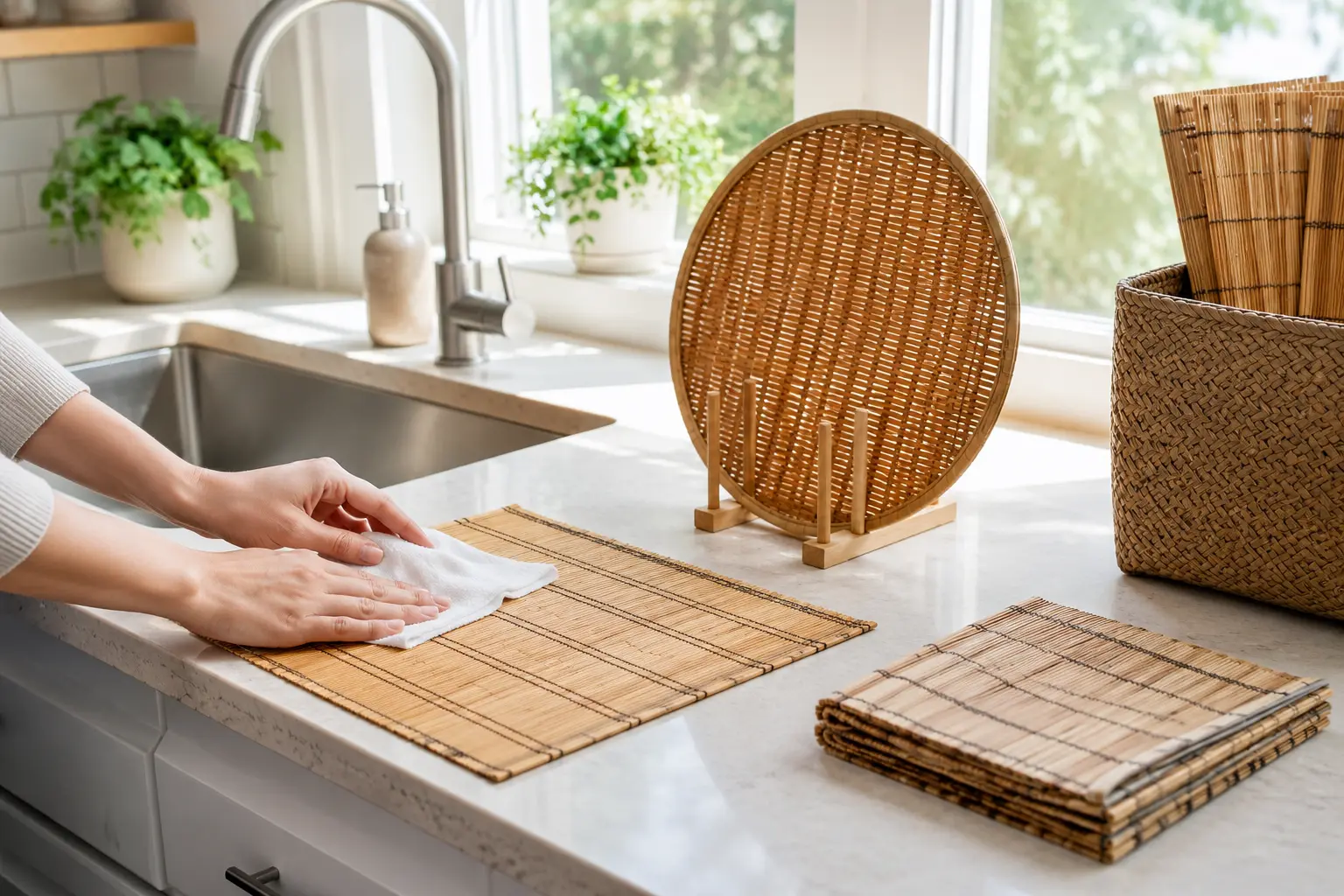
How to clean bamboo placemats correctly depends on their construction and finish. The same care principles apply when these products are described as bamboo table mats. Bamboo slat placemats, woven bamboo placemats, rigid panels and tile-style mats do not all tolerate moisture in the same way. The safest general approach is prompt crumb removal, controlled wiping, complete drying and storage that prevents trapped humidity.
This guide explains daily care, spill response, drying, stain prevention and storage for bamboo placemats used on dining tables, kitchen counters and outdoor meals. Always follow the supplier's instructions for the exact product, especially when it includes fabric backing, adhesive, paint, stain or a special coating.
Why bamboo placemat care matters
Bamboo components naturally respond to moisture. Repeated soaking, uneven drying or storage while damp can contribute to swelling, distortion, cracks, thread problems or finish failure. Food and moisture trapped between slats can also create odor and unsanitary storage conditions.
Good care does not require aggressive cleaning. It requires a consistent routine: remove food early, use only as much moisture as needed, reach the spaces where residue collects, and allow both sides to dry before stacking or rolling.
Know your bamboo placemat construction first
| Placemat type | Cleaning focus | Storage focus |
|---|---|---|
| Bamboo slat or stick mat | Clean between parallel pieces and around threads | Roll only in the intended direction; avoid tight compression |
| Woven bamboo placemat | Use gentle brushing and controlled wiping | Protect the weave and keep edges flat |
| Tile or beaded placemat | Remove residue from gaps and inspect connections | Store flat unless designed to flex |
| Rigid bamboo panel | Wipe both faces and edges; avoid long water exposure | Keep flat in a dry, ventilated place |
| Colored or printed mat | Test care method against the finish instructions | Protect from rubbing, heat and strong sunlight |
A bamboo dish mat may mean a placemat under plates or a drying mat beside the sink. These are different products. Do not use a dining placemat as a wet dish-drying surface unless the manufacturer specifically designed it for that purpose.
Daily cleaning after meals
Step 1: Remove plates and dry debris
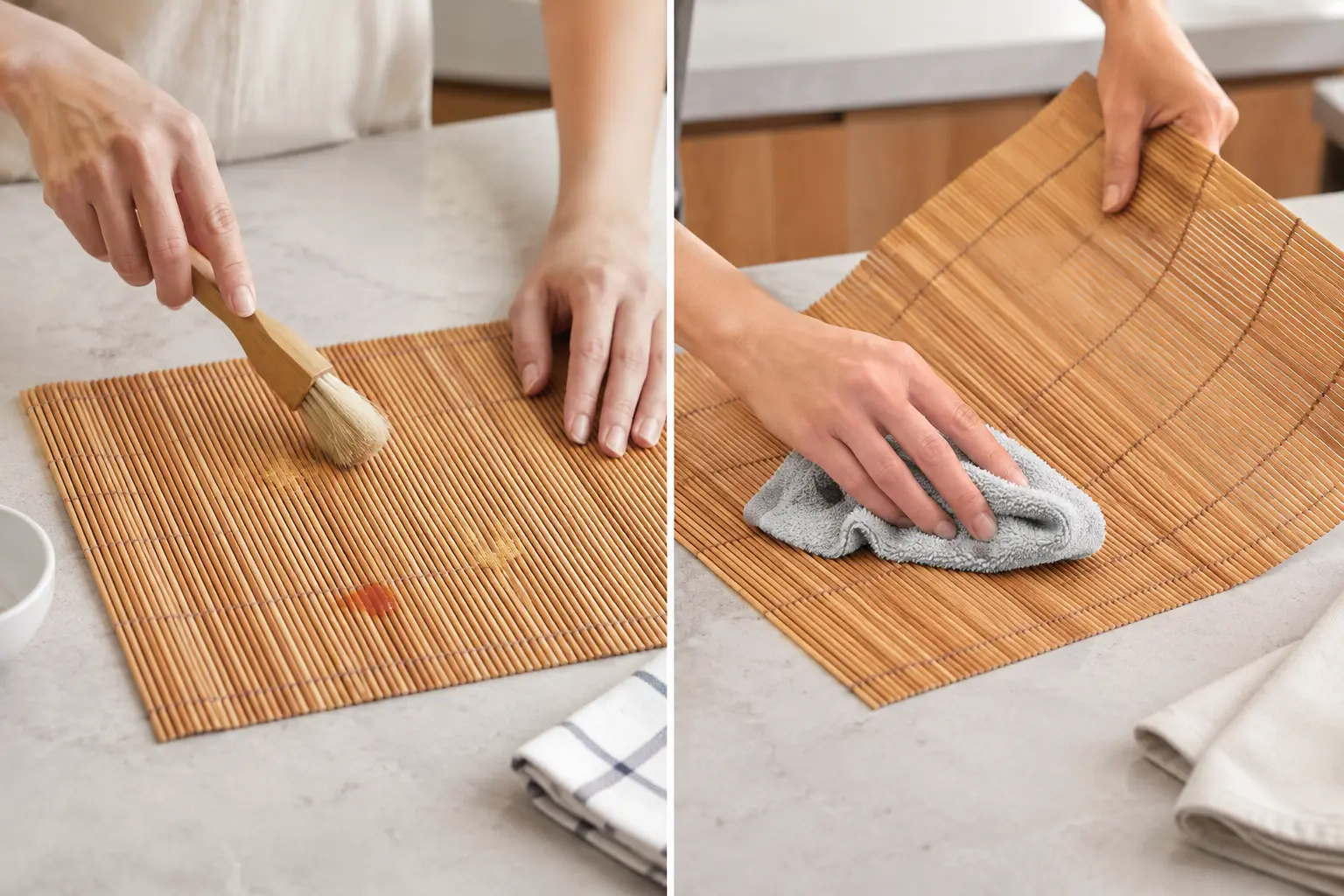
Lift plates and serving items without dragging them across the surface. Shake loose crumbs over a bin or use a soft dry brush to move particles out of the gaps. For slat and stick mats, brush in the direction of the components and inspect the threads or backing.
Step 2: Wipe the top surface
Use a soft cloth dampened with clean water or a mild cleaning solution compatible with the finish. The cloth should be damp, not dripping. Wipe the area where food contacted the mat, then clean the surrounding surface so residue is not spread into a larger film.
Step 3: Clean the underside
Turn the mat over and wipe the underside and outside edges. Moisture, oil or crumbs can transfer to the table and remain hidden under the mat. Cleaning both sides also reduces the risk of uneven moisture exposure.
Step 4: Dry completely
Remove remaining surface moisture with a dry towel. Then place the mat where air can reach both sides. A drying rack may help if it supports the mat without bending it. Do not stack, roll or place the mat in a closed cabinet until it is fully dry.
How to handle common spills
Water, tea and light beverages
Blot the spill promptly rather than letting liquid remain between slats. Wipe both sides and allow complete drying. A square bamboo tea cup mat or matching coaster should receive the same care.
Oil and sauce
Lift excess food with a soft utensil or absorbent cloth without scraping the finish. Use a small amount of mild cleaner recommended for the product, then remove cleaning residue with a separately dampened cloth. Repeated wetting may spread oil into gaps, so work in a controlled area.
Colored foods
Tomato sauce, berries, curry and strongly colored drinks may stain unfinished or lightly finished bamboo. Act quickly, follow the maker's cleaning instructions and avoid improvised bleaching agents. On colored bamboo placemats, an aggressive cleaner may remove the finish along with the stain.
Sticky residue
Soften residue with a damp cloth held briefly against the spot rather than soaking the entire mat. Wipe gently and repeat if necessary. Sharp metal scraping tools can damage coatings and raise bamboo fibers.
Should bamboo placemats be soaked?
Do not assume that bamboo placemats can be soaked. Extended water exposure can affect bamboo, thread, backing, adhesive and finish. Roll-up mats contain many interfaces where water can remain after the surface looks dry.
If a supplier explicitly permits rinsing, follow its time, temperature and drying instructions. Otherwise, controlled wiping is the safer default. Dishwasher and washing-machine compatibility must also be confirmed for the exact construction; it should never be inferred from the word bamboo.
How to dry bamboo placemats
Drying is as important as cleaning. After towel-drying, position the placemat so air reaches both faces. Avoid direct contact with a heater, oven, strong hot air or prolonged intense sunlight, because rapid or uneven drying may affect color and shape.
Round bamboo placemats can stand on a suitable rack if the edge is supported evenly. Flexible roll-up mats may be laid open on a dry surface and turned during drying. Rigid panels should be supported flat so they do not sag.
Before storage, touch several areas, check the gaps and inspect the underside. A surface that feels dry may still hold moisture around thread, binding or backing.
Preventing odor, mold and moisture damage
Mold requires moisture and suitable conditions; bamboo placemats do not sanitize themselves. Prevention therefore focuses on cleanliness, complete drying and dry storage. Do not seal a damp mat in plastic, leave it under a wet plate or stack it immediately after wiping.
- Remove food after every use.
- Dry both sides before storage.
- Keep the cabinet or drawer ventilated and free of leaks.
- Do not store mats against a persistently damp wall.
- Rotate stored sets so the same mat is not always trapped at the bottom.
- Inspect rarely used seasonal mats before placing them on the table.
If visible mold develops, follow the manufacturer's guidance. A deeply affected, persistently odorous or structurally damaged placemat should be replaced rather than returned to food-adjacent use after an uncertain home treatment.
How to store roll-up bamboo placemats
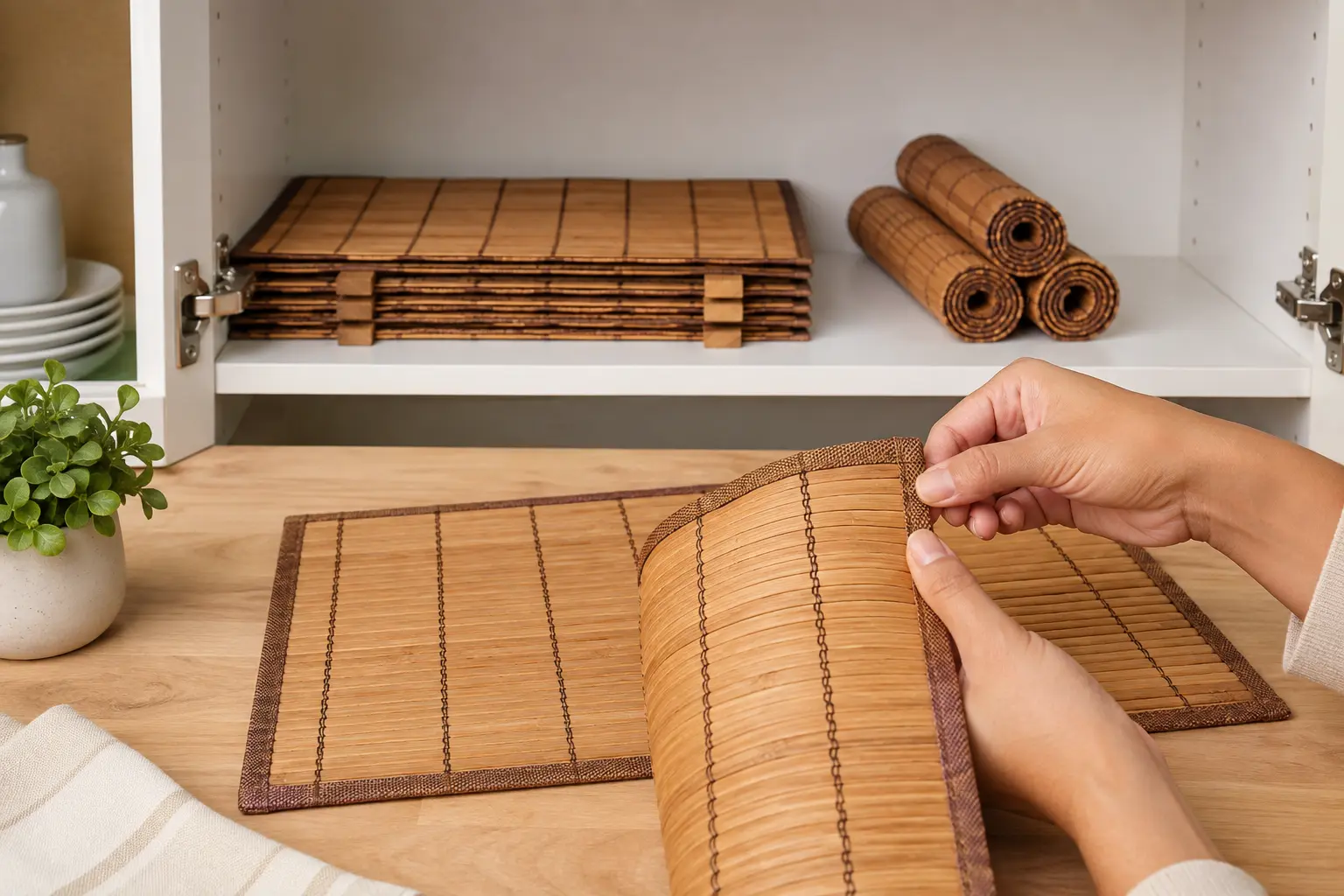
Roll only a product designed to roll, and follow the direction established by its slats and threads. Rolling against the construction can stress the connections. Use a loose, even roll instead of a tight bundle that creates permanent curl.
Store the roll horizontally or in a container that supports it without crushing. Do not place heavy objects on top. If mats remain rolled for a long period, unroll and inspect them before use, allowing them time to relax flat.
How to store flat, woven and rigid placemats
Flat placemats should be clean, dry and supported across their full area. Stack only a manageable number and avoid uneven weight. Thin spacers or breathable protection can reduce surface rubbing where finishes are delicate.
Woven mats need edge protection so the weave does not catch on cabinet hardware. Rigid bamboo wood placemats should remain flat and away from temperature extremes. Keep colored mats out of strong sunlight during long storage to reduce uneven fading.
Outdoor bamboo placemat care
An outdoor bamboo placemat is normally a portable dining accessory, not a product for permanent exposure. Use it on a dry, stable table, remove it after the meal and clean it before indoor storage. Rain, dew and wet grass can introduce moisture from the underside even when no drink is spilled.
Do not leave outdoor mats in a closed vehicle or damp picnic bag. Separate used mats from clean tableware during transport, then clean and dry them promptly at home.
Caring for colored, printed and decorative placemats
Black, white, grey, blue, green, red, cranberry and multi-colored bamboo placemats may use different stains, paints or coatings. Follow the finish-specific instructions and test any new cleaning method in an inconspicuous area. Avoid abrasive pads that can create a lighter patch.
Decorative bamboo placemats may include fabric borders, beads, backing or printed patterns. Each additional material creates its own care limit. A printed bamboo-leaf design should not be treated as solid uncoated bamboo without checking the label.
When should a bamboo placemat be replaced?
Replace a placemat when damage makes it difficult to clean or safe use cannot be maintained. Warning signs include:
- Sharp splinters or broken components
- Loose tiles, sticks, thread or edge binding
- Deep cracks or severe distortion
- Persistent odor after correct cleaning and drying
- Visible mold that cannot be addressed according to the maker's instructions
- Peeling finish in areas used near food and tableware
- A backing that separates or scratches the table
Normal grain and slight color variation are not automatically defects. Compare the mat with its original condition and focus on hygiene, structural security and usability.
Care instructions for wholesale and retail programs
Wholesale bamboo placemats should ship with care instructions matched to the final construction and finish. Buyers should not copy generic bamboo advice from another product. Instructions should cover routine cleaning, prohibited methods, drying, storage and replacement signals.
Care claims should also be tested during product development. If packaging says “wipe clean,” the selected finish and decoration should tolerate the defined wiping method. If a product is marketed for outdoor dining, the copy should clarify that it must be brought indoors and dried after use.
Related bamboo placemat resources
Use the Bamboo Placemats Buying Guide to compare shapes, construction, set sizes, colors and wholesale requirements. Read How to Make Bamboo Placemats for material preparation, assembly, finishing, quality control and packaging.
Fujian Xianxu Bamboo & Wood Co., Ltd. supports OEM/ODM bamboo and wooden products through manufacturing operations in China and Vietnam. Buyers can learn more about the company or send a product brief.
Frequently asked questions
Can bamboo placemats go in a dishwasher?
Do not assume so. Dishwasher heat, water and detergent can affect bamboo, thread, backing and finishes. Follow the exact product instructions.
Can I wash bamboo placemats under running water?
Only if the manufacturer permits it. Controlled wiping is the safer general method for many bamboo constructions.
How often should bamboo table mats be cleaned?
Remove food after every meal and clean spills promptly. The required full wipe depends on use, but mats should never be stored with food residue or moisture.
Why is my bamboo placemat curling?
Possible causes include moisture imbalance, tight rolling, heat exposure, thread tension or construction damage. Stop using damaging storage conditions and consult the supplier's guidance.
Can bamboo placemats stay outdoors?
Unless specifically designed for permanent outdoor exposure, bring them indoors after use and store them dry.
How should sets of four or six be stored?
Keep the complete set clean and dry. Store flat sets evenly or roll flexible mats loosely, avoiding heavy compression and trapped humidity.
Clean promptly, dry completely and store correctly
The most reliable bamboo placemat routine is simple: remove debris, wipe with controlled moisture, clean both sides, dry fully and store according to the construction. These habits protect appearance, reduce odor and make damage easier to notice before the next meal.