
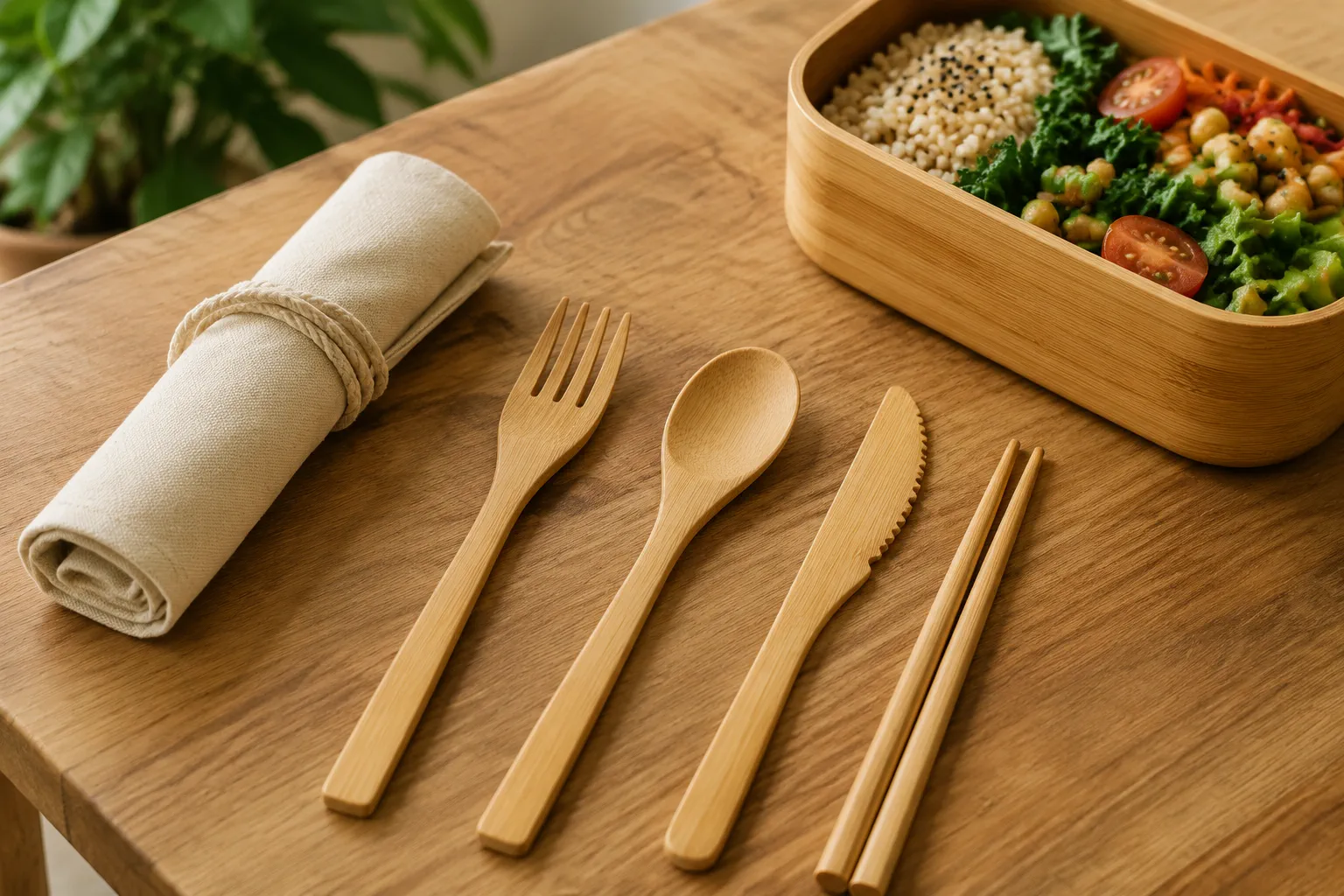
Bamboo utensils occupy an unusual space between familiar tableware and products that need a little explanation. A spoon may look simple, yet its material, edge shape, finish, storage case and cleaning instructions all affect how it performs. That is why the most useful way to discuss bamboo utensils is not as a single “green” product category, but as a family of eating and serving tools designed for different routines.
This article follows the product from material identification to everyday care, then moves through travel, camping, lunch and picnic applications. It also explains the questions importers should ask when evaluating bamboo utensils manufacturers, custom decoration and bulk programs. The aim is practical: help consumers select a set they will actually use and help professional buyers write a specification that a factory can manufacture and inspect.
Start with the material: what counts as a bamboo utensil?
The words “bamboo utensil” can describe several very different products. A solid or laminated bamboo spoon is cut and shaped from bamboo stock. A molded item may combine bamboo-derived powder or fibre with a binder. A disposable food pick can be made from a small bamboo strip, while a travel fork may use bamboo for the handle and another material for the working end. These formats should not be grouped together without stating their construction.
For buyers seeking solid-bamboo eating tools, the relevant questions are straightforward: Which components are bamboo? Is the piece carved from one section or laminated? What adhesive, coating or ink is used? Is the surface unfinished, oiled, stained, lacquered or otherwise sealed? Are those materials suitable for the intended food-contact market? A supplier should answer through specifications and supporting documents for the selected production configuration, not through a vague leaf icon on the packaging.
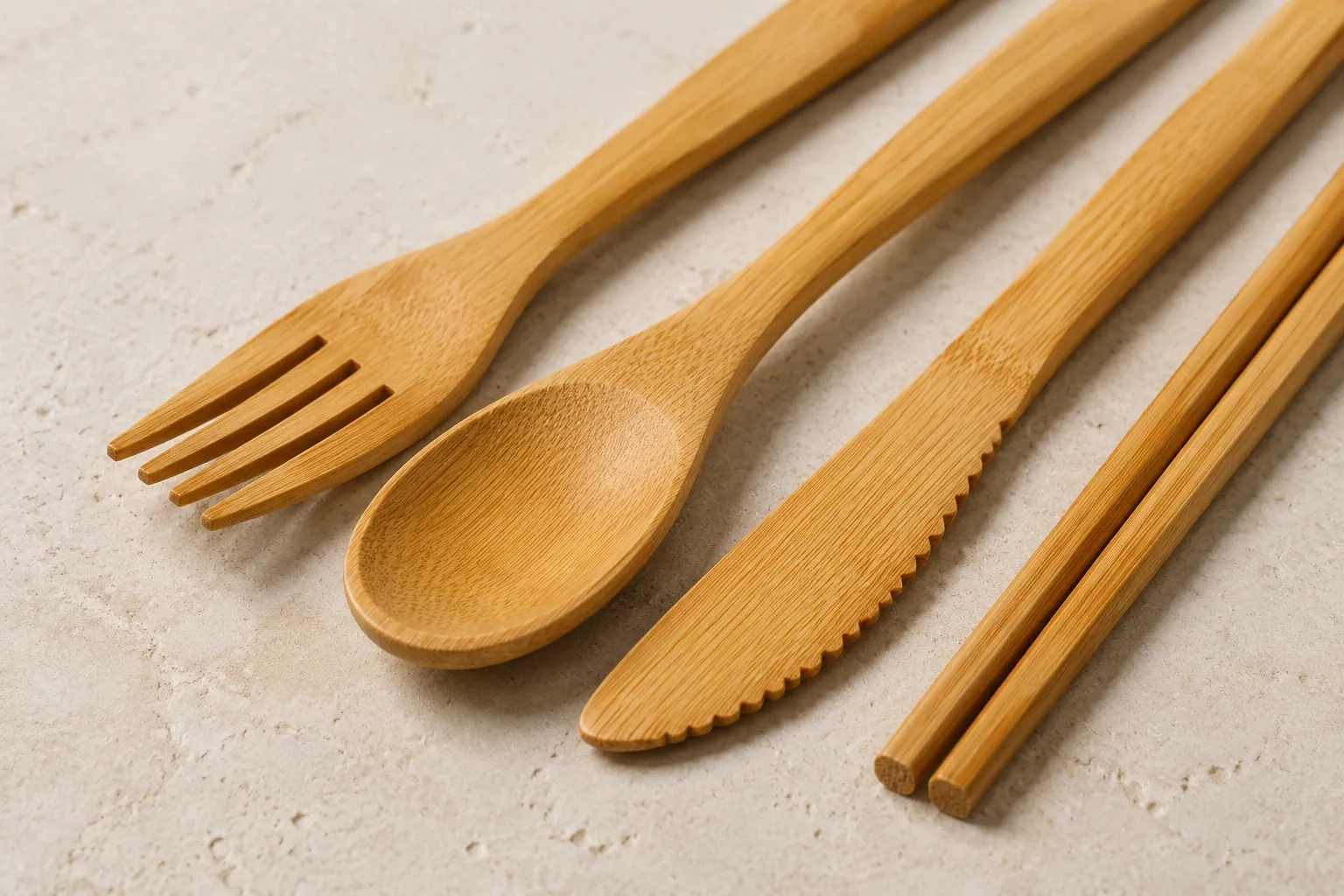
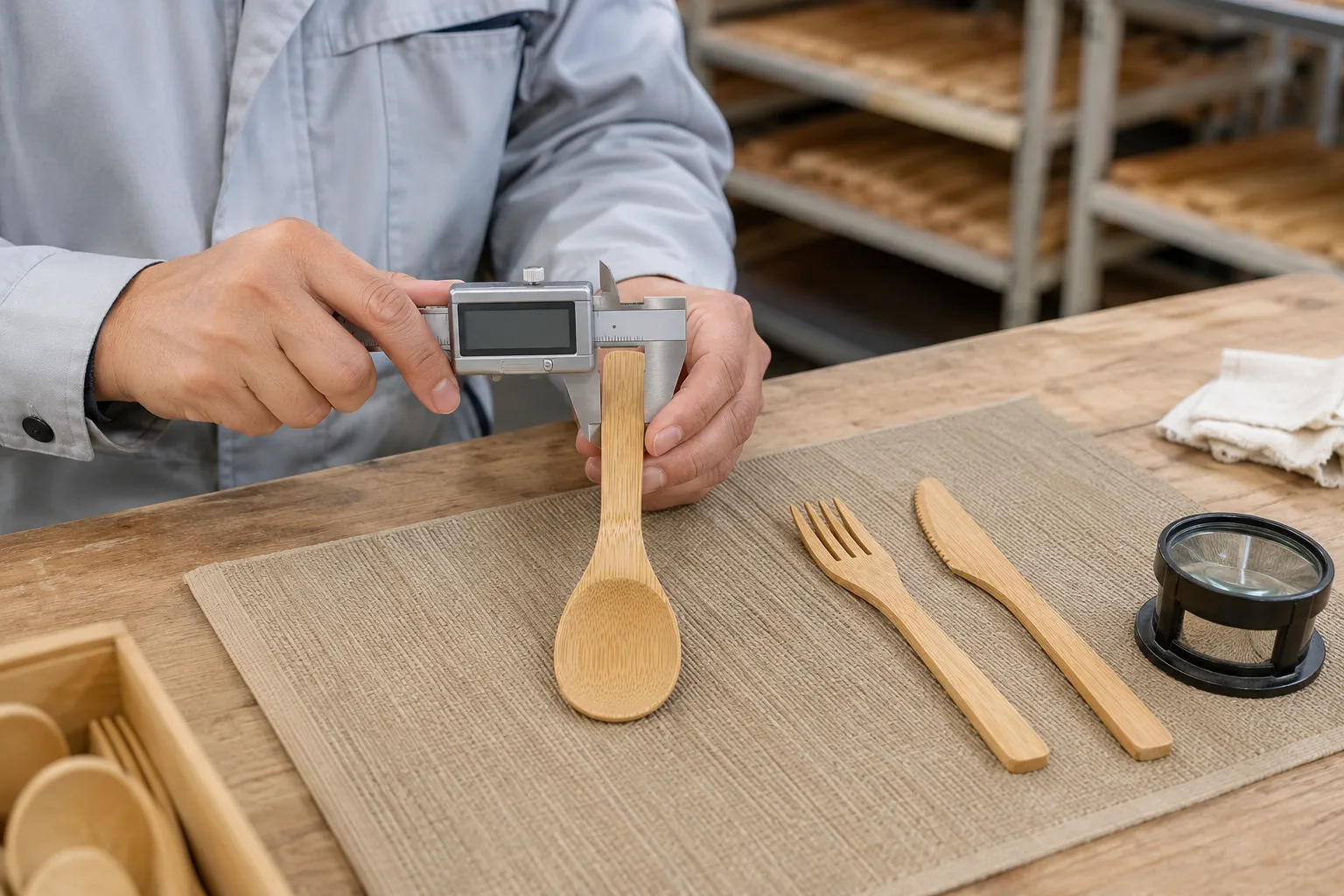
Natural variation is expected. Bamboo grain, node marks and color can differ from one piece to the next. That variation does not automatically mean poor quality. More useful inspection points include rough fibres, splinters, cracks, sharp transitions, uneven tines, residue, odor, inconsistent coating and distortion. For a knife, the edge must be shaped for the foods it is meant to cut without becoming uncomfortably sharp. For a fork, tine thickness and spacing influence both strength and eating comfort.
Solid bamboo, laminated bamboo and mixed-material sets
A one-piece spoon or fork has fewer joints and a visually direct material story. Laminated stock can provide a wider or more dimensionally consistent blank, but the bonding system becomes part of the specification. Mixed-material designs can be appropriate when they solve a functional need, such as a bamboo-handled tool paired with a metal component. In every case, product naming should tell the buyer what they are receiving.
When listings describe a utensil as “natural,” that word should not be treated as proof that the product is completely untreated or free of glue, coating, pigment or packaging materials. Ask for a component breakdown. The same caution applies to organic claims: they require a relevant, verifiable basis and should not be inferred merely because bamboo is plant-derived.
Bamboo fibre, colored finishes and “carbon” search terms
Why bamboo fibre utensils may not be solid bamboo
The phrase bamboo fibre utensils often refers to molded products rather than utensils carved from bamboo. Formulations vary: bamboo-derived fibre or powder may be combined with a resin or another polymer to make a moldable composite. The bamboo content, binder chemistry, temperature limitations and end-of-life pathway therefore depend on the actual formula. A molded bamboo-fibre-looking spoon should not be marketed as if it were a solid bamboo spoon.
Importers should request a complete material declaration and market-appropriate food-contact evidence for the final formula and colorway. Consumers should follow the maker’s temperature and cleaning instructions. If the label does not identify the binder or gives only a percentage-free phrase such as “made with bamboo,” that is a reason to ask a question, not a reason to assume.
Colored bamboo utensils need a finish specification
Colored bamboo utensils can support brand palettes, event themes, children's assortments or differentiated product lines. Color may come from a stain, paint, printed pattern, colored handle section or surface coating. Buyers should define exactly where the color appears, its target reference, acceptable grain visibility, rub resistance and any restricted-substance requirements for the destination market. Approval should be based on a physical sample under agreed lighting, because screen colors are unreliable.
Decoration must also stay away from food-contact zones unless the selected ink or coating system has been evaluated for that use. A colored handle and an undecorated eating end are often easier to specify than full-coverage decoration. Claims such as “chemical-free” or “non-toxic” should not be used without a clear definition and evidence.
“Carbon utensils” is an ambiguous phrase
A search for carbon utensils can point to carbon-fibre products, dark “carbonized” bamboo, black-colored tableware or even low-carbon product discussions. These are not equivalent. Carbon fibre is a different engineered material; carbonized bamboo generally describes heat-treated bamboo with a darker appearance; black color can come from a pigment or coating; and a carbon-footprint claim requires lifecycle boundaries and data. Product pages should use the technically correct term rather than borrowing an attractive but unclear phrase.
Why people use bamboo utensils—and what the tradeoffs are
Common bamboo utensils benefits include low carrying weight, a warm tactile surface and a quieter dining experience than metal can provide. Bamboo grain also gives each piece a distinct appearance. A well-designed set can replace repeated use of single-use cutlery when the owner carries, cleans and reuses it consistently. These are reasonable functional observations; they do not make every bamboo product automatically sustainable.
The broader benefits of bamboo utensils depend on the full product system. Durability, manufacturing yield, coating, packaging, transport distance, frequency of use and disposal all matter. A reusable tool that lasts and is used frequently can serve a different role from a lightly built item discarded after one meal. Environmental language should therefore be specific—for example, “designed for repeated use”—and backed by the product design rather than reduced to an absolute “planet safe” slogan.
Bamboo utensils pros and cons
A balanced review of bamboo utensils pros and cons helps buyers choose for the right reason.
| Consideration | Potential advantage | Limitation or question to check |
|---|---|---|
| Weight | Light to carry in a lunch bag or travel pouch | Very thin sections may flex or break under unsuitable loads |
| Eating feel | Warm, non-metallic mouthfeel and low contact noise | Tines and edges need careful shaping and sanding |
| Appearance | Visible grain creates a natural, giftable look | Color and grain variation must be allowed in the QC standard |
| Reuse | Can be designed for repeated meals and portable routines | Requires prompt washing and thorough drying |
| Customization | Handles, cases and packaging can carry branding | Marking method, position and durability need sample approval |
| Heat and moisture | Suitable for many ordinary eating tasks when correctly designed | Prolonged soaking, extreme heat and unsuitable appliances may damage some products |
If someone asks why use bamboo utensils, the best answer is situational. Use them when light weight, tactile comfort, portability or a bamboo visual identity solves a real need—and when the cleaning routine fits the user. Do not choose them solely because a listing uses green colors or broad environmental language.
Hygiene: bamboo utensils, bacteria and responsible cleaning
The search phrase bamboo utensils bacteria reflects a legitimate concern, but it is often answered with an overconfident claim that bamboo is naturally antibacterial. Finished utensils should not be assumed to sanitize themselves, and this article does not make an antimicrobial claim. Food residue, moisture, surface damage, storage conditions and cleaning habits influence hygiene regardless of the base material.
For routine care, remove food promptly, wash according to the supplier’s instructions with an appropriate detergent, rinse well and allow every surface to dry completely before enclosing the utensils in a pouch. Do not leave wet pieces sealed in an airtight case. Avoid long soaking unless the manufacturer explicitly allows it, because repeated water exposure can encourage swelling, warping, coating failure or cracks. Dishwasher suitability must be verified for the specific construction; it should never be assumed for all bamboo utensils.
A travel case deserves the same attention as the utensils. Fabric pouches can retain moisture or food particles; rigid cases may trap condensation. Select a case that can be cleaned and dried, and store it open after use until both case and utensils are dry. If a set includes a straw and cleaning brush, verify that the brush reaches the full internal length and that the straw can drain.

When should a bamboo utensil be replaced?
Replace an eating utensil if it develops deep cracks, splinters, persistent odor, visible mold, a loose bonded joint or coating that is peeling in a food-contact area. Surface discoloration alone is not always proof of a hygiene failure, but it should be examined. A rough surface that cannot be restored according to the maker’s care guidance is also a practical retirement point.
Commercial users should establish written inspection and replacement rules instead of relying on age alone. Consumers can do a quick visual and tactile check after washing. Never taste-test or continue using a visibly compromised item merely because bamboo is perceived as natural.
How long do reusable bamboo utensils last?
How long do bamboo utensils last is not a question with one honest universal number. Service life changes with bamboo stock, thickness, grain orientation, lamination, finish, food type, washing method, storage climate and how frequently the utensils are used. A sturdy spoon used for lunch and dried correctly faces different stresses from a thin fork left soaking or a cooking tool repeatedly exposed to high heat.
Instead of promising a fixed number of months or years, evaluate design evidence. Look for consistent cross-sections, rounded stress transitions, smooth edges, stable joints and a care instruction matched to the finish. In sampling, buyers can conduct repeated-use protocols appropriate to their market: cycles of food contact, washing, drying and inspection, with predefined failure criteria. The resulting specification is more useful than an unsupported “lifetime” statement.
Reusable bamboo utensils also need to be sized for their intended task. A compact travel knife is not a substitute for a chef’s knife, and a small fork should not be used to pry hard food. Correct use is part of durability. If a product is intended only for eating rather than cooking, its packaging should say so clearly.
Bamboo vs stainless steel utensils vs wood
Bamboo vs stainless steel utensils
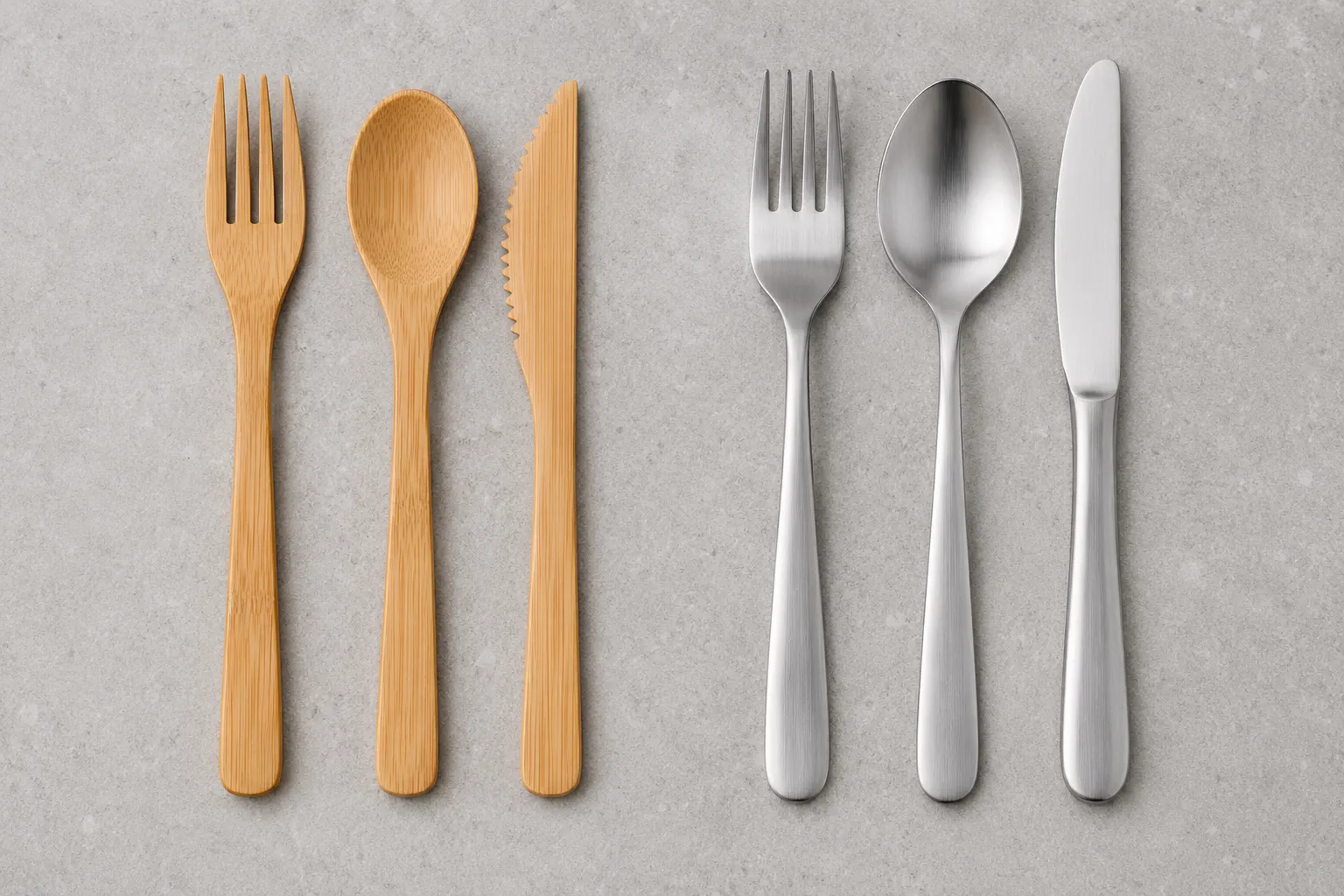
The comparison bamboo vs stainless steel utensils is less about declaring a universal winner and more about priorities. Stainless steel generally offers a thin, strong working edge, familiar cleaning routines and high resistance to everyday food staining when the grade and construction are appropriate. It can feel cold, create contact noise and weigh more in a portable kit. Bamboo is lighter, warmer to touch and visually distinctive, but it requires attention to moisture, surface condition and construction.
| Decision factor | Bamboo | Stainless steel |
|---|---|---|
| Carry feel | Usually light and quiet in a pouch | Typically heavier, with possible metal-on-metal noise |
| Working profile | Often thicker for strength and comfort | Can achieve thin fork tines and knife edges |
| Moisture routine | Benefits from prompt drying and avoiding prolonged soaking | Care depends on grade and finish, but many designs tolerate moisture well |
| Visual identity | Natural grain and warm presentation | Clean, conventional metallic appearance |
| Best choice | Depends on use, care behavior and specification | Depends on use, care behavior and specification |
Are bamboo utensils better than wood?
People searching are bamboo utensils better than wood are comparing two broad families, not two controlled specifications. Bamboo is a grass processed into usable stock, while “wood” can mean many species with different density, grain and finish. Design quality can matter more than the category label.
The topic bamboo utensils vs wood should therefore be evaluated product by product. Compare component thickness, fibre or grain direction, surface smoothness, coating system, bonded joints, moisture instructions and test results. Bamboo can provide a recognizable fine-grain look and good strength for its weight in an appropriate design. A well-made hardwood utensil may also provide excellent service. Neither material is automatically hygienic, durable or low-impact without context.
Wooden reusable utensils may be a suitable alternative where a particular wood species, local sourcing story or established kitchen-tool tradition matters. Bamboo can be preferable for a buyer who wants coordinated bamboo products across lunchware, organizers or other kitchenware. The procurement decision should follow the intended use and verifiable specification.
Matching the utensil set to the occasion
Bamboo eating utensils for daily meals
Bamboo eating utensils typically include some combination of spoon, fork, knife and chopsticks. The right combination follows the menu. A soup-focused kit benefits from an adequately deep spoon; noodles may make chopsticks valuable; soft foods require a different knife profile from firm foods. Reusable bamboo eating utensils should feel comfortable at the lips, with rounded transitions and no rough fibres.
For an office or school routine, bamboo lunch utensils need a compact, cleanable case that fits the lunch bag. Consider whether wet utensils can be carried home without contaminating other items, while still being removed and dried promptly. A name area can help distinguish sets in a shared kitchen, but decoration should not interfere with cleaning.
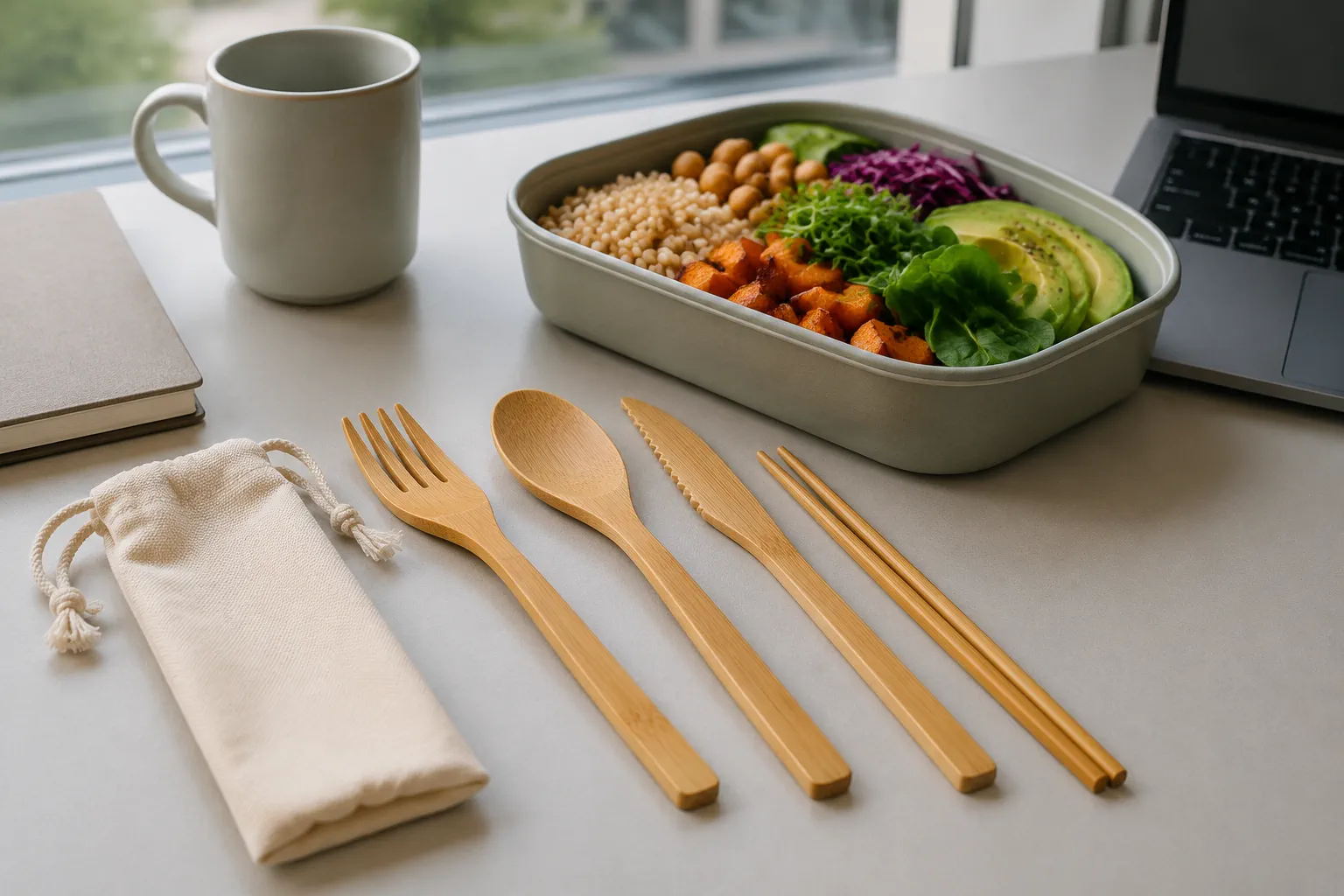
Bamboo travel utensils and portable kits
A practical set of bamboo travel utensils balances coverage against bulk. Spoon, fork and chopsticks handle many meals; a knife, straw or brush may be useful for some travelers but unnecessary for others. Security and venue rules can affect which items are permitted, so users should check applicable restrictions before packing.
The awkward search phrase bamboo utensils travel often leads to sets that look similar but differ in length, case design and finishing quality. The best bamboo travel utensils are the ones matched to the user’s meals, bag space, cleaning access and hand comfort. “More pieces” is not automatically better.
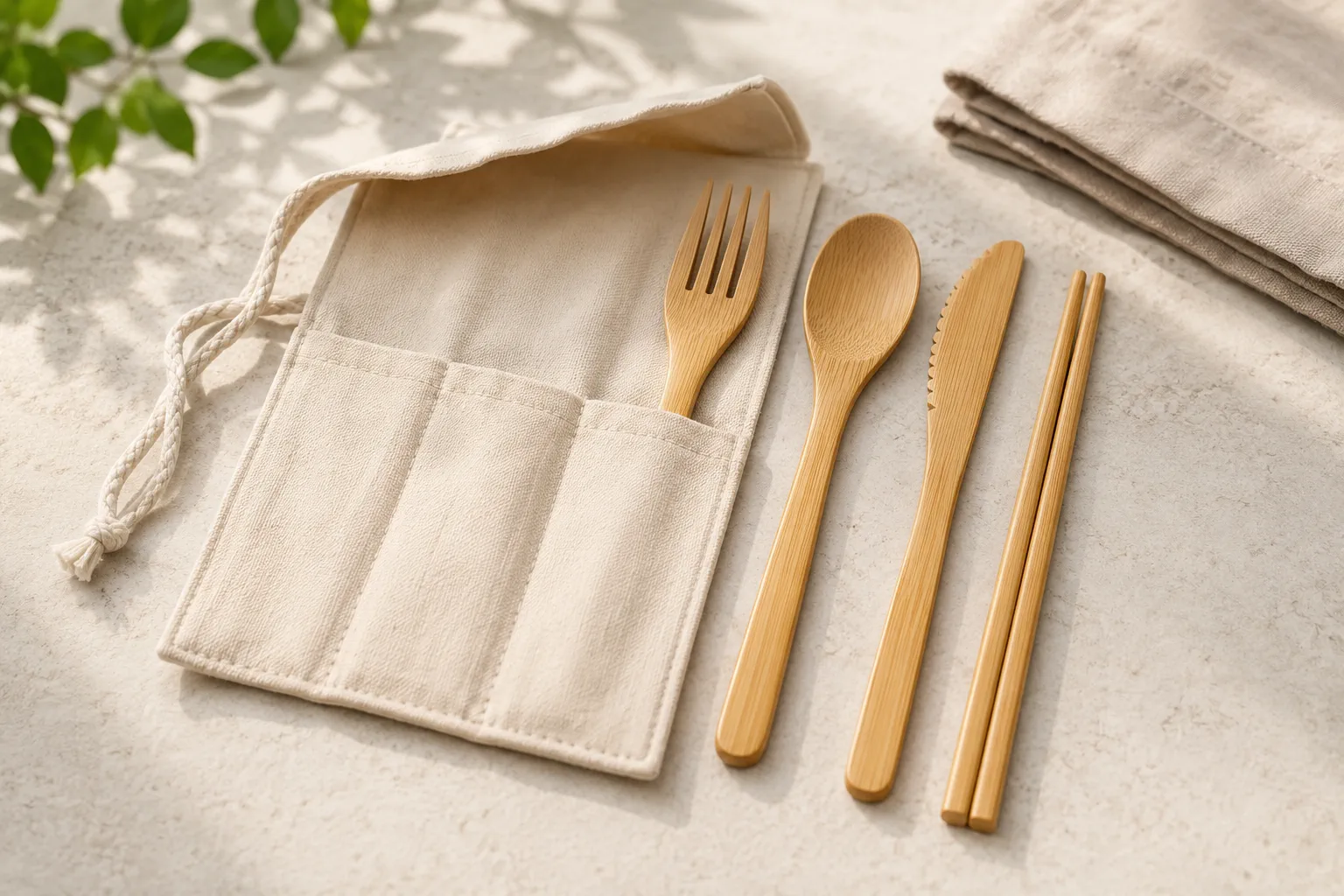
Portable bamboo utensils should not rattle out of the case or expose the eating ends to a dirty bag. Useful case options include washable textile rolls, vented rigid boxes and drawstring pouches, each with tradeoffs. Textile can be compact but must dry completely; rigid protection takes more space; an unvented enclosure should not receive wet utensils.

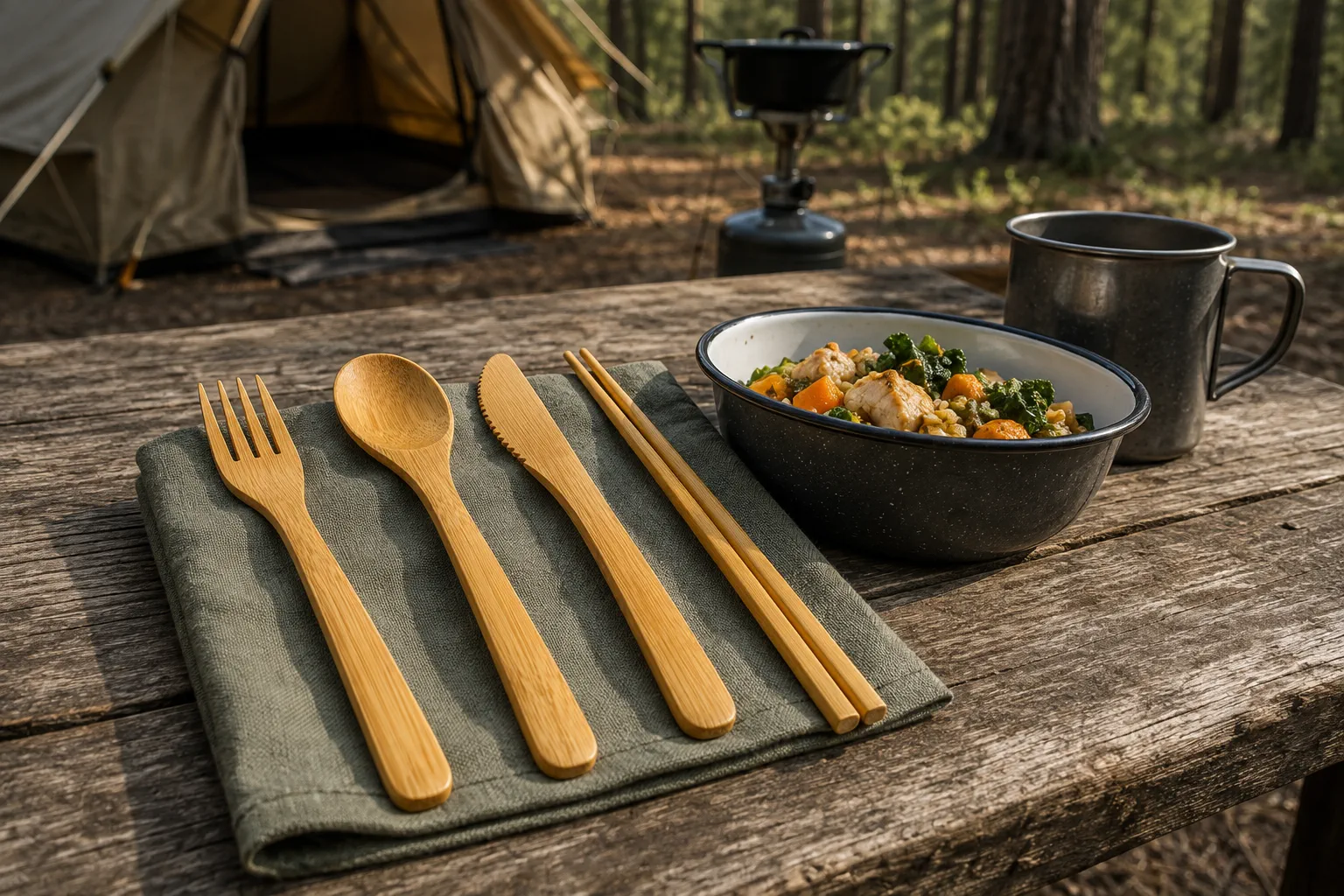
Camping and outdoor meals
Bamboo camping utensils work best as personal eating tools, not as substitutes for high-load camp cooking equipment unless specifically designed and tested for that purpose. A compact eating set can be light and quiet around a campsite. It still needs clean water, suitable detergent and complete drying; wiping a utensil on clothing is not a hygiene plan.
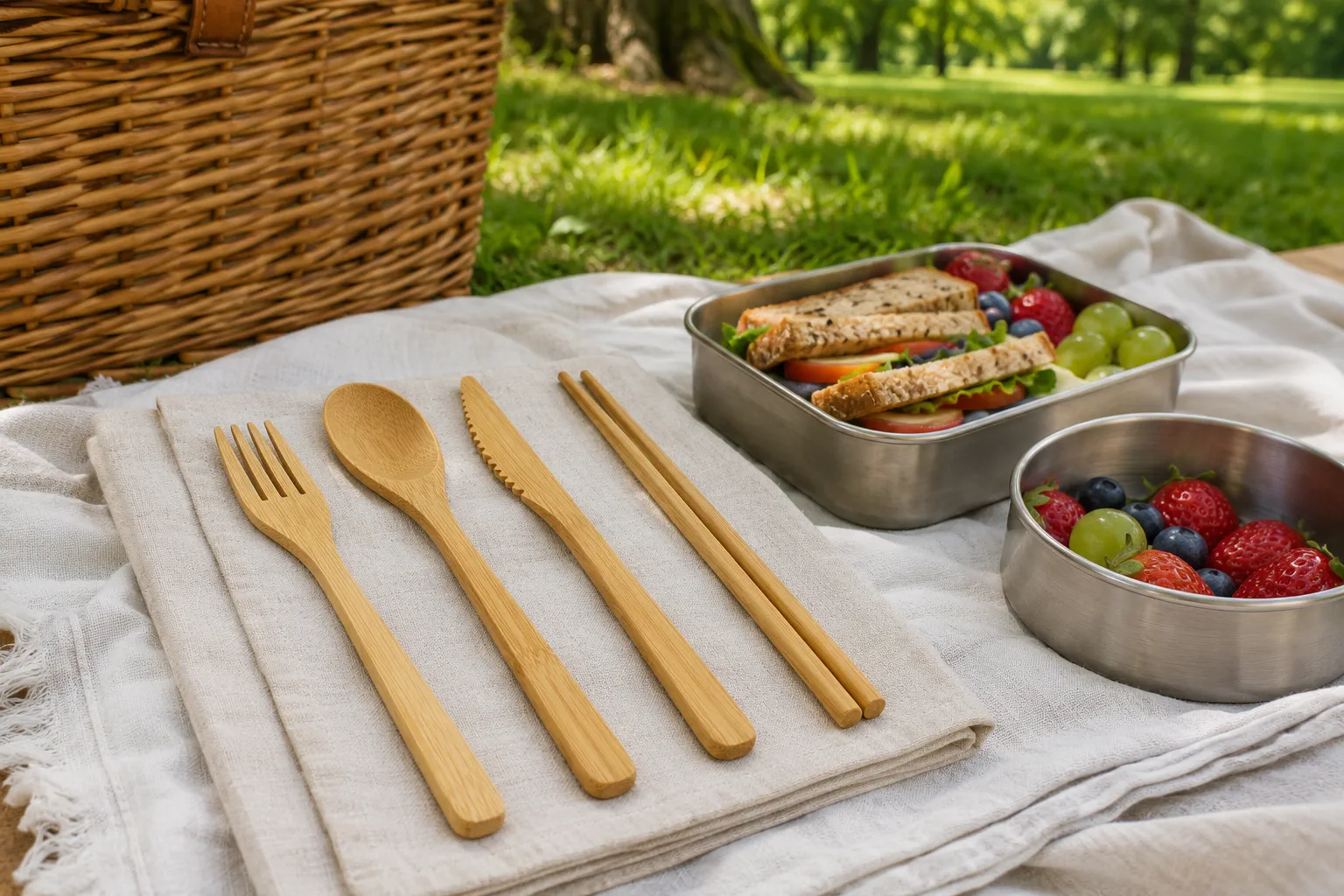
Bamboo picnic utensils can be arranged as individual place settings or packed as a shared kit. Count both utensils and guests, separate clean and used pieces, and provide a return container so reusable items do not become litter. For public events, organizers should plan collection and washing before selecting a reusable system.
A picnic utensil assortment may also be coordinated with serving pieces, napkins and cases, but eating and serving tools have different load requirements. Product descriptions should state which is which.
Choosing a reusable set
A reusable bamboo utensil set should be judged as a system: utensils, case, decoration, instructions and replacement expectations. A well-shaped fork in a case that cannot be cleaned is not a complete solution. Likewise, attractive packaging cannot compensate for rough tines or inconsistent finishing.
Affordable bamboo utensil sets for beginners do not need every accessory. A simple spoon-fork-chopstick combination with a washable pouch may provide better everyday value than a large kit filled with rarely used components. Beginners should prioritize smooth finishing, useful size, understandable care guidance and a case they can maintain.
A practical guide to choosing eco-friendly bamboo utensils
This guide to choosing eco-friendly bamboo utensils treats “eco-friendly” as a claim to examine, not a feature guaranteed by the material name. Shoppers and buyers can use the following sequence:
- Define the use. Is the set for lunch, travel, camping, hospitality, gifting or retail? List the foods and expected frequency.
- Identify every material. Distinguish solid bamboo, laminated bamboo, bamboo-fibre composite, metal components, coatings, inks, cases and packaging.
- Inspect the working surfaces. Check tines, spoon bowl, knife profile, chopstick tips, joints and transitions for consistency and comfort.
- Read the care limits. Confirm washing, soaking, heat and appliance instructions for the exact construction rather than assuming universal dishwasher safety.
- Evaluate repeat use. Choose a design robust enough for the intended routine and a case the user can clean and dry.
- Interrogate claims. Ask what evidence supports recycled, compostable, organic, antimicrobial, carbon or environmental statements.
- Plan end of service. Mixed materials, coatings and local waste systems influence whether parts can be recycled, composted or must enter general waste.
The phrase eco friendly bamboo utensils is commercially popular, but precise copy is more credible. “Reusable bamboo spoon and fork with a washable cotton pouch” tells the customer what exists. “Good for the earth” does not describe manufacturing, durability or disposal. Strong SEO content answers real questions without stretching beyond evidence.
How to interpret bamboo utensils reviews
Bamboo utensils reviews are most useful when they describe the exact model, length of use, foods eaten, cleaning method and observed failure. A one-day review can assess initial comfort and finish, but not long-term durability. A complaint about splintering deserves attention, yet buyers should also determine whether it concerns one batch, unsuitable soaking, an impact or a systematic edge-finishing issue.
Look for patterns across verified purchases rather than repeating a single dramatic claim. Photos of working edges and cases are more informative than lifestyle shots. For wholesale evaluation, reviews can generate questions, but an approved sample, specification, inspection plan and production controls should drive the decision.
Customization, personalization and wholesale sourcing
Custom bamboo utensils for brands and programs
Custom bamboo utensils can be developed through component selection, dimensions, edge geometry, finish, marking, case, insert card, color and outer packaging. The most effective custom brief starts with use requirements, not a logo. Specify who will use the product, what meals it must handle, how it will be cleaned, how it is distributed and which market receives it.
Personalized bamboo utensils often use laser marking, printing or another decoration process on the handle or case. “Personalized” may mean one name per unit, while “custom” may mean a single brand design across an order; these workflows have different data and inspection needs. Buyers should confirm artwork format, safe marking area, contrast, orientation, acceptable variation, serialization rules if relevant and whether decoration changes the surface feel.
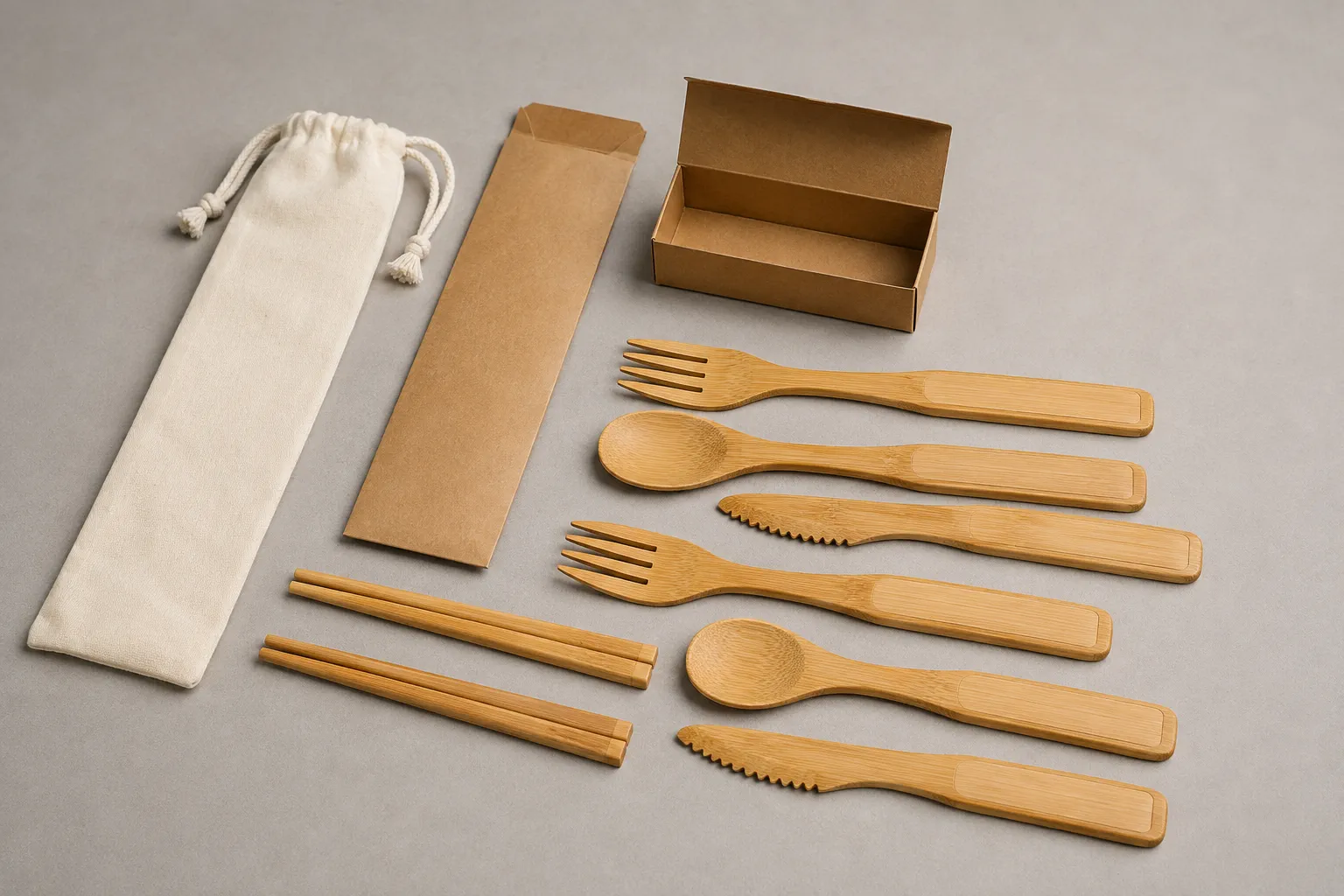
Planning reusable bamboo utensils bulk orders
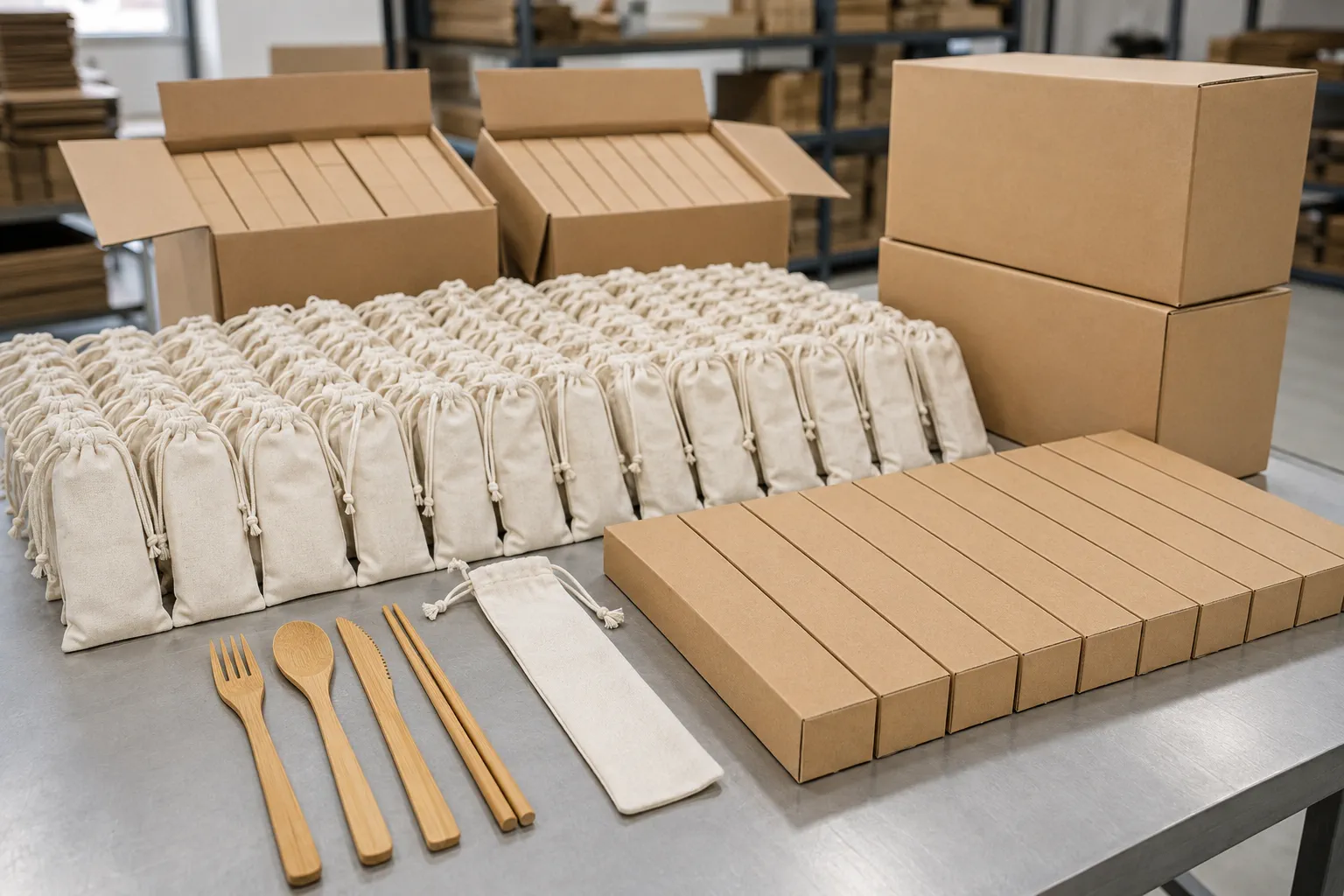
For reusable bamboo utensils bulk sourcing, the purchase order should point to a controlled specification. At minimum, define the set contents, dimensions and tolerances, material construction, surface finish, permitted natural variation, workmanship criteria, decoration, case, unit packaging, carton marking and destination-market requirements. Golden samples or signed approval samples help turn subjective phrases such as “smooth” and “natural color” into shared references.
A sampling plan should distinguish critical, major and minor defects. Examples may include splinters or contamination as serious concerns; missing components, loose joints or incorrect markings as functional or commercial defects; and small acceptable grain variation as a natural characteristic. Exact classifications and acceptance levels should be agreed for the product and market rather than copied blindly from another item.
Packaging trials matter because utensils can rub, shift or absorb moisture during storage and transport. The factory and buyer should review pack-out order, barriers where needed, ventilation considerations, barcode placement, master-carton strength and handling labels. Claims printed on the package need the same verification as claims on the web page.
Questions to ask bamboo utensils manufacturers
Capable bamboo utensils manufacturers should be able to discuss process controls as well as price. Useful questions include:
- Which bamboo components, adhesives, coatings, inks and case materials are used in this exact configuration?
- How are incoming bamboo stock, moisture condition, shaping, sanding, cleaning and final packing controlled?
- Which dimensions and workmanship points are measured during production?
- How is natural color variation separated from stains, burn marks, mold or coating defects?
- Can the supplier produce and retain an approved sample for production comparison?
- Which destination-market documents can be supplied for the final materials and decoration, and which tests still need to be arranged?
- How will traceability, carton identification and corrective action be handled if an inspection finds a problem?
Fujian Xianxu Bamboo & Wood Co., Ltd. was founded in 2018 and supports OEM/ODM bamboo-product projects through manufacturing operations in China and Vietnam, serving buyers in more than 40 countries and regions. Buyers can review related bamboo kitchenware, learn about the company and its Vietnam factory operations, or contact the team with a product brief.
Frequently asked questions
Are reusable bamboo utensils automatically sustainable?
No. Material source, processing, additives, finish, packaging, transport, durability, usage frequency and disposal all influence the result. A reusable product only delivers repeated-use value when it is maintained and actually reused. Product pages should state what the design supports and how it should be cared for instead of depending on broad environmental language.
Can bamboo utensils go in a dishwasher?
Do not assume so. Dishwasher conditions combine heat, water, detergent and long exposure, and different bamboo constructions or finishes respond differently. Follow the instructions for the exact product. A wholesale buyer should validate the intended care claim before printing it.
Do bamboo utensils kill bacteria?
This article makes no antimicrobial claim. Utensils must be cleaned, rinsed, dried and stored responsibly. Replace pieces with deep cracks, splinters, persistent odor, mold or failing food-contact finishes.
What belongs in a bamboo travel utensil set?
A spoon, fork and chopsticks cover many meals; knives, straws and brushes are use-dependent. Choose the smallest combination that fits the menu and verify that the case can be cleaned and fully dried. A good travel kit is defined by usability, not the maximum piece count.
How does bamboo compare with other utensil materials?
Bamboo sits alongside metal, wood and various reusable composites. Each has different strength, care, material-transparency and end-of-life considerations. The best choice follows the intended application and verified product details.
Can a manufacturer match a custom color or logo?
Often, subject to design feasibility and approved materials. Provide vector artwork, target colors, marking position, size, orientation, package requirements and destination market. Approve a physical sample because bamboo grain can affect visual contrast.
What information should an RFQ include?
Include set composition, dimensions, construction, finish, decoration, case and packaging concept, target market, estimated quantities, inspection expectations, requested documents and reference images. The manufacturer can then identify which options need samples or further engineering instead of guessing.
Choose a utensil system, not just a material label
The strongest bamboo utensil decision connects four things: an honest material description, a design suited to the meal, a realistic cleaning routine and evidence-based claims. For consumers, that means buying a comfortable set they can wash, dry and carry. For brands and importers, it means translating those same needs into drawings, samples, material declarations, QC criteria and accurate packaging copy.
Whether the project is a compact lunch kit, a travel assortment, a picnic program or a customized wholesale line, bamboo should be evaluated as an engineered product rather than a shortcut to an environmental promise. That approach creates clearer product pages, more useful specifications and a better chance that the utensils remain in use.