
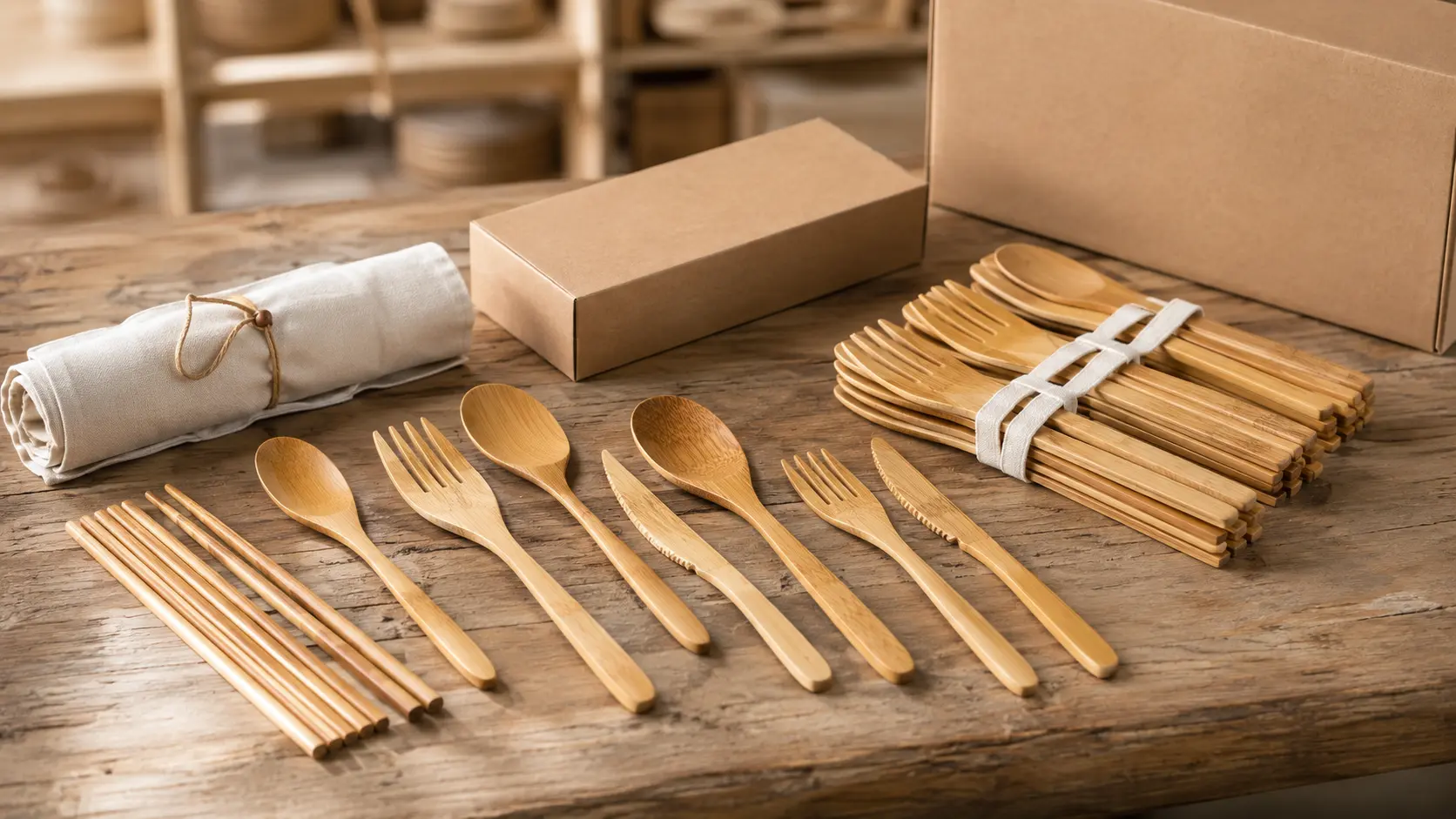
“Bamboo flatware” sounds like a simple product category, yet it can describe several very different items: a fork carved from a single piece of bamboo, a stainless-steel spoon with a bamboo handle, a lightweight travel set, or even a plastic composite marketed with bamboo language. Those differences affect how an item feels, performs, is packed, and can be described to customers.
This article looks beyond the label. It explains how to identify real bamboo flatware, how reusable designs compare with metal utensils, what “green,” “natural,” and “organic” can—and cannot—reasonably communicate, and how importers can develop a coherent bulk or wholesale range. The aim is not to declare one material universally superior. It is to help a buyer match product construction to actual use.
What Is Bamboo Flatware, Exactly?
In ordinary retail language, bamboo flatware usually means forks, spoons, knives, chopsticks, or related serving utensils in which bamboo is the main visible material. However, a useful product specification should go further than the category name. It should state which components are bamboo, whether each utensil is made from one piece or assembled, what surface treatment is used, and whether another material forms the working end.
There are three common constructions:
- One-piece bamboo utensils: the fork, spoon, or knife is shaped from a bamboo blank. This construction makes the bamboo grain and tool marks visible and is often chosen for travel, lunch, gift, and natural-lifestyle collections.
- Metal utensils with bamboo handles: stainless-steel heads provide a familiar eating surface while bamboo changes the grip and appearance. The connection between the metal and handle becomes an important inspection point.
- Plant-filled molded material: bamboo powder or fiber is mixed into a polymer and molded. This is not the same as a utensil shaped from solid bamboo, even when the packaging uses a bamboo color or leaf motif.
The distinction is especially important for European food-contact products. The European Commission has taken enforcement action against plastic food-contact articles containing unauthorized bamboo powder and explicitly distinguishes those articles from cutlery made entirely from bamboo. Buyers can review the Commission’s official explanation of bamboo-filled plastic food-contact materials before approving material language.
How to Recognize Real Bamboo Flatware
Photography alone is not a sufficient material check. A naturally colored molded composite may look convincing online, while a genuine bamboo utensil may have a protective finish that changes its color. A buyer should combine visual inspection with a written construction declaration and an appropriate food-contact documentation review.
Look for natural variation rather than perfect repetition
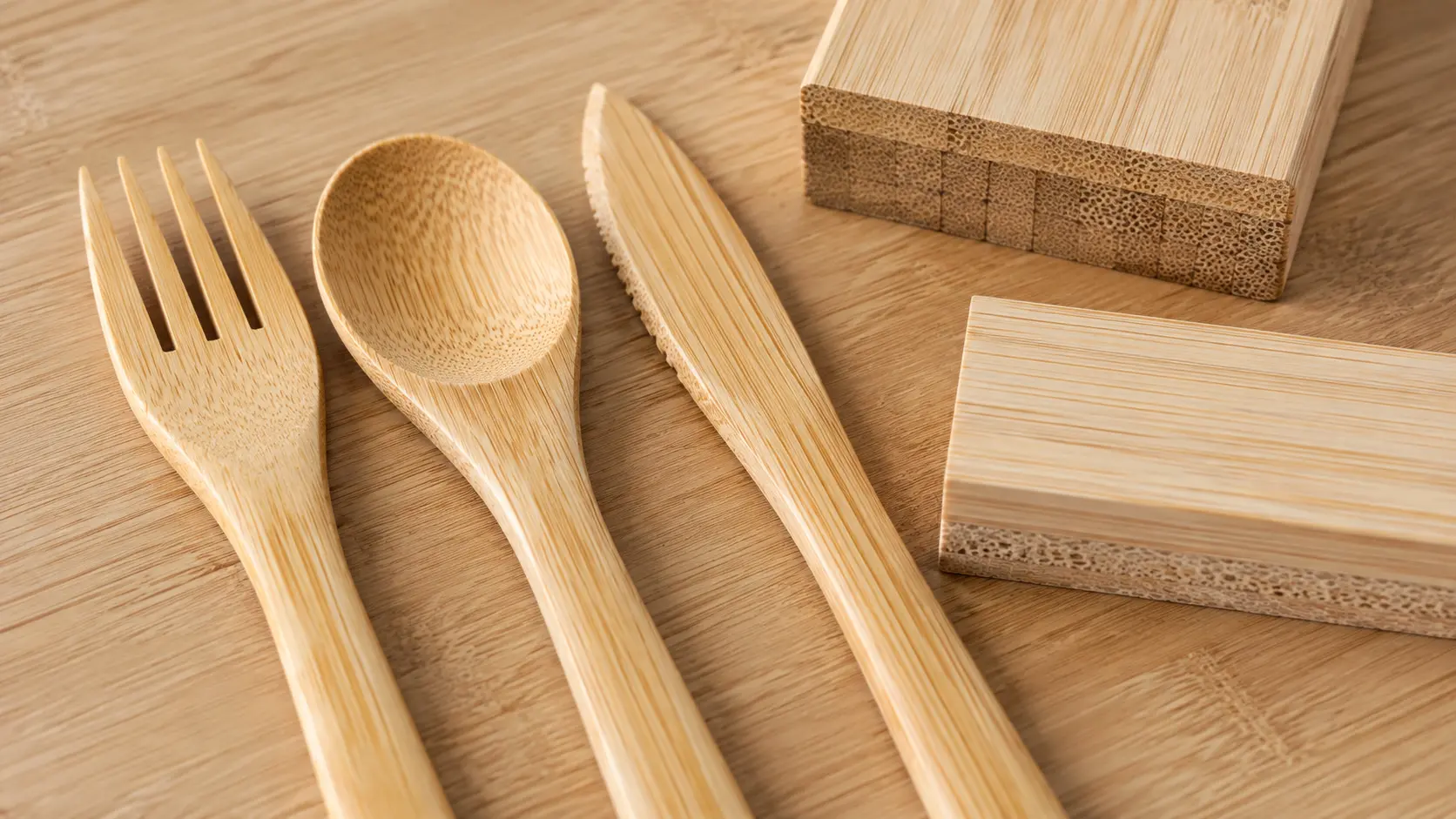
Bamboo is a biological material. On solid pieces, grain density, fiber lines, and color normally vary within an agreed appearance range. Identical swirls repeated across every piece may indicate a printed surface or molded texture. Variation is not automatically a defect; it needs to be separated from unacceptable issues such as cracks, splinters, rough edges, staining, or inconsistent shaping.
Inspect the edge and cross-section
The edge often reveals more than the face. A one-piece utensil should show continuous bamboo structure through the profile. A laminated component should show intentional layers. A molded item will generally have a more homogeneous cross-section and may show a parting line. For metal-and-bamboo designs, inspect the interface for gaps, exposed adhesive, misalignment, movement, and moisture traps.
Ask what every coating, colorant, and adhesive does
“Made of bamboo” does not describe the entire food-contact system. Surface coatings, inks, bonding materials, and packaging components may also matter. The U.S. Food and Drug Administration explains how businesses can determine the regulatory status of food-contact material components. Requirements and testing should always be confirmed for the intended market and use conditions.

The Everyday Experience of Reusable Bamboo Flatware
Reusable bamboo flatware is often selected because it is lightweight, quiet against bowls and plates, and visually suited to natural-material product ranges. Those qualities can make it appealing for packed lunches, office drawers, picnics, travel kits, hospitality welcome sets, and gift programs. They are experiential advantages rather than proof that the product is automatically better for every task.
Bamboo utensils feel different from metal. The handle and working end usually feel warmer to the touch, and contact with ceramic tableware is less metallic. A thicker profile may be comfortable in the hand but less precise for cutting. Fork tine geometry affects food pickup, spoon depth affects liquids, and the knife edge determines whether it is best described as a spreader or as suitable for soft foods. These decisions belong in the sample review, not just in a catalog rendering.
Care instructions should reflect the exact finish and construction. As a conservative default, many one-piece bamboo products are better suited to prompt hand washing, thorough drying, and dry storage than to soaking or repeated high-temperature dishwasher cycles. A supplier should not promise dishwasher compatibility unless the specific item has been evaluated for that use. End users should retire pieces that develop deep cracks, splinters, persistent odors, or surface damage.
Bamboo as One of Several Alternatives to Metal Flatware
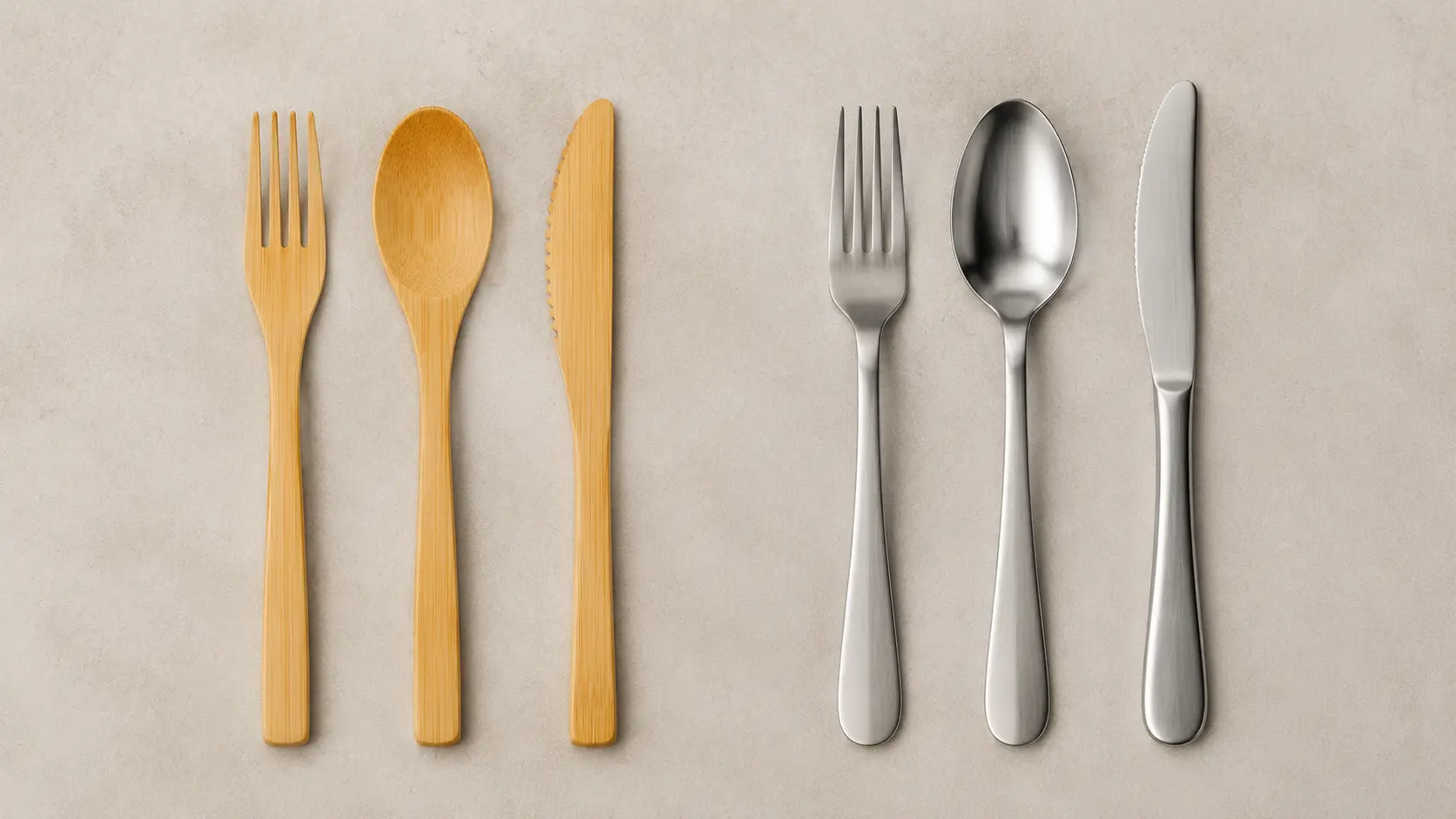
Searches for alternatives to metal flatware do not all represent the same need. One customer may want a light travel kit; another may want a non-metal utensil for ceramic bowls; a third may be building a natural gift assortment. Bamboo can answer some of those needs, but the correct comparison is application-specific.
| Construction | Typical user experience | Points to verify | Commonly considered channels |
|---|---|---|---|
| One-piece bamboo | Light, warm-touch, quiet, visible grain | Edge smoothness, tine shape, finish, care limits | Travel, lunch, gifting, lifestyle retail |
| Stainless steel with bamboo handle | Familiar metal working end with natural handle detail | Steel specification, joint strength, gaps, care method | Home dining, gifts, coordinated kitchen ranges |
| Conventional all-metal flatware | Thin working profiles and familiar weight | Steel grade, polish, corrosion resistance, weight | Broad home and food-service use |
| Bamboo-filled plastic composite | Molded, uniform appearance | Exact polymer/additive composition and destination-market legality | Requires heightened compliance review; do not treat as solid bamboo |
For repeated heavy cutting, very hot food service, or institutional washing systems, another construction may be more suitable. For portable meals and a lighter tactile experience, a carefully finished bamboo set may be a strong fit. The best bamboo flatware is therefore the design that passes the requirements of its intended use—not simply the set with the most environmental words on its label.
“Green,” “Natural,” and “Organic”: Three Words That Need Evidence
Material language influences conversion, but vague claims create risk for brands and importers. “Bamboo” identifies a material. “Green,” “natural,” and “organic” can imply broader benefits or standards that are not established merely because bamboo is visible.
Green bamboo flatware
The phrase green bamboo flatware may express a shopper’s preference for lower-impact products, but “green” alone does not identify a measurable benefit. The U.S. Federal Trade Commission’s summary of the Green Guides advises marketers against broad, unqualified environmental-benefit claims and recommends clear, specific qualifications supported by evidence.
Better copy explains observable product facts: for example, which parts are bamboo, whether the set is intended for repeated use, whether packaging has been reduced, or what verified sourcing documentation applies to a particular order. Each claim still needs substantiation. A bamboo utensil is not automatically compostable, carbon neutral, zero waste, or harmless in every disposal system.
Natural bamboo flatware
Natural bamboo flatware can accurately describe a visible bamboo grain and a material-led aesthetic, provided it does not hide relevant coatings, adhesives, pigments, or non-bamboo components. “Natural color” is often more precise than an unrestricted “all natural” claim. Product pages should identify a stainless-steel head, cotton pouch, synthetic thread, coating, or polymer component when present.
Organic flatware
Organic flatware is a particularly ambiguous search phrase. “Organic” is widely associated with regulated agricultural and food labels, but a utensil is not automatically an organic-certified product because bamboo is a plant. The USDA provides specific rules for organic labeling in the United States. Searching for “organic flatware” does not mean the resulting product is certified, and this article does not claim that our company or these products hold organic certification. Unless a relevant, verifiable standard and its exact scope apply, buyers should avoid turning “organic” into a blanket product claim. Describing material composition, finish, origin documentation, and reuse design is clearer.
Bamboo flatwear
Bamboo flatwear is a common search spelling, but “flatware” is the standard product term. It can be included naturally in search-focused supporting content or FAQs, while customer-facing titles, packaging, and technical documents should use the correct spelling. That approach answers the query without making the brand look careless.
How to Choose the Best Bamboo Flatware for a Specific Range
A good assortment begins with a use case, not a keyword list. Define where the set will be used, how frequently, what foods it should handle, how it will be cleaned, and what the buyer expects to see when opening the package.
For travel and packed lunches
Prioritize compact storage, low weight, smooth edges, and a pouch or case that allows the pieces to be kept together. Check whether the set is comfortable at full size; shortening a utensil too aggressively can make it inconvenient to use. If a straw, cleaning brush, napkin, or chopsticks are included, specify the complete bill of materials instead of referring only to the fork and spoon.
For home dining and gifting
Visual consistency, handle proportions, surface feel, and coordinated packaging matter more. A real bamboo flatware set may intentionally retain subtle grain variation, but the acceptable color range should be documented. For a metal-and-bamboo collection, check balance in the hand and the joint between materials. Gift packaging should protect the tips and prevent loose pieces from marking one another in transit.
For food service, events, or hospitality
Clarify whether the intention is reusable service, limited repeated use, or a different service model. Do not infer cleaning compatibility from appearance. Test the actual utensils with the menu, service temperature, washing process, and storage environment. The European Commission’s general food-contact materials guidance emphasizes that tableware must not endanger health, unacceptably change food composition, or affect taste and smell when placed on the EU market.
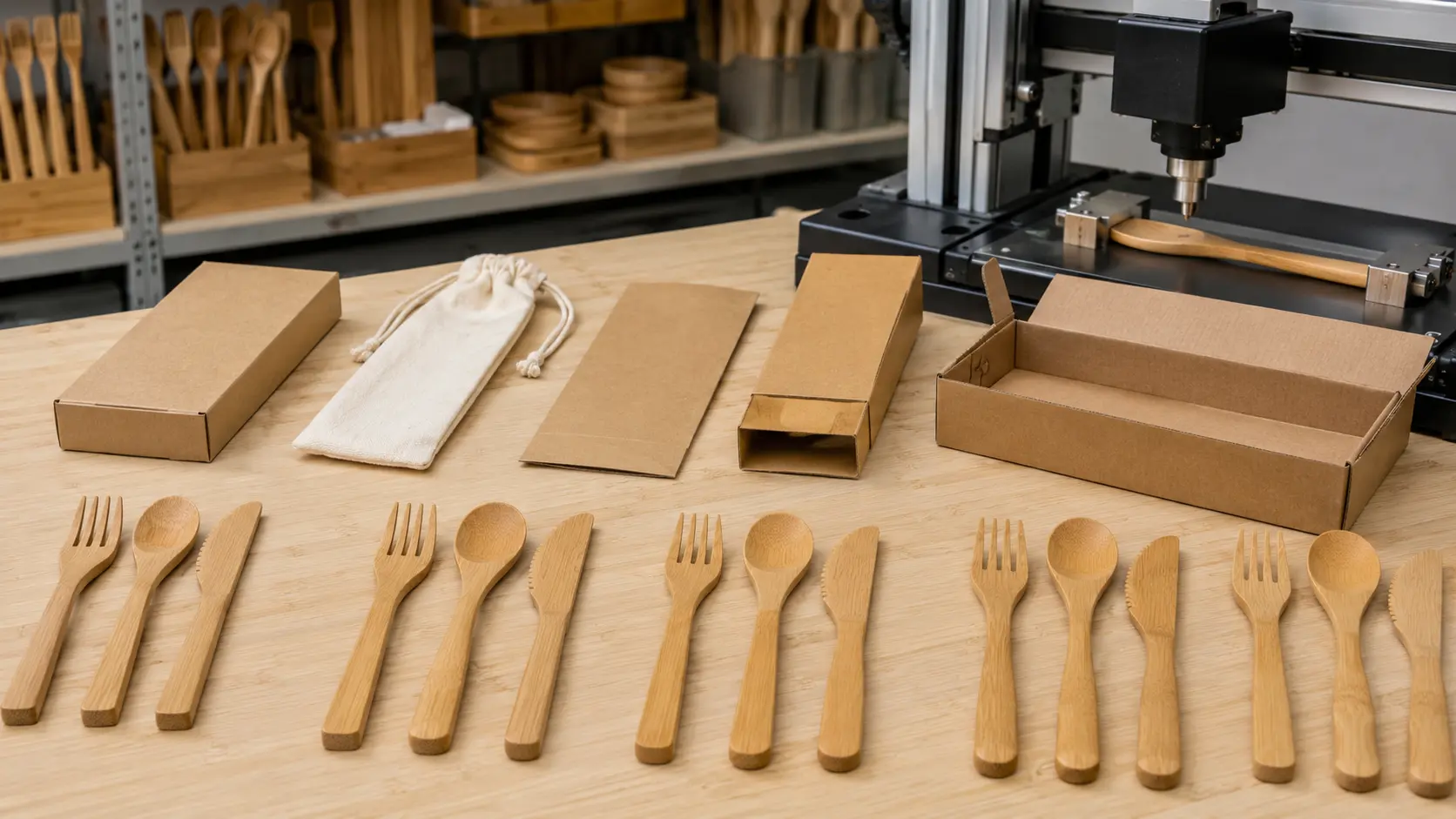
From Sample to Shelf: Building a Product That Can Be Reordered
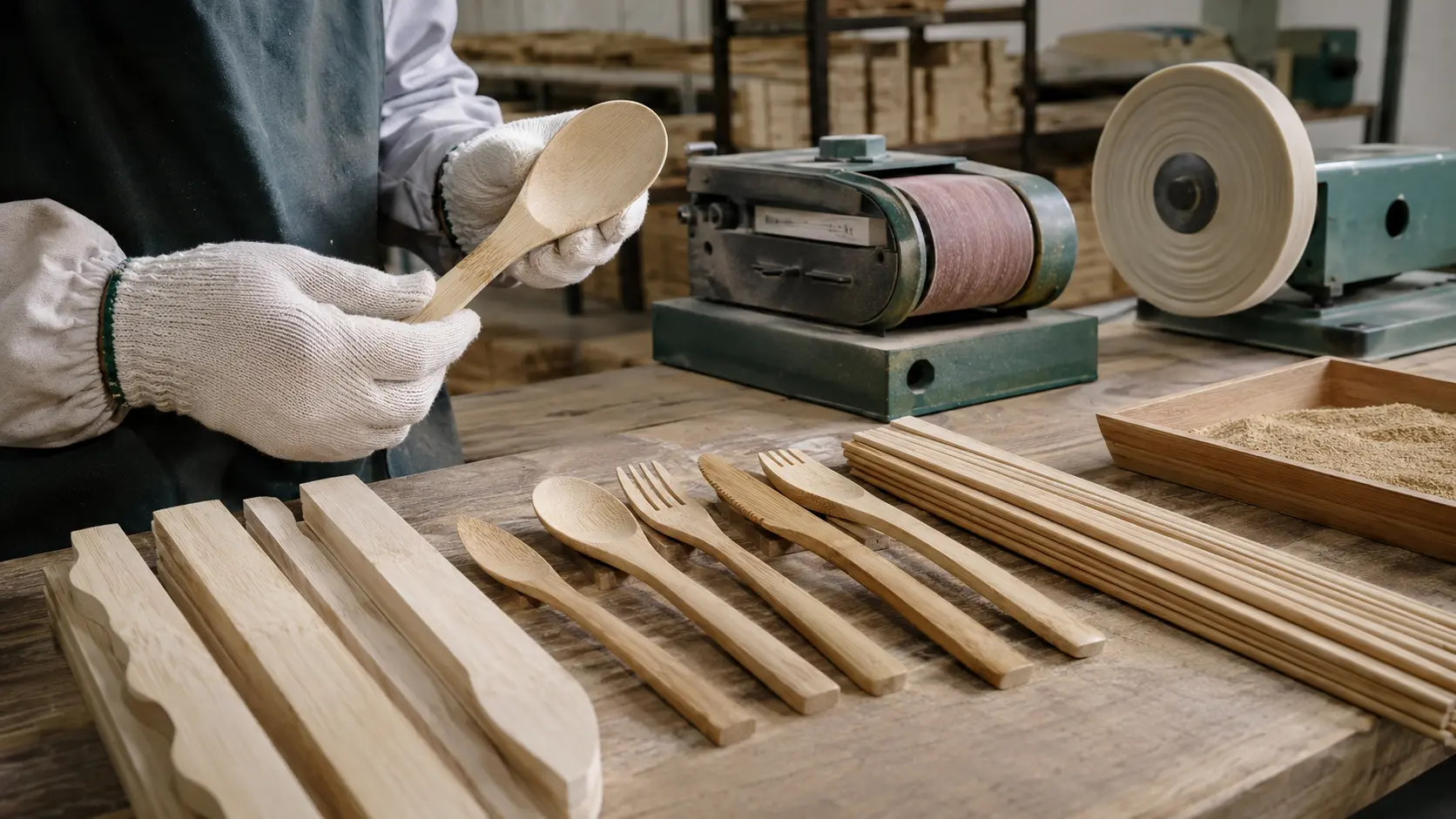
A successful flatware program is not just an attractive sample. It is a specification that a factory, inspection team, importer, and retailer can interpret in the same way. Before confirming production, turn subjective words such as “smooth,” “natural,” and “premium” into inspectable criteria.
1. Freeze the product architecture
List every component and material: fork, spoon, knife or spreader, chopsticks, straw, brush, pouch, band, box, instruction card, and protective insert. Record dimensions, weight targets, edge profiles, bamboo orientation, logo location, and finish. A rendering is useful, but a signed sample and controlled specification reduce ambiguity.
2. Test the eating experience
Use the set with representative foods. Check fork penetration and pickup, spoon capacity and rim comfort, knife or spreader function, chopstick straightness, handle comfort, and aftertaste or odor. Assess both dry and wet handling. If the product claim implies repeat use, establish a realistic care cycle and inspect how the approved sample changes through that cycle.
3. Define surface and workmanship limits
Agree on what counts as a sharp edge, splinter, crack, rough patch, color deviation, tool mark, stain, exposed adhesive, loose joint, or warped piece. Natural variation needs a range, preferably shown with approved and rejected samples. For laser branding, check legibility, placement, burn depth, and any effect on the surrounding surface.
4. Match testing to market and intended use
Food-contact requirements depend on materials, coatings, food type, use conditions, and destination. The FDA publishes defined food types and conditions of use for food-contact evaluations. Ask a qualified laboratory or compliance specialist to identify the correct test program for the finished item. A report for a different material, coating, supplier, or product construction should not be treated as automatic coverage.
5. Engineer packaging for both protection and communication
Packaging should keep the working ends clean and prevent movement, abrasion, or moisture exposure during distribution. It should also carry accurate material, care, traceability, and responsible-disposal information. Avoid filling the panel with unqualified icons. One precise, documented statement is more useful than several vague green symbols.
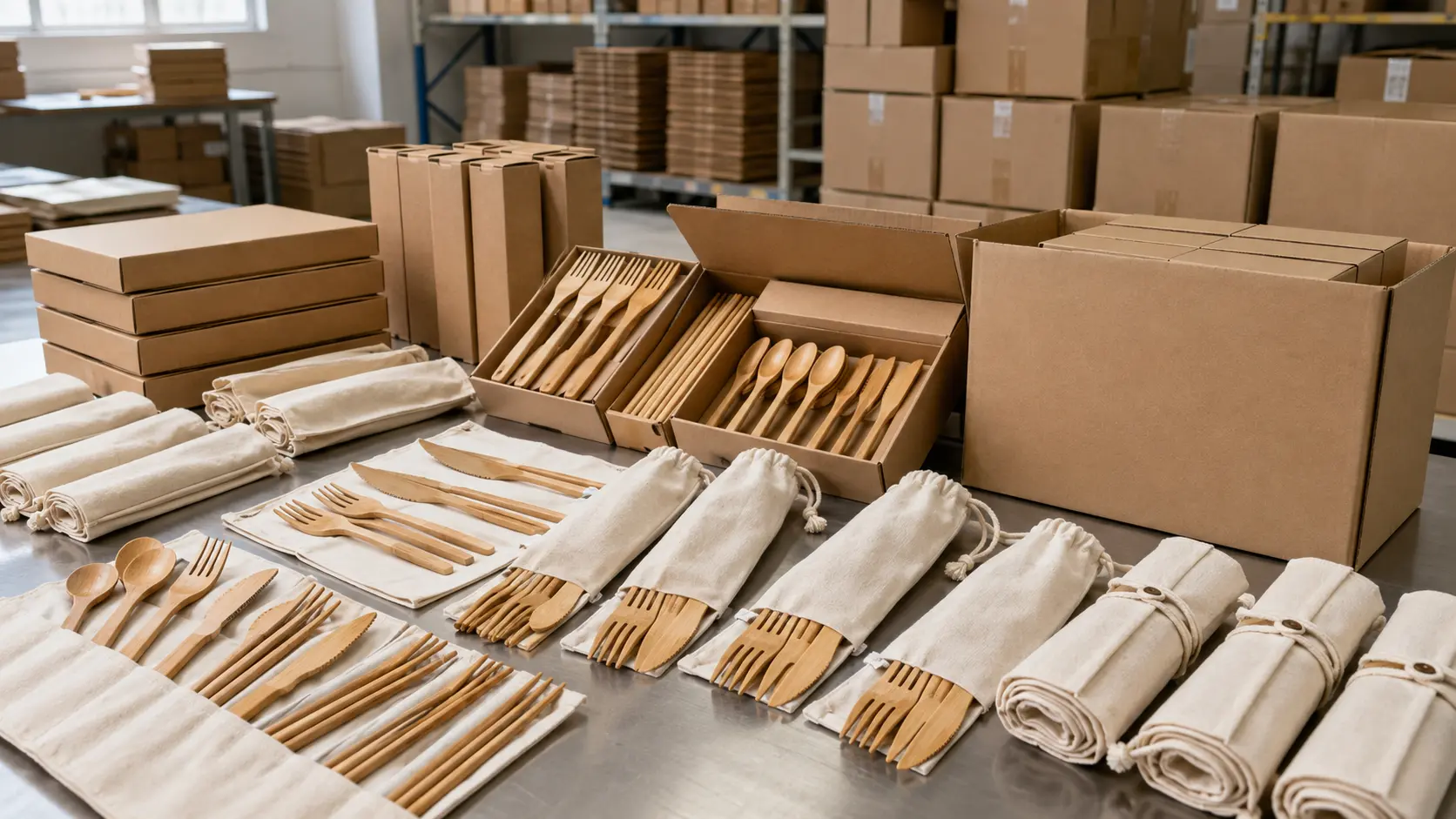
Planning Bamboo Flatware Bulk and Wholesale Orders
The phrases bamboo flatware bulk and bamboo flatware wholesale can describe very different purchasing models. Bulk may mean loose utensils packed by type for a hospitality operation, complete sets in simple master-carton packing, or retail-ready units ordered in commercial quantities. Wholesale may involve a standard product, a private-label package, or a fully customized construction. A useful inquiry states which model is needed.
For comparable quotations, provide:
- target market and intended food-contact use;
- one-piece bamboo or stainless-and-bamboo construction;
- utensils included in each set and target dimensions;
- surface color, finish, and care expectations;
- logo method and exact branding position;
- pouch, retail box, sleeve, band, or loose bulk packing;
- barcode, labeling, warning, and language requirements;
- inspection plan and required destination-market documentation;
- forecast volume, order mix, and target delivery window for feasibility review.
Do not compare only the unit price. Confirm what is included in the packing, inspection, labeling, documentation, and freight basis. A slightly different utensil thickness, pouch fabric, carton count, or finish can make two quotations appear comparable when they are not.
For private-label development, Fujian Xianxu Bamboo & Wood Co., Ltd. can discuss product construction, branding, packaging, and production feasibility around a defined brief. Buyers can review our company background, learn about our Vietnam factory, and use the checklist below to prepare a clearer request.
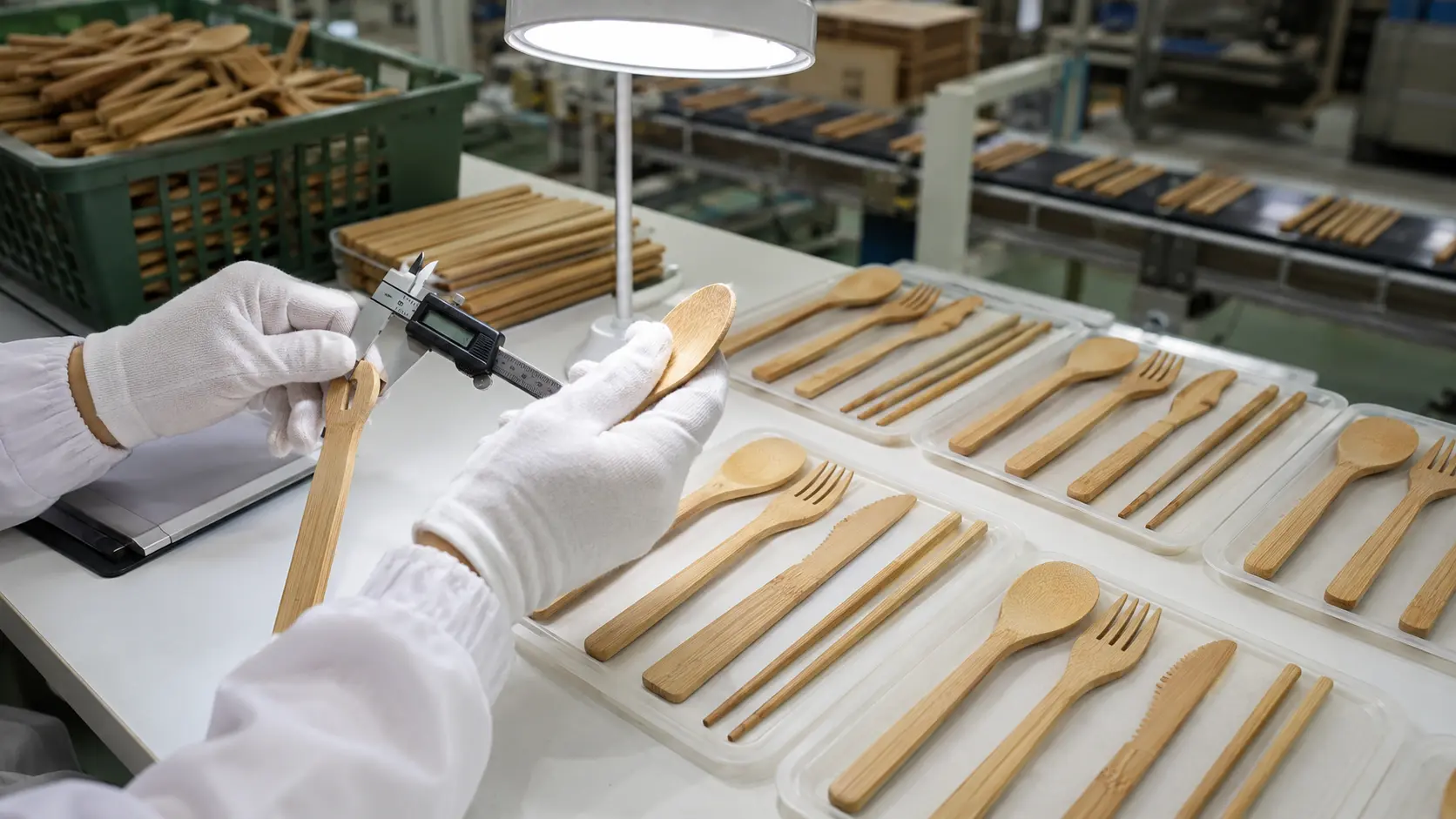
A Practical Bamboo Flatware Buyer Checklist
- Identity: Is the product one-piece bamboo, laminated bamboo, metal with bamboo handles, or a composite?
- Transparency: Are coatings, adhesives, inks, textiles, metals, and polymers declared?
- Use: Which foods, temperatures, cleaning methods, and reuse cycles are intended?
- Function: Have fork, spoon, knife, chopstick, and handle geometry been tested with representative meals?
- Workmanship: Are limits for splinters, cracks, roughness, color, odor, warping, and loose joints defined?
- Claims: Is every “green,” “natural,” “organic,” reusable, or disposal statement specific and supported?
- Compliance: Does the finished construction have a market-appropriate review rather than an unrelated generic report?
- Branding: Are artwork, logo position, color, and acceptable appearance approved?
- Packaging: Are contents, materials, care information, languages, carton quantities, and protection specified?
- Control: Is there an approved sample, written specification, inspection method, and traceability plan?
Frequently Asked Questions
Is bamboo flatware the same as bamboo-filled plastic cutlery?
No. A utensil shaped from bamboo is materially different from a molded plastic article containing bamboo powder or fiber. Ask for a full composition statement, inspect the edge and cross-section, and review destination-market requirements. This distinction is particularly important for EU food-contact products.
Can bamboo flatware replace metal flatware?
It can be a practical alternative for selected uses, especially portable meals, light dining, and natural-material collections. It does not reproduce every property of metal. Cutting performance, thickness, washing compatibility, weight, and long-term wear should be evaluated against the actual application.
What makes reusable bamboo flatware reusable?
“Reusable” should reflect the design, finish, care method, and expected use—not simply the material name. Buyers should validate repeated-use performance for the specific product and give consumers clear washing, drying, storage, and retirement instructions.
Is all natural bamboo flatware organic?
No. “Natural” may describe appearance or material, while “organic” can imply a regulated production or certification scheme. Neither term should be assumed from the other. State the actual bamboo content and any non-bamboo components, and use organic language only when its basis and scope are verifiable and legally appropriate.
How should I search for bamboo flatwear?
Use “bamboo flatware” in product titles and supplier inquiries; bamboo flatwear is a frequent spelling variation. Adding the construction, intended use, set contents, and packaging format will produce more relevant results than the broad term alone.
Can bamboo flatware wholesale sets be customized?
Possible options may include utensil mix, dimensions, surface appearance, laser branding, pouch design, retail packaging, labels, and carton configuration. Feasibility depends on the design, materials, order plan, and compliance needs, so confirm each option against an approved sample and specification.
Build the Claim Around the Product—not the Product Around the Claim
A credible bamboo flatware range begins with honest material identity and a clear use case. Decide whether the customer needs one-piece bamboo, a metal-and-bamboo combination, or another material entirely. Then validate comfort, function, care, workmanship, packaging, and market requirements before writing the headline.
If you are developing a reusable set, retail collection, gift program, or bamboo flatware wholesale order, send us the target market, set contents, dimensions, packaging concept, branding artwork, and intended use. Contact Fujian Xianxu to discuss a sample and specification for your project.