
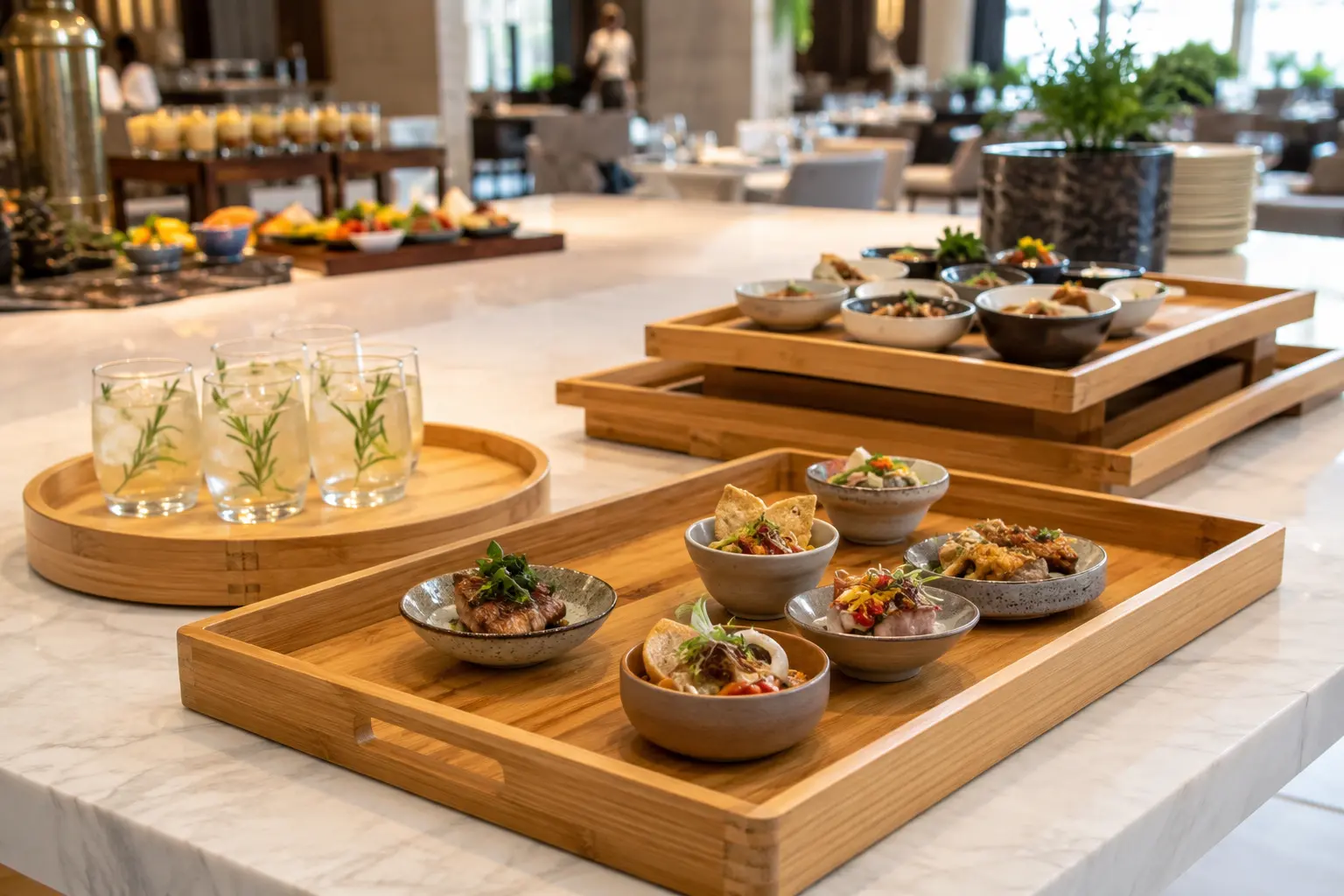
Bamboo food serving trays can support many parts of a hospitality or homeware range, from breakfast and room service to cafeteria lines, catered events, snack presentation and coordinated dinner sets. Yet a tray that looks attractive in a sample room is not automatically ready for repeated commercial use. Buyers need to compare construction, usable area, edge height, carrying comfort, finish, stacking behavior, packaging and the intended level of food contact before confirming an order.
This guide is written for importers, hospitality suppliers, wholesalers, retailers and private-label brands sourcing bamboo food serving trays for Europe and North America. It explains how to translate a sales concept into a practical specification, how different applications change the design, and what to verify before a bulk purchase.
Why Bamboo Food Serving Trays Appeal to Hospitality and Homeware Buyers
Bamboo gives a serving program a warm, natural appearance that works with ceramic, glass, stainless steel and neutral textiles. Consistent grain can also help a retailer build a coordinated collection across trays, boards, organizers and other bamboo kitchenware. For commercial buyers, however, appearance is only one part of the decision.
A useful tray must be stable when carried, sufficiently rigid for its intended load, comfortable at the handles and easy to wipe after service. A raised rim helps retain dishes, while a broad flat base supports plates and bowls. Rounded corners can improve handling and simplify cleaning. If trays will be nested or stacked, the profile must also prevent excessive rubbing and make each unit easy to lift from the pile.
Not every product described online as a “bamboo tray” has the same construction. Some are laminated solid bamboo, some use bamboo veneer over a core, and others are molded composites containing bamboo fiber and binders. Buyers should therefore request a material breakdown rather than relying only on the product name.
Match the Tray Design to the Service Use
Bamboo Catering Trays and Cafeteria Trays
Bamboo catering trays are frequently carried between preparation areas, buffet stations and guest tables. They usually benefit from secure handholds, a protective rim and enough clearance around the dishes for staff to grip the tray safely. For event rental or contract catering, repeatability matters: trays should stack consistently, fit the same transport crates and remain easy to count and inspect.
Bamboo cafeteria trays may experience more frequent sliding, stacking and cleaning than decorative household trays. Specify the expected load, service cycle, countertop material and cleaning method. If an anti-slip surface, removable mat or protective foot is required, confirm how that component is attached and whether it can be replaced. A tray intended for light home use should not be assumed to meet an institutional duty cycle.
Bamboo Dinner Trays and Lunch Trays
Bamboo dinner trays need a usable area that fits the actual plate, side bowl, cutlery and drink—not merely an attractive outer dimension. For bamboo lunch trays, a lighter unit may be preferable, but reducing thickness without load testing can cause flex. Ask the supplier to prepare a layout drawing using your tableware dimensions and to test a representative load at the handle and base.
Compartment designs can separate a cup, utensils or small dishes, although fixed divisions reduce flexibility. A plain tray is easier to use across menus; a compartment tray can create stronger differentiation for a defined restaurant or retail program.
Appetizer, Cheese, Snack and Fruit Presentation
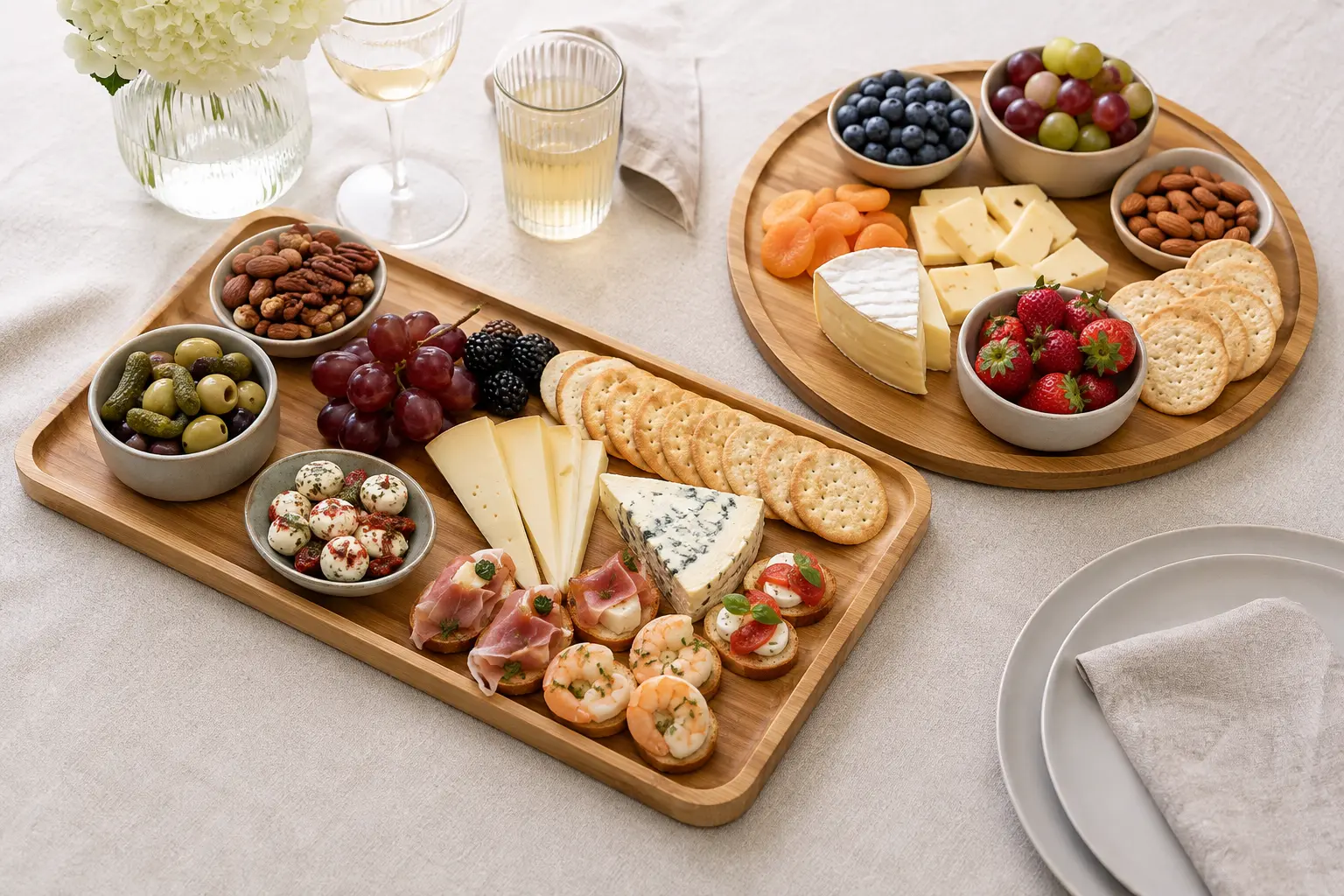
A bamboo appetizer tray may be designed as a flat platter, a shallow-rim tray or a carrier for removable ceramic dishes. The last option helps keep oily, acidic or strongly colored foods away from the bamboo surface. A bamboo cheese serving tray should be specified differently depending on whether cheese sits directly on the surface or on a separate board, liner or plate.
The same principle applies to a bamboo snack tray, bamboo fruit tray or bamboo platter tray. Decide whether the bamboo is a presentation surface or a transport base. This distinction affects the finish, cleaning instructions, testing plan and label copy.
Sushi, Soba and Coordinated Serving Dishes
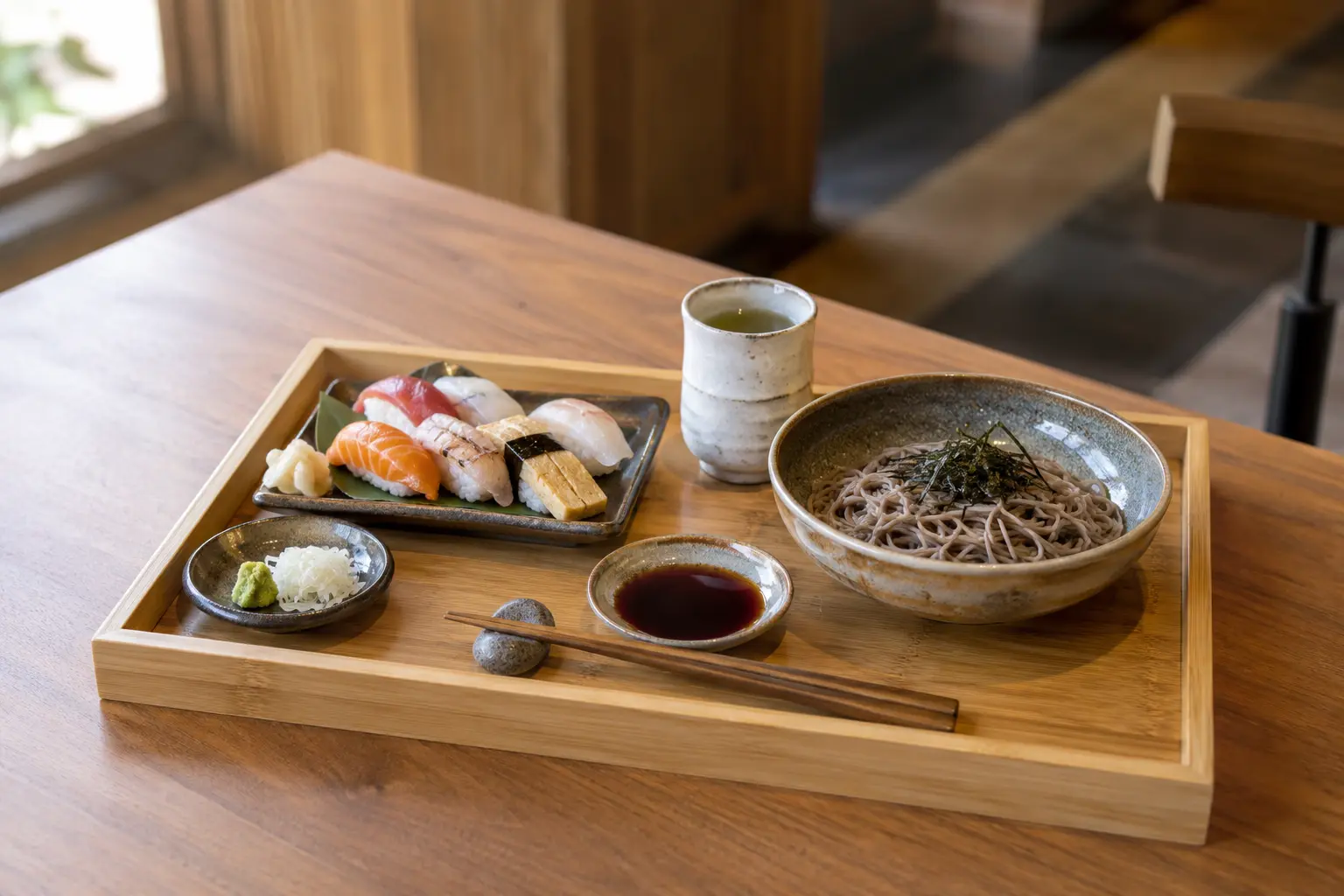
A bamboo sushi tray can range from a minimalist platter to a raised carrier for ceramic plates. A bamboo soba tray may refer to a restaurant service tray or to a specialized draining presentation, so buyers should define the structure with drawings and reference photos. Search terms alone are not a production specification.
For sets sold with bamboo serving dishes, document the material and dimensions of every component. Ceramic bowls need secure spacing and protective packaging; removable dividers or dipping bowls require tolerance checks. Buyers developing tea-service collections can compare these serving formats with our separate bamboo tea tray sourcing guide.
Construction Choices That Affect Performance
Laminated bamboo panels can provide a clean, stable platform when strip selection, adhesive application, pressing and conditioning are controlled. Important details include grain orientation, panel thickness, base reinforcement and the joint between the bottom and rim. A routed one-piece appearance may simplify the visual design, while separately assembled rails can enable deeper walls or integrated handles.
Ask whether the base is solid laminated bamboo, plywood with bamboo veneer, or another composite. Veneered structures can be lightweight and efficient, but exposed edges and moisture-prone joints require careful finishing. Molded bamboo-fiber products are a separate material category because resin content, heat response and food-contact documentation may differ from solid bamboo.
Handle openings should have smooth internal edges and enough space for the intended user, including gloved catering staff. For a tray without handles, the side profile needs a comfortable lifting point. Small feet can improve pickup and protect the base, but they may reduce stack density or detach under hard use. Every feature has an operational tradeoff.
Size and Specification Guide for Bamboo Serving Trays
There is no universal size standard covering every market. The ranges below are planning references, not fixed rules. Final dimensions should be based on tableware, shelf size, carton efficiency and carrying ergonomics.
| Planning category | Indicative outer length | Typical program | Key point to verify |
|---|---|---|---|
| Small | 25–32 cm | Tea, coffee, snacks, one bowl | Usable area after subtracting the rim |
| Medium | 33–42 cm | Lunch, breakfast, appetizer sets | Plate and cup clearance during carrying |
| Large | 43–55 cm | Dinner, catering, room service | Loaded deflection and handle comfort |
| Extra large or custom | Above 55 cm | Buffet, display, shared service | Weight, reinforcement and shipping carton |
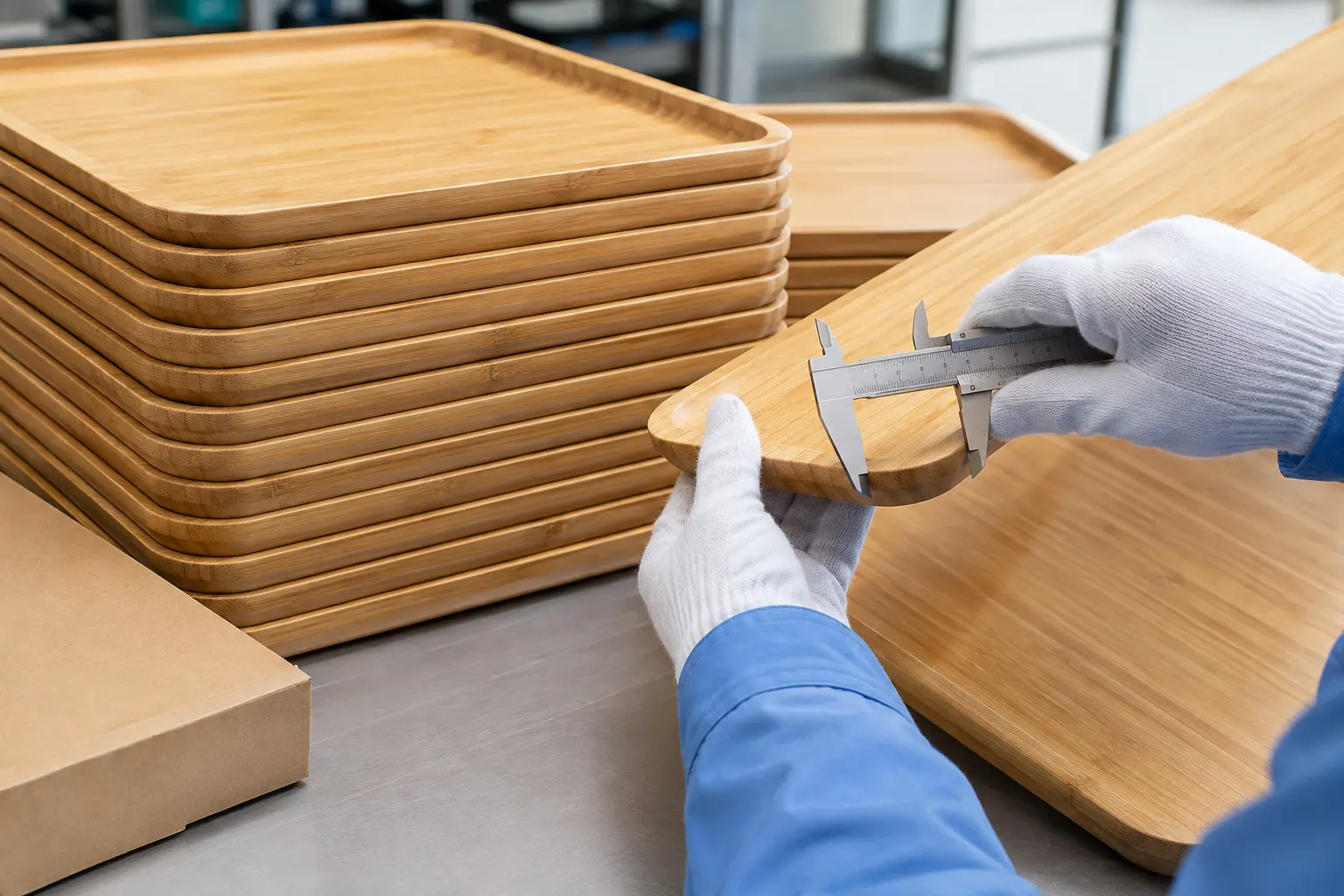
A complete specification should state outer length, width and height; internal usable area; rim height; panel thickness; unit weight; handle dimensions; edge radius; finish system; target color range; stack pitch; flatness tolerance; intended load; cleaning instructions; packaging and any direct-food-contact areas. Where possible, define a test method instead of using words such as “strong” or “heavy duty.”
Food-Contact, Finish and Compliance Questions
First determine whether food will touch the bamboo directly, occasionally, or not at all. A tray carrying sealed packages or ceramic plates presents a different exposure from a platter holding cheese, fruit or sushi on its finished surface. Water, oil, salt, acid, alcohol, heat and contact time can all influence the appropriate finish and test plan.
Ask for the composition and technical information relevant to bamboo, adhesive, coating, ink, non-slip parts and any included dishes. Testing and documentation should be selected for the destination market, intended use and exact production materials. Requirements can change, so an importer should confirm the current obligations with its compliance adviser or qualified laboratory rather than accepting a generic “food safe” statement.
Responsible sourcing documentation is another question. FSC Chain of Custody can help buyers understand how certified material and claims are controlled through the supply chain. It does not by itself demonstrate that a coating, adhesive or finished tray is suitable for food contact. If an FSC claim is required, confirm the certificate scope, product eligibility, claim wording and transaction documents before printing packaging.
Cleaning and Care Instructions Should Match the Product
For many finished bamboo trays, conservative care instructions include wiping or hand washing with mild detergent, avoiding prolonged soaking, rinsing promptly and drying completely in a ventilated position. Abrasive pads and aggressive chemicals can scratch the finish. Dishwashers, sterilization cycles and very hot cookware should not be permitted unless the specific construction has been designed and validated for those conditions.
Commercial programs should test real cleaning routines before approval. Observe surface roughness, color change, odor, joint opening, warping and water marks across repeated cycles. Care labels must reflect the tested sample and final finish—not a standard paragraph copied from another bamboo item.
Stacking, Handling and Back-of-House Efficiency
Efficient stacking can reduce storage space and transport volume, but tightly nested trays may bind together or rub the finish. A controlled taper, small separation detail or defined stack pitch can make trays easier to lift. Confirm the maximum stable stack height and whether handles remain accessible.
For restaurant and cafeteria programs, simulate a loaded carry, a wet-hand grip, movement through doorways and placement on service carts. Check base friction on common worktops. If trays are returned on a conveyor or rack, provide the supplier with the equipment dimensions before tooling or sampling.
Packaging Bamboo Food Serving Trays for Bulk Shipping
Packaging should protect corners and finished surfaces without creating unnecessary volume. Common elements include soft interleaving sheets, fitted sleeves, corner protection, inner cartons and a tested master carton. Handles and projecting feet need extra attention because they can concentrate impact loads.
Agree on retail packaging, barcode location, warning and care copy, carton quantity, gross weight, carton dimensions and pallet pattern before mass production. For humid or long shipping routes, discuss moisture management with the supplier and packaging specialist. Desiccants and barrier materials should be chosen for the route, product and local packaging rules rather than added without a plan.
Quality-Control Checklist for Bamboo Serving Tray Orders
A practical inspection plan should connect visible workmanship with measurable requirements:
- Material and construction: agreed bamboo structure, strip quality, joints, base assembly and permitted repair limits.
- Dimensions: outer size, usable area, rim height, thickness, handle opening, flatness and stack pitch.
- Appearance: approved color range, grain variation, sanding, coating consistency, logo position and clean edges.
- Function: representative load test, handle test, stack-and-separate test, stability and compatibility with specified dishes.
- Care durability: agreed wipe, wash or exposure cycles using the final production finish.
- Packaging: unit protection, assortment, labels, carton quantity and shipping test where required.
Approve a signed reference sample and specification sheet before production. During manufacture, use first-article, in-process and pre-shipment checks rather than relying only on final inspection. Sampling levels and acceptance criteria should be agreed according to order risk; no single AQL value is appropriate for every defect and every buyer.
OEM and ODM Options for Importers and Brands
OEM/ODM development can include custom dimensions, round or rectangular profiles, integrated handles, removable compartments, coordinated bowls, logo application, color matching and retail packaging. Laser marking can create a restrained result, while printing may support more color; either method must be evaluated for the chosen surface and its location relative to food.
A useful development process moves from reference concept to dimensioned drawing, material and finish selection, sample, functional review, packaging test and approved production standard. Our company overview explains the broader bamboo and wood product capability, while the Vietnam factory page provides context for buyers evaluating supply options. For a category-wide sourcing comparison, see the forthcoming bamboo trays wholesale guide; buyers developing drawer storage can also review bamboo cutlery tray and drawer organizer options.
What to Include in a Bamboo Tray RFQ
Send more than a photo and target price. A clear RFQ should include:
- destination market, sales channel and expected annual quantity;
- outer dimensions, usable area, shape, rim and handle requirements;
- tableware layout, expected load and direct or indirect food-contact use;
- material construction, finish, color and branding method;
- required testing, documents and responsible-sourcing claim, if any;
- unit packaging, master carton, barcode and pallet requirements;
- target timeline for samples, approval and shipment.
This information allows a manufacturer to evaluate feasibility and quote comparable options. It also reduces costly changes after tooling, packaging artwork or production has started.
Frequently Asked Questions
Can a bamboo food serving tray hold food directly?
It depends on the exact bamboo construction, adhesive, coating, food type, temperature, contact time and destination-market requirements. Define the contact condition before sampling and request documentation or testing appropriate to the final materials and intended use.
What is the difference between bamboo catering trays and household serving trays?
Commercial trays often need more frequent carrying, stacking and cleaning, plus compatibility with carts, crates or standard tableware. Household products may prioritize appearance and lighter occasional use. The duty cycle should be written into the specification.
Are bamboo dinner trays and bamboo lunch trays available in custom sizes?
Yes, dimensions can generally be developed around a buyer's plates, bowls and cup layout, subject to construction and production feasibility. Ask for a drawing showing both the outer size and internal usable area before approving the sample.
Can hot dishes be placed on bamboo kitchen trays?
Warm plates may be acceptable for a suitably designed tray, but hot cookware should not be assumed safe for the finish or joints. Specify the expected temperature and whether a heat-resistant insert is needed, then validate the final design.
How should bamboo food serving trays be cleaned?
Many bamboo trays are best wiped or hand washed briefly with mild detergent and dried promptly. Avoid soaking or dishwashing unless the supplier has validated those conditions for the exact product. Follow the care instructions approved for the final construction.
What should buyers check before ordering bamboo serving trays wholesale?
Confirm materials, dimensions, usable area, load, handles, finish, food-contact configuration, stacking, cleaning, logo, packaging, testing and inspection criteria. Review a representative sample with actual dishes and approve a signed specification before bulk production.
Develop a Bamboo Serving Tray Program for Your Market
The right bamboo tray is not simply a shape—it is a combination of menu use, carrying ergonomics, material construction, finish, care, packaging and compliance planning. A detailed brief helps suppliers recommend practical options and gives inspectors a clear standard for the finished order.
Fujian Xianxu Bamboo & Wood Co., Ltd. works with overseas buyers on custom bamboo and wooden homeware programs. Visit our bamboo and wooden products website, then contact our team with your tray dimensions, intended food-contact use, order quantity, destination market and packaging needs. We can review the concept, identify open specification questions and discuss sampling and OEM/ODM options.