
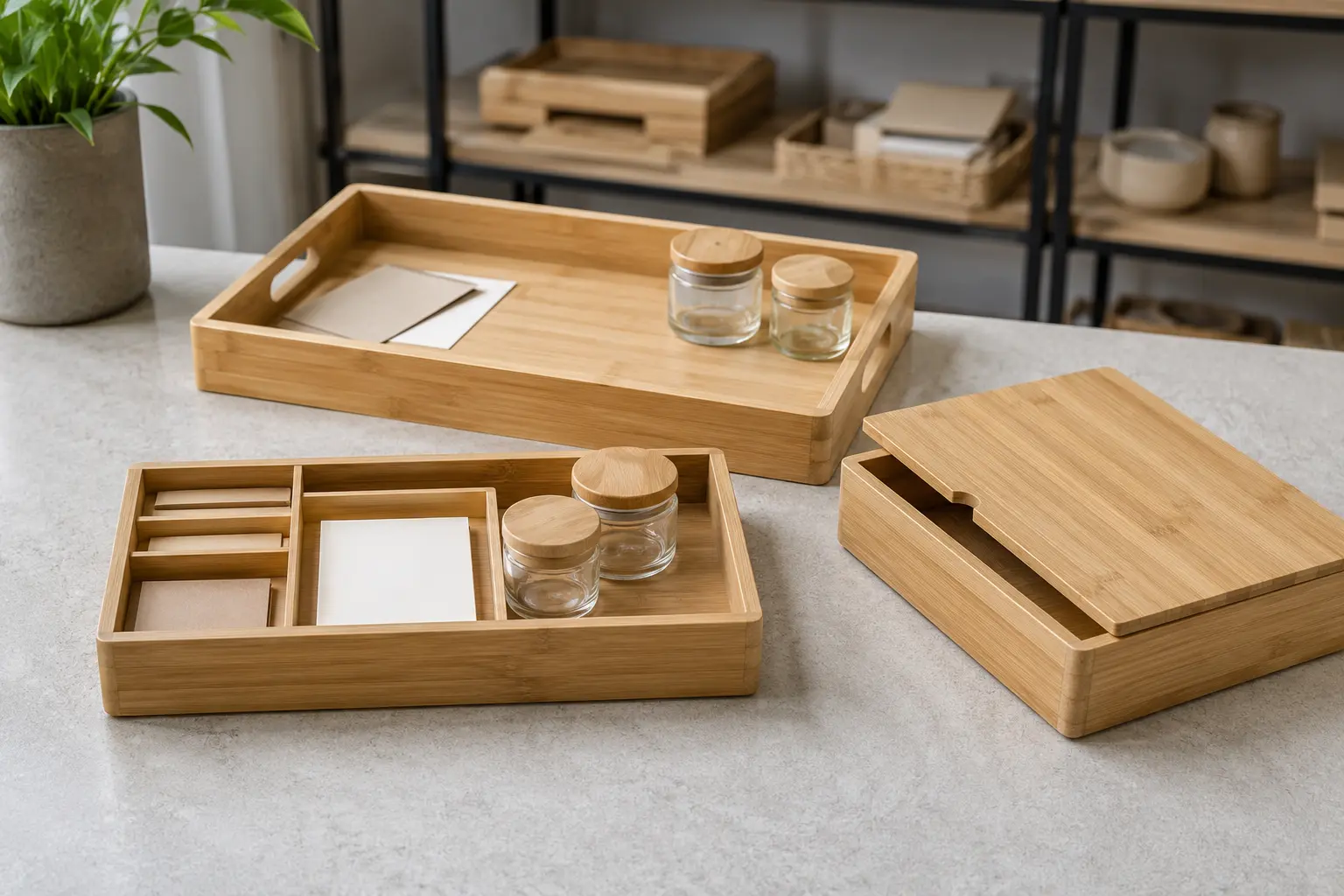
Sourcing bamboo rolling trays wholesale requires a more precise brief than sending a reference photo and asking for the lowest price. Product dimensions, rim height, compartments, lid construction, surface finish, branding and packaging all affect manufacturability and cost. The buyer must also confirm whether the product category, artwork and sales channel are permitted in every destination market.
This guide is written for importers, accessory brands, wholesalers, retailers and promotional-product buyers developing legally marketed tray collections. It focuses on product specification, OEM options, quality control and responsible merchandising. It does not provide instructions for consuming any substance. Buyers planning a broader homeware program can also review our general bamboo trays wholesale guide.
What Is Included in a Bamboo Rolling Tray Range?
A bamboo rolling tray is generally a shallow organizer with raised edges and a smooth working area. Wholesale collections may include compact portable models, larger desktop trays, routed compartments, removable accessories or fitted covers. These formats should not be treated as one standard SKU.
Simple flat trays
A simple design normally has a broad flat center and a continuous rim. It can be produced in several sizes and may be easier to clean and package than a heavily compartmented model. Important details include corner radius, usable internal area, base flatness and how easily a user can pick up small dry accessories from the surface.
Bamboo compartment trays
A bamboo compartment tray may use routed recesses, removable dividers or assembled sections. Each cavity needs a purpose and a measured object. A buyer should provide accessory dimensions rather than ask for a generic “large slot” or “small holder.” Deep narrow pockets can be difficult to sand, coat and clean, while thin walls between recesses may be vulnerable during machining.
Rolling trays with lids or covers
A bamboo rolling tray with lid can protect the working surface and create a giftable presentation. The lid may slide in grooves, lift off, use hinges or be held by magnets. A bamboo tray with cover should have a defined clearance, opening method and retention expectation. The cover must not bind after normal material movement, and any metal fitting should be identified in the bill of materials.
Sets and accessory programs
A rolling tray set may combine multiple tray sizes, removable dishes or storage pieces. Every component needs its own material, dimensions, finish and pack position. If accessories are sourced from different suppliers, appoint one party to verify final fit and packaging before mass production.
Choose the Size from Usable Area, Not the Product Name
Words such as mini, small, large and extra large are merchandising terms. A purchase specification should use millimeters and record both external dimensions and usable internal area. The rim, rounded corners and compartments can remove significant working space from a visually large tray.
| Planning format | Indicative external length | Common commercial position | Critical check |
|---|---|---|---|
| Compact | 18–25 cm | Portable or entry-level retail range | Usable area after the rim and corner radius |
| Medium | 26–34 cm | General tabletop program | Balance between compartments and open surface |
| Large | 35–45 cm | Premium, gift or multi-accessory set | Panel flatness, weight and carton efficiency |
| Custom | Defined by drawing | Brand-specific system or unusual accessory fit | Toolpath, tolerances and packaging validation |
These ranges are planning references, not universal standards. Buyers should test a full-size prototype with the intended legal accessories and retail pack. Our bamboo tray sizes and shapes guide explains how external dimensions, usable area, handles and stacking affect other tray categories.
Construction Options for Custom Bamboo Rolling Trays
Many custom bamboo rolling trays use laminated bamboo panels machined to create a base, rim and recesses. Other models combine a flat panel with separately assembled side rails or use a bamboo frame around an inset base. Ask the supplier to identify every material rather than relying on a product name.
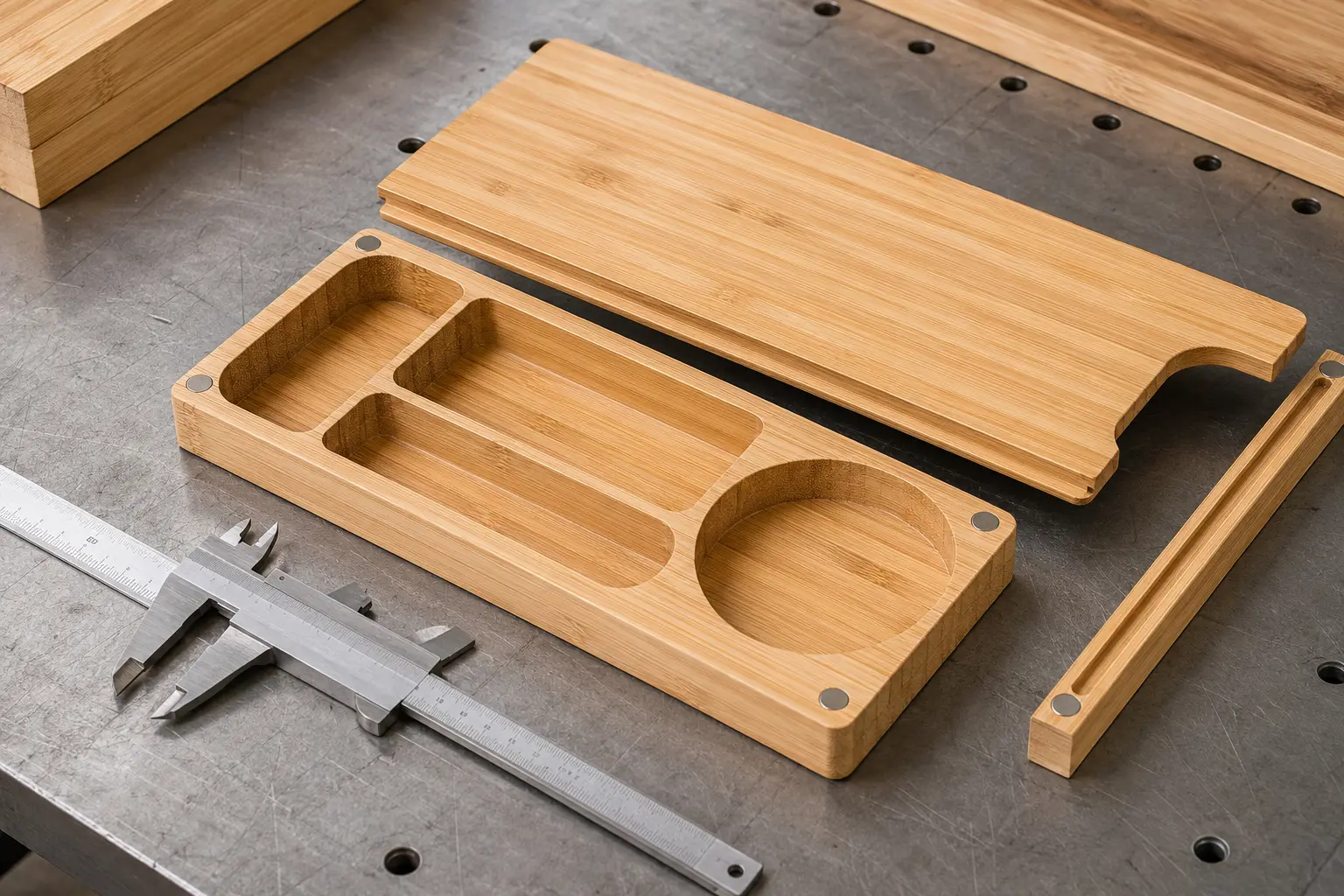
Routed one-piece appearance
Machining recesses into a thicker laminated panel can create a clean integrated appearance. Cost depends on panel thickness, routing time, corner detail, sanding access and material yield. The drawing should include recess depth, wall thickness and edge radius. Very sharp internal corners may not match the selected tool diameter.
Assembled rim and base
An assembled structure can reduce the amount of thick material removed and may support deeper side walls. Joint quality, adhesive control and base alignment become important. Buyers should approve the visible joint standard and inspect production for gaps, squeeze-out and rocking.
Lids, hinges and magnets
Sliding lids require straight grooves and enough clearance to move smoothly without excessive play. Hinged lids add hardware, screw placement and opening-angle checks. Magnets need a secure installation and confirmed orientation. The buyer should specify whether the lid must remain attached during carrying and how that expectation will be tested.
Our bamboo tray materials guide compares laminated, framed, woven and composite constructions. Material choice can change machining, finish, documentation and end-of-life claims.
Surface Finish, Cleanability and Care
The approved finish should create an even surface without obscuring the agreed bamboo appearance. Its composition and testing depend on the product, intended contact, destination market and buyer requirements. A generic statement that bamboo is automatically food safe, waterproof or antibacterial is not sufficient.
For many finished bamboo accessories, practical care language includes wiping with a soft damp cloth and drying promptly. Soaking, dishwashing, abrasive cleaners, strong solvents and high heat should be avoided unless the final construction has been validated for those conditions. Routed pockets must be smooth enough to wipe and should not contain inaccessible splinters or coating buildup.
If the buyer expects contact with a particular dry material, oil, cleaning agent or temperature, disclose it before sampling. The appropriate laboratory tests and warnings should be selected for the final bill of materials and market.
OEM Branding and Artwork Options
Common branding methods include laser engraving, screen or pad printing, UV printing, metal badges and branded packaging. The appropriate method depends on artwork detail, color, surface finish, order quantity and intended appearance. Laser marking interacts with natural grain and can vary in tone; printed decoration requires adhesion and abrasion expectations.
Artwork must be supplied or authorized by the buyer. Factories should not reproduce third-party trademarks, characters or protected designs without permission. Product graphics and wording must also comply with the destination market and sales platform. Where the product is age-restricted or regulated, the importer should determine the correct labeling, merchandising and online access controls with qualified local advisers.

Packaging for Retail, Gift and E-Commerce Programs
A lidded tray, flat tray and set require different protection. Packaging can include soft sleeves, paper wraps, fitted inserts, plain or printed boxes and master-carton dividers. Raised rims and thin lid edges need support so they are not loaded unevenly during transport.
Retail information may include product name, component list, care instructions, barcode, origin wording and market-specific warnings. These details should be approved by the buyer before printing. Do not rely on a generic factory template for regulated language. E-commerce packs may need stronger corner and surface protection than store-delivery cartons.
Confirm closed and open dimensions, unit weight, retail-pack size, master-carton quantity, carton weight, pallet assumptions and required transport testing. A small reduction in external size can materially change carton efficiency, but it should not reduce the usable area below the approved requirement.
What Determines Wholesale Pricing?
Pricing for wooden rolling trays wholesale or bamboo alternatives cannot be compared from a photo alone. Buyers should ask every supplier to quote the same drawing, materials, finish, branding, quantity, packaging and trade term. Key cost drivers include:
- bamboo panel thickness, grade, construction and material yield;
- overall dimensions, routed depth and machining time;
- number and complexity of compartments, grooves and rounded details;
- lid structure, hinges, magnets, fittings and assembly labor;
- sanding standard, coating system and color requirements;
- logo method, artwork colors and setup requirements;
- retail packaging, inserts, labels and carton protection;
- testing, inspection and documentation; and
- order quantity, Incoterm and delivery point.
MOQ depends on whether the design already exists, whether new fixtures or tooling are needed, the packaging print run and material purchasing. Lead time should cover drawing approval, sample development, material preparation, production, inspection and packing. Both are project-specific and should be confirmed in the quotation.
Approve a Golden Sample Before Production
A physical approval sample turns subjective expectations into a shared reference. Mark the approved dimensions, bamboo appearance range, sanding level, coating sheen, compartment geometry, lid action, branding position and complete retail pack. Photograph important details, date the approval and record any deviations that are accepted only for the sample. If a later change affects fit, finish, artwork or packaging, approve the revision in writing instead of relying on an informal message.
For a set, check every component together and place the sample in its final insert or box. This exposes clearance, rubbing and carton-height problems before mass production. The golden sample does not replace the drawing or inspection plan; the three references should agree. Keep one approved unit with the buyer or inspection party and one controlled unit at the factory so bulk goods can be compared against the same standard.
Quality Control for Bamboo Rolling Tray Orders
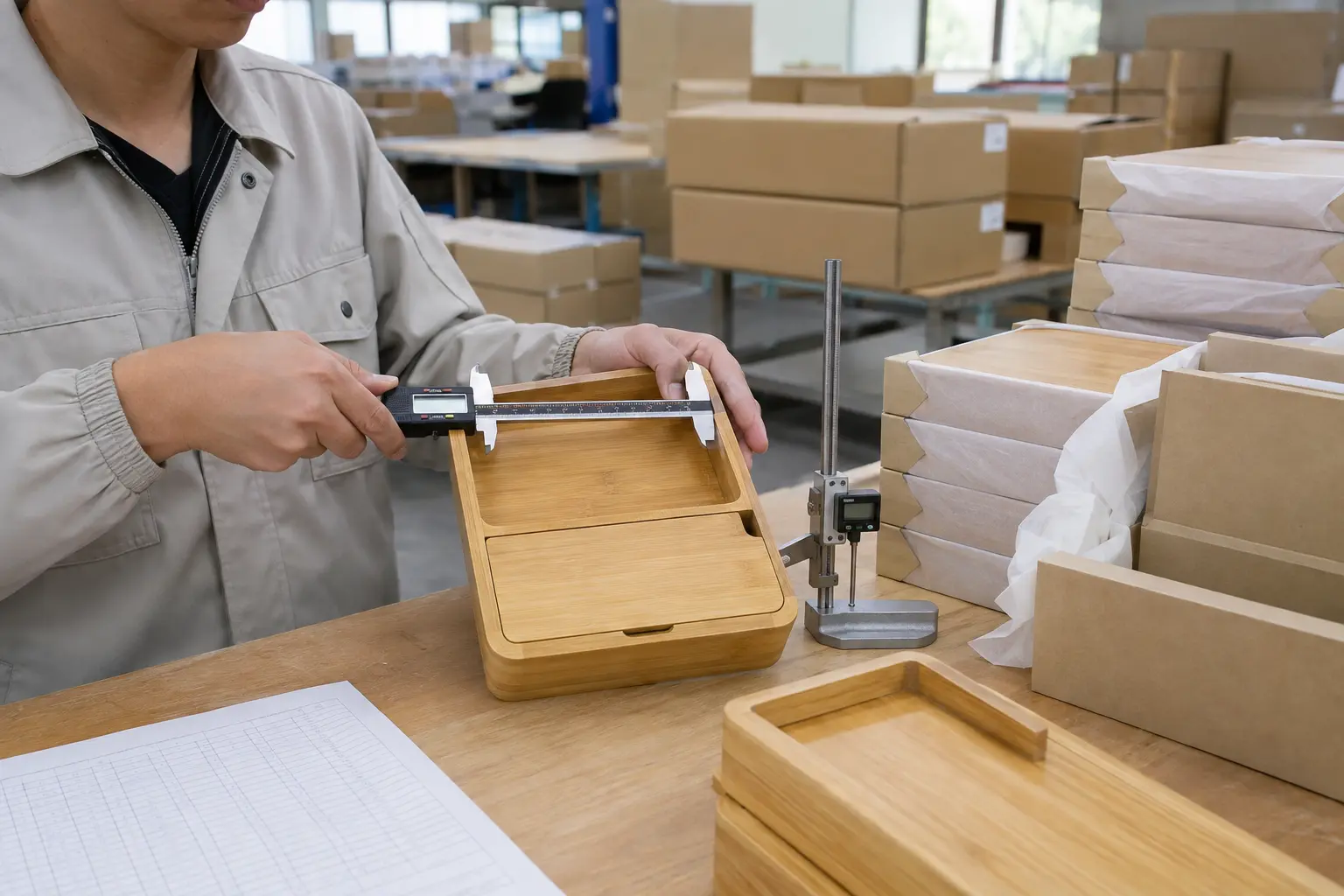
A signed drawing and approved sample should be the production reference. A practical inspection checklist can include:
- external size, internal usable area, rim height and unit weight;
- flatness and stability on a reference surface;
- recess position, depth, wall thickness and smooth internal edges;
- grain, color and finish within the approved appearance range;
- cracks, splinters, gaps, adhesive marks and coating defects;
- sliding, hinged or removable lid fit across multiple units;
- magnet orientation, hardware security and opening action;
- logo position, size, color and abrasion requirement;
- component count and fit for sets; and
- retail pack, barcode, carton quantity, marks and protection.
Any load, closure-retention or abrasion claim should have an agreed test method and acceptance criteria. Words such as premium, strong or secure are not measurable inspection standards.
Compliance and Responsible Sourcing
The importer is responsible for confirming whether the product, artwork, warning language, customer age requirements and sales channel comply with applicable destination-market rules. Regulations and platform policies can change, so this article is not legal advice. Requirements should be checked before sample approval and again before shipment if necessary.
Responsible-sourcing claims are also order-specific. If an FSC claim is requested, verify the relevant certificate scope and transaction chain before using a label or statement. The official FSC Chain of Custody overview explains how certified material claims are controlled. A BSCI-related audit concerns a production site and should not be presented as a product safety certificate.
Frequently Asked Questions
Can bamboo rolling trays wholesale be customized in size?
Custom dimensions may be possible subject to material, machining and order feasibility. Provide external size, usable area, rim height, recesses and packaging limits in a drawing, then approve a physical sample before mass production.
Can a bamboo rolling tray have a sliding lid?
Yes, a sliding cover can be developed with routed grooves and defined clearances. The sample should be checked for smooth movement, retention, seasonal material change and abrasion between the lid and tray.
Which logo method works best on bamboo?
There is no single best method. Laser engraving creates a grain-dependent natural mark, while printing supports color. Select the method from the artwork, finish, appearance target, quantity and durability requirement.
Are bamboo rolling trays automatically FSC certified?
No. FSC availability and claims depend on the relevant certified organizations, material scope and transaction documents. Confirm the exact order before placing an FSC statement or label on the product or packaging.
How should a bamboo rolling tray be cleaned?
Many finished bamboo trays are best wiped with a soft damp cloth and dried promptly. Avoid soaking, dishwashing, abrasive tools or strong solvents unless those conditions have been validated for the final construction and finish.
What information is needed for a wholesale quotation?
Send the drawing, material and finish, lid or compartment details, target quantity, branding files, packaging, destination market, testing requirements, delivery term and timeline. This allows suppliers to quote comparable specifications.
Request a Project-Specific OEM Review
Fujian Xianxu Bamboo & Wood Co., Ltd. supports OEM/ODM development for overseas homeware and accessory buyers. Review our bamboo and wood manufacturing capabilities, China and Vietnam production information and wider bamboo product range.
Send our team your legally compliant tray concept, dimensions, quantity, artwork, packaging and destination requirements. We can review manufacturability, identify open specification questions and discuss drawings, samples and a quotation based on the approved project brief.