
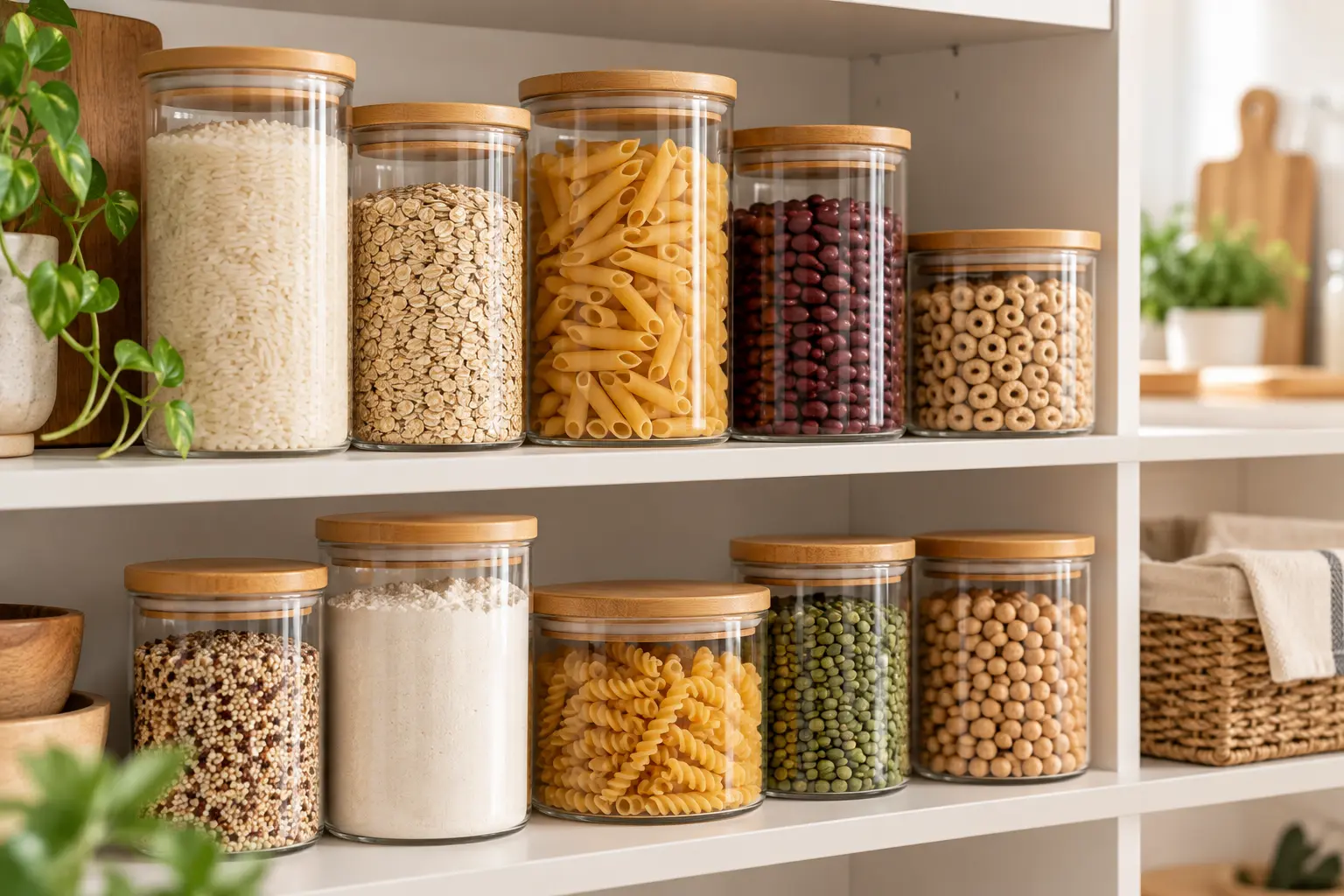
A well-planned pantry is not defined by matching jars alone. The containers must suit the ingredients, the shelf depth, the way people refill them, and the level of protection each dry food needs. That is why searches for bamboo kitchen canisters, a bamboo canister set, or a cereal container with bamboo lid can lead to products that look similar but perform very differently.
This guide explains the main constructions, useful sizes, seal details, moisture control, and care requirements for pantry canisters. It focuses on dry foods such as rice, cereal, pasta, flour, sugar, coffee, tea, nuts, and seasonings—not cooked meals, liquids, or long-term preservation systems.
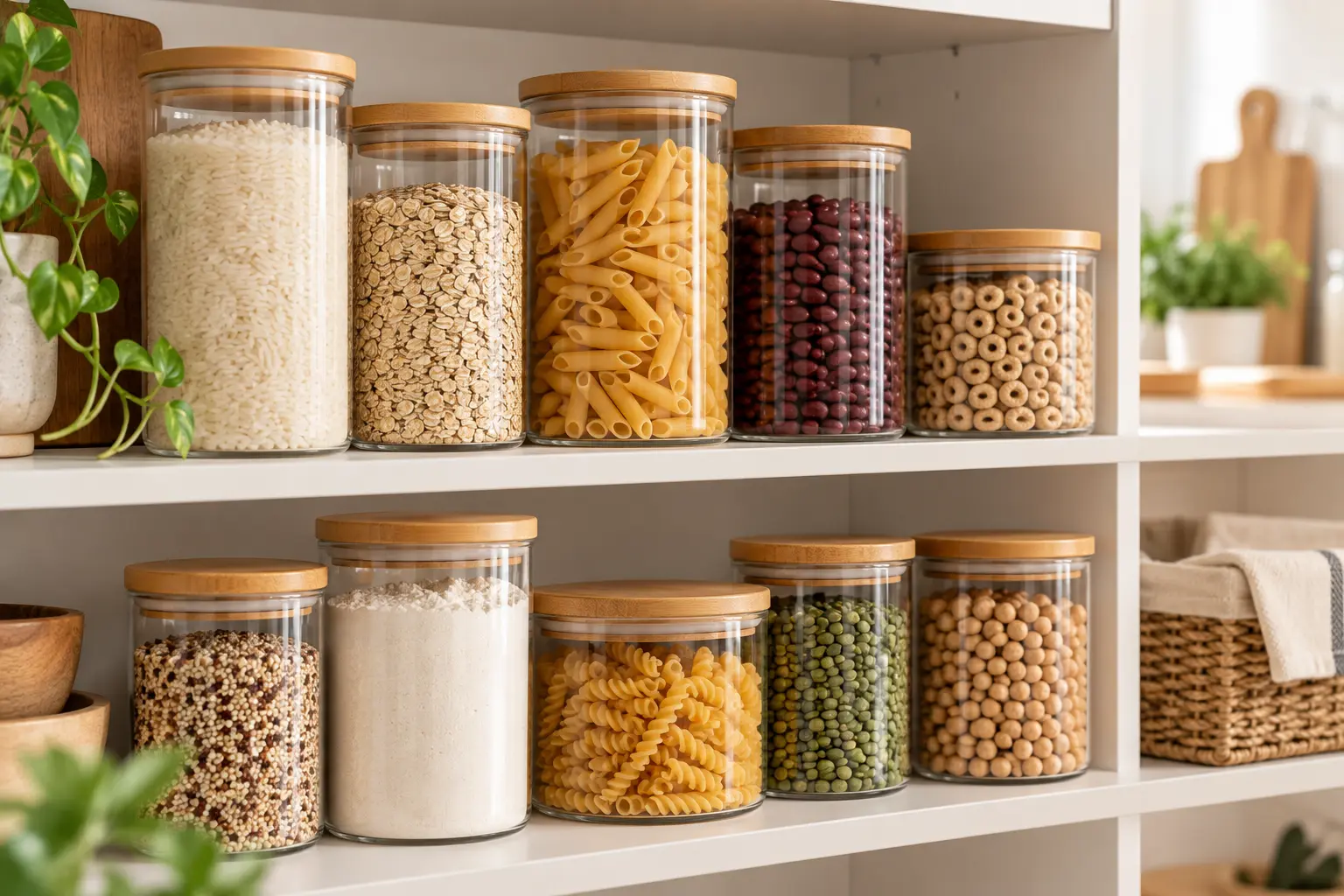
What Are Bamboo Kitchen Canisters?
The name can describe several different products. In many current kitchen ranges, the vessel is clear glass, ceramic, stainless steel, or plastic, while the removable top is bamboo. A bamboo glass canister therefore usually means a glass jar with a bamboo lid, not a jar made entirely from bamboo. Solid or laminated bamboo bodies also exist, but they are a separate construction with different coating, cleaning, and food-contact considerations.
This distinction matters when comparing a bamboo storage jar for kitchen use. Clear glass makes the fill level visible and resists staining from many dry ingredients. Ceramic or metal hides light-sensitive contents but does not show when stock is low. Plastic reduces weight and breakage risk, while buyers need to confirm the exact resin and intended food-contact use. Bamboo contributes a warm, coordinated surface on the lid or outer shell, but it does not by itself make a container airtight.
When comparing bamboo kitchen food containers, check the vessel material, lid material, gasket material, intended contents, and care method separately. Clear specifications help customers understand what they are buying and reduce incorrect assumptions about microwave, freezer, dishwasher, or liquid-storage use.
Choosing a Bamboo Canister Set for the Pantry
A useful bamboo canister set is built around real pantry routines. The best bamboo canisters for the kitchen fit both the food and the available space. Before choosing matching pieces, list the ingredients that will be decanted, record the dimensions of the shelves, and measure the packages normally purchased. Capacity labels alone do not show whether a full bag of cereal, rice, or flour will fit because different foods have different bulk densities and shapes.
- Small canisters: seasonings, loose tea, seeds, baking powder, nuts, and frequently used toppings.
- Medium canisters: coffee, sugar, oats, dried fruit, beans, and short pasta.
- Tall canisters: spaghetti, cereal, and ingredients whose original packages are narrow and high.
- Large canisters: rice, flour, bulk grains, or high-use family staples.
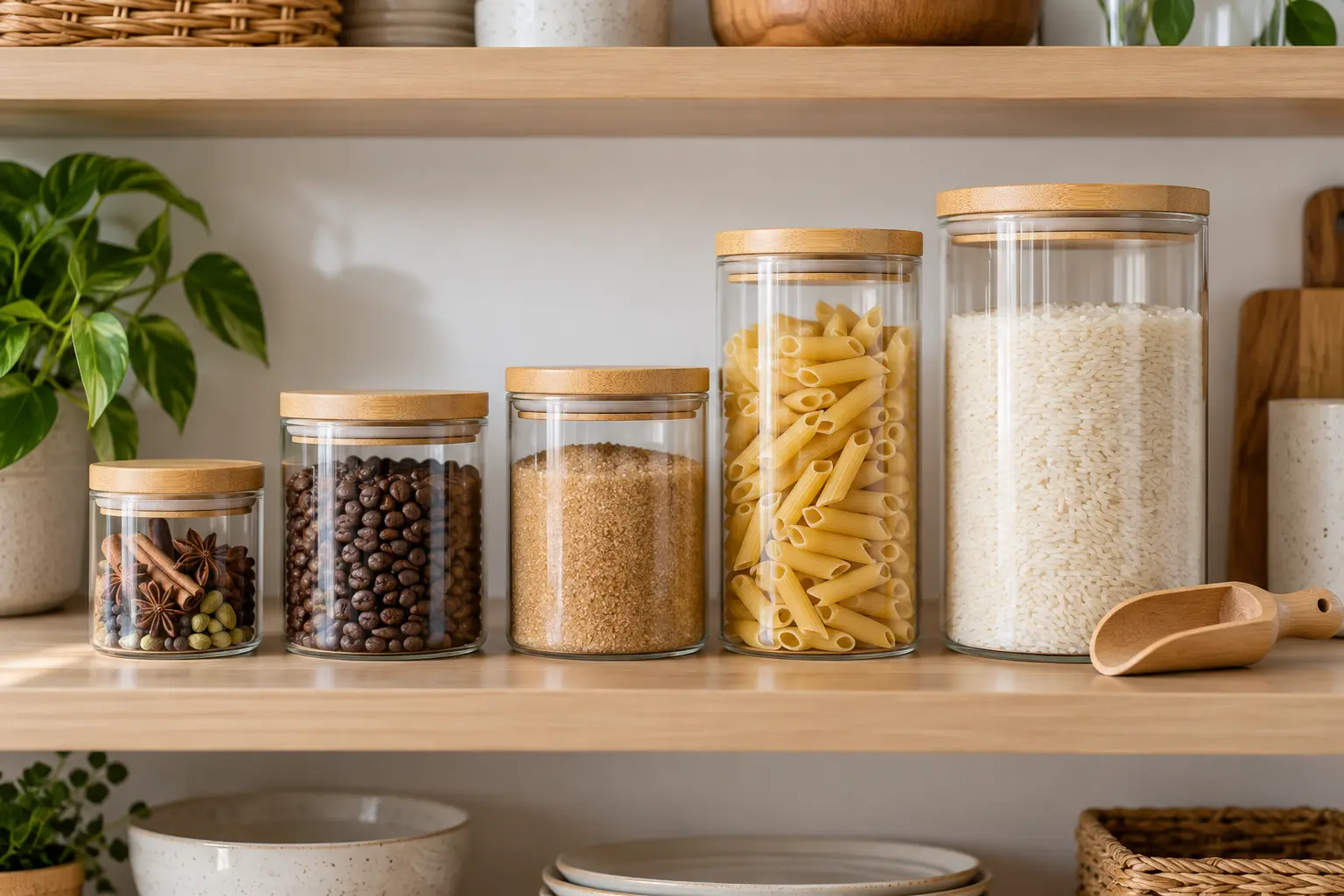
Leave practical headspace for a scoop and for clean closing. A jar filled to the rim is harder to use and can contaminate the gasket with powder or grains. For a retail range, graduated capacities are more helpful when the lid diameter or footprint remains consistent. Shared lid sizes simplify replacement parts, while modular footprints make the set easier to arrange.
Do not rely on nominal volume when developing a new range. Fill-test each candidate jar with the target ingredient and its common retail pack. A container that holds a stated volume of water may not hold the expected bag of cornflakes or long pasta. Confirm usable internal volume, opening diameter, scoop clearance, shelf height, and the extra space needed to lift the lid.
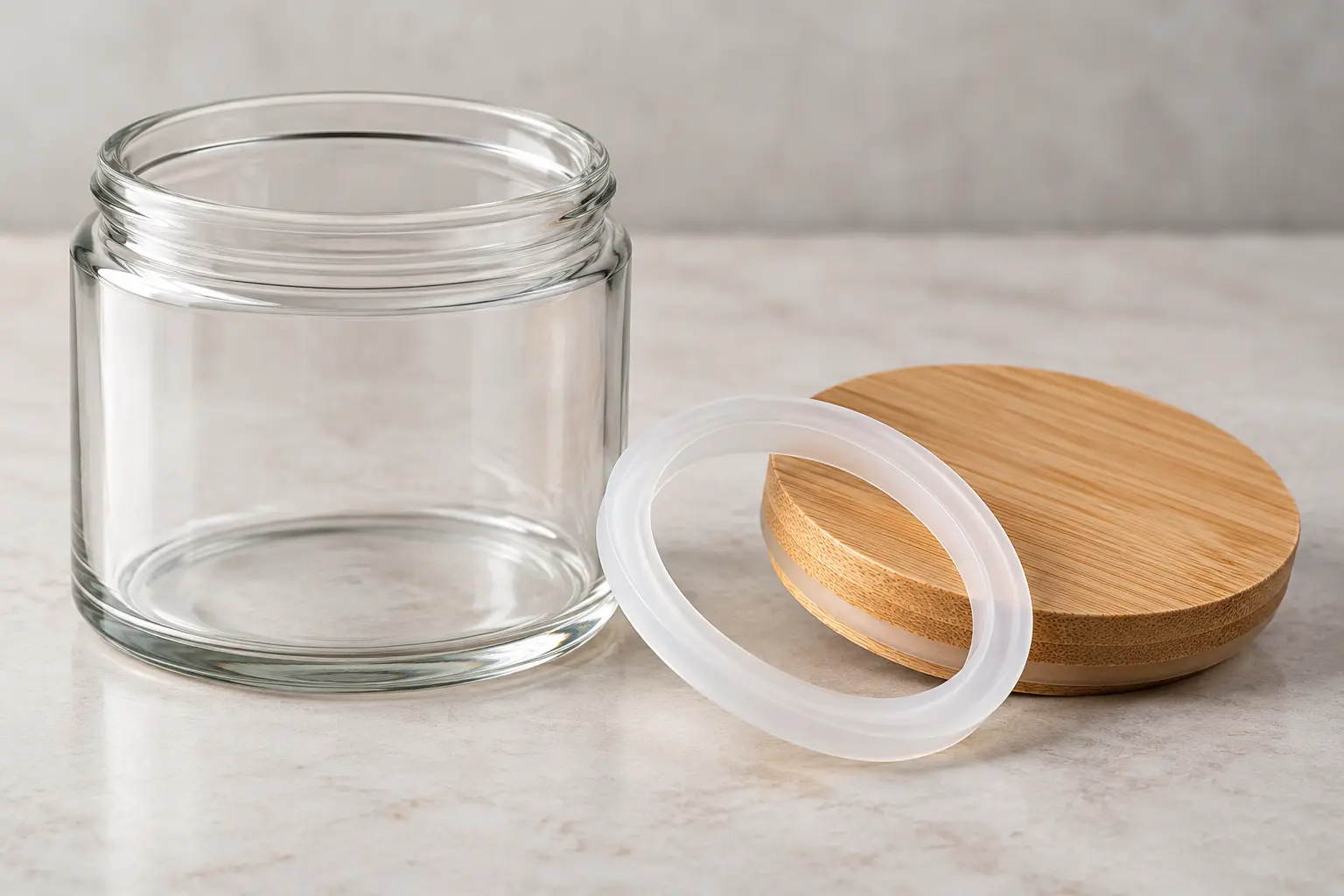
What Makes a Bamboo Lid Canister Airtight?
An attractive lid is not automatically an airtight lid. In most push-fit bamboo lid canister sets, the functional seal comes from a removable silicone or elastomer gasket. The gasket compresses between the lid and the rim, limiting the movement of air and moisture. Performance depends on the gasket profile, the roundness and finish of the rim, the fit between parts, and consistency from one production batch to another.
“Airtight” and “leakproof” are not interchangeable. A press-on lid may be suitable for upright dry-food storage yet release if the jar is tipped or if liquid presses against the seal. Unless the finished product has been designed and tested for liquids, it should be presented as a pantry canister rather than a transport or soup container.
When assessing samples, close and reopen every size several times. Check for uneven resistance, gaps, rocking, gasket twisting, splinters, rough edges, and lids that lift when a filled container is moved. A seal that is excessively tight can be difficult for older users or anyone with limited hand strength; a loose seal may not protect dry food from humid air. The goal is repeatable closure with a clear, comfortable release.
Bamboo Glass Canisters for Cereal, Pasta, and Baking Ingredients
Bamboo glass canisters are popular because the contents and remaining quantity are visible without opening the lid. This is especially useful for cereal, pasta, beans, oats, cookies, and baking ingredients. Clear walls also make it easier to notice crumbs at the bottom before refilling.
For a cereal container with bamboo lid, the opening should be wide enough for pouring or scooping without crushing the cereal. The container should also fit the shelf when the lid is installed; published vessel height without the lid can cause planning errors. If stackability is claimed, evaluate a fully loaded stack, the lid recess, base stability, and safe lifting—not only empty display samples.
Flour and powdered ingredients need a smooth rim and a gasket design that does not trap fine particles. Coffee, tea, herbs, and some seasonings benefit from reduced light exposure, so clear jars are best kept in a closed cupboard or offered with an opaque body. A coordinated range may combine transparent jars for frequently checked staples with opaque canisters for more light-sensitive ingredients.
Bamboo Rice Containers and Rice Storage Boxes
A bamboo rice container may be a compact countertop jar, a larger bamboo rice storage box, or a non-bamboo vessel fitted with a bamboo top. The right format depends on purchase quantity and refill frequency. Daily-use jars prioritize one-handed access and scoop clearance. Larger storage formats need stable handles or grip areas, a broad base, and a lid that remains secure when the container is moved.
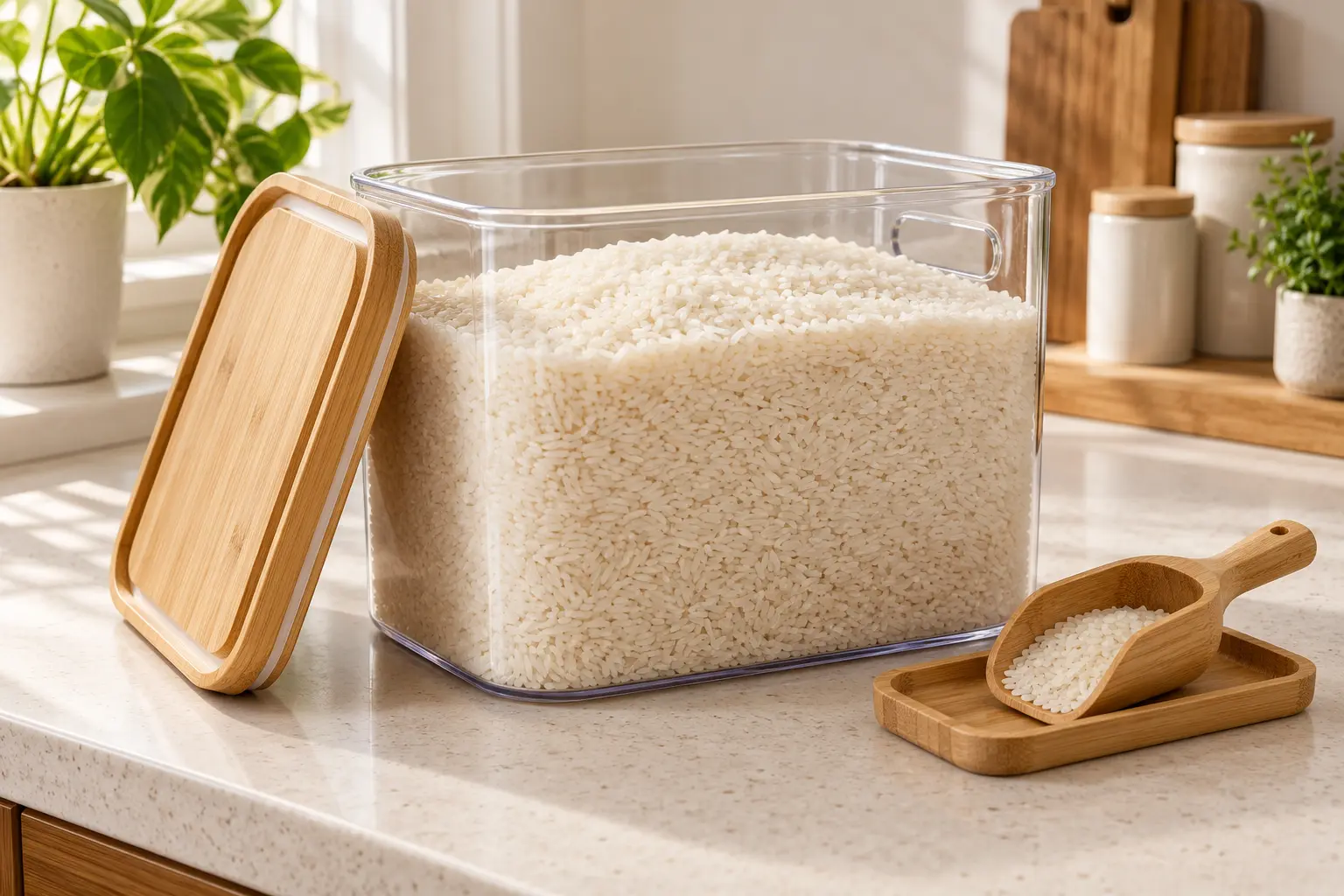
Uncooked rice should remain dry. Store the closed container in a cool, dry area away from steam from kettles, sinks, dishwashers, and cooking pots. Do not top up a jar indefinitely: use the remaining rice first, clean and completely dry the container, then refill it. Dating or labeling the contents supports first-in, first-out rotation, especially when several rice varieties share one pantry.
For a larger bamboo rice storage container, capacity should be expressed in both volume and intended fill guidance only after physical testing. Rice type, grain shape, and packing affect the actual mass that fits. A removable scoop should have a dedicated, clean resting position rather than being buried with a wet handle after cooking.
Seasoning Containers and Small Storage Canisters
A bamboo seasoning container needs different proportions from a cereal jar. A small opening can slow controlled pouring, while a wide mouth is easier for measuring spoons. The best choice depends on whether the ingredient is shaken, poured, pinched, or scooped. Labels should remain readable from the normal viewing angle—front-facing for shelves and top-facing for drawers.
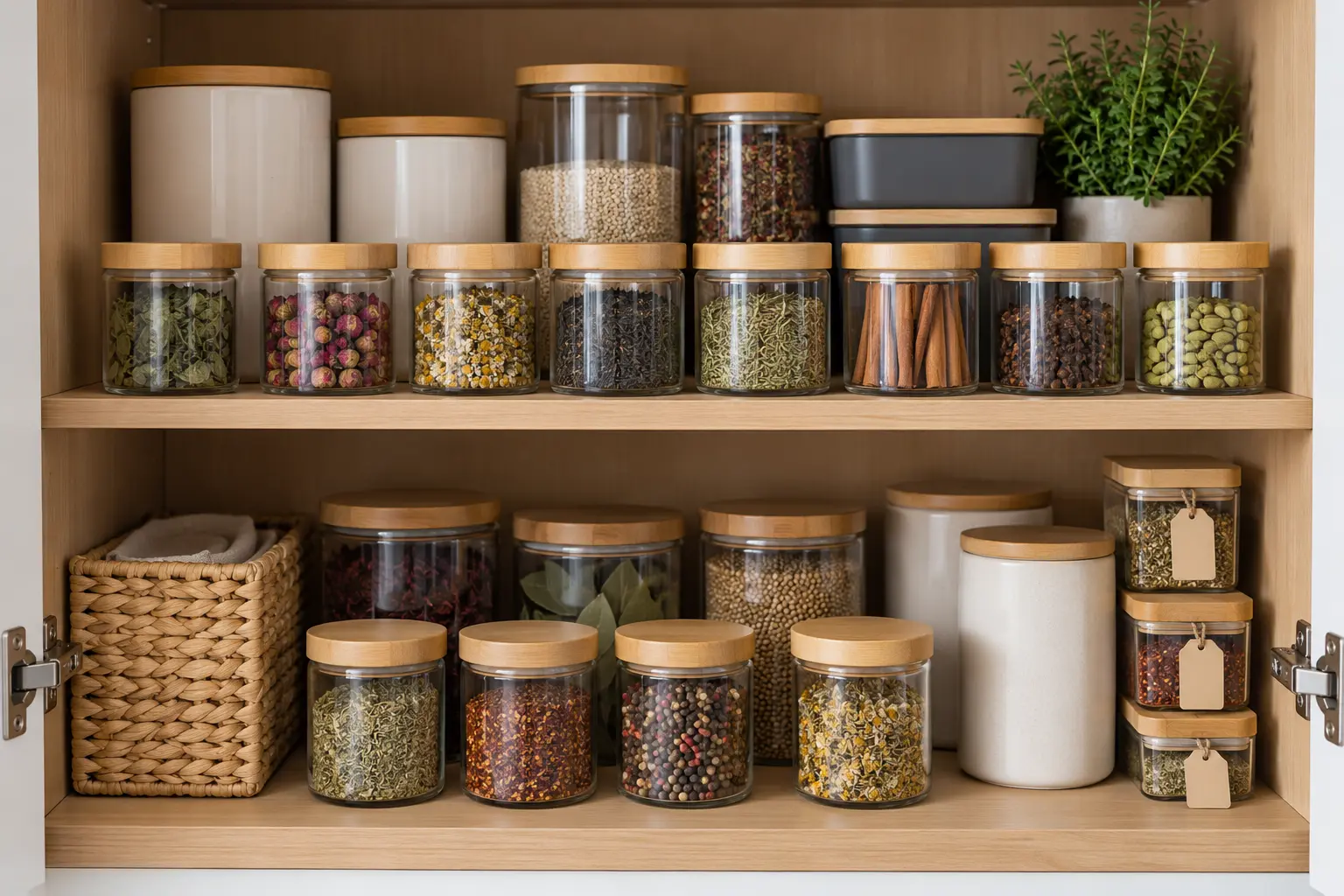
Keep dried herbs and spices in airtight containers in a cool, dry, dark place away from sunlight, heat, and steam. Avoid positioning them directly above a cooker even if that location is convenient. Condensation and repeated heat exposure work against quality. For retail sets, a replaceable gasket and washable vessel add more long-term value than decorative accessories that are difficult to clean.
Moisture Control and Better Pantry Placement
Dry foods can absorb moisture from humid air, which can cause clumping, texture loss, and spoilage. A sound seal helps, but pantry conditions and user behavior still matter. Close the lid promptly, use a dry scoop, and never decant warm food that can create condensation inside the container.
- Place bamboo storage canisters away from sinks, steam outlets, direct sun, and major heat sources.
- Store heavy glass canisters on stable shelves where they can be lifted safely.
- Keep frequently used ingredients between waist and eye level and reserve high shelves for lighter items.
- Label the ingredient and refill date, particularly when similar powders or grains share a set.
- Inspect pantry staples and clean spills promptly to discourage pantry pests.
If a lid or gasket develops an odor, visible damage, persistent staining, or a poor fit, replace the affected part when possible. A modular product family with available gaskets and lids can extend the useful life of the jar body.
How to Clean Bamboo-Lid Pantry Containers
Always follow the instructions supplied with the finished product because finishes, adhesives, gaskets, and vessel materials vary. Many bamboo lids are designated for hand washing rather than the dishwasher. Prolonged soaking and dishwasher heat can affect a bamboo component or its finish even when the glass vessel is dishwasher-safe.
- Empty the container and remove loose crumbs before adding water.
- Remove the gasket if the product is designed for gasket removal.
- Wash the vessel according to its material-specific instructions.
- Clean the bamboo lid gently with mild detergent and a soft cloth; do not leave it submerged.
- Clean the gasket grooves so flour, oil, or seasoning dust cannot remain hidden.
- Allow every component to dry fully before reassembly and refilling.
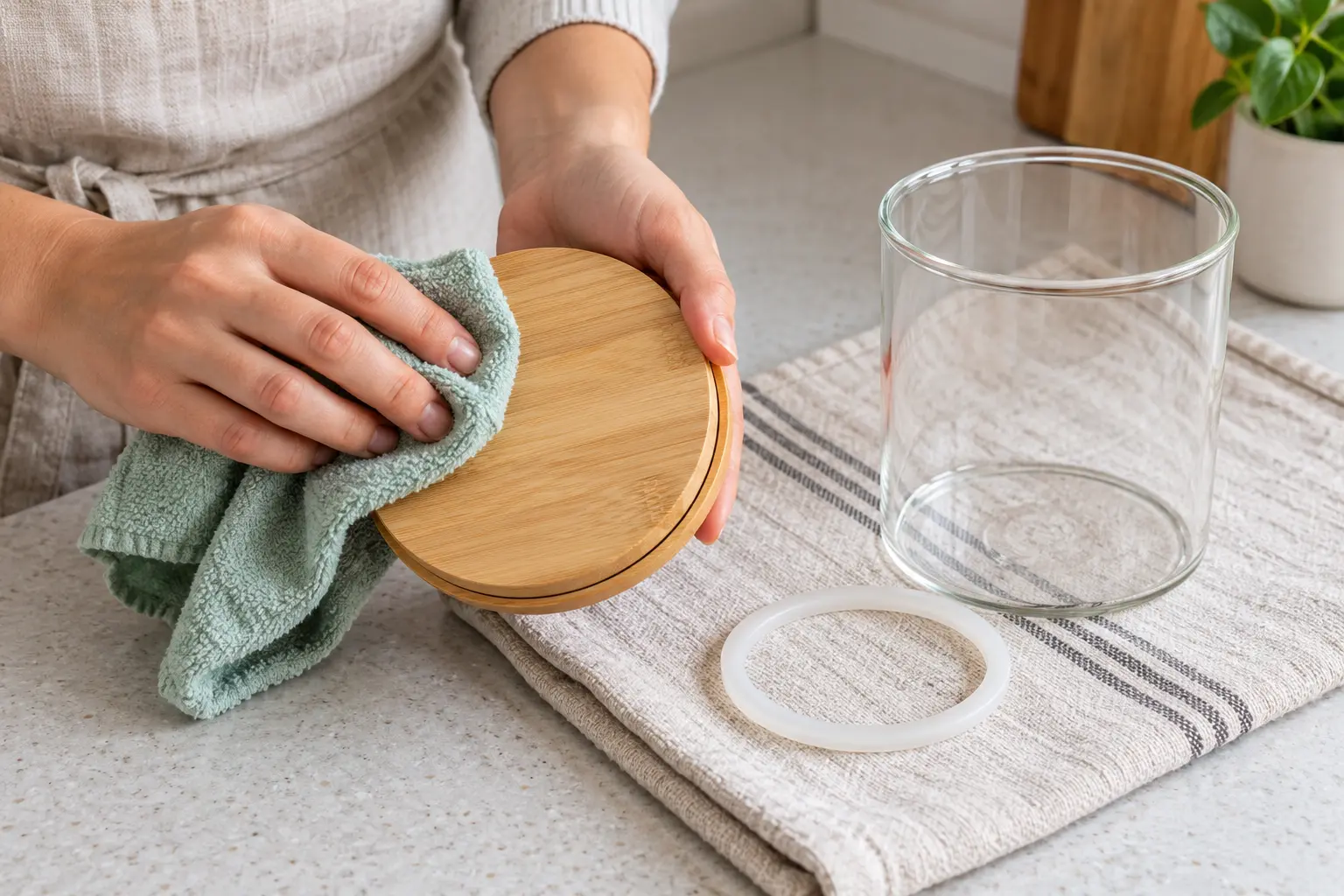
Never assume a bamboo lid is microwave-, oven-, freezer-, or dishwasher-safe because the vessel has one of those ratings. The use instructions for the body and lid must be read separately. This simple distinction prevents many avoidable product complaints.
What Buyers Should Specify for a Custom Canister Range
For wholesalers, retailers, and private-label brands, a useful specification goes beyond “glass jar with bamboo lid.” Define the target ingredients, vessel material, capacity range, opening size, lid construction, gasket material, finish, label area, stacking requirement, packaging, and cleaning instructions. Ask for food-contact documentation applicable to the materials, intended use, and destination market; the word “bamboo” is not a substitute for compliance evidence.
Evaluate production samples with the same tests customers will perform: filling, scooping, pouring, opening with one hand, repeated closing, shelf placement, and cleaning. Check glass rims and bamboo surfaces for chips, cracks, roughness, color inconsistency, warping, and poor gasket fit. If several capacities form one set, compare them together so proportions, lid colors, branding, and packaging feel consistent.
Frequently Asked Questions
Are bamboo kitchen canisters airtight?
Some are, but bamboo alone does not create the seal. Look for a fitted gasket and a clear airtight claim for the finished container. Airtight does not necessarily mean leakproof.
What can be stored in bamboo glass canisters?
They are commonly designed for dry pantry foods such as rice, cereal, pasta, oats, beans, sugar, flour, snacks, coffee, tea, and seasonings. Follow the individual product instructions and keep light-sensitive ingredients in a dark cupboard or an opaque container.
Can a bamboo lid go in the dishwasher?
Many manufacturers specify hand washing for bamboo lids even when the container body is dishwasher-safe. Check the care label for the exact product and dry the lid completely before replacing it.
How should I choose canister sizes?
Measure the shelf and the packages you regularly buy, then allow room for the lid, your hand, and a scoop. Use physical fill tests because equal volumes of rice, cereal, flour, and pasta occupy containers differently.
Develop a Practical Bamboo Canister Collection
A successful pantry range combines an appealing bamboo detail with dependable fit, clear use instructions, sensible capacities, and easy cleaning. If you are developing bamboo kitchen canisters, bamboo rice storage, or a private-label bamboo lid canister set, Fujian Xianxu Bamboo & Wood Co., Ltd. can discuss material options, product structure, branding, packaging, sampling, and production requirements for your project.