
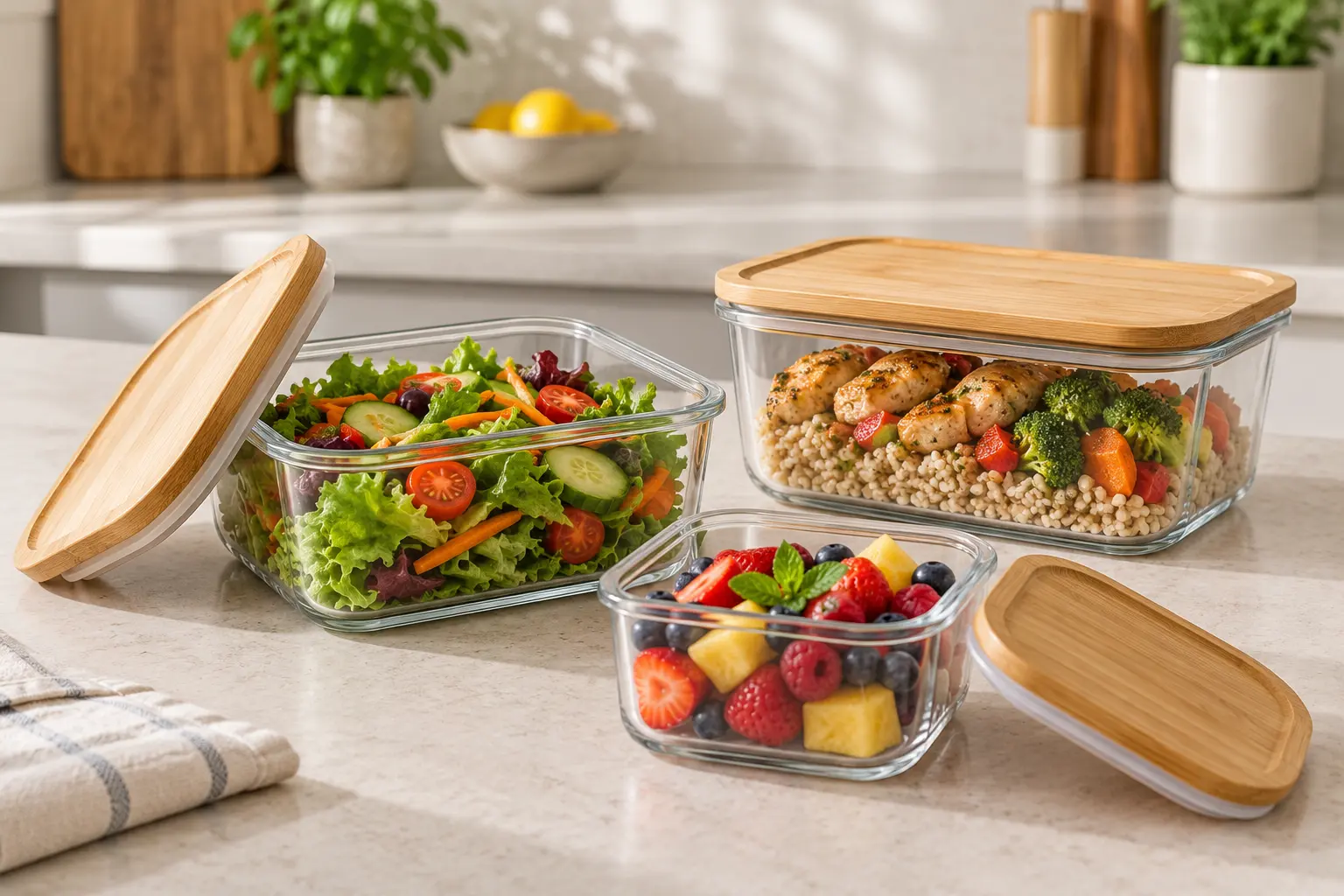
A reusable food container is only useful when its body, lid, seal and care instructions match the food and the journey. This guide explains how to specify bamboo food storage containers for lunches, snacks, meal preparation and takeaway programs without treating every product sold under the word “bamboo” as the same construction.
Searches for a bamboo food container can describe several very different products: a solid bamboo box, a molded composite container containing bamboo fiber, or a glass, stainless-steel or plastic food-contact body supplied with a bamboo lid. These products do not share one safety profile, one temperature limit or one sealing performance. Buyers should therefore start with the intended use, then confirm the material declaration and test documents for the exact finished item.
What “Bamboo Food Storage Containers” Can Mean
The phrase bamboo food storage is a market category, not a complete material specification. For purchasing and compliance work, divide the options into clear construction families.
- Solid bamboo boxes: attractive for dry snacks, tea, wrapped foods or countertop organization. The lid may be loose-fitting, hinged or fitted with a separate gasket. Solid bamboo alone should not be assumed to be airtight, leakproof, microwave-safe or freezer-safe.
- Bamboo-fiber composite containers: molded products may combine bamboo-derived particles or fibers with one or more binders. Ask for the complete composition and the applicable food-contact documentation. “Made with bamboo” does not mean “100% bamboo.”
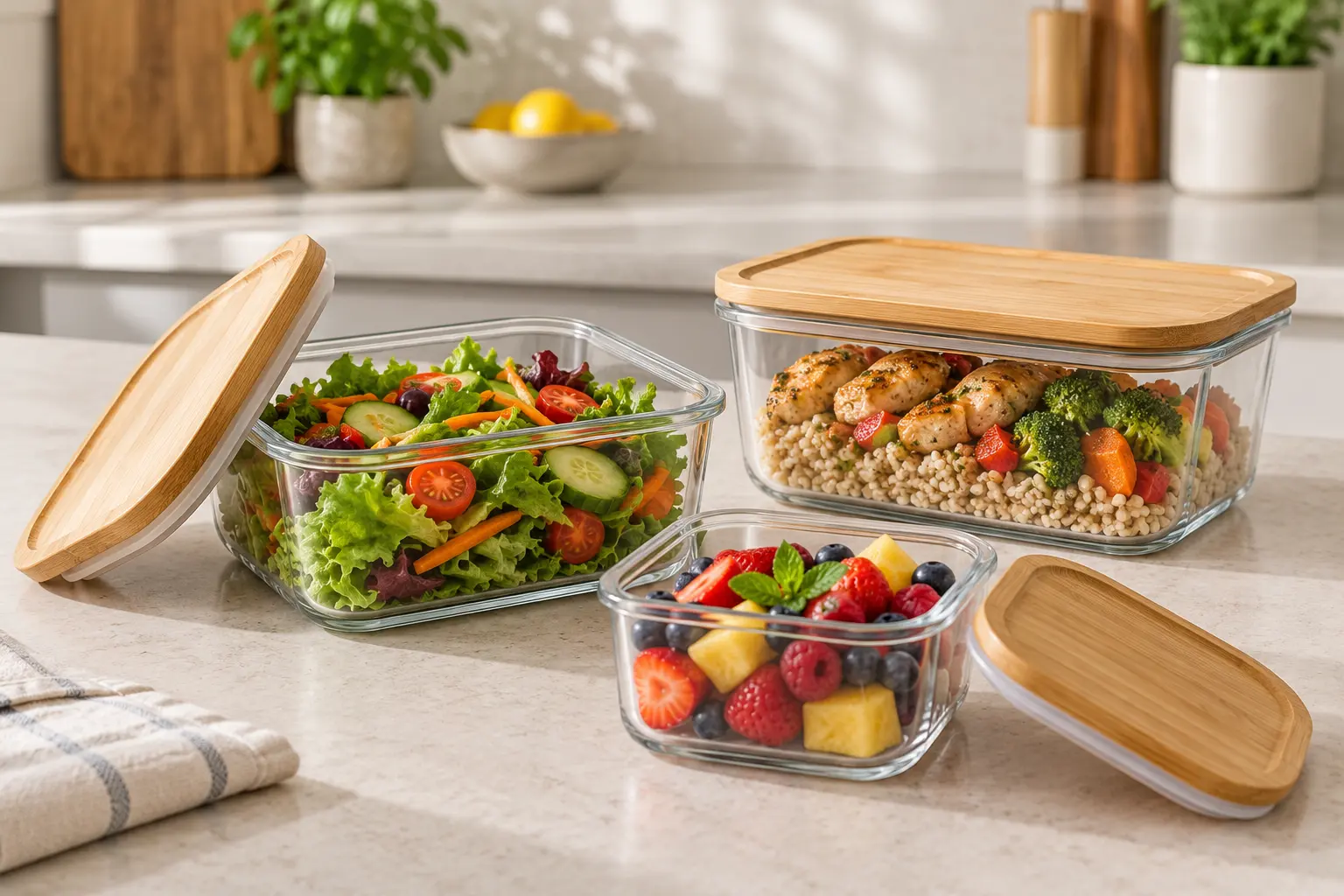
- Glass or metal bodies with bamboo lids: the food is mainly in contact with glass or stainless steel, while the bamboo component provides a natural-looking top. The gasket, vent, coating and underside construction still need to be specified.
- Plastic bodies with bamboo lids: this combination can reduce weight and support stacking, but the resin type, food-contact status and temperature conditions must be documented for the body and every seal or coating.
This distinction matters when comparing bamboo food storage boxes, a food container with bamboo lid and a molded bamboo reusable container. Similar photography can conceal substantial differences in weight, break resistance, care and approved conditions of use.
Choose the Container Around the Use Case
Begin the product brief with the food, filling temperature, transport method and expected cleaning routine. A lunch container carried upright in an office bag has different design priorities from a snack box used by children, a refrigerated meal-prep tray or a container intended for soup.
| Use case | Useful design priorities | Questions to settle before ordering |
|---|---|---|
| Dry snacks | Low weight, easy opening, removable dividers, crumb control | Will the food be wrapped or directly in contact? Is a moisture seal required? |
| Lunch and meal prep | Portion layout, secure closure, stain-resistant food-contact surface, stackability | Will users refrigerate, reheat or wash the body in a dishwasher? |
| Soup, dressing or wet foods | Continuous gasket, controlled lid compression, leak testing, venting if applicable | Is the product truly designed and validated for liquids, or only for solid food? |
| Takeaway and commuting | Compact shape, impact protection, low total weight, dependable closure | Will it travel sideways? How many open-close cycles are expected? |
| Retail food-storage set | Coordinated capacities, nesting, clear markings, replacement seals | Do all pieces share the same use limits and care instructions? |
Lunch and Meal-Prep Formats
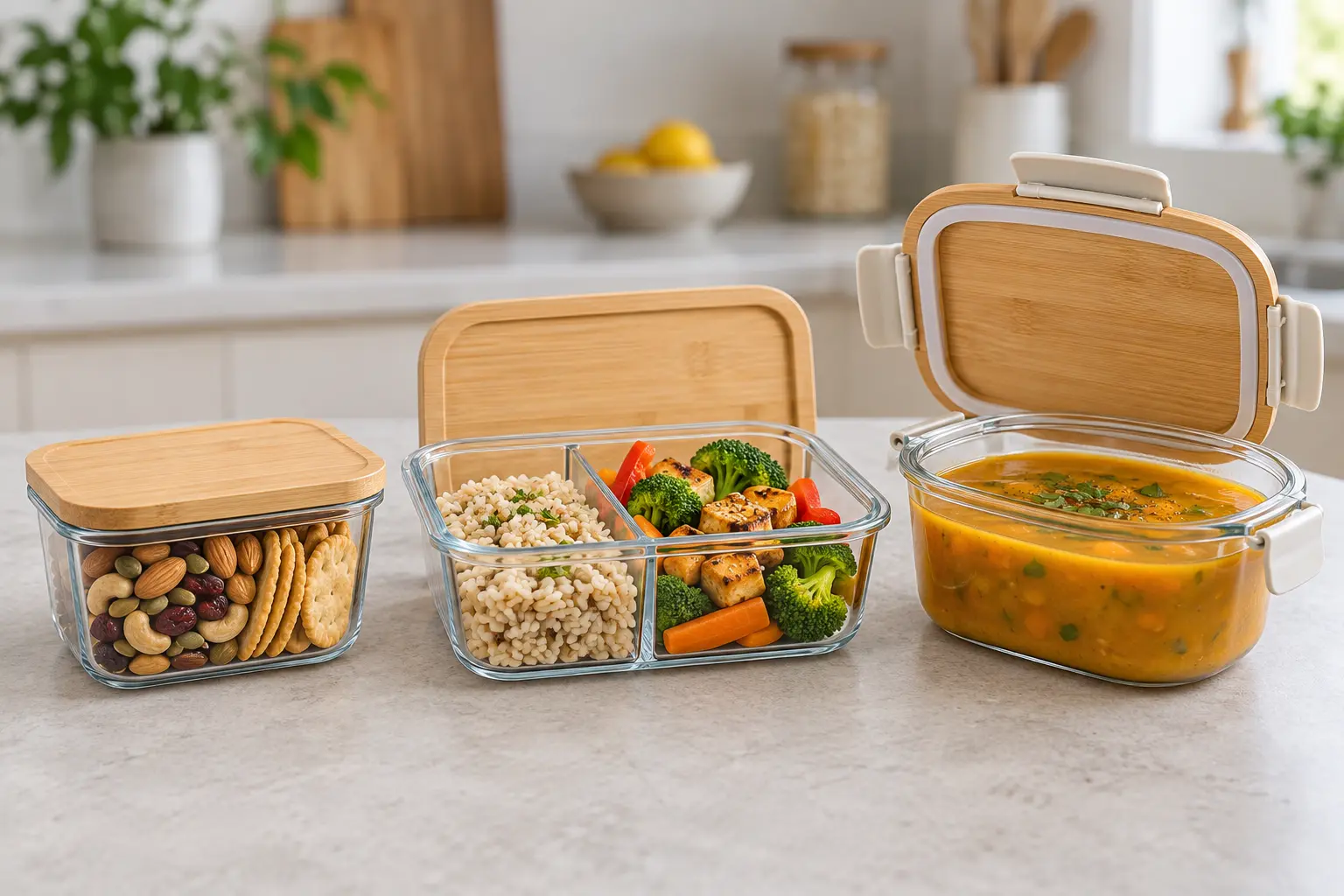
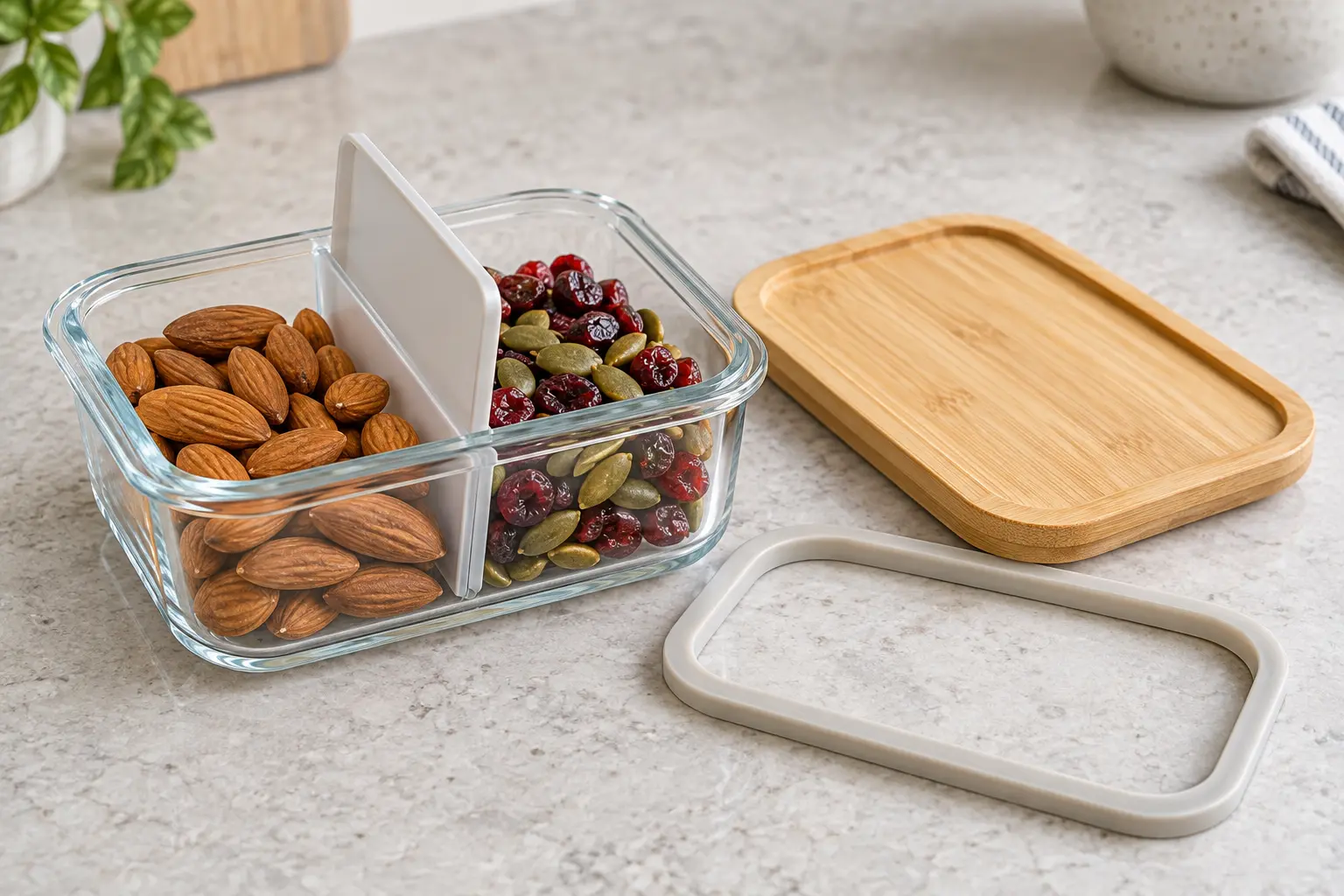
For a daily lunch program, the most practical format is often a durable food-contact body paired with a bamboo lid or bamboo outer detail. A single cavity is flexible for salads, pasta and rice dishes. Fixed compartments keep foods separated but reduce nesting efficiency and can create corners that are harder to clean. Removable dividers provide more flexibility, provided they fit securely and are made from a documented food-contact material.
Specify usable capacity rather than relying on outside dimensions alone. The space occupied by a gasket, divider and rounded corners can reduce the actual fill volume. For comparison, buyers can request brimful capacity, recommended working capacity, product weight and internal dimensions. A family may include a compact snack size, a standard lunch size and a larger meal-prep size, but the final volumes should come from the brand's portion strategy and tooling—not a generic assumption.
A bamboo container set should also feel coherent in use. Check whether lids are interchangeable only where intended, whether sizes are marked clearly, and whether a user can identify the correct lid without trial and error. If the set is sold for commuting, test the complete packed weight; a thick glass body and heavy solid-bamboo lid may look premium but can be burdensome in a bag.
Where bamboo reusable containers are sold as a size family, make the differences easy to understand at a glance. Consistent base shapes can support orderly stacking, while distinct capacity markings and lid details reduce mix-ups at home or in a commercial packing area.
Snack Containers Need Easy Handling
Bamboo snack containers usually prioritize portability, frequent opening and simple cleaning. Small round or rectangular formats can hold nuts, fruit pieces, crackers or other prepared snacks, subject to the exact product's food-contact scope. For children or users with limited hand strength, opening force and latch geometry deserve as much attention as capacity.
Test whether a small box can be opened without a sudden release that scatters food. Rounded internal corners improve access during cleaning, while a removable gasket allows residues to be inspected. Very small detachable pieces can be easy to misplace, so replacement-part availability should be considered in the initial design.
Soup and Wet Foods Require a Different Seal
The keyword bamboo soup container can be misleading if it implies that any bamboo box can carry liquid. Soup transport requires a system designed for wet foods: a non-porous food-contact chamber, a continuous gasket, sufficient lid compression and a closure that resists accidental release. The product should be tested in the orientations and temperatures stated in its instructions.
“Airtight” and “leakproof” are not interchangeable marketing decorations. Define a test method, liquid type, fill level, temperature, duration and movement condition. A container that keeps dry crackers fresh may still leak dressing when shaken. A lid that performs upright in a refrigerator may not be suitable for sideways transport. If a bamboo lid is used, designers should control how much liquid and steam can reach the bamboo and its seams.
A vent can help with pressure management on products specifically designed for reheating, but it also adds parts and cleaning points. Never assume that the presence of a vent makes a container microwave-safe. The body, lid, gasket, coating and printed decoration must each be suitable for the stated condition of use.
Lid, Gasket and Closure Specifications
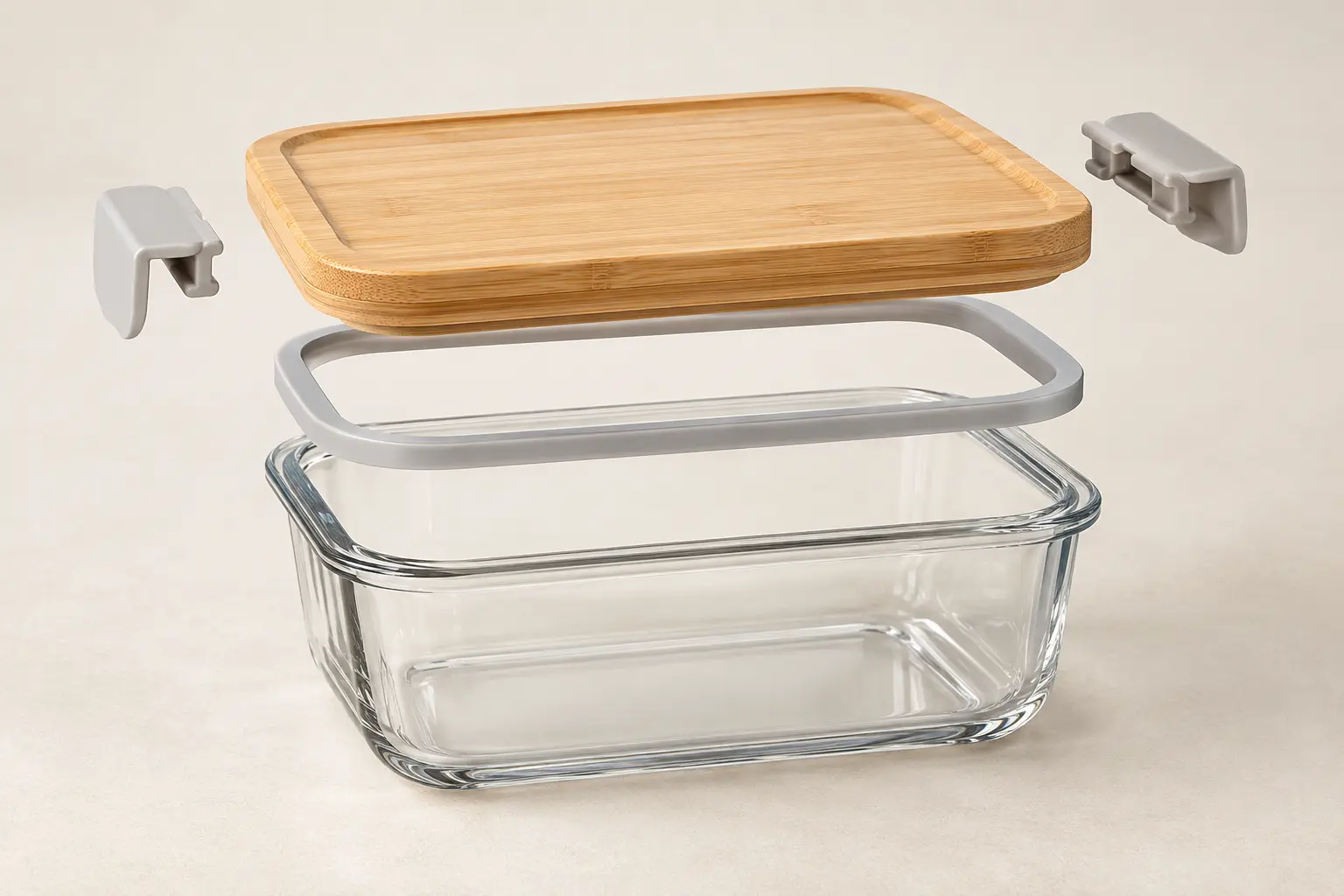
For bamboo food containers with lids, performance depends on the interface between components. A well-made bamboo top cannot compensate for a distorted body rim, undersized gasket or weak latch. Include the following items in the specification sheet:
A buyer may brief a range as bamboo lid food storage, but each SKU should identify its construction more precisely—for example, a glass food container with a bamboo lid and removable silicone gasket. Applying that discipline across bamboo lid food containers helps keep the correct instructions attached to each body, lid and seal combination.
- Lid material, construction, coating or finish, and whether its underside can contact food.
- Gasket material, hardness, color, removable design and spare-part policy.
- Closure type: friction fit, elastic strap, side clips, sliding lock or another defined mechanism.
- Target opening force and closure-cycle test.
- Leak-test orientation, duration, fill percentage and temperature.
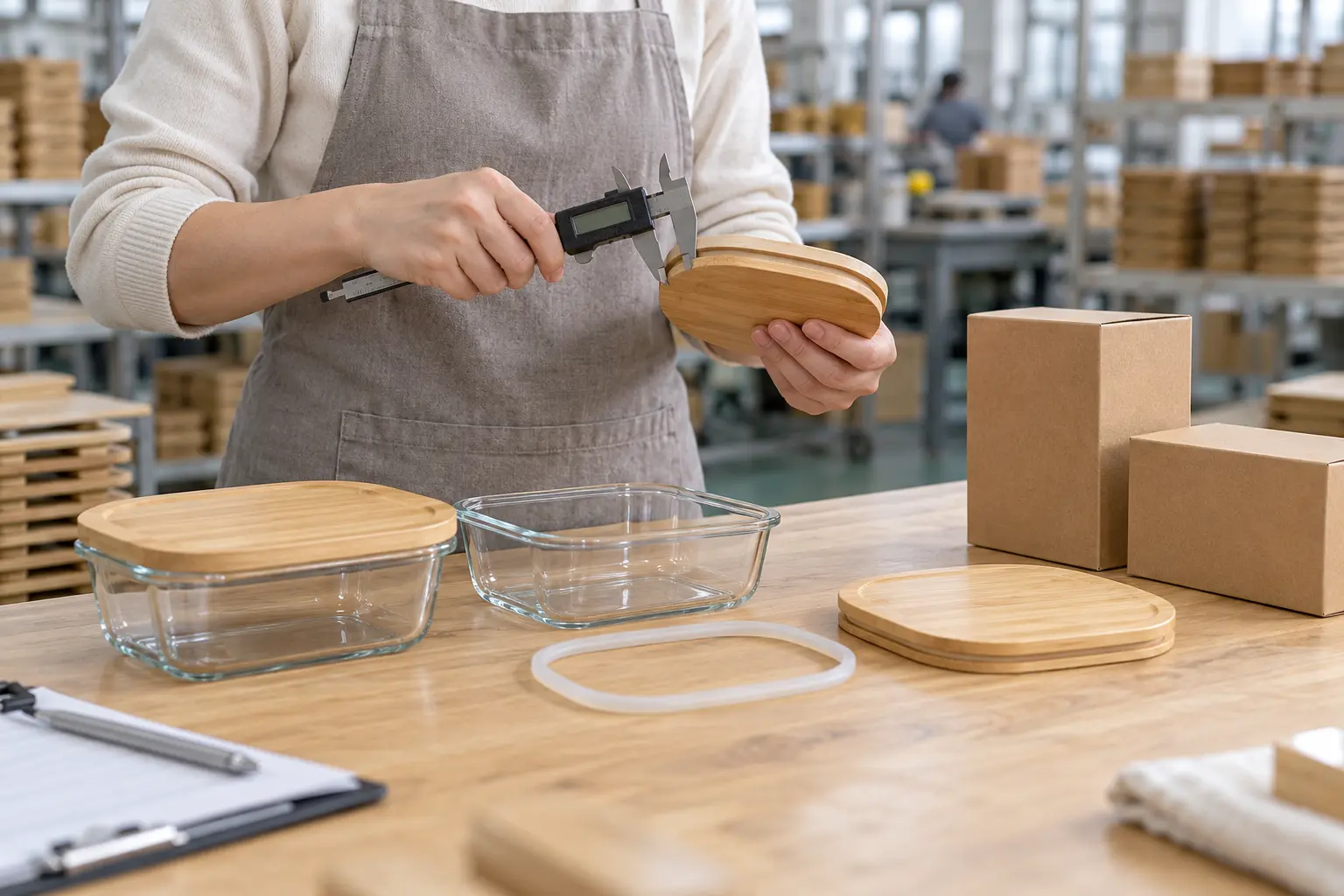
- Tolerances for the body rim, lid groove and gasket seat.
Humidity and repeated washing can affect natural bamboo components, so prototypes should be conditioned and tested under realistic storage and use cycles. Visual inspection should include warping, cracking, coating damage, odor, staining and changes in fit.
Stacking, Nesting and Transport
Stacking and nesting solve different problems. Stacking keeps filled containers stable in a refrigerator, cabinet or retail display. Nesting reduces the space used by empty bodies, but only if the wall angles and size progression allow them to separate easily. A bamboo tupperware set is a common search phrase, but Tupperware® is a registered brand; for non-branded products, the accurate category name is a reusable food-container set with bamboo components.
For bamboo to go containers, evaluate the assembled system in a real bag. Test vertical and horizontal placement, repeated movement, compression from nearby items and accidental drops appropriate to the product brief. Rounded outer edges can improve handling, while a recess or anti-slide feature can stabilize a stack. An elastic band may provide secondary retention but should not be presented as a substitute for a validated liquid seal.
Microwave, Freezer and Dishwasher Claims Must Be Product-Specific
There is no responsible universal answer to whether “bamboo food storage containers” can go in a microwave, freezer or dishwasher. The answer depends on the complete construction and its documented intended use. The U.S. Department of Agriculture advises using only utensils labeled for microwave use, and the U.S. Food and Drug Administration evaluates food-contact substances according to food type and conditions of use. In the EU, food-contact materials must meet the applicable regulatory framework for their intended conditions.
If a product uses a glass or approved polymer body with a removable bamboo lid, one component may have different use limits from another. Care instructions should say exactly which parts, if any, may be reheated, frozen or machine-washed. Do not infer that the whole set is microwave-safe because the body is, or dishwasher-safe because a gasket is removable.
Buyers should request the composition, applicable test report, tested conditions, traceability details and final-use labeling for the exact SKU. Check that the documentation covers the intended contents, contact conditions, and cleaning method.
Care Instructions for a Longer Useful Life
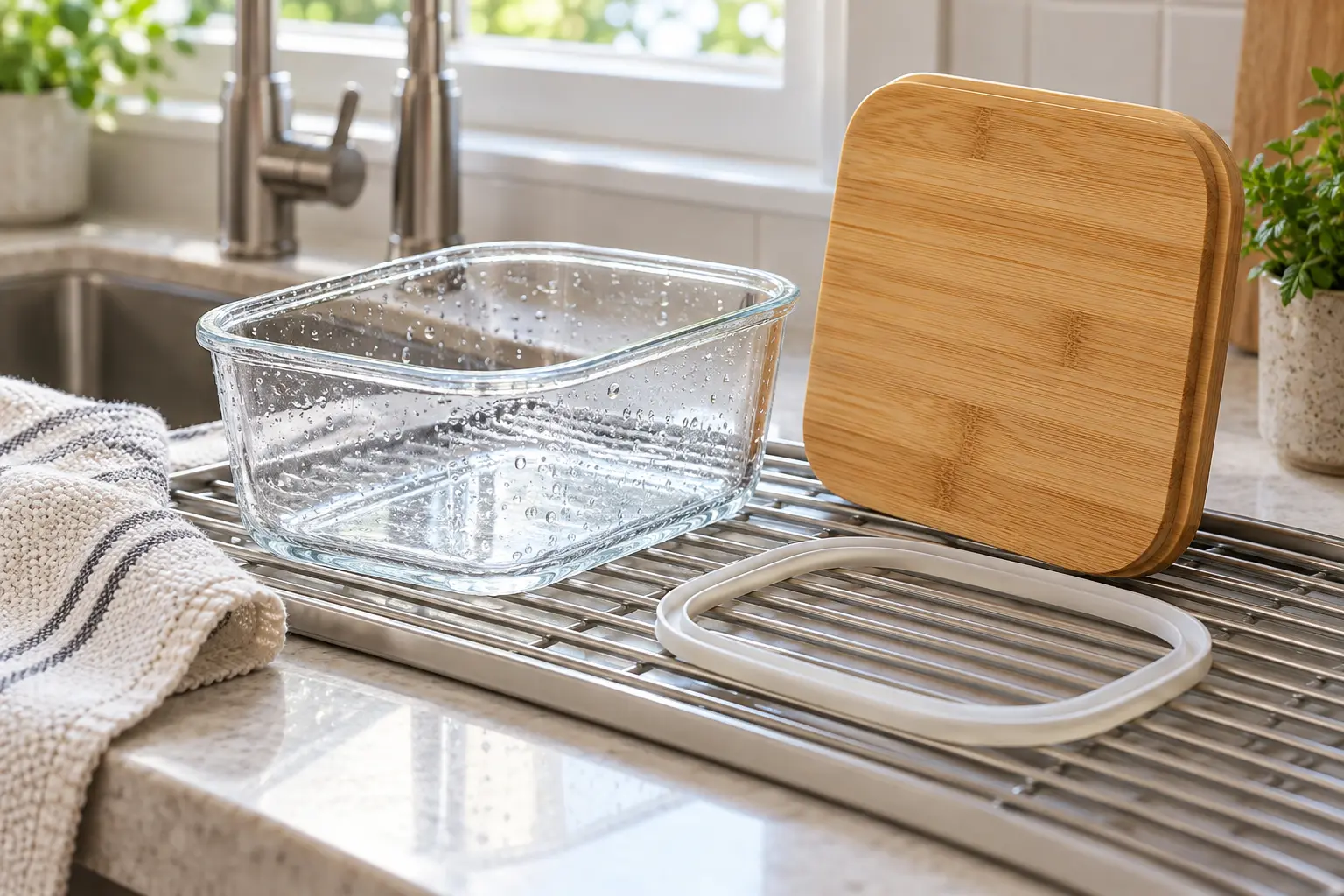
Care should be written for the actual components, not copied from another product. A typical system with a removable bamboo lid may require the lid to be hand-washed, wiped promptly and dried fully, while the body may have different instructions. These directions are examples only; final labels must reflect validated product performance.
- Remove the gasket when the instructions permit, clean the groove and allow all parts to dry before reassembly.
- Avoid prolonged soaking of a natural bamboo component unless the product has been designed and tested for it.
- Inspect the lid, seal and latches periodically; discontinue use if damage could affect hygiene or closure.
- Store the container open or with ventilation after cleaning to reduce trapped moisture and odor.
- Follow the stated limits for heat, cold, dishwasher cycles and contact with oily, acidic or strongly colored foods.
A Practical Buyer Checklist
When sourcing a bamboo reusable container program, send suppliers a concise but complete requirement sheet. This produces more comparable quotations and reduces late redesigns.
- Define the food: dry, moist, oily, acidic, hot-filled, chilled or frozen, as applicable.
- Define the use: lunch, snack, meal prep, countertop storage or takeaway transport.
- Define every material: body, lid, gasket, coating, adhesive, pigment, printing ink and accessory.
- Set capacity and weight targets: include internal dimensions and recommended working volume.
- State the closure claim: dust cover, freshness seal, airtight or liquid leak-resistant, supported by a defined test.
- Specify intended conditions: contact duration, temperature range, reheating, refrigeration, freezing and washing.
- Request samples and pilot testing: check fit, odor, staining, warping, drop performance and repeated opening.
- Approve instructions and packaging: ensure claims, warnings and component-specific care are clear.
Custom Reusable Food-Container Development
Customization can include capacity families, divider layouts, lid profiles, engraved branding, printed sleeves, color-matched seals and retail packaging. The strongest brief connects each visual choice to manufacturing tolerances and end-use performance. A logo position, for example, should not weaken a thin lid section or create a difficult-to-clean food-contact recess.
Fujian Xianxu Bamboo & Wood Co., Ltd. works with business buyers on custom bamboo and bamboo-combination products. Share the intended food, market, capacity, body material, lid structure, closure requirement, branding method, packaging format and estimated quantity so the project can be evaluated against a clear specification. Compliance claims and use instructions should be confirmed for the final construction before production.
Frequently Asked Questions
Are bamboo food containers safe?
Safety cannot be determined from the word “bamboo” alone. Confirm the complete material composition, intended food types, contact time and temperature, applicable regulations and test documents for the exact finished product.
Can bamboo food storage containers go in the microwave?
Only use a container or component in a microwave when its instructions specifically permit it. A microwave-compatible body does not automatically make a bamboo lid, gasket or complete assembled container microwave-safe.
Can a bamboo food container carry soup?
Only if the complete product is designed and tested for wet-food transport. Look for a non-porous food-contact body, continuous gasket, dependable closure and a documented leak test. A decorative bamboo box should not be assumed suitable for soup.
What size is best for a lunch container?
The right capacity depends on the menu, portion strategy, divider layout and target user. Compare usable internal volume and packed weight, not only external dimensions or nominal capacity.
Are bamboo lids airtight?
Not automatically. Airtight performance comes from the complete rim, gasket, lid geometry and closure pressure. Ask for a defined test and claim rather than judging by appearance.
Can reusable bamboo food containers be customized?
Yes, depending on construction and order requirements. Options may include sizes, dividers, lid design, seals, engraving, packaging and coordinated sets. Tooling, tolerances, testing and replacement parts should be considered early.
Planning a private-label food-storage range? Contact Fujian Xianxu Bamboo & Wood Co., Ltd. with your use case and product specification to discuss a practical development route.