
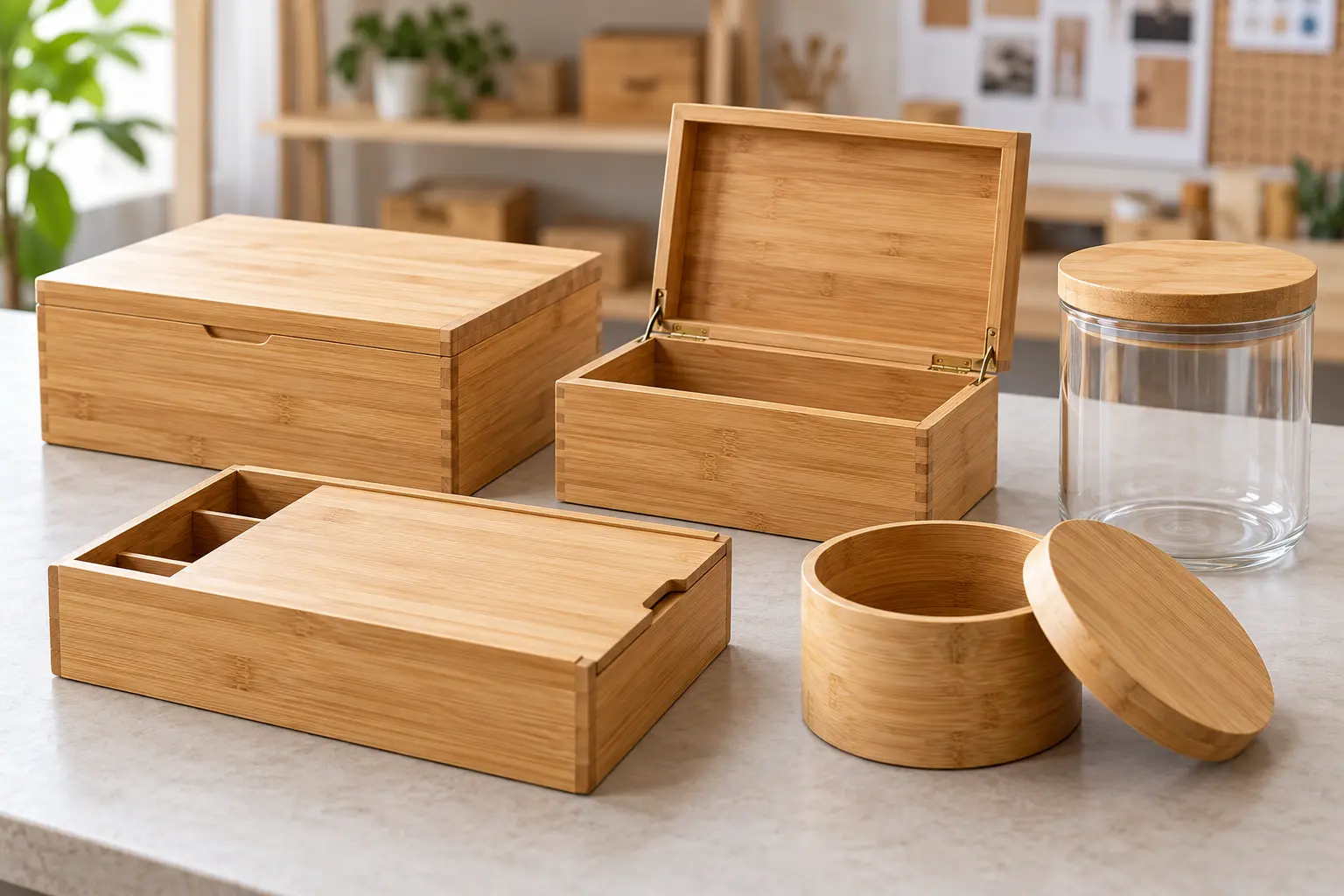
For buyers comparing bamboo boxes and containers wholesale, the product name is only the starting point. A retail storage box, a compartment organizer, a presentation case and a food-contact canister may all use bamboo, yet they require different structures, fittings, finishes, tests and packing methods. A useful sourcing brief therefore defines what the container must hold, how it will open, where it will be used and which components will touch the contents.
This guide explains how to specify custom bamboo boxes for wholesale programs without treating every product as the same construction. It covers material choices, lid styles, inserts, branding, prototyping, quality control and documentation. It also clarifies the important difference between an all-bamboo box and a glass, plastic or metal container topped with a bamboo lid.
What “Bamboo Containers Wholesale” Can Mean
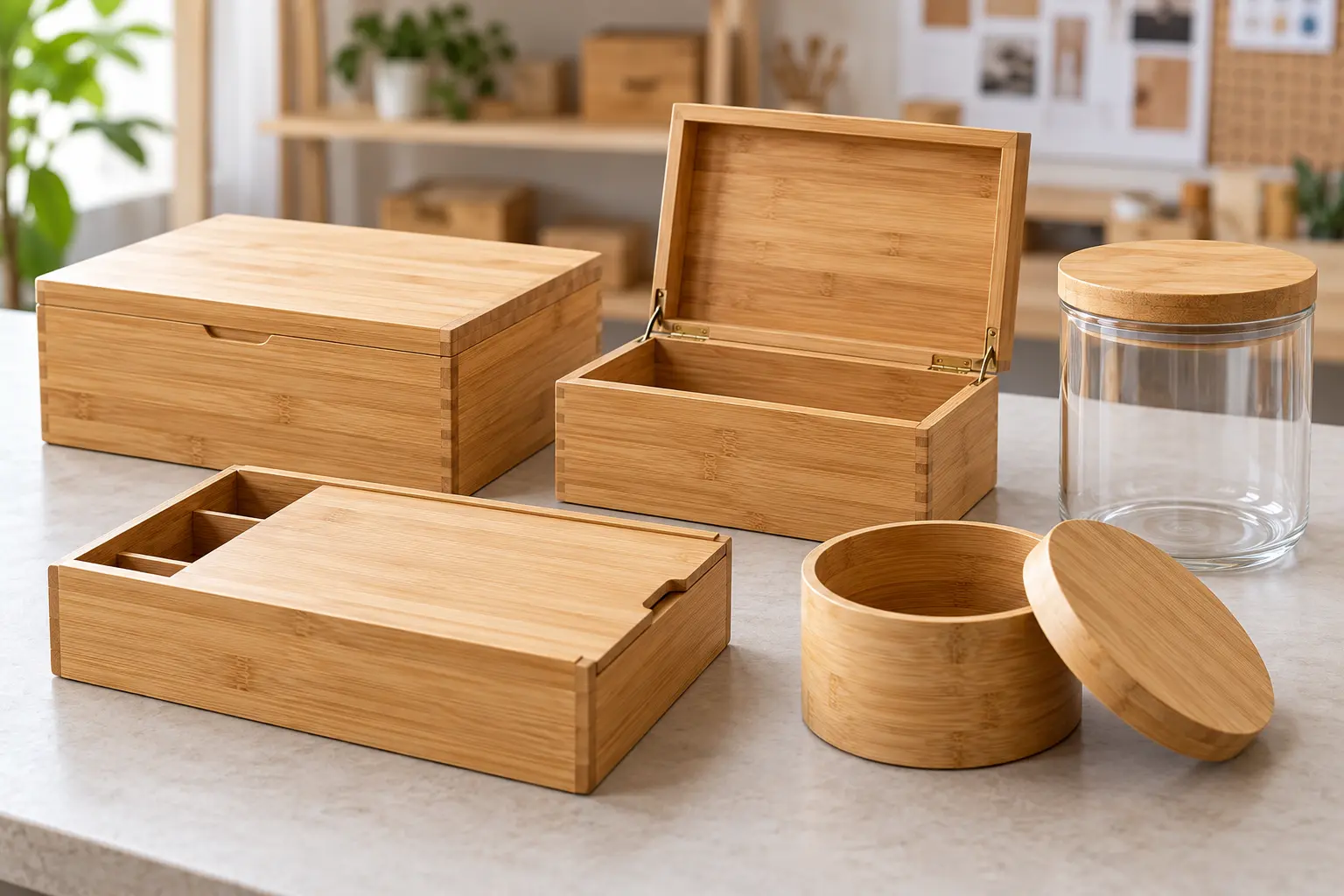
The phrase bamboo containers wholesale covers several product families. Search listings labeled “bamboo containers bulk” or “bamboo containers for sale” may include products with very different materials and functions. Some are boxes made mainly from laminated bamboo panels. Others combine a glass or polymer body with a removable bamboo top. A third group uses bamboo as an exterior sleeve, frame, tray or decorative element. These formats should not share one specification simply because they appear under the same search term.
- Home and office storage: bamboo boxes for storage, drawer organizers, desktop boxes, cable boxes and stackable organizer systems.
- Kitchen and pantry: bamboo canisters, tea or coffee boxes, rice-storage concepts and glass containers with bamboo lids.
- Presentation and gifting: hinged bamboo boxes, sliding-lid cases, gift sets, keepsake boxes and engraved packaging.
- Personal-care packaging: concepts for a bamboo deodorant container, lotion packaging, cosmetic jars or replaceable interior vessels.
- Specialized organization: a bamboo essential oil storage box, divided craft case, watch box, tea organizer or sample presentation kit.
Before requesting prices for bamboo containers in bulk, identify which family applies. That first decision affects drawings, tolerances, closures, surface treatment, labeling and the documents a buyer may need for the destination market.
Material and Construction Choices
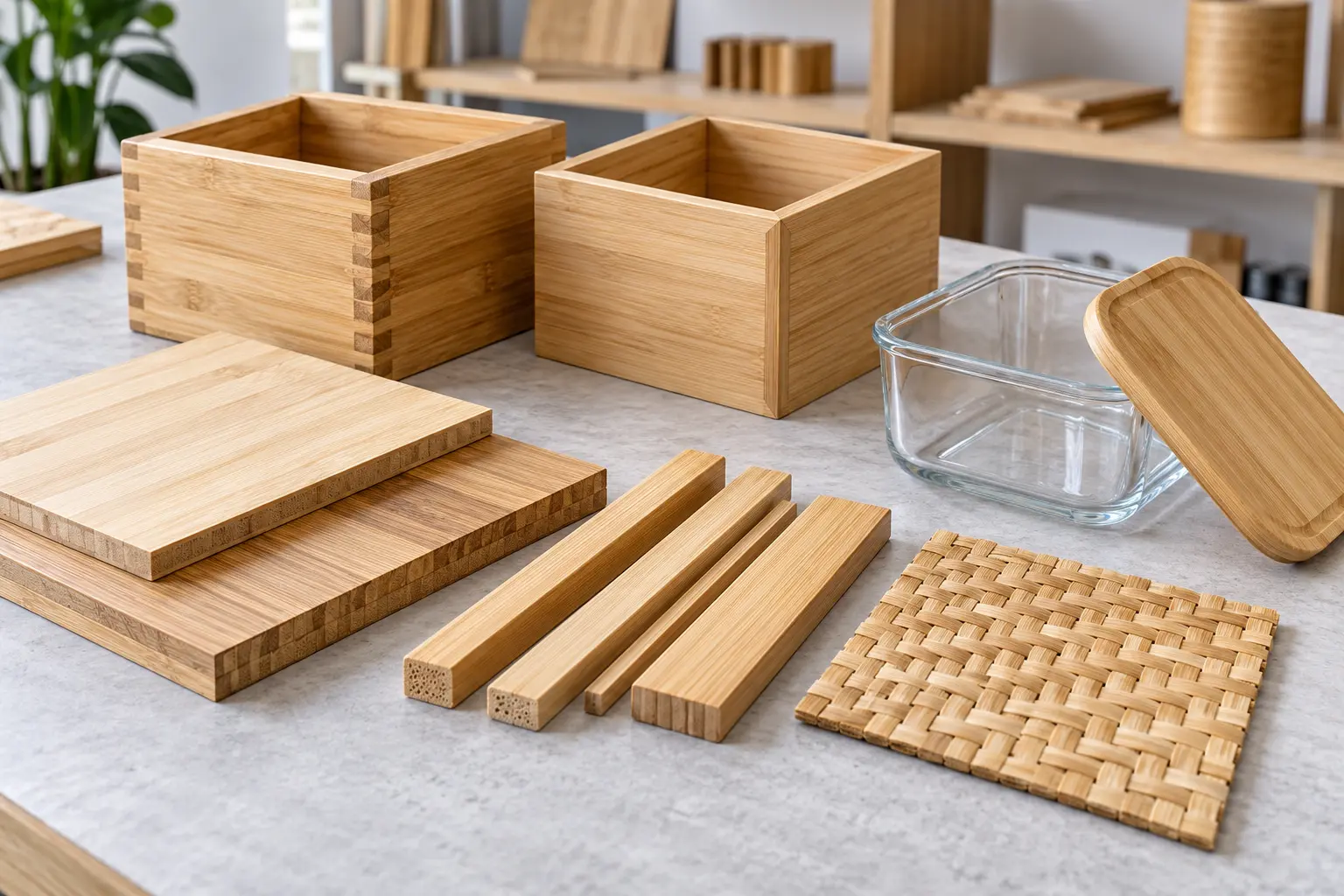
A custom box can be built from laminated bamboo panels, assembled bamboo strips, woven bamboo elements or a combination of bamboo with another substrate. The visible grain direction, panel thickness, edge treatment and joint design all influence appearance and performance. Buyers should describe the intended look rather than using “natural bamboo” as the entire material specification.
Panel-based bamboo boxes
Panel construction suits a clean, geometric bamboo wood storage box or organizer. It can support straight walls, routed recesses, dividers and accurately located hardware. The drawing should show outside dimensions, usable inside dimensions, wall thickness, base construction and acceptable grain orientation. If the box must fit a shelf, drawer or retail carton, specify the maximum outside size—not only a nominal size such as “15 × 5.”
Strip, slat and woven structures
Strip or woven designs create a lighter visual language and can be appropriate for breathable storage, gift packaging or decorative baskets. Their openings, rim construction and base support need to match the contents. A loose woven box intended for dry accessories should not be described as airtight or liquid-resistant. Samples are especially valuable because hand-visible texture and spacing can vary more than on flat panels.
Multi-material containers with bamboo tops
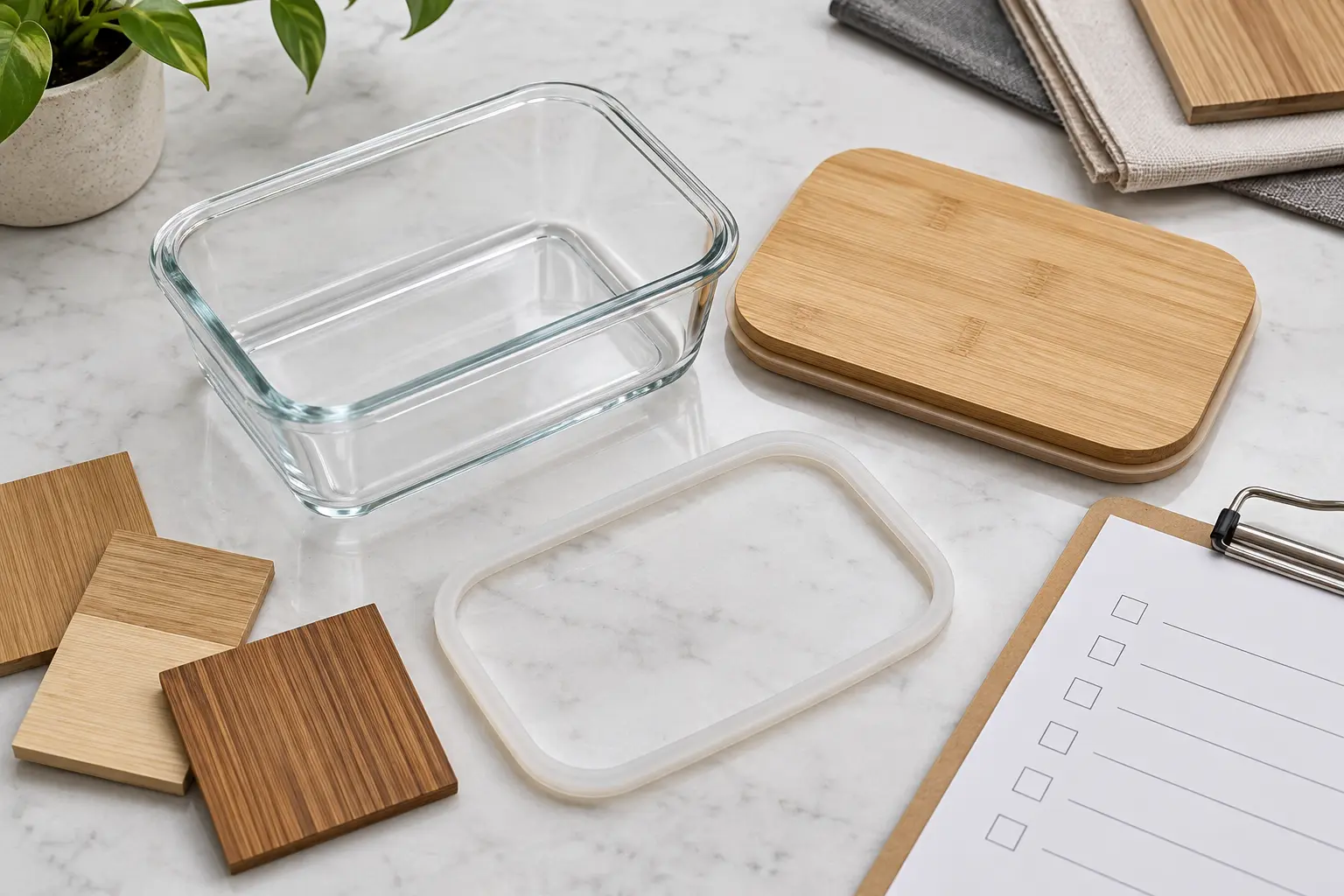
Searches such as “glass bamboo container,” “plastic container with bamboo lid” and “white storage box with bamboo lid” describe a combined product. The body material, bamboo lid, gasket, coating, adhesive and any printed decoration must be specified separately. The bamboo component may supply warmth and visual differentiation, while the glass or polymer body provides transparency or a particular barrier function. The final performance belongs to the complete assembly, not to the bamboo lid alone.
Choose the Lid and Opening System Around the Use Case
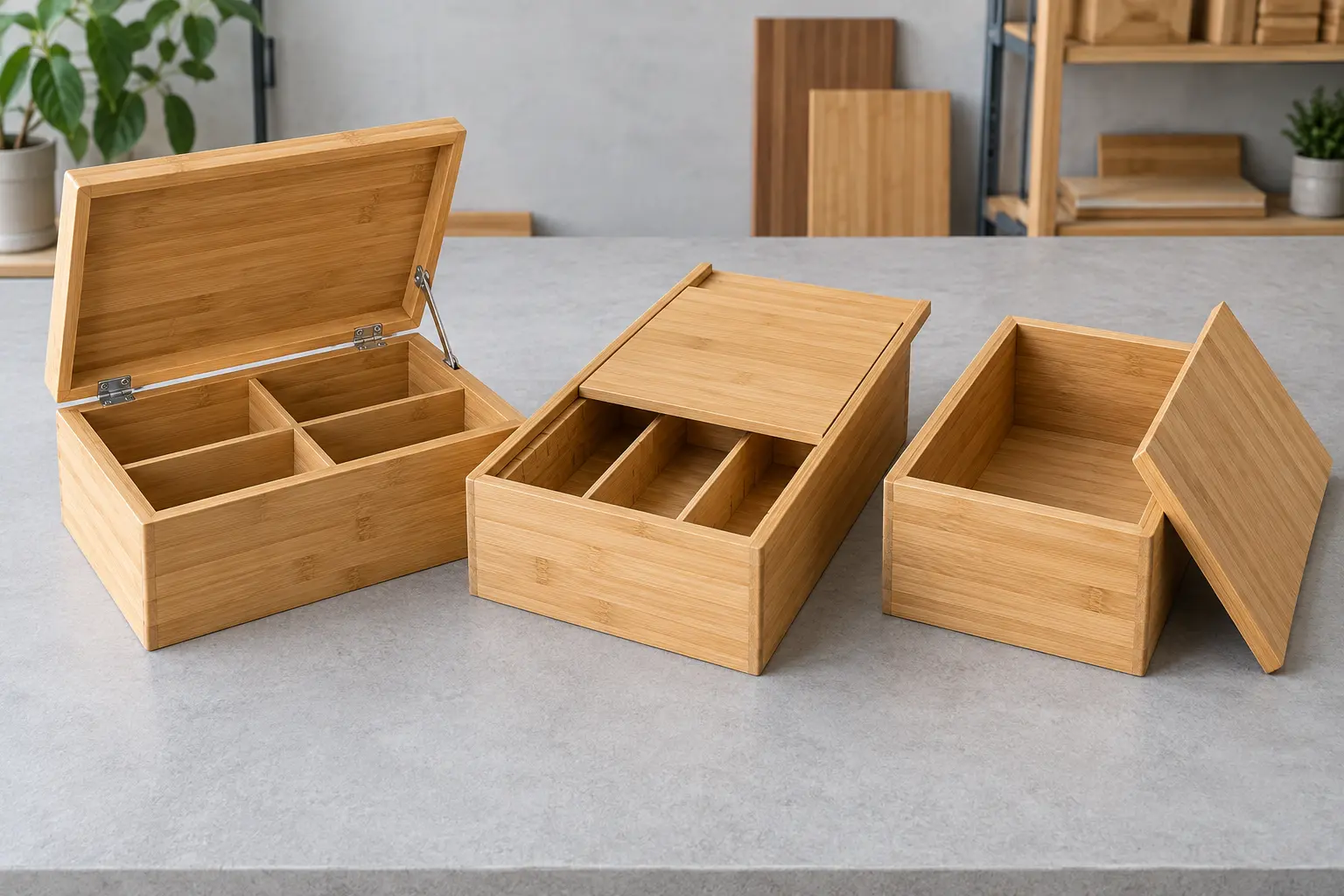
A lid changes both cost and user experience. It also determines where tolerances matter most. Listings for bamboo storage boxes with lids can refer to hinged, lift-off, sliding or gasketed designs, so buyers should name the required opening system. A bamboo box with hinged lid needs suitable hinge positioning, opening clearance and a reliable closed position. A lift-off lid should be easy to grip without feeling loose. A sliding lid needs a controlled track and enough clearance to move after normal environmental changes.
- Hinged lid: useful for presentation boxes, tea collections, keepsakes and frequently accessed organizers.
- Lift-off or nesting lid: simple for a round bamboo box with lid, small storage box or countertop container.
- Sliding lid: suitable for gift boxes, cutlery organizers and compact retail packaging when the opening direction is clearly defined.
- Gasketed bamboo top: common on glass or polymer canisters, but an airtight claim should be supported by an agreed test method and an approved production sample.
- Magnetic or clasp closure: can create a premium opening experience, provided the hardware location, pull force and destination-market requirements are reviewed.
For stackable bamboo storage boxes, include the stacking interface in the drawing. Buyers should state the intended stack height, expected contents and whether boxes must remain aligned during movement. “Stackable” should be treated as a measurable design requirement rather than a styling word.
Compartments, Round Forms and Specialized Inserts
A bamboo organizer box becomes more useful when the internal layout is designed from the contents outward. Send the dimensions and weight of every item that must fit, including caps, labels, cables or protective sleeves. Fixed bamboo dividers offer a permanent arrangement; removable dividers can support multiple assortments; and fitted foam, paperboard or molded inserts can protect delicate goods.
Round and cylinder formats require their own engineering review. A bamboo cylinder container may use rolled, segmented, laminated or composite construction depending on the desired wall and finish. Do not assume that a square box can simply be converted to a round version at the same specification or price.
For an essential-oil storage box, the buyer should supply bottle diameter, cap height, count, label-clearance needs and the desired orientation. Personal-care concepts need similar clarity. A bamboo exterior can house a separate refill or liner, but the component that directly contacts deodorant, lotion or another formulation requires compatibility and regulatory review for that precise use. Bamboo itself should not automatically be treated as a universal direct-contact packaging material.
From Custom Brief to Approved Prototype
Effective bamboo custom manufacturing begins with a specification that can be checked. A reference photo is helpful, but it cannot define internal dimensions, tolerances, finish, hinge position or packing. A buyer seeking bamboo boxes wholesale should prepare a concise technical brief before requesting a quotation.
- Define the application. State the contents, user, sales channel, target market and whether the product is decorative, organizational, food-contact or packaging.
- Supply dimensions. Include maximum outside dimensions, minimum usable inside dimensions, compartment sizes and product weight.
- Select construction. Identify preferred material appearance, lid style, base, joints, hardware, inserts and stacking features.
- Describe the finish. Specify color target, gloss level, tactile expectation, visible grain and any restricted substances or testing requirements.
- Provide artwork. Send vector logo files, print colors, engraving size, placement and acceptable variation.
- Approve the prototype. Review fit, opening action, appearance, branding, stability and packing before authorizing the production standard.
The approved sample and signed specification should work together. If a detail changes after sampling—such as a deeper engraving, thicker divider or different gasket—the revision should be recorded rather than communicated only through chat messages.
See a Real Bamboo-Box Making Process
The short video below shows a real bamboo-box making process at the factory. It gives buyers a practical look at production activity without implying that every custom box follows exactly the same sequence; materials, structure, finish and inspection points can change with the approved design.
Branding Options for Retail and Corporate Programs
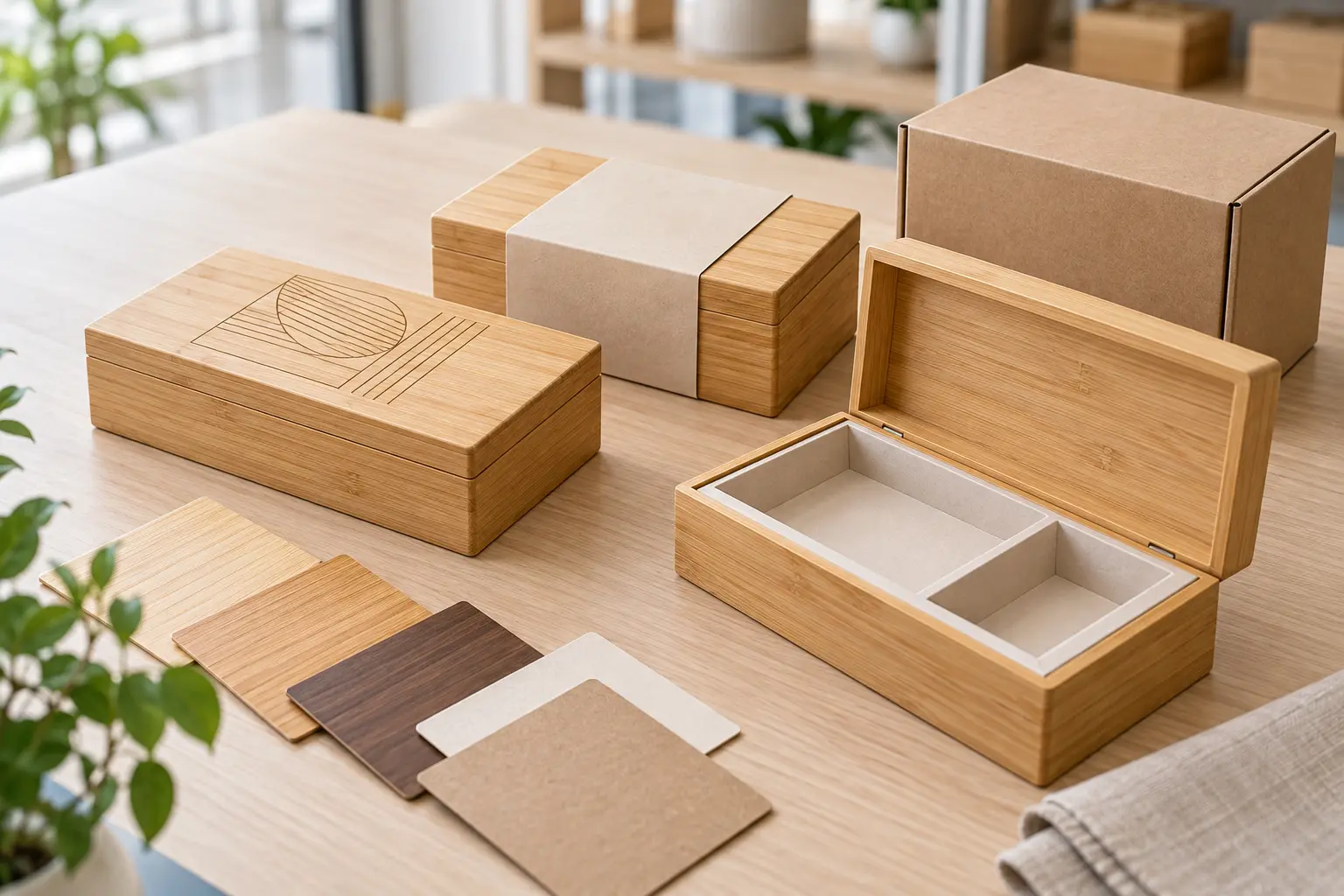
Custom bamboo boxes can carry a brand through laser engraving, printing, a metal badge, a paper sleeve, a label or branded interior packaging. Each method produces a different visual result. Engraving interacts with natural grain and may not look identical on every unit; printing requires defined color and adhesion expectations; applied badges introduce hardware or adhesive considerations.
Ask for a branded sample or representative branding trial before approving a large program. Check logo size, position, contrast, orientation when the box is opened, and visibility after retail packing. If multiple box sizes form a set, decide whether the logo should remain the same physical size or scale with each product.
Food-Contact and Performance Documentation
“Are bamboo containers safe?” cannot be answered from the material name alone. Safety depends on the full construction, intended food, temperature, contact time and conditions of use. Coatings, adhesives, inks, seals and the non-bamboo body may all be relevant. In the United States, the FDA explains that manufacturers are responsible for ensuring food-contact materials comply with the specifications and limitations of applicable authorizations. In the European Union, food-contact materials placed on the market must meet the framework requirements of Regulation (EC) No 1935/2004.
For a food container with bamboo lid or a bamboo canister set, buyers should define whether food directly touches the bamboo, a liner, a gasket or only the glass body. Then request documentation suited to that exact construction and market. A report for one material or color should not automatically be applied to a revised product.
The same caution applies to claims such as airtight, microwave safe, freezer safe, dishwasher safe or suitable for hot food. A bamboo-topped container is not automatically approved for those uses. If a claim matters to the listing, agree on the complete product configuration and a relevant validation method before mass production. Care instructions should match the approved materials and tests.
Useful starting references include the FDA guidance on the regulatory status of food-contact material components and the European Commission overview of food-contact materials legislation. The buyer and supplier should still confirm which requirements apply to the product and destination.
Quality Control for Bamboo Boxes in Bulk
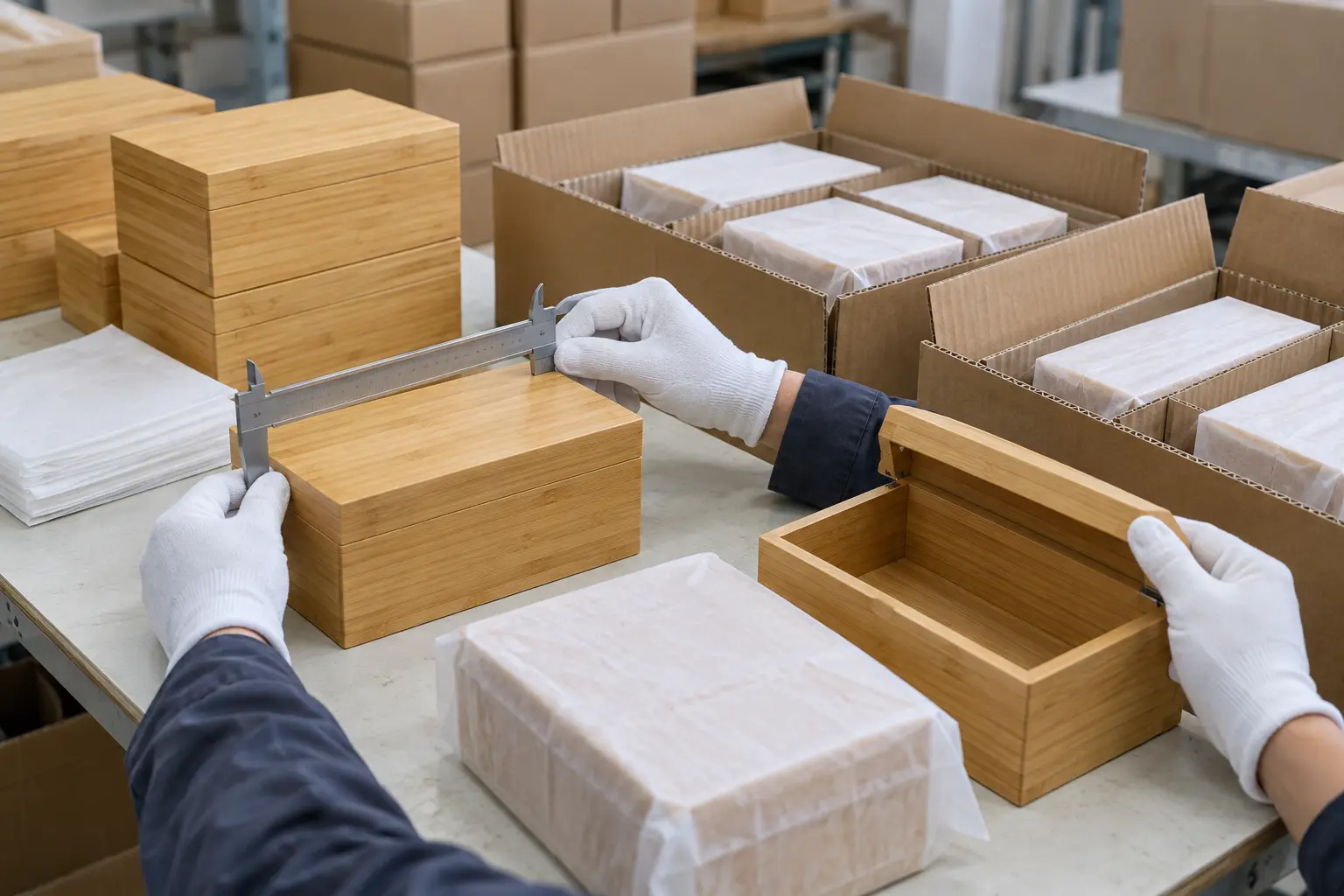
Quality criteria should be visible and measurable. Natural color and grain variation are expected in bamboo, but the approved range should still be communicated. Inspection should focus on the product’s function as well as appearance.
- Outside and inside dimensions, compartment fit and lid alignment
- Joint condition, edge smoothness, base stability and hardware security
- Opening and closing action for hinges, tracks, magnets or lift-off lids
- Finish consistency, visible glue residue, scratches, dents and unacceptable surface defects
- Logo location, legibility, orientation and approved appearance range
- Gasket fit, stacking alignment or insert retention where those features are specified
- Retail labeling, barcode readability, accessory count and carton markings
For performance claims, add the agreed test and acceptance rule to the inspection plan. A visual check cannot prove airtightness, load capacity or temperature suitability. The inspection level and sampling method should be agreed between buyer, supplier and any third-party inspection company.
Packaging and Shipping Considerations
Boxes can scratch one another, lids can shift and projecting hinges can mark adjacent products. Protective packing should therefore be developed with the product rather than added at the end. Options may include tissue, sleeves, dividers, corner protection, individual cartons or nested components when the design safely allows it.
For a large bamboo storage box, a glass-and-bamboo canister set or a multi-piece organizer, confirm packaged dimensions and weight early. Retail display requirements, drop-test expectations, pallet limits and e-commerce parcel handling can lead to different pack designs. If reducing plastic is a project goal, state it in the brief and review protective alternatives through transit testing rather than removing protection without validation.
Questions to Ask a Bamboo Box Manufacturer
- Which construction is suitable for the intended dimensions, contents and opening method?
- Which details require a drawing, physical sample or prototype before quotation approval?
- How will material, grain, color and finish variation be defined for inspection?
- Can the proposed lid, insert and closure be tested against the actual contents?
- What documentation is available for the exact materials, coating, adhesive, gasket and intended use?
- How will branding be sampled and controlled across different box sizes?
- What individual and master-carton protection is proposed, and how will it be validated?
Plan Your Custom Bamboo Box Project
A successful wholesale project starts with a clear use case, complete dimensions and realistic performance claims. Whether you need a bamboo organizer box, hinged gift case, divided essential-oil box, round container or storage system with bamboo lids, the best next step is a feasibility review based on drawings and actual contents.
Send your concept, dimensions, target market, artwork and packaging requirements to Fujian Xianxu Bamboo & Wood Co., Ltd. to discuss a custom bamboo box or container program. Specifications, material choices, documentation and commercial terms can then be evaluated for the proposed design rather than assumed from a generic product name.
Frequently Asked Questions
What information is needed to quote custom bamboo boxes wholesale?
Provide the application, outside and inside dimensions, quantity target, material preference, lid style, compartments, finish, logo artwork, target market and packing requirements. Include the size and weight of the items placed inside. A drawing or reference sample reduces ambiguity.
Can bamboo boxes be made with hinged, sliding or removable lids?
These are common design directions, but feasibility depends on box size, panel construction, hardware, tolerances and intended use. The closure should be reviewed in a prototype and recorded in the approved specification.
Are bamboo food containers automatically food safe?
No. Suitability depends on every food-contact component, the intended food, temperature, contact duration and applicable market rules. Ask for documentation that matches the exact bamboo, coating, adhesive, liner, gasket and body material used in the final product.
Does a bamboo lid make a container airtight?
Not by itself. Airtightness depends on the complete lid geometry, gasket, container rim and manufacturing tolerances. If airtight performance is required, define a test method and acceptance criteria for the approved assembly.
Can bamboo containers go in a microwave, dishwasher or freezer?
Do not make that assumption. A multi-material container may have different care limits for its body, bamboo lid and gasket. Claims and instructions should be based on the exact construction and relevant validation.
Can logo engraving be identical on every bamboo box?
Natural grain and color can influence engraving contrast, so reasonable visual variation should be expected. Approve the size, location and acceptable appearance range on representative samples before production.