
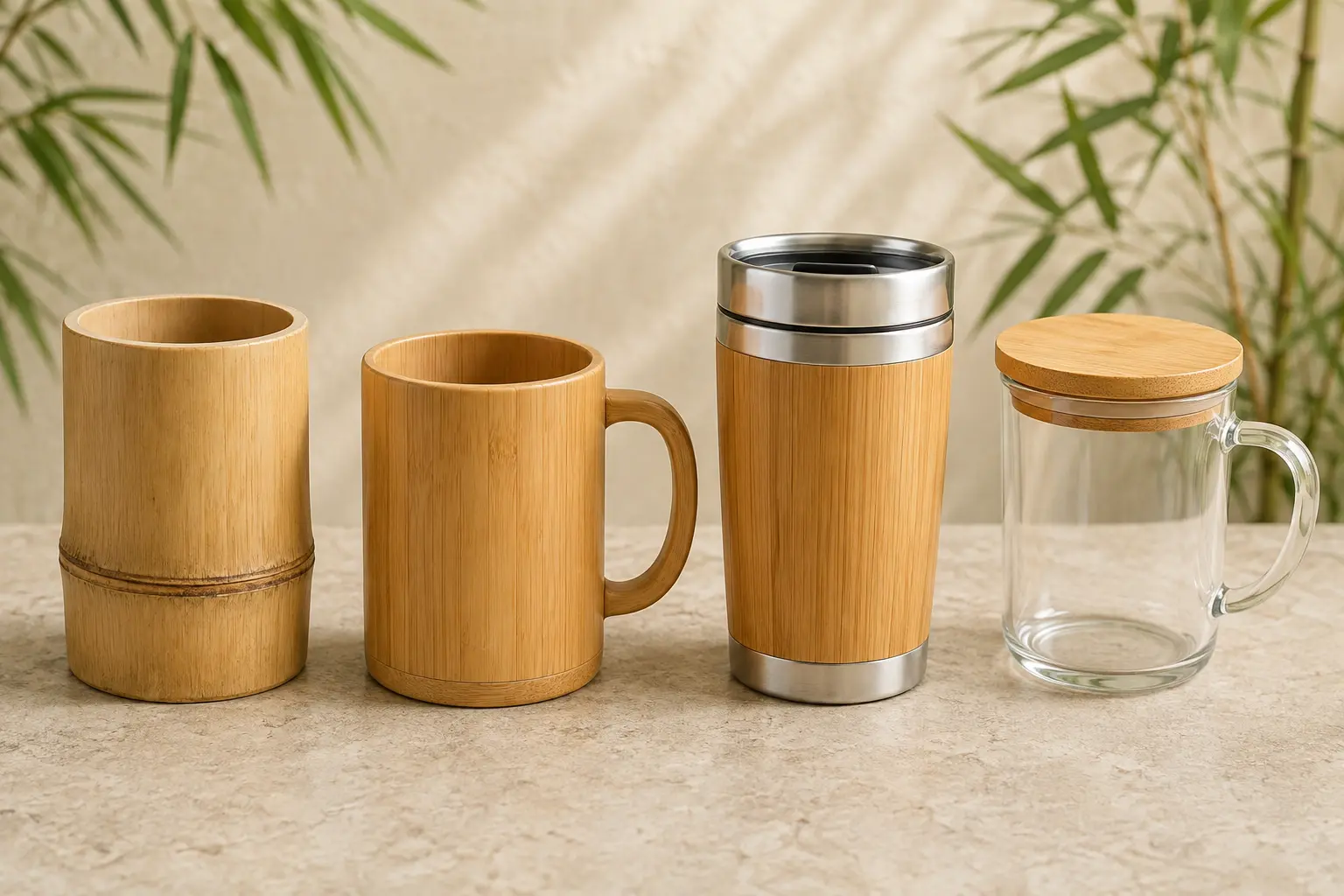
Search for a bamboo cup and the results can look surprisingly inconsistent. One item may be cut from a section of bamboo culm, another may be assembled from laminated bamboo, and a third may be a moulded composite that combines bamboo fibre with a binder. You may also find glass, ceramic or stainless-steel drinkware described as “bamboo” simply because it has a bamboo lid, handle or outer sleeve.
Those products can have different appearances, care requirements and intended uses. The useful first question is therefore not “Is this a good bamboo cup?” but “What does bamboo mean in this particular design?” This guide explains the main constructions, common cup styles and specification points that help buyers compare bamboo drinking cups accurately.
What Is a Bamboo Cup?
Bamboo cup is a broad market term, not a complete material specification. It can describe a vessel whose main body is bamboo, a cup made with processed bamboo fibre, or conventional drinkware with one visible bamboo component. The same ambiguity applies to related phrases such as bamboo cups, bamboo drinkware, cup made of bamboo and bamboo eco mug.
A product title alone rarely tells you enough. A clear description should identify every material that contacts the drink, the finish or coating, the lid and seal materials, and the care instructions for the complete product. This is especially important when two cups share a natural-looking surface but use very different structures underneath.
Five Constructions Commonly Sold as Bamboo Cups
| Construction | What the product actually is | Typical appearance | What to confirm |
|---|---|---|---|
| Natural bamboo culm | A section of the hollow bamboo stem shaped into a vessel | Visible nodes, grain and natural variation | Interior finish, base construction and intended beverage use |
| Laminated bamboo | Bamboo strips or layers bonded and machined into a cup or mug | Regular grain and a controlled profile | Adhesive system, finish and food-contact documentation |
| Moulded bamboo-fibre composite | Processed bamboo fibre combined with one or more binders and formed in a mould | Uniform wall, many colours and repeatable shapes | Full formulation, applicable test reports and temperature limits |
| Bamboo-pulp paper cup | A disposable or limited-use fibre cup made partly or mainly from bamboo pulp, normally with a liquid barrier | Paper-cup form with printed or natural-colour exterior | Barrier material, use conditions and disposal claim evidence |
| Bamboo-accented vessel | Glass, ceramic or metal cup with a bamboo lid, handle, sleeve or decorative shell | Mixed-material design | Primary vessel material and care instructions for removable parts |
1. Natural bamboo culm cups
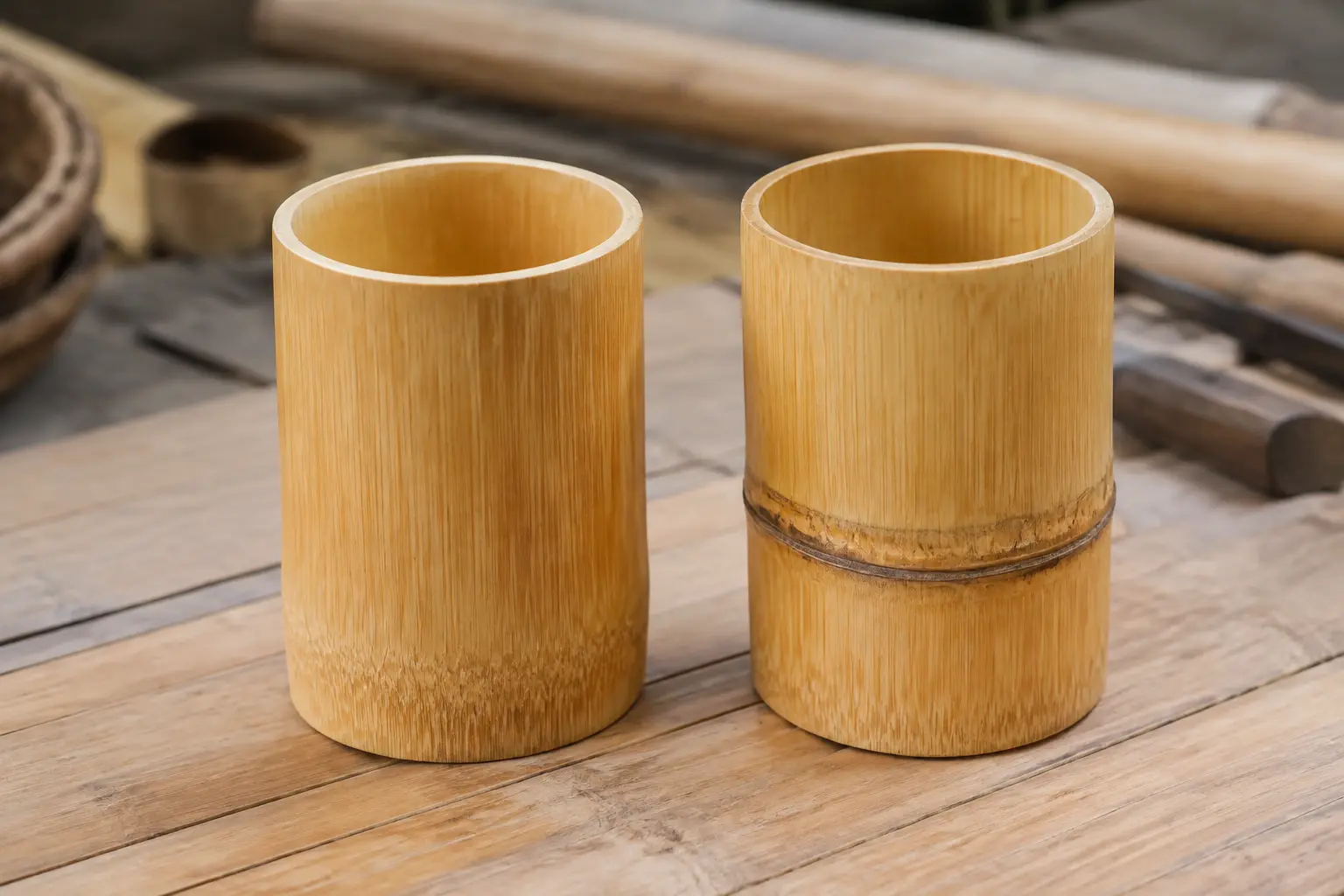
A traditional natural bamboo cup starts with the plant’s hollow stem. A suitable section is cut, dried and shaped, while a node or fitted base closes one end. The grain, wall thickness and diameter naturally vary. That variation is part of the visual character, but it also means that perfectly identical pieces should not be assumed.
Natural-culm designs are often offered as handleless drinking cups, tea vessels or rustic-style serving pieces. A bamboo beer mug may add a separate handle or use a wider culm section. Before assigning an application, buyers should establish the finish, the beverage conditions covered by the supplier’s instructions and the way the base is sealed.
2. Laminated or assembled bamboo cups
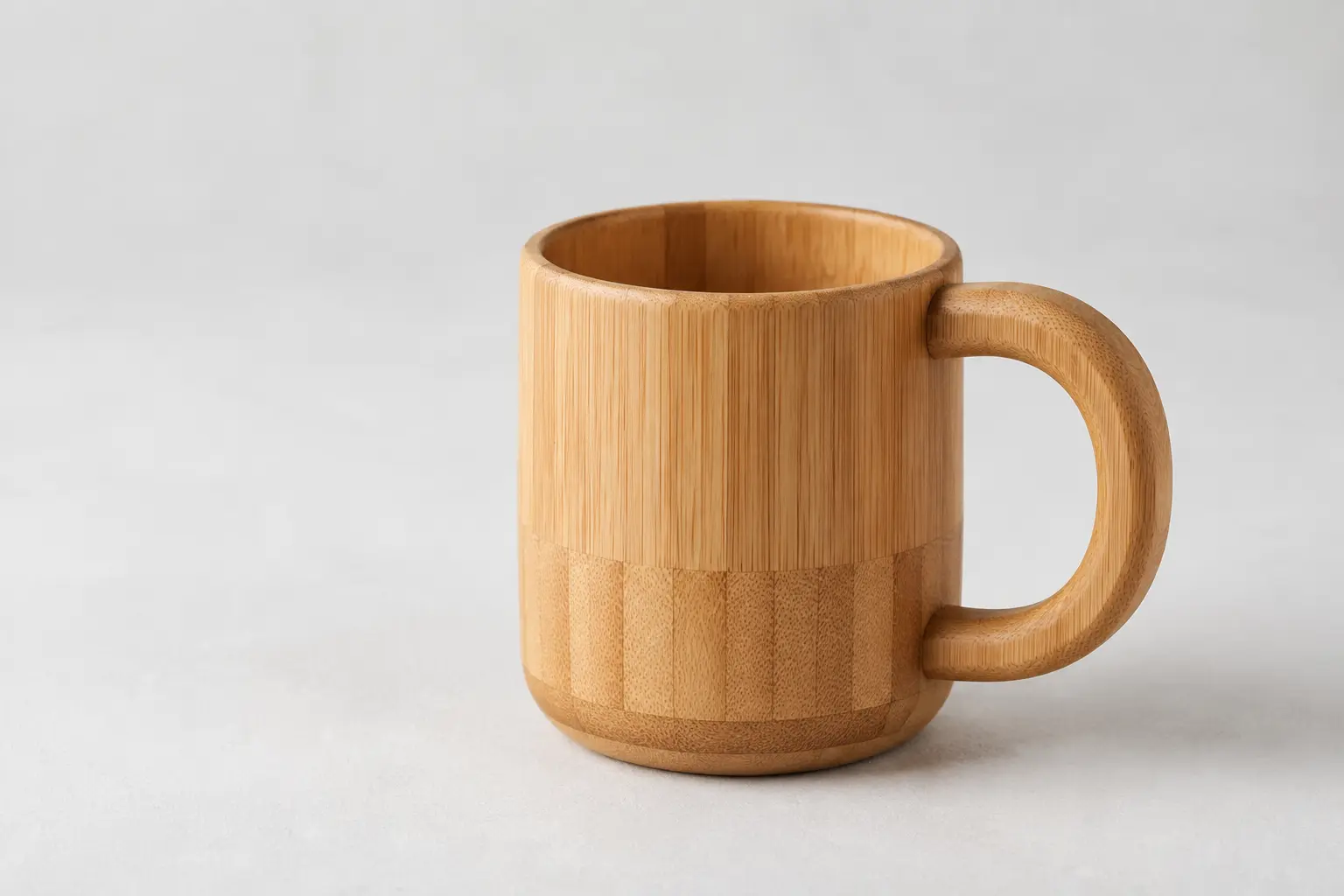
Laminated bamboo is made by joining prepared strips or layers before machining the resulting blank. This route allows designers to create more regular walls, handles and geometric profiles than a natural stem may permit. A laminated bamboo mug with handle, for example, can follow a familiar coffee-mug silhouette while retaining visible bamboo grain.
The word “laminated” also signals that other materials are present. The adhesive and surface treatment matter as much as the bamboo itself when evaluating a drinkware project. Ask for a bill of materials and documentation relevant to the intended market rather than inferring suitability from the exterior.
3. Moulded bamboo-fibre composite cups
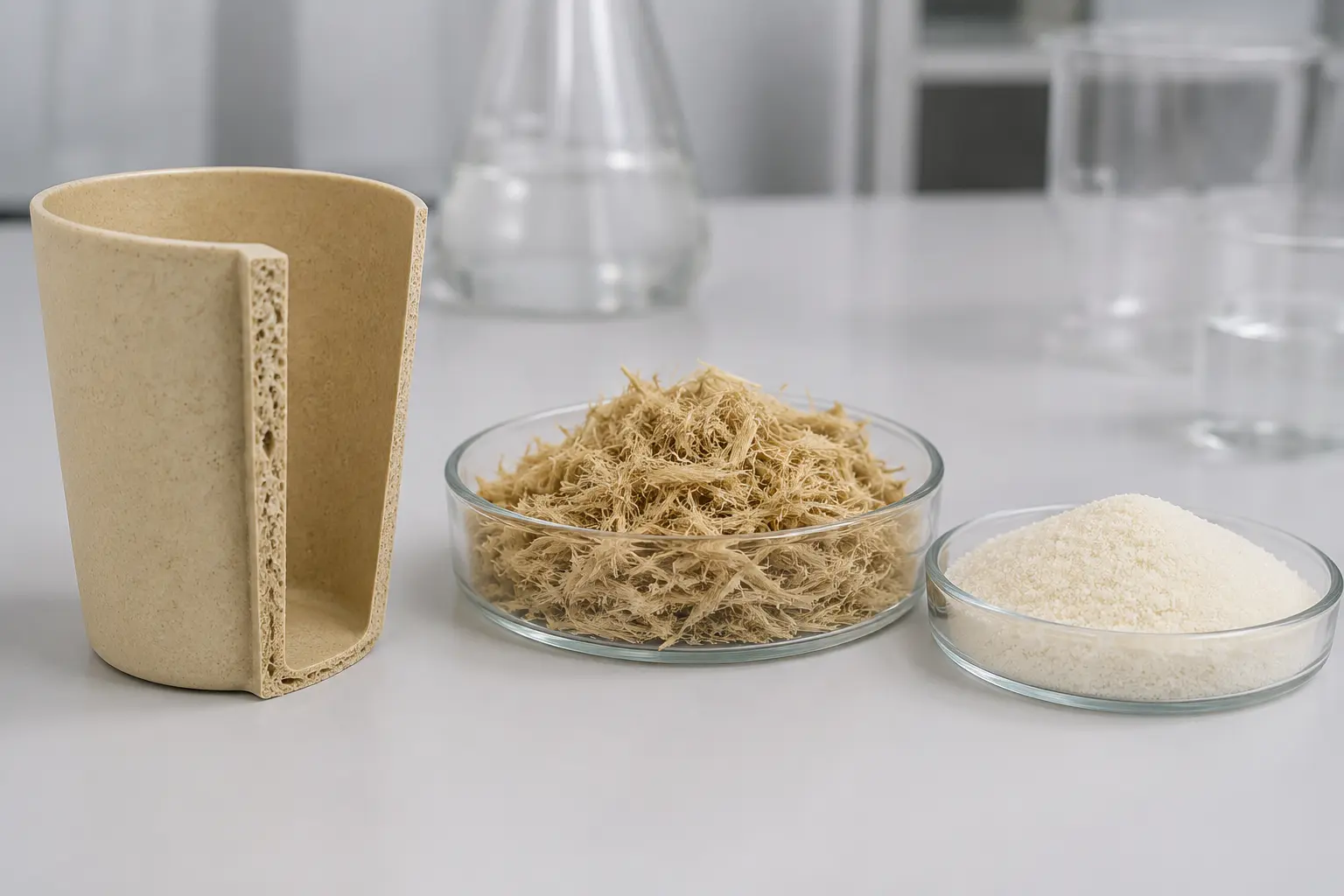
In a moulded composite, bamboo fibre acts as one constituent within a formulated material. A binder gives the cup its shape and influences its performance. The result can support uniform dimensions, coloured surfaces and repeatable decorative details, but “bamboo fibre” does not identify the binder or its proportion.
This category should never be presented as if it were a piece of solid bamboo. Nor should labels such as plastic-free, compostable, biodegradable, microwave-safe or suitable for hot drinks be applied solely because bamboo fibre appears in the formula. Such statements require evidence for the exact composition, finished article and market in which it will be sold.
4. Bamboo-pulp beverage cups
Bamboo can also be processed into pulp for paper-style cups. These products belong to the fibre-packaging category rather than traditional bamboo craft. Because paper fibres alone do not normally provide a liquid barrier, the cup’s coating or lining is a central part of its specification. “Made with bamboo pulp” therefore does not automatically describe the whole package or its end-of-life route.
5. Cups with bamboo lids, sleeves or shells
A ceramic mug with a bamboo lid, a glass tumbler with a bamboo sleeve and a stainless-steel vessel with a bamboo exterior all use bamboo differently. In each case, the non-bamboo vessel performs the principal liquid-holding function. The bamboo element can contribute texture, visual warmth or a surface for decoration, but it should not obscure the core material in the product description.
For example, a listing headed “mug with bamboo lid” is clearer than one that calls the whole product a solid bamboo mug. Accurate naming improves customer expectations and helps users follow the right instructions for the vessel, lid and seal separately.
Bamboo Cup, Beaker, Tumbler or Mug?
Drinkware vocabulary changes by country and sales channel. In general English, a cup may have a handle, while a tumbler is usually handleless. A mug tends to be taller or larger and normally includes a handle. These conventions are useful, but they are not technical standards.
- Bamboo drinking cups: a broad phrase for handleless or handled vessels intended for beverages.
- Bamboo beakers: in British usage, “beaker” can mean a simple handleless drinking vessel. Laboratory beakers are a separate product category and should not be confused with tableware.
- Bamboo Becher: Becher is the German word commonly used for a cup or tumbler. International listings may use this term, but the material still needs to be stated.
- Bamboo mug: normally a handled vessel, although online listings do not always follow that convention.
- Bamboo tumbler: often a taller, handleless shape; a lid may convert it into a portable format.
For SEO and product catalogues, use the term that matches the actual design. Adding dimensions, nominal capacity, material composition and a clear photograph is more informative than repeating several near-synonyms in one title.
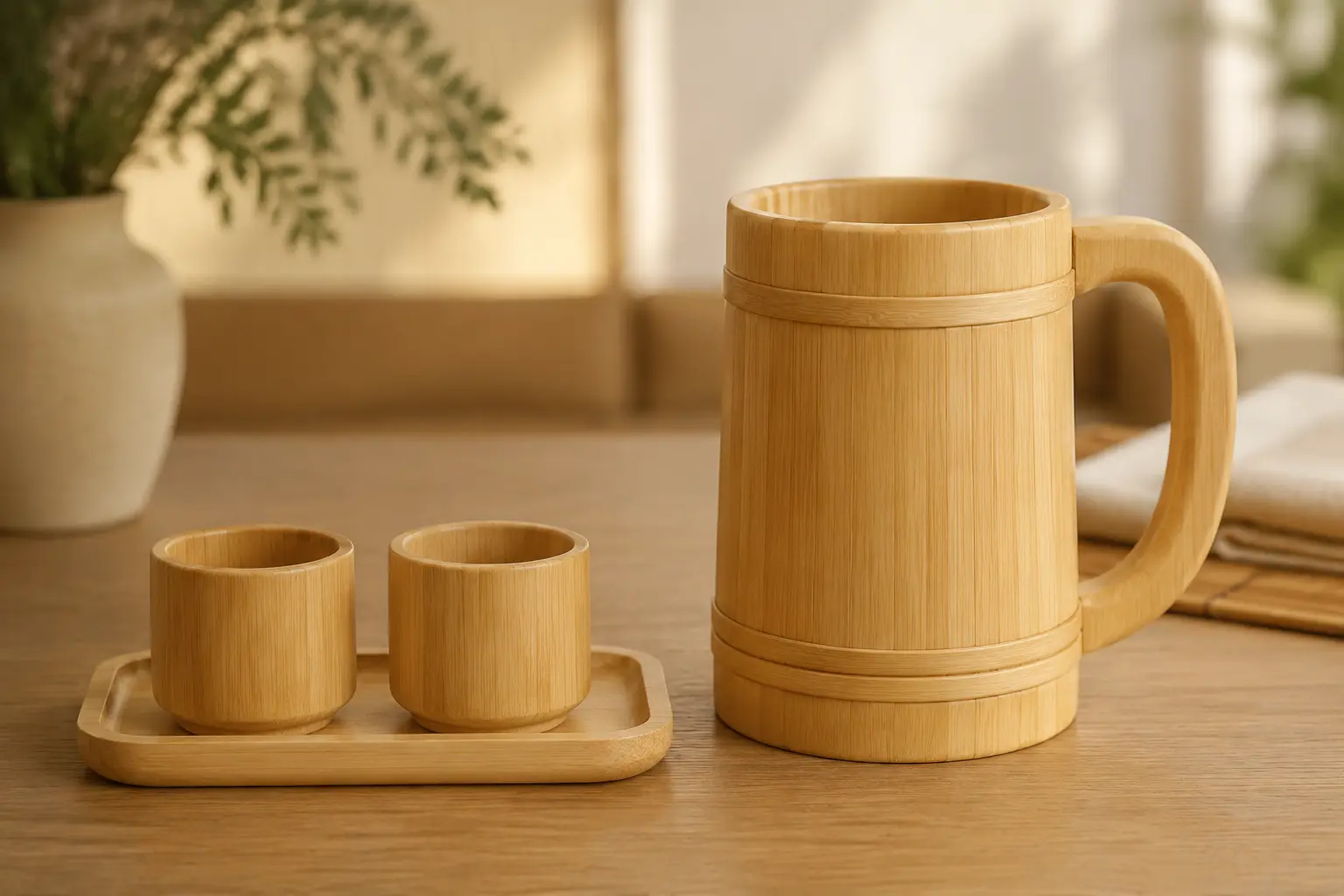
Common Bamboo Drinkware Styles and Uses
Everyday drinking cups
Simple bamboo drinking cups focus on a comfortable rim, stable base and practical grip. Handleless natural-bamboo forms suit a rustic visual direction, while machined or mixed-material designs can provide more control over dimensions. “Everyday” should not be treated as a claim that every beverage or cleaning method is acceptable; the documented use conditions still govern the product.
Bamboo mugs with handles
A handle changes both appearance and engineering. Its opening must fit the intended user, and its connection to the body needs enough surface area for the expected load. On a mixed-material mug, the handle may be bamboo even when the vessel is ceramic or metal. On a natural or laminated bamboo mug, it may be joined as a separate component. Product copy should make that difference clear.
Bamboo tea cups and tea cup sets
A bamboo tea cup may be a small handleless vessel inspired by traditional service, a larger bamboo tea mug, or a conventional ceramic cup paired with a bamboo tray or lid. A bamboo tea cup set may include matched cups, a tray, coasters or a storage box. When comparing sets, count the pieces and list their materials individually; “six-piece” can mean six cups or a combination of accessories.
Bamboo beer mugs and serving pieces
The phrase bamboo beer mug usually describes a larger handled design with a robust visual style. Its intended serving temperature, internal finish and capacity should be explicit. If the piece is decorative, ceremonial or intended only for a narrower set of uses, state that directly rather than allowing the word “mug” to imply universal beverage suitability.
How Bamboo Mug Design Affects the User Experience
A successful bamboo mug design is more than a natural-colour surface. Start with the way the cup will be held, filled, used and cleaned. Each decision affects the others.
- Rim geometry: thickness, roundness and finish influence drinking comfort and pouring.
- Base stability: the footprint should suit the cup’s height and expected setting, whether a dining table, tasting counter or gift set.
- Grip: diameter, taper, surface texture and handle clearance determine how easily the cup can be held.
- Interior: specify the substrate, coating and any joints that contact the beverage.
- Lid interface: for lidded styles, identify whether the lid rests on top, uses a gasket or screws into place. “With lid” does not automatically mean leakproof.
- Decoration area: a logo or pattern must fit the curvature, grain and chosen decoration process. Natural variation can affect visual consistency.
- Cleaning access: narrow openings, deep corners and multi-part lids can make manual cleaning more involved.
Prototypes are useful because a drawing cannot fully communicate weight balance, lip feel, handle comfort or the way natural grain interacts with artwork. Review the complete sample, not only a digital logo proof.
A Material-First Selection Checklist
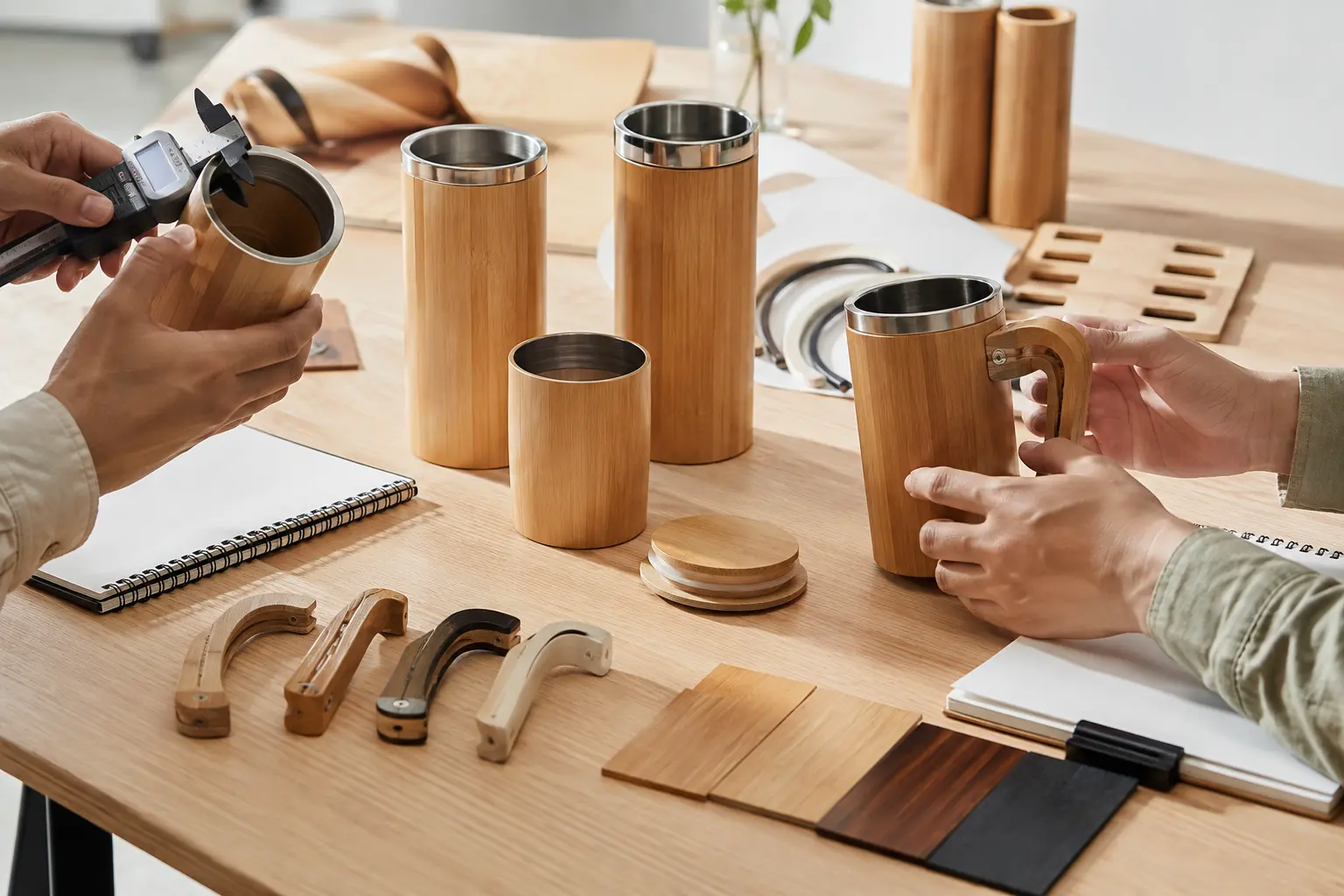
Instead of beginning with a marketing label, define the use case and work back to a documented construction. The following questions help turn a broad search for bamboo cups into a workable specification:
- Is the cup intended for repeated use, single use, display or gift presentation?
- Which drinks, fill temperatures and contact times are expected?
- Which material forms the liquid-contact surface?
- Does the product contain a coating, adhesive, binder, liner, gasket or seal?
- Is a handle, lid, straw opening or infuser required?
- Must pieces match closely, or is natural variation acceptable?
- What capacity, dimensions and weight range are required?
- Which decoration method and artwork size are proposed?
- What packaging protects the rim, handle and surface finish?
- Which market will receive the product, and what documentation does that market require?
- What care instructions and limitations must appear on the product or packaging?
This checklist also prevents an avoidable sourcing error: approving an attractive exterior before confirming the unseen materials and use conditions.
Care Depends on the Complete Construction
There is no single care rule for all bamboo drinkware. Natural bamboo, a laminated body, a moulded composite and a stainless-steel mug with a removable bamboo lid respond differently to heat, moisture and detergents. Follow the instructions supplied for the exact model.
Where hand washing is specified, clean promptly with suitable materials, avoid prolonged soaking and allow separated components to dry fully before reassembly. Do not assume that a removable bamboo lid can follow the same dishwasher or microwave instructions as the glass or ceramic vessel beneath it. If instructions are missing or unclear, ask the seller before use rather than relying on the word “bamboo.”
Frequently Asked Questions
Are all bamboo cups made from solid bamboo?
No. The name may refer to natural bamboo culm, laminated bamboo, a bamboo-fibre composite, bamboo-pulp paper or a non-bamboo vessel with a bamboo component. Check the complete material declaration.
What is the difference between a bamboo cup and a bamboo mug?
A mug usually has a handle and is often larger, while “cup” is the broader term. Online sellers use the words inconsistently, so compare the actual dimensions, capacity, handle and material rather than relying on the title.
Is a glass cup with a bamboo lid a bamboo cup?
It may appear in that search category, but an accurate product description should call it a glass cup with a bamboo lid. Glass is the liquid-holding vessel; bamboo is one component.
Does bamboo fibre mean the cup is plastic-free?
Not necessarily. Moulded bamboo fibre needs a system that binds the fibres into a stable shape. Obtain the full formulation and evidence before making plastic-free, compostability or similar claims.
Can every bamboo cup hold tea, coffee or beer?
No universal answer applies. Suitability depends on the body material, liquid-contact finish, construction and documented conditions of use. Use only as directed for the exact product.
Why do natural bamboo cups look different from one another?
Bamboo culms naturally vary in diameter, wall thickness, node position, grain and colour. Sorting and finishing can control the range, but buyers who require close visual matching should define acceptable limits in the sample approval.
Turn “Bamboo Cup” into a Clear Product Brief
The best bamboo cup brief identifies the construction before discussing colour or logo placement. Define the beverage, contact conditions, vessel material, finish, components, dimensions, decoration, packaging and destination market. With those facts in place, a supplier can evaluate whether natural bamboo, laminated bamboo or a mixed-material concept is feasible.
For a material and project feasibility review, share your drawings, intended use and destination market with Fujian Xianxu Bamboo & Wood Co., Ltd.. A precise brief makes it easier to identify open questions, choose a suitable sample direction and avoid misleading product descriptions.