
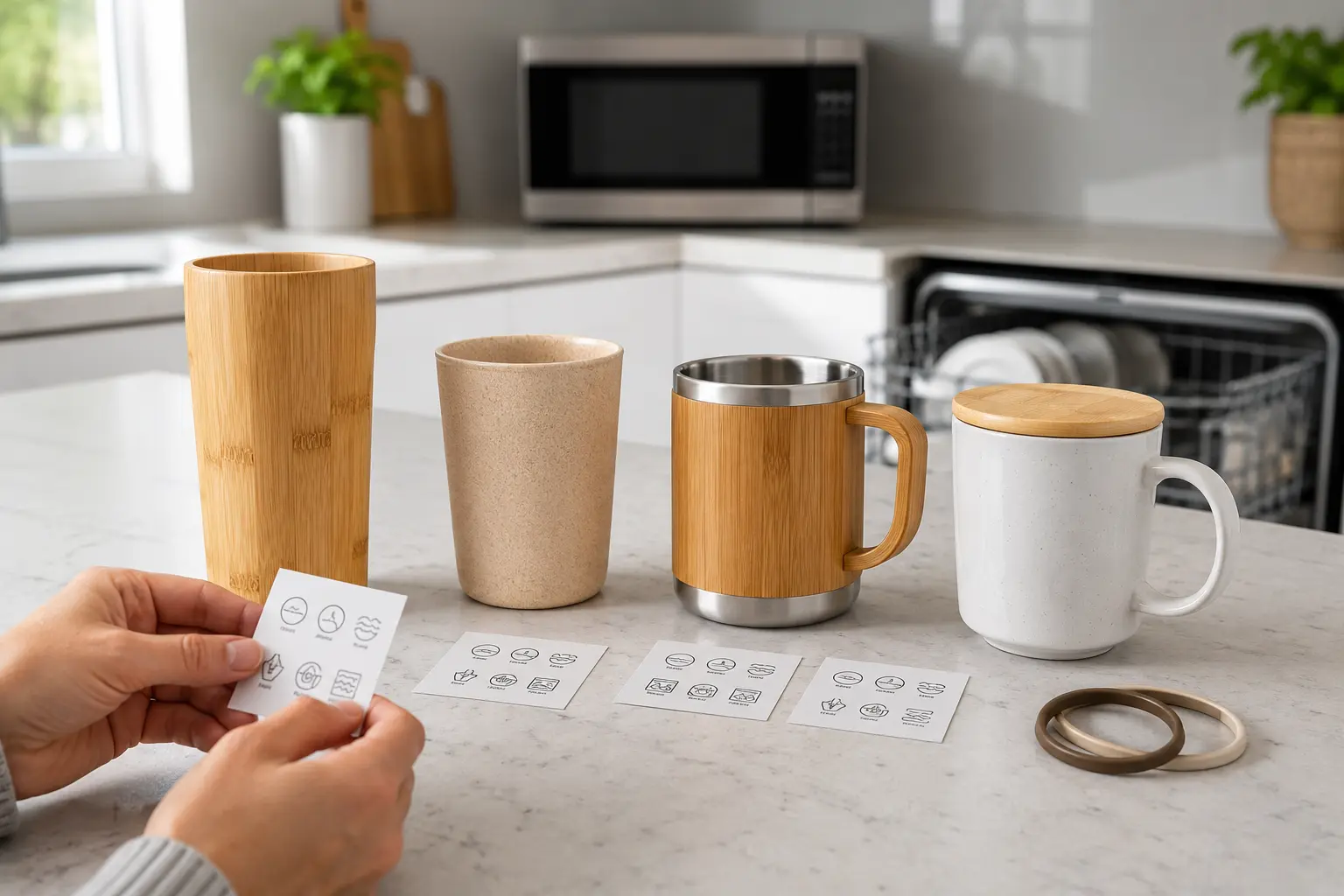
A product described as a bamboo cup may be carved from natural bamboo, assembled from laminated strips, molded from bamboo fibre and plastic, made from stainless steel with a bamboo exterior, or paired with a bamboo lid or handle. Those constructions respond very differently to heat, water and detergent. That is why there is no honest universal answer to “are bamboo mugs microwave safe?” or “is a bamboo coffee cup dishwasher safe?”
The dependable answer comes from identifying every material, reading the exact instructions and checking whether the finished configuration was evaluated for its intended use. A bamboo-looking cup may still contain metal, adhesive, coating, resin or silicone. Search phrases such as “bamboo cup microwave safe” and “microwave bamboo cup” hide that essential material question.
Are Bamboo Mugs Microwave Safe? The Short Answer
Do not microwave a bamboo cup unless the manufacturer clearly identifies the construction and explicitly marks that exact cup, including its non-removable components, as microwave-safe. Remove a lid or sleeve only when the instructions tell you to do so. Never put a stainless-steel vessel or another metal component in a microwave.
The U.S. Food and Drug Administration explains that metal reflects microwaves and can cause uneven heating or damage to an oven. It also notes that some plastic containers can be affected by heat, even though microwaves pass through plastic. The FDA therefore directs users to the container and oven instructions rather than assuming that a material category is safe. See the FDA's microwave oven guidance.
A similarly conservative rule applies to dishwashers. Unless the care label specifically says that the complete product—or named removable parts—can be washed in a dishwasher, wash it by hand. A marketing phrase such as “bamboo eco mug” does not reveal how its body, coating, adhesive, seal or lid reacts to a hot, wet cleaning cycle.
First Identify What “Bamboo Cup” Means
Most confusion begins with the product name. “Bamboo” can describe the food-contact surface, a filler inside plastic, or only a decorative exterior. Before deciding whether a bamboo cup is microwave safe, ask for a material breakdown that covers the body, liner, finish, adhesive, lid, gasket, drinking port and any decoration.
| Construction sold as a bamboo cup | Microwave decision | Dishwasher decision | Hot-drink decision |
|---|---|---|---|
| Natural solid bamboo | Use only if the exact finished cup is explicitly approved; otherwise do not microwave | Hand-wash by default unless the maker validates dishwasher use | Use only within the stated temperature and contact-time limits |
| Laminated bamboo | Do not assume suitability because adhesives, joints and finishes vary | Hand-wash by default unless the complete assembly is approved | Confirm the adhesive, coating and finished article are intended for the drink and temperature |
| Bamboo-fibre/resin, melamine or plastic composite | Do not microwave; check current rules in the destination market | A dishwasher claim does not settle whether the material is legally suitable for food contact | Official European and British authorities have raised specific concerns about bamboo-plastic composites, especially with heat |
| Stainless-steel body with bamboo exterior | Never microwave because the body is metal | Follow the model's instructions; some decorative bamboo parts may require hand washing | Check the steel grade, lid, gasket, insulation and declared use |
| Ceramic or glass body with bamboo lid or handle | Only the parts expressly marked microwave-safe; bamboo lids and metal fittings normally need separate handling | Check the vessel and accessories separately | Confirm thermal-use instructions and inspect removable parts before each use |
This table is a screening guide, not a substitute for the instructions supplied with a specific SKU. Two cups with a similar appearance can use different resins, finishes, liners and seals. The intended beverage, maximum fill temperature, contact time and cleaning method must be assessed together.
Natural and Laminated Bamboo Cups
A natural bamboo drinking cup may be made from a section of culm or assembled from shaped material. A laminated design is built from multiple bamboo pieces and may depend on adhesives and surface finishes. Neither description, by itself, tells a buyer whether the finished cup is suitable for coffee, tea, a microwave or a dishwasher.
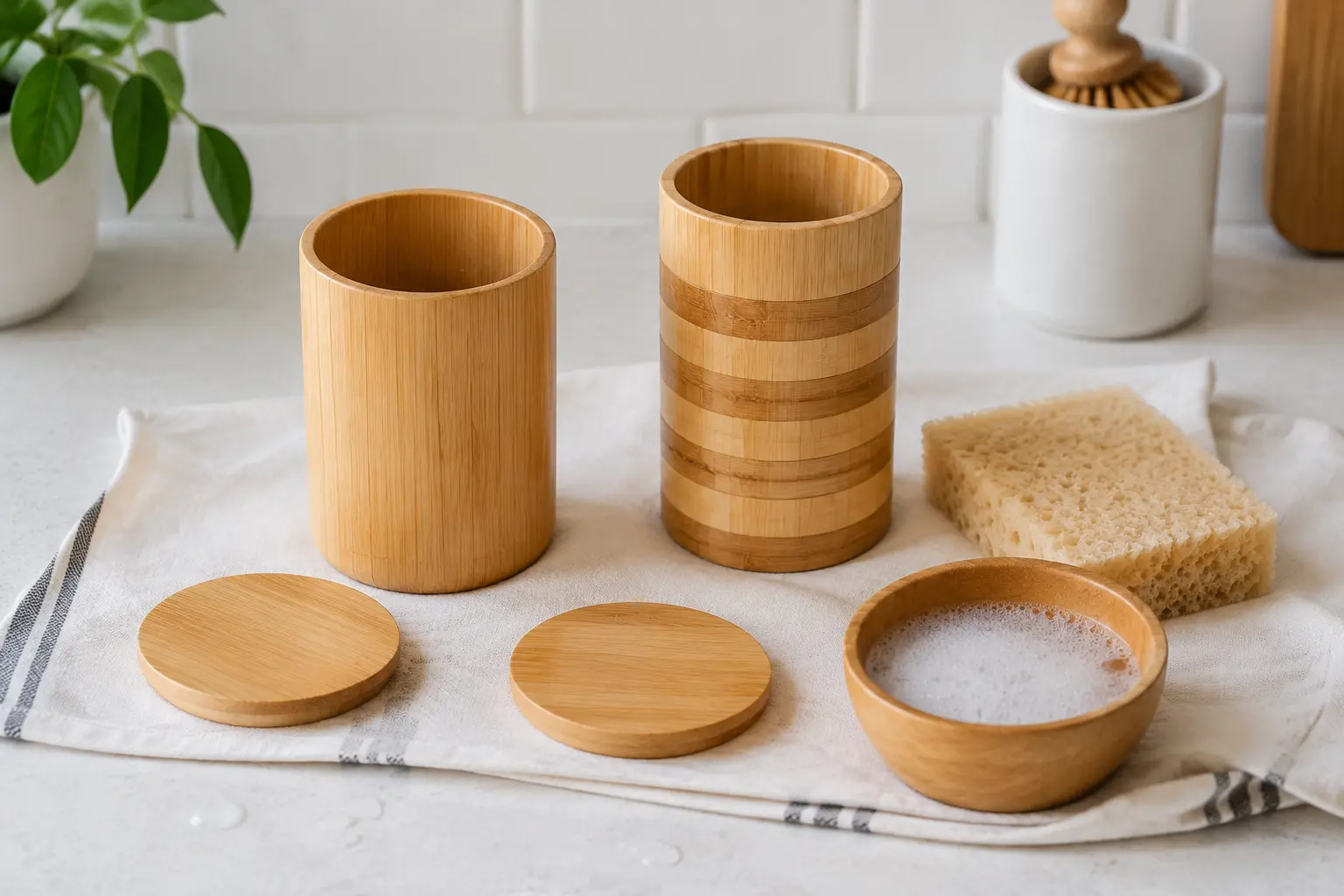
For an unlabeled natural or laminated cup, the practical default is gentle hand washing, prompt drying and no microwave. Do not soak it, boil it or leave liquid in it for long periods unless the supplied care instructions permit that use. This avoids treating an unknown finish or bonded joint as though it has been validated for repeated heat and moisture exposure.
For sourcing, request the exact substrate, adhesive and coating specification, not merely the phrase “cup made of bamboo.” Ask which surface touches the beverage, which tests apply to the finished article and whether the documentation matches the color, decoration and production version being ordered.
Bamboo-Fibre and Plastic Composite Cups Need Special Attention
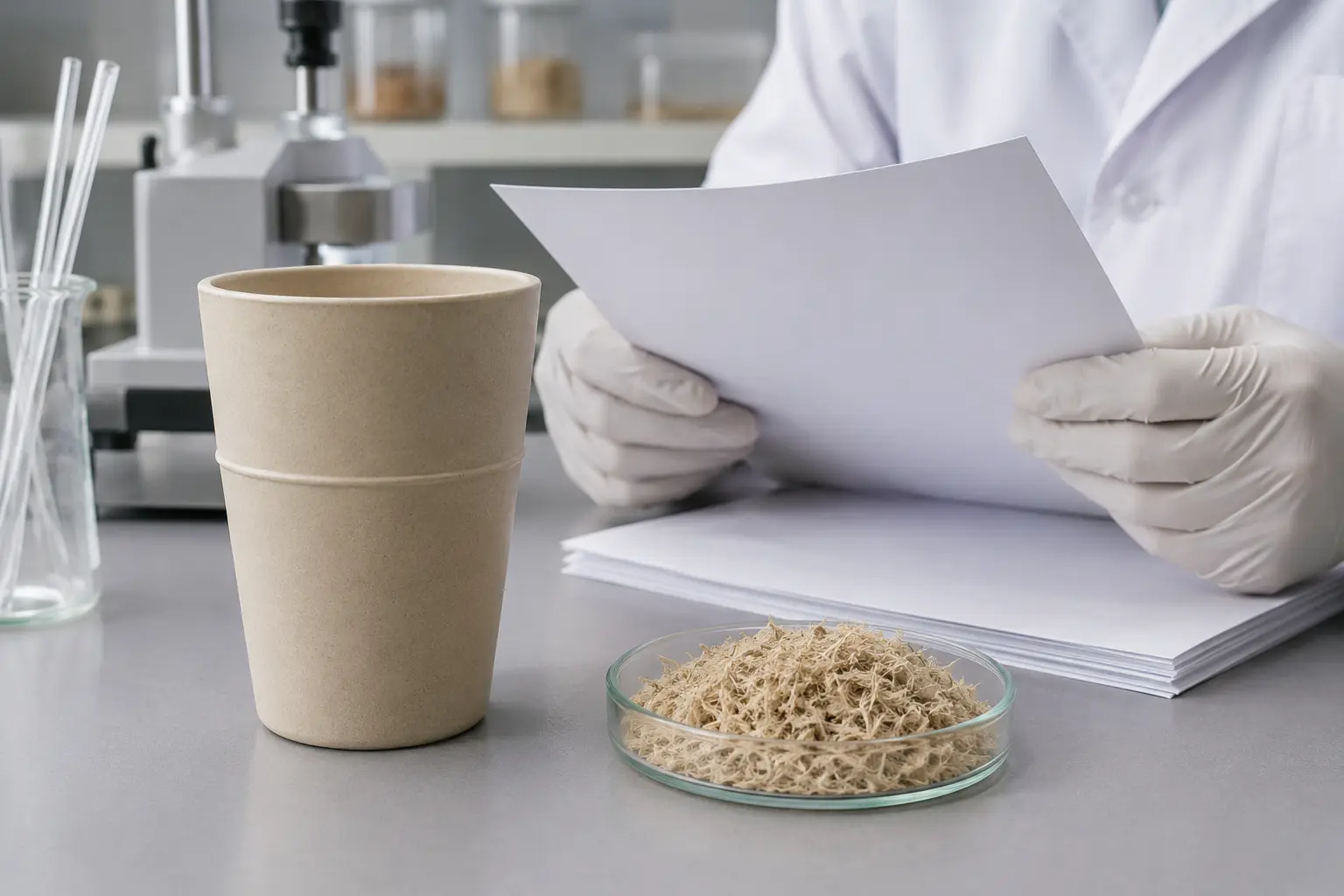
A molded reusable bamboo fibre cup is not necessarily solid bamboo. Some products combine ground bamboo with a plastic or melamine-formaldehyde resin. That distinction matters: the European Commission reports that many plastic food-contact articles containing unauthorized bamboo or other plant additives showed accelerated degradation and migration of melamine or formaldehyde. Its coordinated “Bamboo-zling” action ended in 2022, while national authorities continued controls.
The German Federal Institute for Risk Assessment (BfR) distinguishes these plastic composites from articles actually made from bamboo stems or leaves. Its current melamine-formaldehyde tableware FAQ concludes that MFR tableware is unsuitable for hot liquid food or microwave use. It also says tested “bamboo ware” varied: many articles complied with migration limits, but exceedances occurred more often than with conventional MFR. That evidence supports a specific warning about the composite category; it does not mean every product containing a visible piece of bamboo has the same risk.
Market rules also differ. The UK Food Standards Agency stated in 2024 that evidence was insufficient to assure the safety of plastic food-contact products containing bamboo and continued to advise consumers not to use them for storing or serving food. Buyers placing products in Great Britain should read the FSA's bamboo-plastic composite update and verify the current legal position before ordering.
Stainless Steel, Ceramic or Glass with Bamboo Details
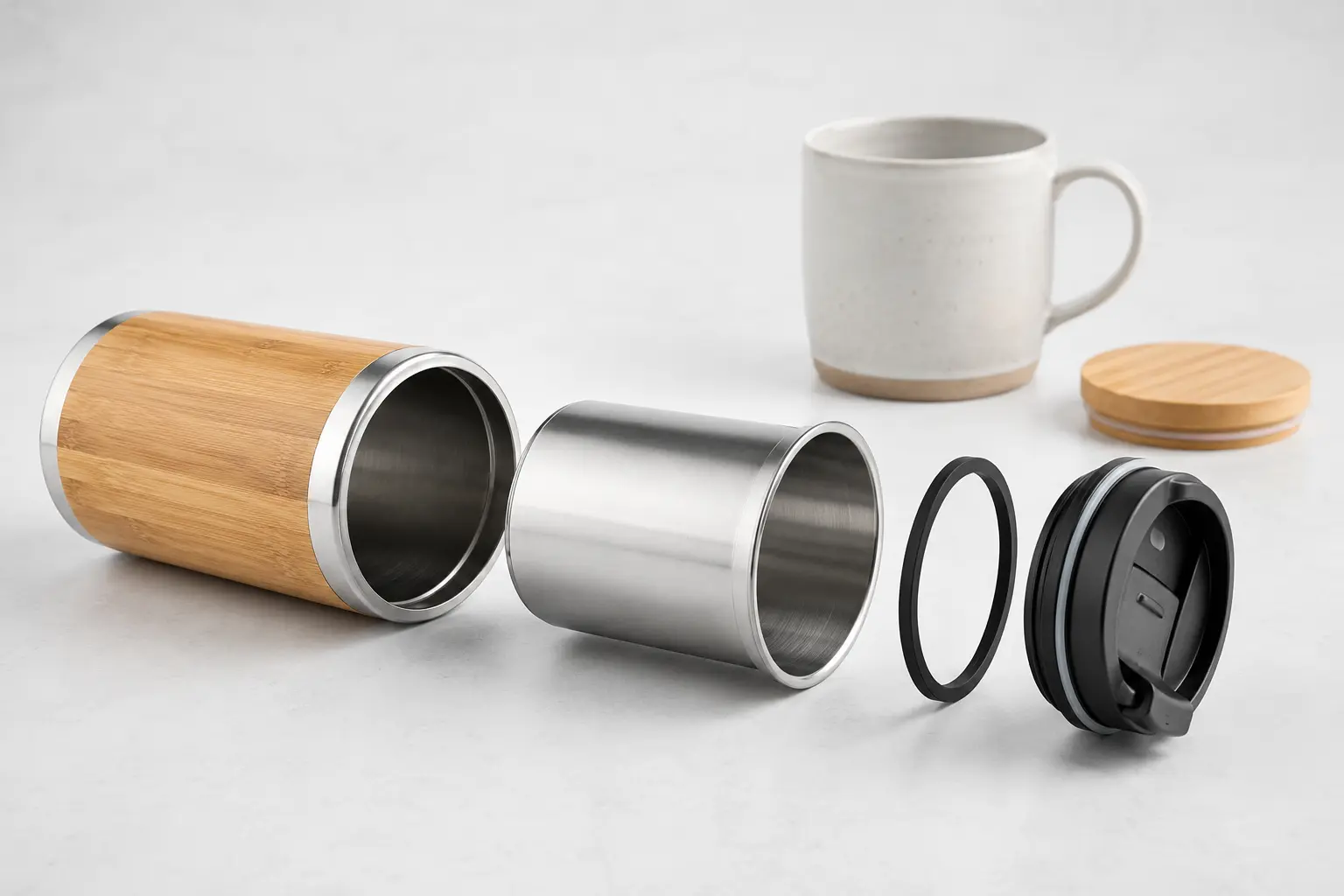
Many products found under “bamboo travel mug” or “coffee mug bamboo” use bamboo only as an outer shell, lid, grip or handle. Their food-contact body may be stainless steel, ceramic or glass. This can make the primary vessel easier to identify, but every component still matters.
- Stainless steel with bamboo exterior: never put it in a microwave. Confirm whether the bamboo sleeve is removable and whether the lid, gasket and insulated body are dishwasher-safe.
- Ceramic with a bamboo lid or handle: use the microwave only if the maker marks the specific ceramic vessel and complete non-removable assembly as suitable. Remove accessories only as instructed.
- Glass with a bamboo lid: “glass” alone is not a microwave claim. Glass composition, wall construction, decoration and temperature change all matter, so follow the stated use limits.
- Mixed-material lids: check the polymer, silicone seal, vent and any metal hinge or fastener. A safe body does not automatically make the lid safe for heating or dishwashing.
The FDA advises that food and drink should not be heated on melamine-based dinnerware and that only cookware specified as microwave-safe should be used. Its melamine tableware Q&A is a useful reminder that a use claim must belong to the specific material and purpose—not to a broad style label.
Can Bamboo Cups Be Used for Hot Drinks?
Searches for “bamboo cups for hot drinks” often mix very different products. A stainless-steel travel cup with bamboo cladding, a ceramic mug with a bamboo lid and a molded bamboo-plastic composite may appear together, yet they should not share one temperature promise.
Before serving coffee or tea, verify the declared maximum temperature, contact time, lid pressure behavior and drinking method. “Reusable” does not mean “suitable for boiling liquid,” and “travel mug” does not necessarily mean leakproof. A drinking vent can release steam or liquid if the cup tips, while an insulated vessel can keep a beverage hotter for longer.
In the EU, all food-contact materials must meet applicable safety rules and be manufactured under good manufacturing practice. The European Commission's food-contact materials overview explains that materials must not transfer constituents to food in ways that endanger health or unacceptably affect the food. A buyer should therefore ask for market-relevant compliance evidence for the finished article rather than relying on a generic “natural” or “eco” description.
Is a Bamboo Coffee Cup Dishwasher Safe?
Only when the care instructions for that exact cup say so. Dishwasher suitability is a performance claim about the complete construction. Heat, water pressure and detergent act on the body, printing, coating, bonded seams, bamboo trim, lid and gasket during every cycle.
If the label is missing or vague, hand-wash the cup with mild detergent and a soft cloth or non-abrasive sponge. Clean lids and seals separately when the design allows, rinse away detergent and dry all parts fully before reassembly. Avoid scouring pads, bleach, prolonged soaking and automatic drying heat unless the maker expressly permits them.
A 10-Point Decision Checklist
- Identify the food-contact surface. Is the drink touching bamboo, coating, plastic, stainless steel, ceramic or glass?
- List every component. Include liners, adhesives, paint, printing, lids, seals, sleeves and metal fittings.
- Read the exact symbols and words. “Reusable” and “dishwasher-safe” do not equal “microwave-safe.”
- Check the destination market. Food-contact requirements and restrictions are not identical worldwide.
- Match the intended beverage. Cold water, warm tea and hot acidic drinks are different use conditions.
- Confirm time and temperature limits. Ask for numbers or a clear use category, not “heat resistant.”
- Check whether parts must be removed. A microwave-safe vessel may have a lid, sleeve or fitting that cannot be heated.
- Review finished-product evidence. Documentation should match the ordered material, color, coating and decoration.
- Inspect condition before use. Retire a cup if instructions say to do so or if it develops cracks, delamination, a damaged coating, a deformed lid or a persistent odor.
- When uncertain, do not heat it. Transfer the beverage to clearly marked microwave-safe cookware instead.
A Practical Care Routine
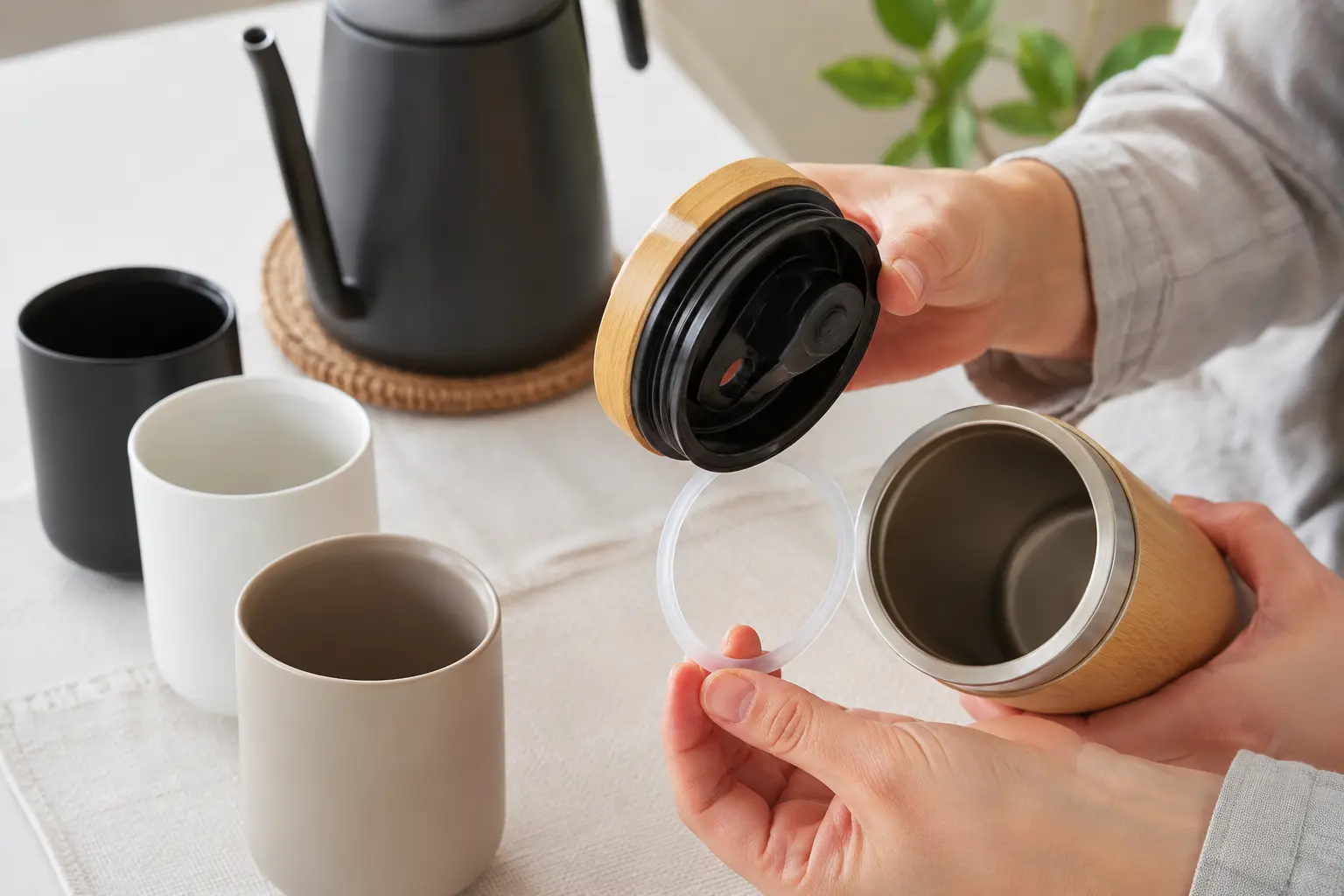
Good care starts with the supplied instructions. For a hand-wash-only product, empty it soon after use, wash it gently, rinse it well and let the body and lid dry separately. Do not close a damp cup for storage. Periodically remove a serviceable gasket to clean the groove, then refit it correctly so the lid closes as designed.
Stop using a vessel when the food-contact surface is cracked, peeling, deeply scratched or separating, or when a lid no longer closes correctly. BfR notes that surface damage can accelerate degradation in melamine-formaldehyde resin. For any product type, visible damage is also a practical reason to consult the instructions or replace the item.
What Buyers Should Request Before Approving a Bamboo Travel Cup
If you are evaluating whether bamboo travel mugs are safe for a retail or promotional program, begin with intended use rather than appearance. State the beverage type, fill temperature, expected contact time, cleaning method, target market, user group and whether microwave use is required. Then request a bill of materials, food-contact declarations, relevant test reports, care wording and traceability for the approved sample.
Test reports should identify the product or material tested, applicable method, date and result. Confirm that production will use the same body, finish, decoration and supplier inputs as the approved sample. If a design changes—from an unprinted cup to a printed one, or from one lid resin to another—ask whether the evidence must be updated.
Claims also need evidence. Do not print “microwave-safe,” “dishwasher-safe,” “BPA-free,” “biodegradable,” “compostable,” “leakproof” or a maximum temperature merely because a similar-looking cup uses the phrase. Define the claim, test the relevant finished configuration and ensure the wording complies in the sales market.
Frequently Asked Questions
Can I microwave a bamboo cup for 30 seconds?
Time alone does not make an unknown cup safe. Microwave it only when the exact product is marked for microwave use and follow its limits. Never microwave a stainless-steel cup, including one with bamboo cladding.
Are bamboo travel mugs safe?
The word “bamboo” is not enough to decide. Identify the liner and body, review market-specific food-contact evidence, confirm the intended fill temperature and inspect the lid and seal. Bamboo-plastic composites require particular regulatory attention in the EU and Great Britain.
Are all bamboo-fibre cups unsafe?
That statement is too broad. “Bamboo-fibre cup” can be used imprecisely, and regulations depend on composition and market. However, official European and British authorities have identified specific legal and migration concerns with plastic or melamine composites containing bamboo. Verify the exact formulation and current destination-market rules.
Can a bamboo mug with a ceramic liner go in a microwave?
Only if the manufacturer approves that exact assembled product. A ceramic vessel may be suitable while its bamboo lid, handle adhesive, decoration or metal fitting is not. Do not separate parts or heat the cup unless the instructions describe that procedure.
Can bamboo cups hold boiling water?
Do not assume so. Check the declared maximum fill temperature and contact time for the specific cup. For bamboo-plastic or MFR composites, official BfR guidance advises against hot liquid food.
What should I do if the cup has no material label?
Ask the seller for the full material composition and instructions. Until they are clear, do not microwave it or use it for very hot drinks, and hand-wash it rather than relying on an unknown dishwasher claim.
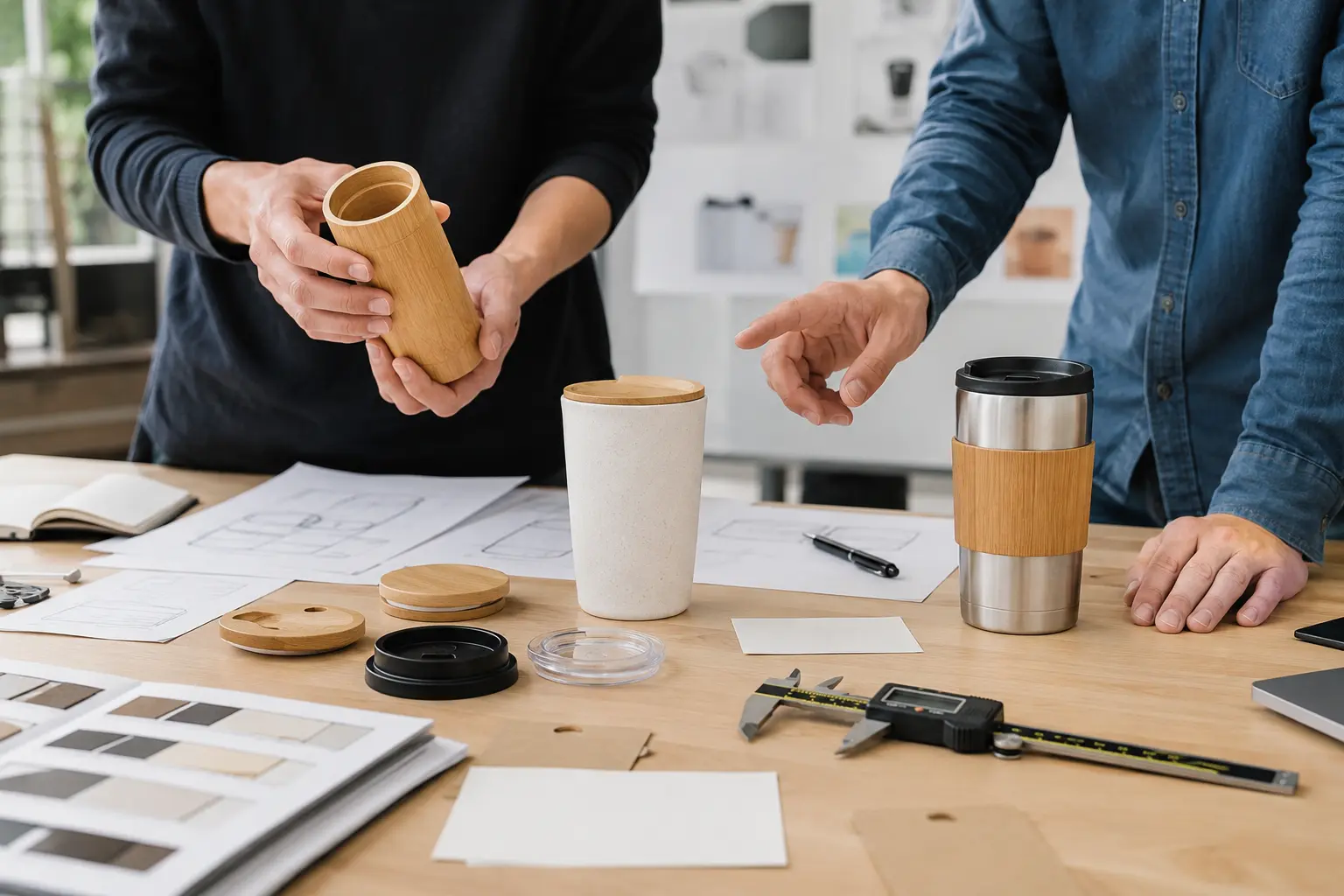
Plan the Construction Before You Make the Claim
A safer product brief names the food-contact material, target beverage, use temperature, cleaning method and destination market before choosing the bamboo detail. For a feasibility discussion about a custom cup concept, send those requirements and the desired bamboo component to Fujian Xianxu Bamboo & Wood Co., Ltd. The team can review whether the concept fits the requested construction and documentation path without treating “bamboo cup” as one universal material.