
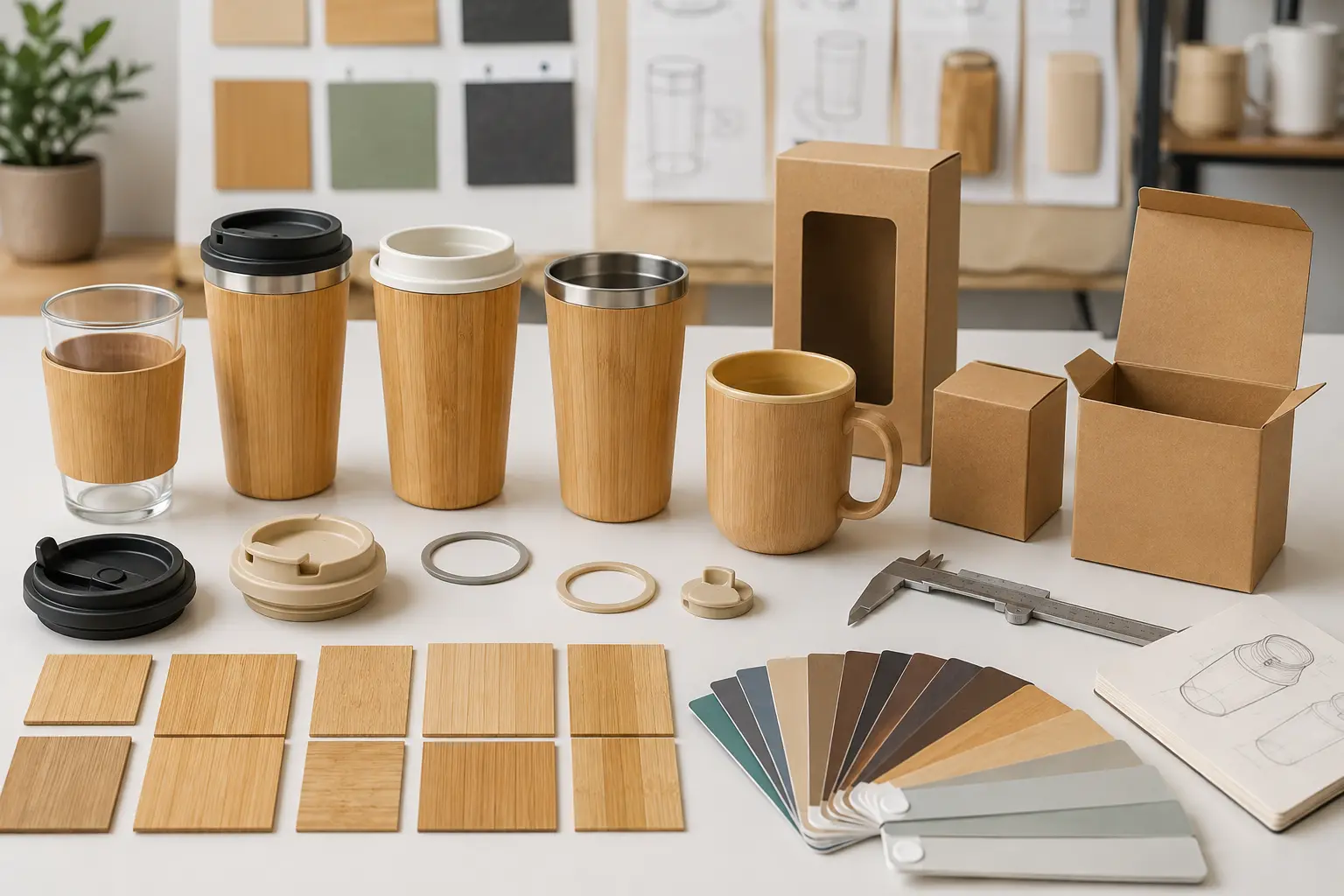
Finding a bamboo coffee cup manufacturer starts with a deceptively simple question: what does “bamboo coffee cup” mean for your project? In wholesale catalogs, the phrase can describe a natural bamboo vessel, a stainless-steel travel mug with a bamboo exterior, a ceramic or glass mug with a bamboo lid, a bamboo-pulp takeaway cup, or a molded composite that contains bamboo fiber. These products do not share the same performance, branding methods, care instructions, or regulatory pathway.
A useful sourcing process therefore begins with construction, not appearance. This guide shows brand owners, importers, corporate-gift buyers, cafés, and distributors how to define a custom cup, compare quotations on equal terms, approve samples, and build a quality-control plan without relying on vague “eco” language.
First, Define What “Bamboo Mug” Means
Search results for bamboo mugs wholesale often place very different constructions on the same page. Compare the complete material stack before comparing unit prices. A lower quotation may refer to a single-wall promotional cup, while another covers a double-wall metal mug, gasketed lid, bamboo shell, individual box, and custom mark.
| Common market description | Typical construction to confirm | Questions for the specification |
|---|---|---|
| Natural bamboo cup or mug | Bamboo body, sometimes with an applied finish or separate liner | Species, moisture control, inner surface, joint method, finish, intended beverage and care limits |
| Bamboo travel mug | Metal inner vessel with a bamboo sleeve, veneer, or shell | Steel grade, wall construction, insulation claim, bamboo attachment, rim, base, lid and gasket |
| Mug with bamboo lid or handle | Ceramic or glass body plus bamboo component | Body material, lid fit, gasket, steam vent, handle attachment and replacement-part policy |
| Bamboo-pulp takeaway cup | Fiber-based paperboard with a barrier layer | Pulp composition, barrier chemistry, hot/cold use, matching lid and end-of-life evidence |
| Molded bamboo-fiber cup | Bamboo powder or fiber combined with a binder or polymer | Full formulation, food-contact authorization, migration reports, temperature limits and target-market legality |
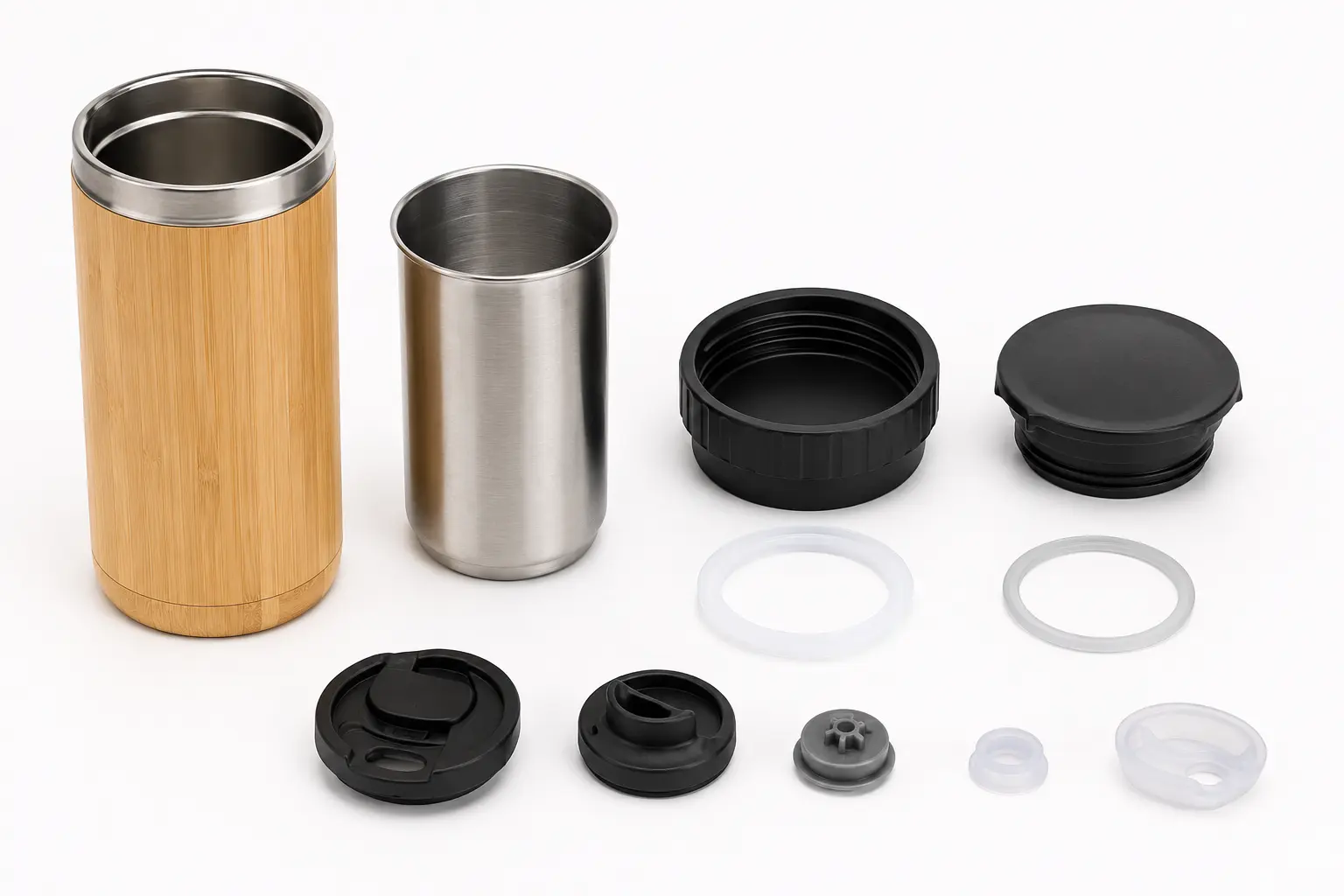
Ask the supplier to identify every food-contact and non-food-contact component. “Bamboo fiber” is not a complete material declaration, and a bamboo-look pattern is not the same as bamboo. The construction should also match the use case. A desk mug, commuter cup, event giveaway, hotel-room cup, and café takeaway cup present different demands.
Build a One-Page Product Brief Before Requesting Quotes
A precise request for quotation saves more time than a long chain of messages. Give every prospective supplier the same controlled brief so that price, tooling, sampling, packaging, and test-document responses are comparable.
- Use scenario: office, commuting, hospitality, retail, corporate gift, or takeaway service.
- Beverage conditions: hot or cold, expected fill temperature, contact time, and whether acidic or dairy drinks are anticipated.
- Construction: body, liner, bamboo component, lid, gasket, sleeve, handle, base, coating, adhesive, and accessory materials.
- Dimensions: capacity, overall height, rim diameter, base diameter, weight target, cup-holder requirement, and tolerances.
- Performance: insulation target, splash resistance or leak resistance, drop-test expectation, odor/taste limits, and cleaning method.
- Branding: artwork, colors, mark position, maximum print area, finish, and reference sample.
- Packaging: individual protection, retail box, insert, barcode, master-carton limits, pallet rules, and labeling.
- Market: destination country, required languages, food-contact rules, retailer protocols, and desired verification documents.
Separate mandatory requirements from preferences. A factory can then identify conflicts early—for example, a large wraparound graphic may not suit a tapered shell, while a tight deadline may not allow new tooling. Do not use a competitor’s product photo as the only brief; supply measurable requirements and artwork you have permission to use.
Clarify what “OEM,” “custom,” and “private label” mean in the quotation. One offer may cover only a logo on an existing mug; another may include a new color, lid combination, packaging, or structural development. A fully new form can introduce tooling, validation, and schedule implications. Ask the supplier to identify which elements are standard, which are modified, and which require new development.
Choose the Liner, Lid and Drinking Interface as One System
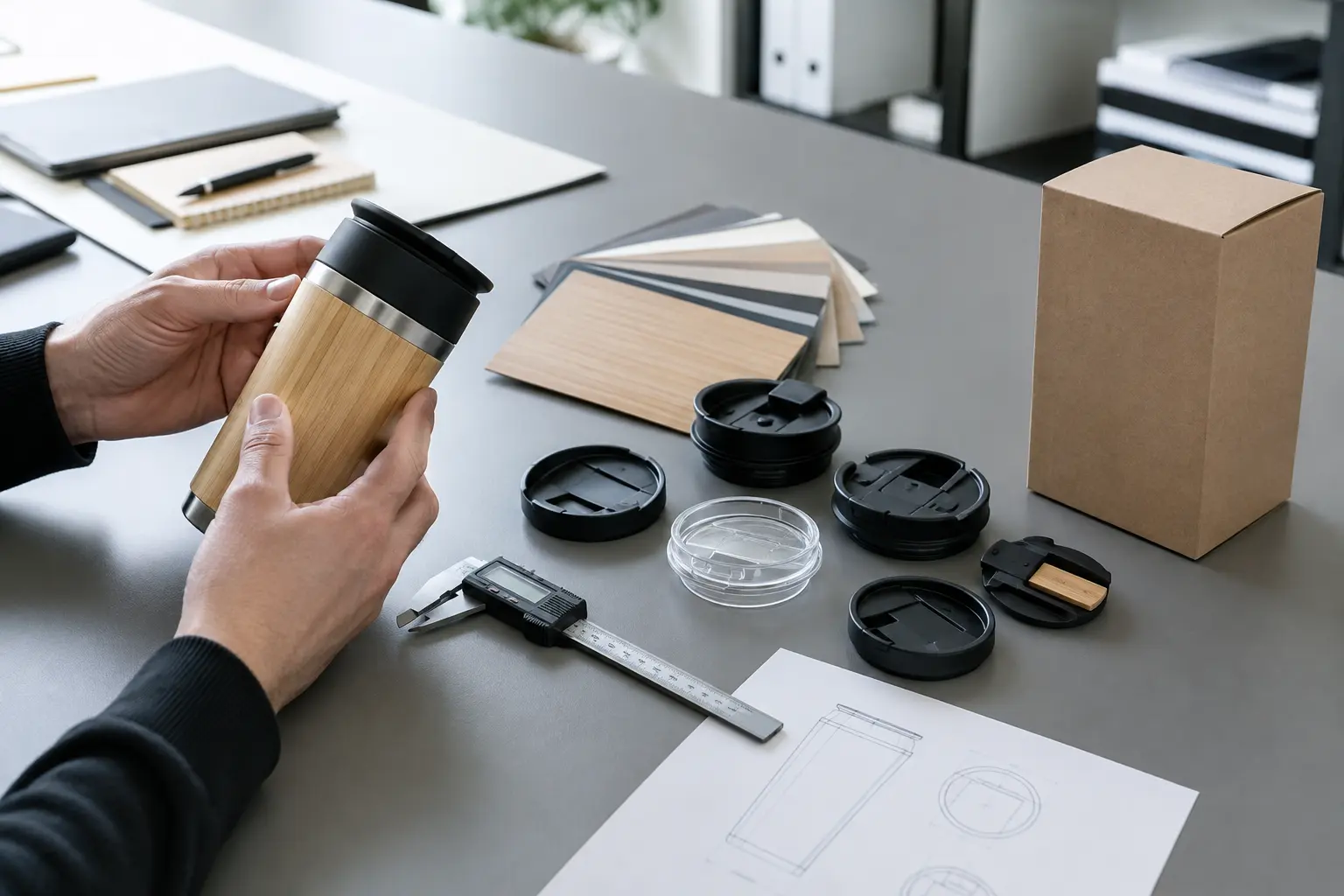
For a personalized bamboo travel mug, the lid often determines the actual user experience. A press-fit lid may be convenient at a desk but is not automatically leakproof. A threaded lid may improve retention, yet the seal still depends on gasket geometry, thread engagement, venting, and manufacturing tolerance. Ask the supplier to state whether the design is open, splash-resistant, or tested as leak-resistant—and to provide the test method behind any claim.
Review the drinking opening with the intended beverage in mind. Check flow rate, vent position, lip comfort, one-handed operation, cleaning access, and the risk of a loose gasket. If the cup has a metal liner, confirm whether it is single wall or double wall. If insulation performance matters, define the starting temperature, ambient conditions, test duration, fill volume, and acceptable result instead of asking whether the mug “keeps drinks hot.”
A bamboo lid paired with ceramic or glass requires its own assessment. Clarify whether it is a dust cover or a drinking lid, whether it seals, how steam is managed, and whether prolonged contact with liquid is intended. Replacement lids and gaskets can also reduce after-sales problems, so include spare-part availability in the commercial discussion.
Match the Decoration Method to the Surface
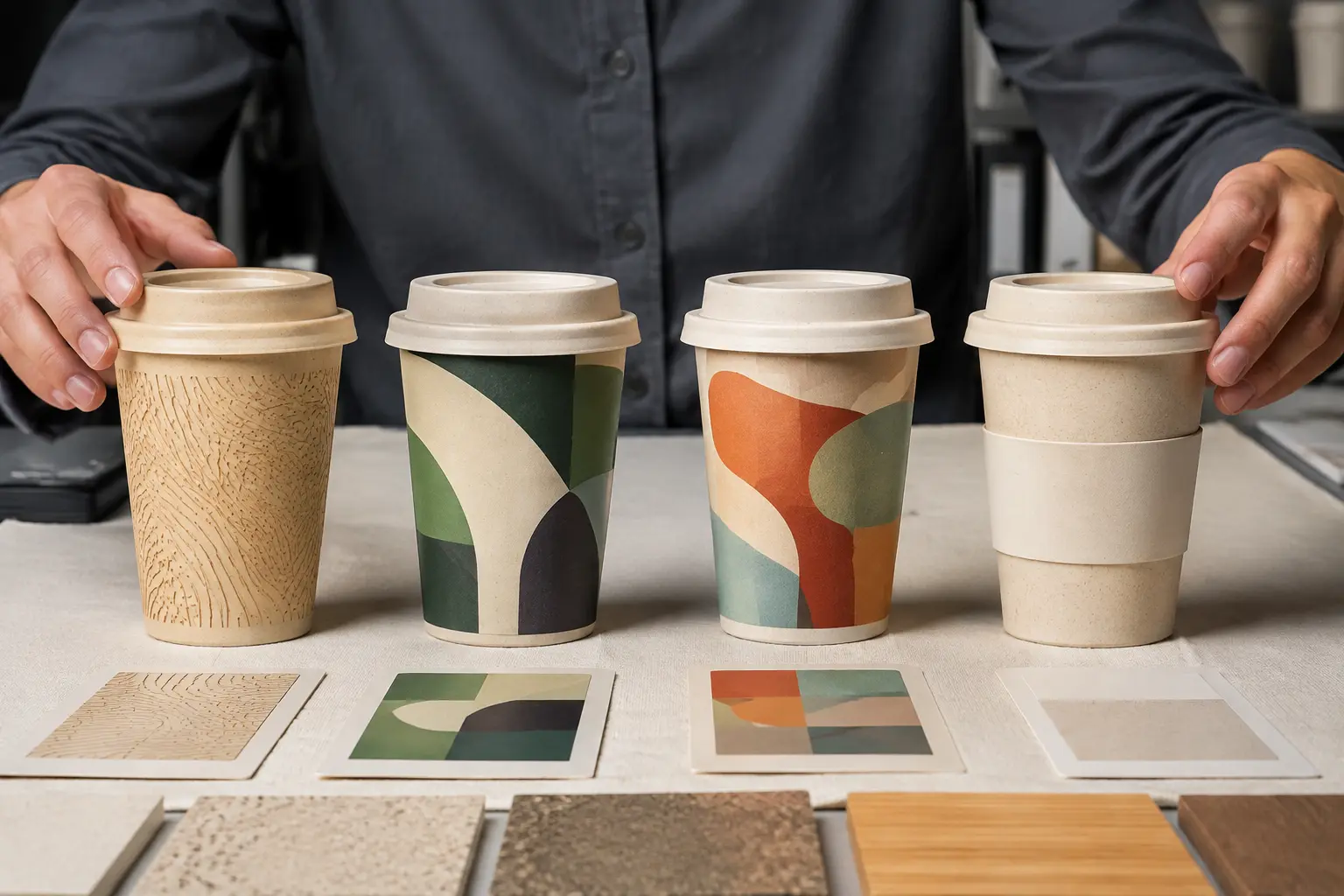
A custom bamboo coffee cup can carry a subtle mark or a high-visibility campaign design, but the correct process depends on the substrate and geometry. Treat the following as options to validate on the selected sample—not as universally available methods.
| Decoration option | Often considered for | What to approve |
|---|---|---|
| Laser marking | Bamboo shells, sleeves or lids | Contrast, depth, edge clarity, scorch variation and position on natural grain |
| Pad or screen printing | Small logos on suitable coated or smooth areas | Ink system, adhesion, opacity, color tolerance and abrasion resistance |
| UV or digital printing | Detailed or multicolor graphics on compatible prepared surfaces | White layer, color result, adhesion, cure, edge quality and usable print area |
| Wrap, transfer or sleeve graphic | Larger artwork on compatible cup shapes | Seam, distortion, registration, wash durability and grip |
| Packaging-only branding | Projects requiring an undecorated vessel | Box color, insert, label, barcode, legal copy and print proof |
Natural bamboo varies in grain and tone, so a laser mark will not look perfectly identical across every piece. Define an acceptable range with physical samples. For printed areas, require a production-representative decorated sample and agree on an objective adhesion or rub check. Pantone references are useful, but color on bamboo, silicone, metal, ceramic, and paper will not appear identical without a signed tolerance standard.
Use Samples to Close Decisions, Not Just to View the Product
An off-the-shelf sample can confirm basic size and handling. A customized pre-production sample should confirm the final material stack, color, logo, lid, accessories, label, and packaging. Record approved decisions in a signed specification rather than relying on chat history.
During review, fill and drink from the cup under realistic conditions. Inspect odor and taste, lid engagement, flow, grip, stability, seam quality, sharp edges, surface finish, condensation, and cleaning access. Measure capacity to a defined reference point, not merely to the brim. If a claim such as dishwasher compatibility, thermal retention, or leak resistance is important, ask how it was tested and decide whether independent verification is appropriate for your risk level and market.
Create a Quality-Control Plan Around Critical Risks
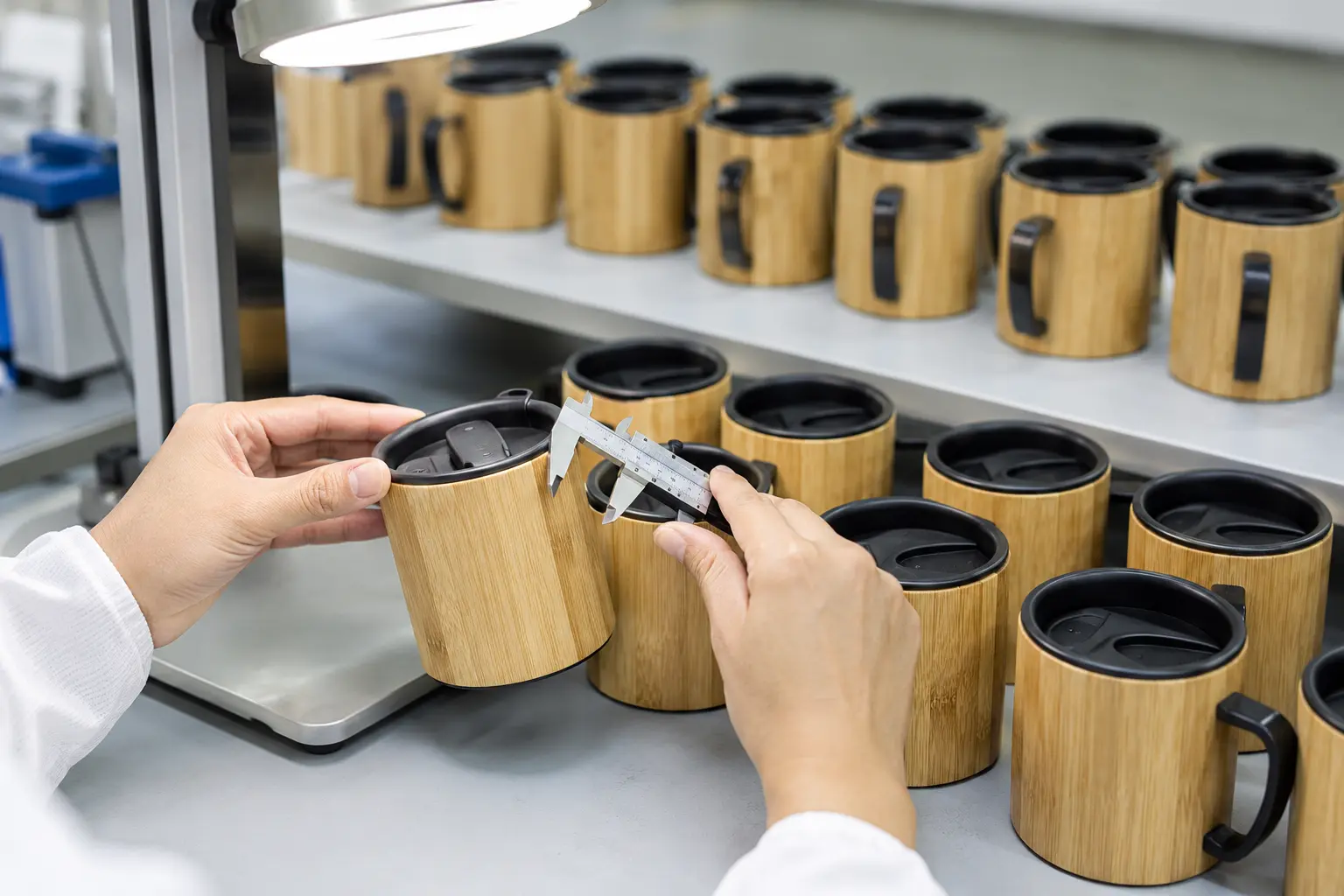
Quality control for bamboo mugs wholesale should cover both the drinking vessel and the natural material. Bamboo grain variation is expected, while cracks, splinters, loose parts, contamination, or an incorrect liner are defects. Define which characteristics are cosmetic, functional, or safety-critical.
- Verify approved material and component identities against purchase documents.
- Check critical dimensions, capacity, weight range, fit, assembly and stability.
- Inspect bamboo for cracks, splinters, mold, excessive discoloration and finish defects.
- Test lids, threads, gaskets, vents and handles using an agreed method and sample size.
- Compare logo size, location, color and durability with the signed reference.
- Check odor, cleanliness, interior surfaces and foreign-material contamination.
- Confirm packaging count, protection, labels, barcodes, accessories and carton marks.
- Retain an approved sample and production records for traceability.
Inspection timing should reflect project risk. Raw-material or first-article checks can catch a wrong construction before volume production. In-process checks reveal assembly drift. A pre-shipment inspection verifies the finished lot but cannot economically correct every upstream error. Agree on sampling rules, defect categories, acceptance criteria, and the response to a failed inspection before the order begins.
Request Market-Specific Food-Contact Evidence
Food-contact compliance is not proven by a generic “food grade” badge. Requirements depend on the destination, construction, substances, intended food, contact time, temperature, and applicable law. For the EU, the European Commission explains that food-contact materials must comply with the framework rules and applicable material-specific measures. Other markets have their own requirements.
Ask for reports that identify the tested article, laboratory, test date, methods, simulants, time and temperature conditions, and result. The model, colors, formulation, coating, printing, gasket, and lid in the report should correspond to the goods you intend to buy. A report for a different cup or only one raw material may not support the complete finished product.
Take special care with molded products described as bamboo fiber. Determine the binder or polymer and obtain regulatory review for the target market. Do not assume that adding plant fiber makes a plastic formulation authorized, biodegradable, microwave-safe, or suitable for hot drinks. Likewise, do not transfer a dishwasher or temperature claim from one construction to another.
Design Packaging for Protection and Accurate Claims
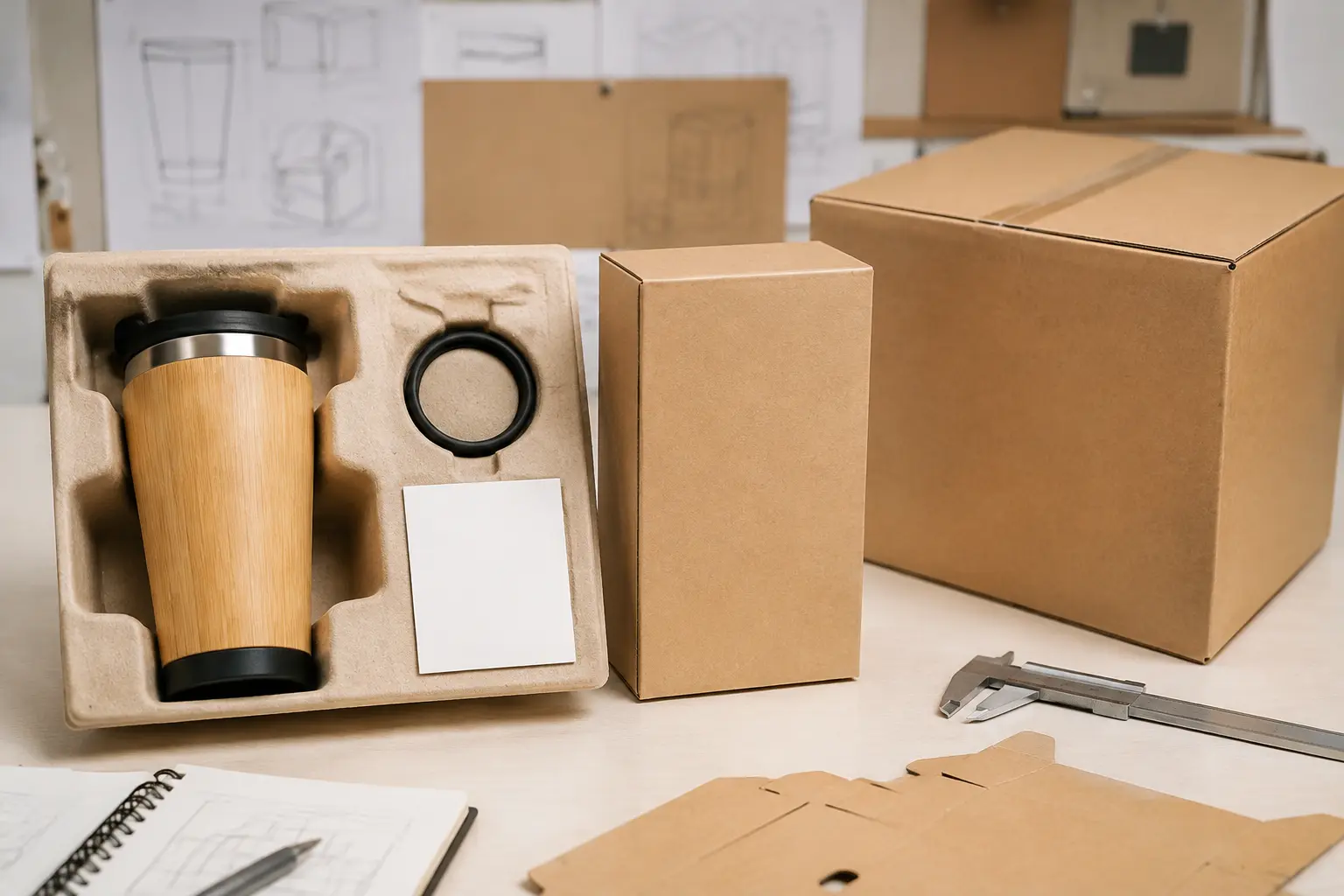
Packaging is part of the product. A bamboo shell can be scratched by unprotected lids or accessories, and ceramic or glass bodies need impact protection. Ask for a packed-sample drop assessment appropriate to the distribution route. Confirm carton dimensions and gross weight before estimating freight; a small change to the retail box can alter carton utilization and landed cost.
Review every package statement. “Reusable” should be supported by a design and care instructions suitable for repeated use. Claims such as biodegradable, compostable, plastic-free, carbon neutral, antibacterial, or recyclable need evidence that covers the complete product and the location where it will be sold. A bamboo exterior does not determine the end-of-life route for the metal liner, adhesive, coating, gasket, or box.
A Quote Checklist for Buyers
Before selecting a bamboo coffee cup manufacturer, make sure each quotation answers the same questions:
- What is the exact construction and material declaration for every component?
- Which dimensions, capacities, colors, lids and accessories are included?
- Which customization methods are feasible on the chosen surface?
- Are tooling, sampling, decoration setup, testing and packaging priced separately?
- What order quantity applies to this exact configuration rather than a catalog version?
- What production schedule starts after sample, artwork and deposit approval?
- Which food-contact and performance documents match the finished product?
- What inspection standard, defect remedy and change-control process will apply?
- How are units packed, and what are the master-carton size, weight and quantity?
- Which trade term, shipping scope, payment milestones and quote-validity period apply?
The lowest unit price is not always the lowest landed risk. Compare the completeness of the specification, evidence, sample, packaging, inspection, communication, and corrective-action plan. A clear quotation makes later changes visible instead of hiding them inside a vague product name.
Frequently Asked Questions
Can any bamboo mug be personalized with a logo?
No. Feasibility depends on surface material, coating, curvature, artwork detail, color, mark size, and durability target. Approve the decoration on the production-representative cup rather than assuming a method used on another bamboo product will transfer.
Is a personalized bamboo coffee cup always made entirely from bamboo?
No. Many market listings use “bamboo” for one visible component, such as an exterior sleeve or lid. Request a component-by-component material declaration and make the consumer-facing description equally specific.
What should I send to get an accurate wholesale quotation?
Send the use case, target market, construction, capacity, dimensions, lid type, performance expectations, order quantity, artwork, packaging, test-document needs, destination, and desired delivery window. Ask suppliers to list assumptions and exclusions.
How should I compare bamboo mug samples?
Use one checklist and realistic beverage conditions. Evaluate material identity, dimensions, capacity, finish, odor, taste, lid operation, gasket retention, drinking comfort, logo, cleaning access, packaging, and any claimed performance. Record the approved sample version.
Does bamboo automatically make a coffee cup sustainable?
No single material word establishes overall environmental performance. Consider the complete construction, sourcing evidence, durability, repair or replacement options, packaging, transport, actual reuse, and realistic end-of-life route. Use narrow, documented claims instead of broad green language.
When should buyers use independent testing or inspection?
That depends on the destination rules, retailer requirements, construction, claim set, order value, and consequence of failure. Independent review is especially valuable when documents do not clearly match the finished article or when performance and compliance claims are commercially important.
Plan the Project Around Evidence
A strong custom drinkware project is built from a defined construction, controlled artwork, representative sample, relevant evidence, measurable quality plan, and accurate packaging claims. If you are developing a bamboo component or custom bamboo drinkware concept, contact Fujian Xianxu Bamboo & Wood Co., Ltd. to assess project feasibility against your drawings, target market, quantity, and documentation needs before treating the design as production-ready.