
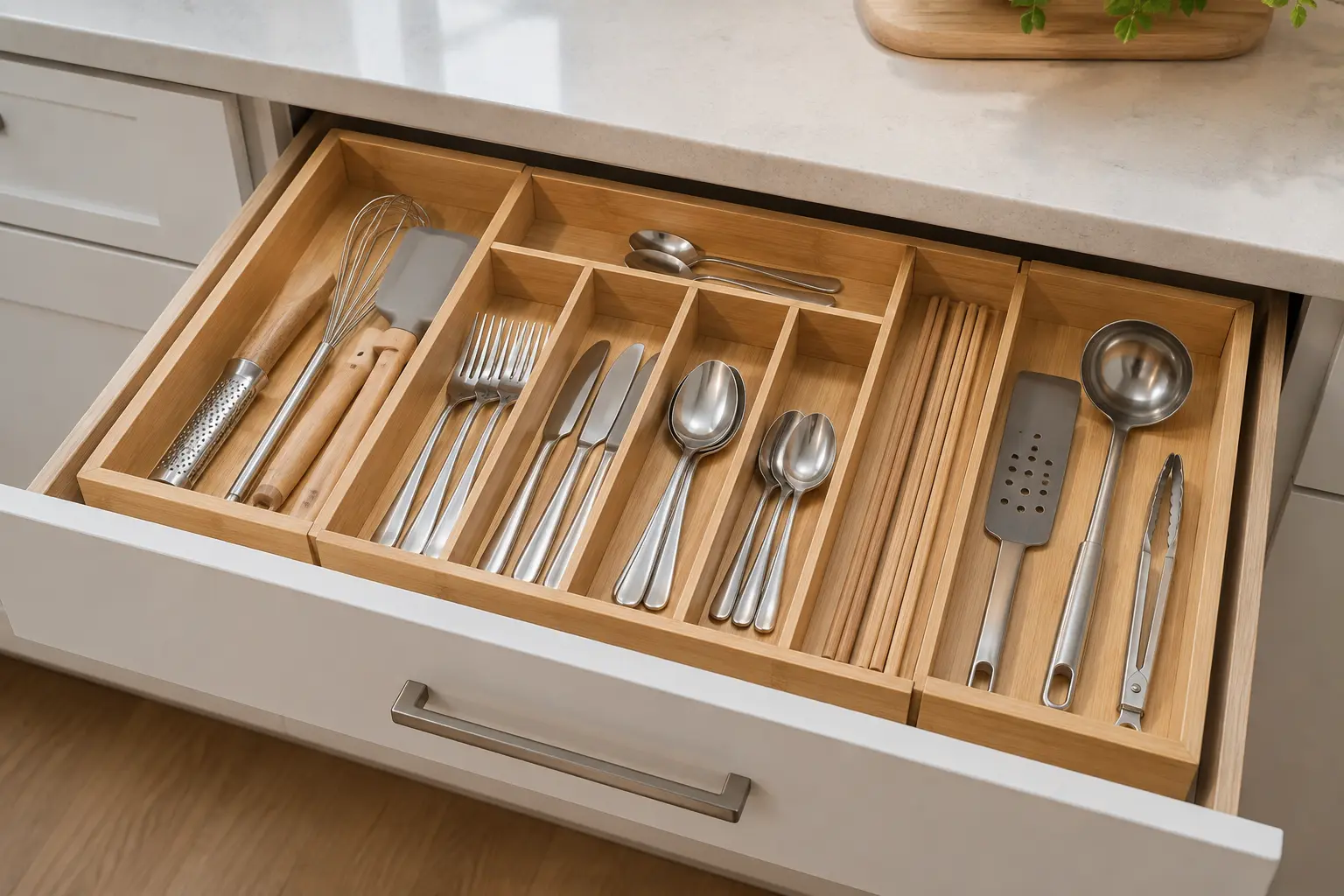
Bamboo cutlery trays look simple, but a successful retail or private-label program depends on dozens of small decisions: the drawer fit, number and length of compartments, expansion mechanism, wall thickness, corner finish, surface coating, packaging and acceptable natural variation. For importers, wholesalers, retailers and kitchenware brands, defining those details before quotation is the best way to compare suppliers and prevent avoidable fit complaints.
This guide explains fixed and expandable formats, how to measure a drawer, how large, small, deep and narrow layouts serve different users, and which quality points belong in an inspection standard. It also covers care, packaging and OEM/ODM development without assuming that every bamboo organizer has identical performance or documentation. Whether a buyer calls the product a bamboo cutlery tray, bamboo flatware tray or bamboo silverware tray, the quotation should use the same measured dimensions and approved layout.
Choose the Right Bamboo Cutlery Tray Type
A bamboo drawer tray is normally designed either as a fixed-width organizer or as an expandable unit. Both can work well, but they solve different merchandising and fit problems. A fixed tray offers a clean, predictable footprint and may pack more efficiently. An expandable design can cover a wider range of drawers, but it introduces sliding parts, overlapping panels and additional inspection points.
Fixed-width organizers
A fixed organizer is useful when the retailer sells a clearly defined cabinet system, when a hospitality project has standardized drawers, or when compact packaging is important. Common layouts use five or six sections for forks, knives, spoons and serving utensils. Buyers should confirm the external dimensions as well as the usable internal length and width of every compartment; thick dividers can make an apparently large tray hold less than expected.
Expandable bamboo tray designs
A bamboo expandable tray typically has side wings that slide outward to reveal extra storage. It can appeal to customers who are uncertain about drawer width or who need space for larger tools. During development, check the minimum and maximum external width, fully supported travel, side-panel alignment, friction, gaps, stops and whether the expanded sections remain stable when loaded.
Searches such as “bamboo expandable gadget tray” often refer to the same adaptable organizer used for kitchen tools, stationery or small household accessories. Customer-facing copy should name the intended use clearly rather than promise that one layout fits every drawer or every item.
How to Measure for a Bamboo Drawer Tray
Fit is the most common source of disappointment in this category. The relevant measurement is the clear internal drawer space—not the cabinet width or drawer-front size. Buyers preparing specifications should measure the usable width, front-to-back depth and internal height at more than one point. Slides, screw heads, corner blocks and curved drawer sides can reduce clearance.
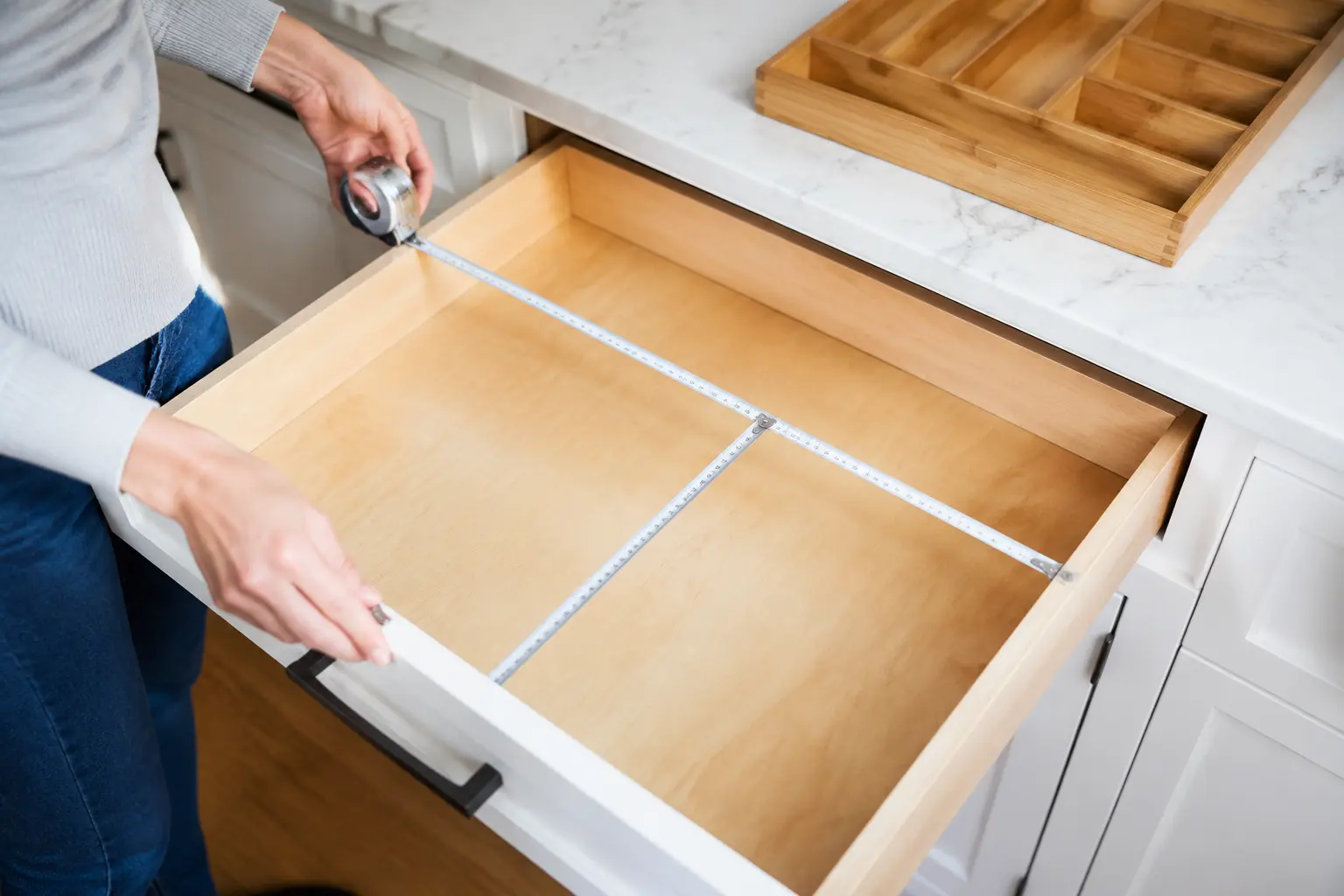
- Measure width: record the narrowest clear distance between the drawer sides.
- Measure depth: check the usable front-to-back distance with the drawer closed.
- Measure height: allow clearance above the tallest utensils and tray walls.
- Check obstructions: note hardware, curved corners, liners and protruding fasteners.
- Add practical clearance: agree a fit allowance so the tray can be inserted and removed without binding.
For an expandable model, publish both collapsed and extended dimensions. Do not imply a universal fit unless the claim is defined and supported by the intended drawer range. E-commerce images should show dimension arrows, while wholesale cartons and product specifications should use the same measurement method.
Compare Compartment Layouts, Depths and Usable Space
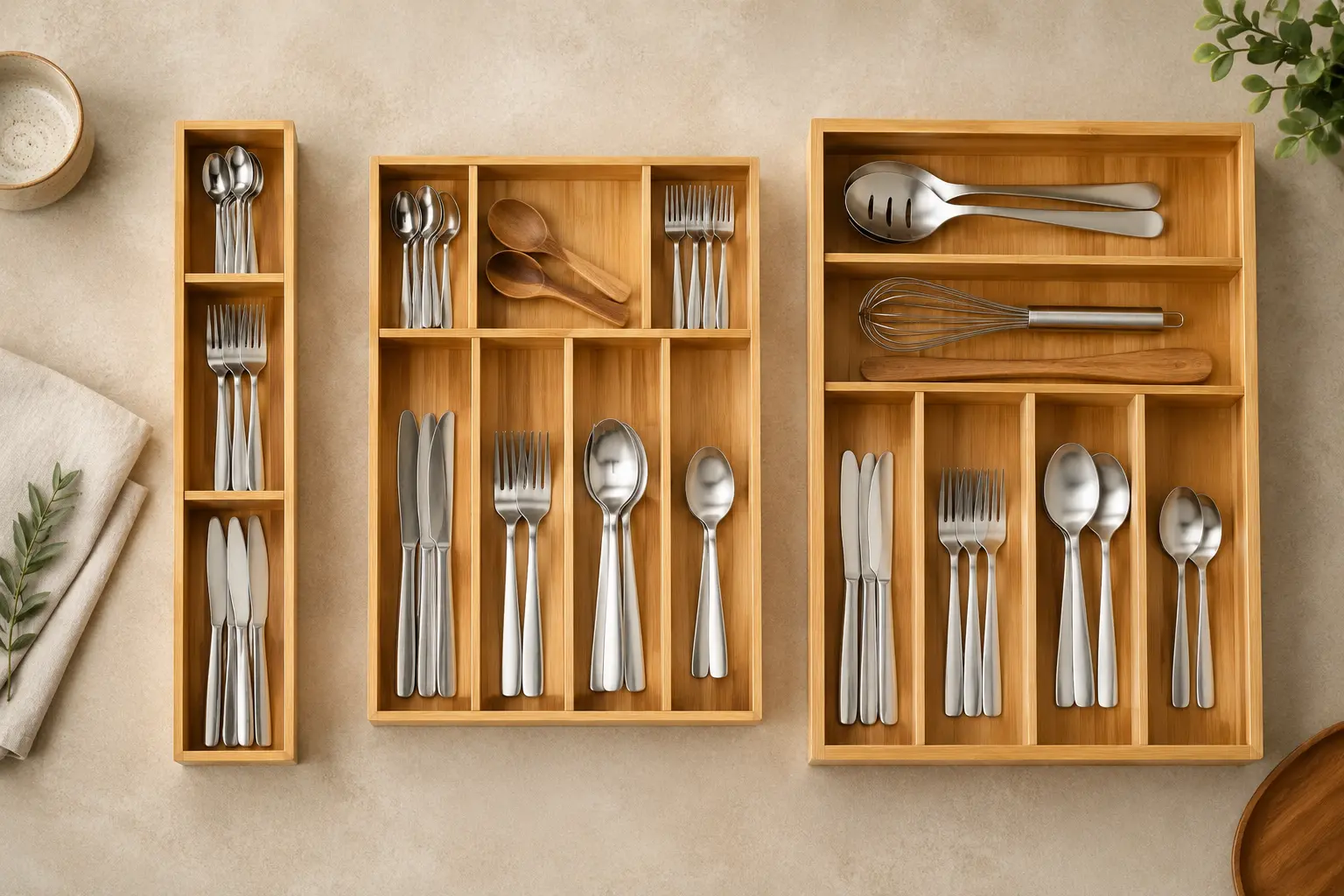
A bamboo compartment tray should be evaluated with real utensils, not only by counting sections. Long chef’s tools need different proportions from teaspoons, while wide-handled flatware may fill a narrow channel quickly. Rounded internal corners can make cleaning easier, but they also reduce usable width near the base.
Large and deep bamboo cutlery trays
A bamboo large cutlery tray can include longer channels for spatulas, whisks and serving pieces as well as standard flatware sections. A deep bamboo cutlery tray provides more vertical capacity, but the total height must still clear the drawer opening and any utensils placed on top. Large formats also affect retail-box size, carton utilization, freight volume and shelf presentation.
Small and narrow organizers
A bamboo small cutlery tray—also described as a small bamboo cutlery tray—or a small bamboo silverware tray suits compact apartments, narrow cabinets, office kitchens and secondary drawers. A narrow bamboo cutlery tray may prioritize everyday forks, knives and spoons instead of large tools. Define which utensils the layout is intended to hold so marketing images do not overstate capacity.
Drawer Organizer Ideas for Office and Mixed-Purpose Storage
Expandable side sections may store gadgets, chopsticks, reusable straws, measuring spoons or stationery. Outside the kitchen, a compact drawer organizer can separate pens, clips, charging cables or craft tools. Desktop drawer organizers should be sized for shallow desk drawers, while trays for storage drawers in craft rooms or utility cabinets may need longer compartments and clearly stated internal measurements. However, multipurpose positioning should remain plausible for the approved dimensions and finish. Buyers developing a broader bamboo tray organizer collection can coordinate the product with other bamboo and wood kitchenware while keeping each SKU’s use instructions specific.
Bamboo Construction, Surface Finish and Workmanship
Many organizers are assembled from laminated bamboo panels and machined components. The bottom, outer walls, dividers and sliding wings may use different thicknesses or constructions. Buyers should request a bill of materials or clear material specification rather than assume that every visible surface is made in the same way.
Panel alignment and joints
Inspect glue lines, joints, wall squareness, divider alignment and bottom-panel support. Gaps can trap debris, while excess adhesive and rough joints reduce perceived quality. The tray should sit flat without rocking. On expandable models, the wings should move consistently without excessive looseness, scraping or sudden binding.
Edges and surfaces
Customer contact surfaces should be smooth and free from sharp edges, splinters, chips, visible glue residue and severe sanding marks. Because bamboo is a natural material, reasonable tone and grain variation should be defined with an approved sample or limit samples instead of eliminated through vague instructions.
Finish and performance claims
A coating may support appearance and routine wiping, but it does not automatically make a tray waterproof, stain-proof, antibacterial or dishwasher-safe. Ask the supplier to identify the finish system and determine which documentation or testing is appropriate for the intended use and destination market. Claims should follow evidence for the final production specification.
How to Clean and Care for Bamboo Cutlery Trays
Final instructions must match the approved construction and coating. A conservative care approach for many bamboo drawer organizers is to remove loose crumbs, wipe with a soft damp cloth and dry completely before returning the tray to the drawer. Avoid prolonged soaking and dishwasher cleaning unless the exact product has been tested and approved for that method.
- Empty the compartments before cleaning so corners can be reached.
- Use mild cleaning products only when permitted by the supplier’s care specification.
- Wipe sliding channels carefully and remove residue that could affect movement.
- Allow all surfaces and overlaps to air-dry fully before closing or expanding the tray.
- Do not apply food oil, polish or another treatment unless it is recommended for the specified finish.
Care copy should be consistent on packaging, inserts and online listings. Clear limitations are more useful than broad durability claims and can reduce avoidable customer-service issues.
Wholesale Specification Checklist for Bamboo Drawer Organizers
Before requesting a quotation, provide a written specification that distinguishes product dimensions from compartment dimensions. The following points help suppliers quote comparable products:
| Specification area | Details to define |
|---|---|
| Format | Fixed or expandable; collapsed and extended dimensions |
| Layout | Compartment count, usable length, width, depth and intended utensils |
| Construction | Bamboo components, bottom panel, joints, dividers and expansion mechanism |
| Appearance | Grain direction, color range, edge profile, surface smoothness and finish |
| Performance | Fit, flatness, loaded stability, slide movement and agreed care method |
| Branding | Logo process, artwork, size, location, contrast and approved sample |
| Packaging | Retail box or sleeve, inserts, barcode, care copy and master-carton limits |
| Compliance | Destination market, buyer protocol, material documents and required testing |
| Inspection | Tolerances, defect definitions, sampling level and acceptance criteria |
MOQ, sample timing and production lead time depend on the design, branding, packaging, testing and current capacity. Request project-specific confirmation instead of using a generic number from a different SKU.
Quality Inspection and Packaging for Bulk Orders
Inspection should combine measurements with functional checks. Measure external size, compartment dimensions, wall thickness where relevant and expanded width at defined points. Place the tray on a flat surface, test the sliding wings repeatedly, load representative utensils and confirm that the organizer fits the approved drawer reference.
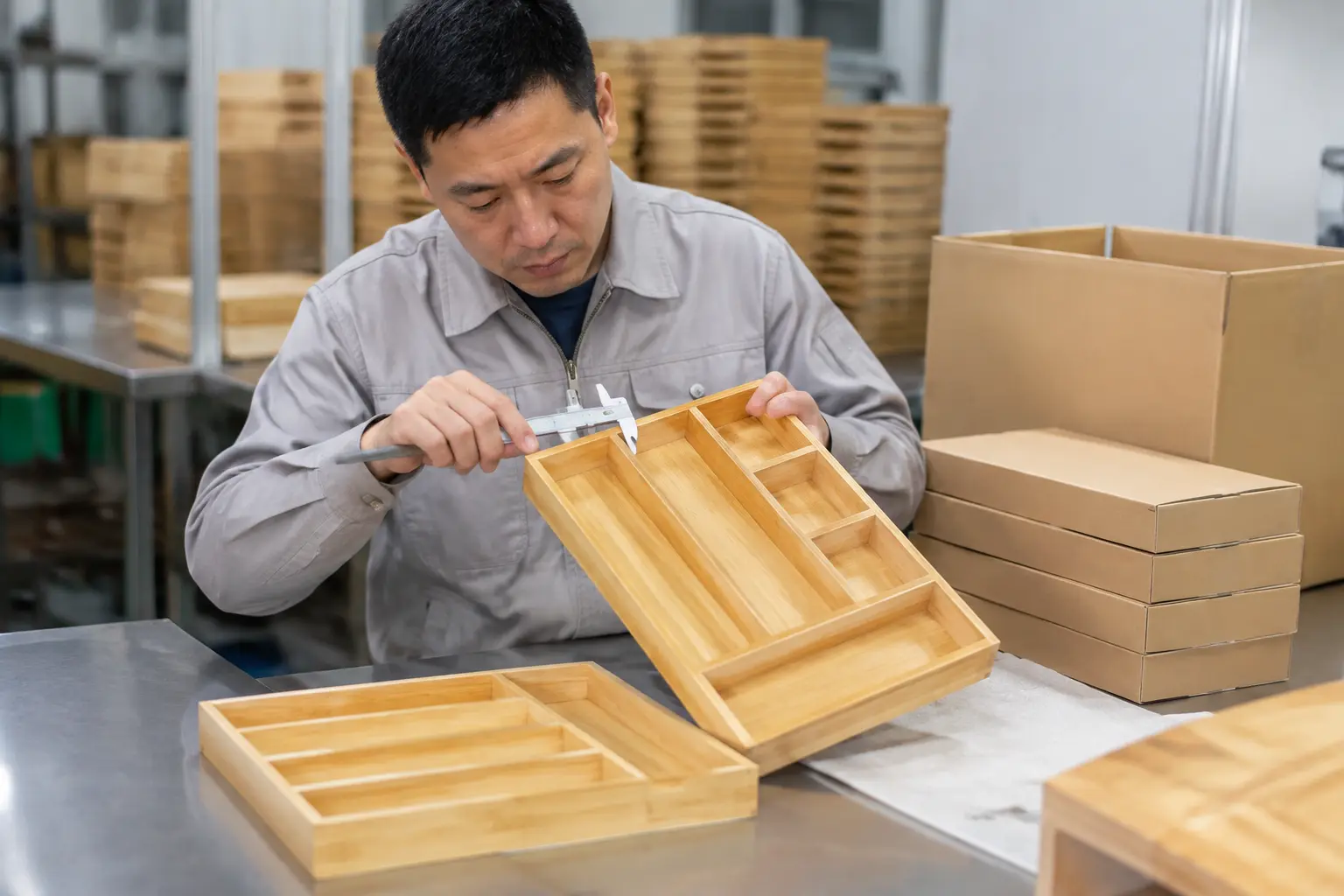
Visual checks may include cracks, chips, splinters, rough edges, scratches, glue residue, uneven coating, distorted panels, excessive color variation, loose dividers and poor logo placement. Define acceptable natural variation with samples, photographs or written limits.
Packaging should protect corners and sliding parts from impact and rubbing. Expandable models may need a restraint, paper band or insert that prevents movement in transit. Confirm unit count, barcode readability, care instructions, carton marks, gross weight and drop-test requirements appropriate to the sales channel.
OEM/ODM Options for Bamboo Cutlery Trays
OEM/ODM development may include custom dimensions, compartment layouts, divider positions, expansion range, edge profiles, color direction, laser engraving, printed branding and private-label packaging. The most efficient brief includes the target drawer range, utensil samples or dimensions, desired retail price position, order quantity, destination market and packaging concept.
Documentation must match the actual product, production site, order and claim. If an FSC claim is requested, confirm that the relevant materials and trading chain support the intended claim and verify certificate scope before using labels or marketing statements. The FSC chain-of-custody overview explains why transaction and supply-chain scope matter. BSCI-related information concerns the audited production facility and is not a product safety certificate.
Buyers can learn more about our bamboo and wood manufacturing capabilities and review our China and Vietnam manufacturing information. A physical sample should be approved before mass production, particularly when drawer fit or sliding movement is central to the product promise.
Frequently Asked Questions
Are expandable bamboo cutlery trays better than fixed trays?
Neither type is universally better. Expandable trays cover a wider drawer range and add storage, while fixed trays offer a predictable footprint and simpler construction. Select the format around the intended drawer, utensils, package and price position.
How should customers measure a drawer?
Measure the narrowest clear internal width, usable front-to-back depth and available height. Account for slides, fasteners, curved corners and liners, then compare those measurements with the tray’s collapsed and expanded dimensions.
Are a bamboo cutlery tray, bamboo flatware tray and bamboo silverware tray different?
The terms usually describe the same type of divided drawer organizer, although regional usage and the intended utensil mix can influence the preferred wording. Search queries such as “utensil tray bamboo” and “cutlery tray bamboo” express similar purchase intent, but natural English product copy should use “bamboo utensil tray,” “bamboo cutlery tray” or “bamboo silverware tray” while stating the exact layout and dimensions.
Can a bamboo cutlery tray be used for gadgets or office supplies?
It may be suitable when compartment dimensions match the items and the approved finish supports the intended environment. Avoid claiming universal use; show representative items and publish accurate internal measurements.
Are bamboo drawer trays dishwasher-safe?
Only if the exact construction and finish have been validated for dishwasher cleaning. Otherwise, conservative care is to wipe with a damp cloth, avoid soaking and dry fully before returning the tray to the drawer.
Can the size and compartment layout be customized?
Custom dimensions and layouts may be possible after design and manufacturing review. Provide the target drawer range and intended utensils so the supplier can evaluate panel construction, tooling, packaging and tolerances.
What should be checked before a wholesale order?
Approve product and compartment dimensions, expansion movement, workmanship, finish, logo, packaging and care instructions. Agree measurable tolerances and defect limits before mass production.
Develop a Bamboo Drawer-Organization Range
This organizer can sit within a broader tray collection. Compare bamboo trays wholesale and OEM purchasing decisions, review bamboo food serving tray applications, or explore bamboo tea tray styles and drainage designs.
Send our team your drawer dimensions, compartment plan, expansion range, artwork, packaging requirements, target quantity and destination market. We can review the brief and identify which details require sampling before a production quotation.