
The European Union Deforestation Regulation (EUDR) has become one of the most important environmental regulations affecting global suppliers and exporters. Companies exporting certain commodities and products to the European market need to understand EUDR requirements, compliance obligations, due diligence procedures, and supply chain traceability.For bamboo and wooden product manufacturers, understanding whether products fall under EUDR regulations is essential to ensure smooth exports and long-term cooperation with European buyers.
What Is EUDR Regulation?
EUDR stands for the European Union Deforestation Regulation, officially known as the Regulation on Deforestation-free Products.The regulation aims to prevent products linked to deforestation and forest degradation from entering the EU market. It replaces the previous EU Timber Regulation (EUTR) and focuses on ensuring that imported products are both environmentally responsible and legally produced.The two core requirements of EUDR compliance are:
1.Deforestation-Free
Products must not be associated with deforestation or forest degradation after December 31, 2020.
2.Legal Production
Products must comply with all relevant laws in the country of production, including land use, environmental protection, and harvesting regulations.
Why Was EUDR Introduced?
Global deforestation has become a major environmental concern. The European Union introduced EUDR to encourage sustainable supply chains and reduce the impact of imported commodities on forests worldwide.The regulation requires companies to improve:
- Raw material transparency
- Supply chain traceability
- Responsible sourcing
- Environmental compliance
For exporters, EUDR is not only a regulation but also an opportunity to demonstrate sustainable manufacturing practices.
Which Products Are Covered by EUDR?
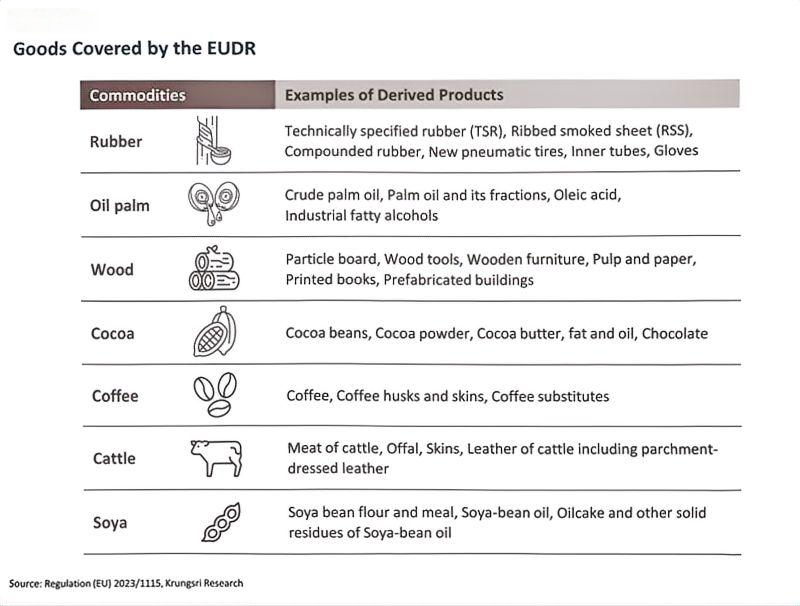
EUDR applies to seven major commodities:
| Commodity | Examples |
|---|---|
| Wood | Furniture, paper products, wooden materials |
| Palm Oil | Food, cosmetics, biofuels |
| Soy | Soybean products and animal feed |
| Beef | Meat and leather products |
| Cocoa | Chocolate and cocoa products |
| Coffee | Coffee beans and processed coffee |
| Rubber | Tires and rubber products |
Among these categories, wood and wood-based products are especially relevant to furniture and home product exporters.
What Are the EUDR Compliance Requirements?
Companies dealing with regulated products need to follow several key compliance steps.
1.EUDR Due Diligence
Businesses must conduct due diligence before placing products on the EU market.
This includes:
- Identifying product origin
- Evaluating deforestation risks
- Preparing required compliance documents
2.EUDR Traceability Requirements
EUDR requires accurate supply chain information.
Companies may need to provide:
- Country of production
- Raw material origin
- Production location
- Geolocation information of production plots
Traceability helps ensure that products are sourced responsibly.
3.EUDR Risk Assessment
Companies must assess potential risks based on:
- Country risk classification
- Raw material sources
- Supply chain transparency
Risk evaluation helps companies determine whether additional verification is required.
Do Bamboo Products Need EUDR Compliance?
This is one of the most common questions from bamboo product exporters.
Pure Bamboo Products
Pure bamboo products are generally not included in EUDR-regulated wood products.The reason is:
- Bamboo belongs to the Poaceae family (grass family)
- Bamboo is not classified as wood under EUDR regulations
- Pure bamboo products are outside the listed wood commodity scope
Examples of pure bamboo products:
- Bamboo kitchenware
- Bamboo organizers
- Bamboo bathroom accessories
- Bamboo furniture
- Bamboo home décor
These products generally do not require EUDR due diligence.
Important Note: Bamboo and Wood Mixed Products
Although pure bamboo products are excluded, exporters should pay attention to mixed-material products.Products containing:
- Solid wood
- Wood pulp
- Wood chips
- Other regulated wood materials
may fall under EUDR requirements.Therefore, manufacturers should clearly identify product materials before exporting to Europe.
EUDR Checklist for Bamboo & Wooden Product Exporters
| Requirement | Description |
|---|
| Material Identification | Confirm whether products contain regulated materials |
| Supplier Information | Maintain raw material sourcing records |
| Traceability | Record production and supply chain information |
| Risk Assessment | Evaluate deforestation risks |
| Documentation | Keep compliance records |
How Can Exporters Prepare for EUDR?
To prepare for EUDR compliance, exporters should:
1. Understand Product Classification
Identify whether products contain regulated commodities.
2. Improve Supply Chain Transparency
Maintain clear records of material sources.
3. Work With Reliable Manufacturers
Choose suppliers with:
- Sustainable material sourcing
- Quality management systems
- Export experience
4. Maintain Compliance Documents
Keep necessary records for future verification.
EUDR FAQ
What does EUDR stand for?
EUDR stands for European Union Deforestation Regulation.
When did EUDR take effect?
EUDR entered into force on June 29, 2023.
Does bamboo need EUDR compliance?
Pure bamboo products are generally excluded because bamboo is not classified as wood under EUDR.
What products are covered by EUDR?
The regulation covers wood, palm oil, soy, beef, cocoa, coffee, and rubber-related products.
What is EUDR due diligence?
Due diligence refers to the process of checking product origin, assessing risks, and ensuring compliance before entering the EU market.
What is EUDR traceability?
Traceability means tracking products and raw materials through the supply chain.
Fujian XianXu – Reliable Bamboo & Wooden Products Manufacturer
Fujian XianXu Bamboo Wood Co., Ltd. specializes in manufacturing bamboo and wooden products for global wholesalers, retailers, importers, and brands.With manufacturing facilities in China and Vietnam, we provide:
- OEM & ODM services
- Custom product development
- Sustainable bamboo solutions
- Strict quality control
- Reliable export support
Our products are exported to more than 40 countries, helping global customers develop eco-friendly product lines for international markets.
Contact us today to discuss your bamboo product requirements and manufacturing solutions.