
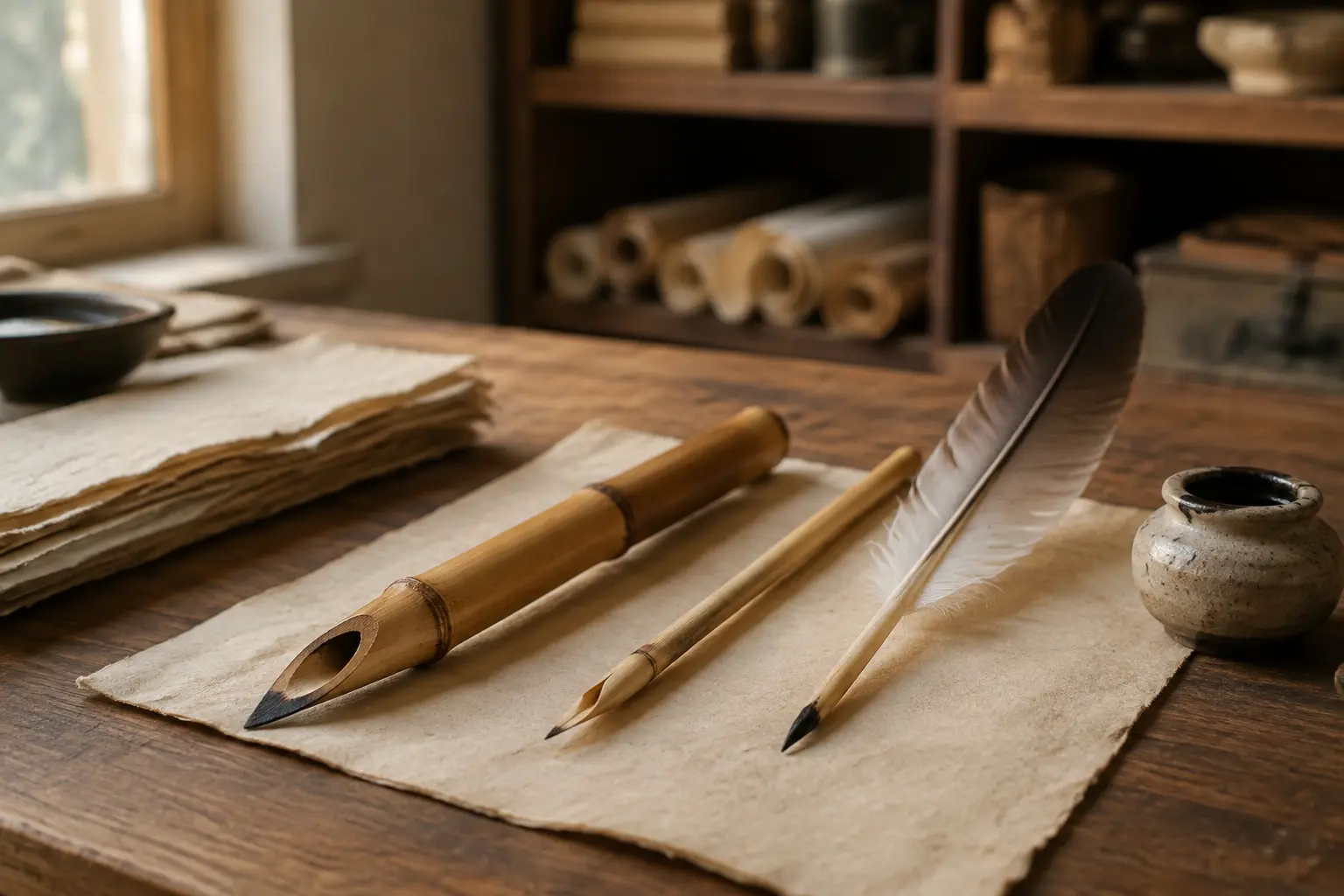
A cut plant stem can be both a simple tool and a highly controlled writing instrument. The broad edge of a qalam or reed pen makes line width respond to direction, while a feather quill has its own structure and handling. Bamboo can also be shaped into a direct, tactile dip pen. These tools are related by the act of cutting a natural material into a nib, but they are not interchangeable historical labels.
This guide explains what a bamboo qalam is, how it differs from a reed pen, calamus pen, quill and modern bamboo-handled pen, and why those differences matter to writers and product buyers. It approaches Chinese bamboo calligraphy carefully: bamboo matters in Chinese material culture, yet the brush—not the cut bamboo pen—is the central traditional calligraphy tool.
What Is a Qalam?
“Qalam” can mean a pen in several languages and contexts. In discussions of traditional calligraphy, it commonly refers to a cut reed pen. The Metropolitan Museum of Art, for example, describes the qalam used by artist Lala Rukh as a dried reed pen with an angled tip. The museum also describes an early Qur'an folio as written with a broad-nibbed reed pen. These records support two useful points: a qalam is defined by a writing tradition and nib form, and a traditional example should not automatically be relabeled as bamboo.
A bamboo qalam applies a comparable cut-nib principle to bamboo or to material sold as bamboo. It can be a calligraphy tool, artist's pen or part of a teaching set. The phrase is useful when accurate, but it must not imply that every historical qalam was bamboo or that one modern tool represents all regional traditions.
How the nib creates contrast
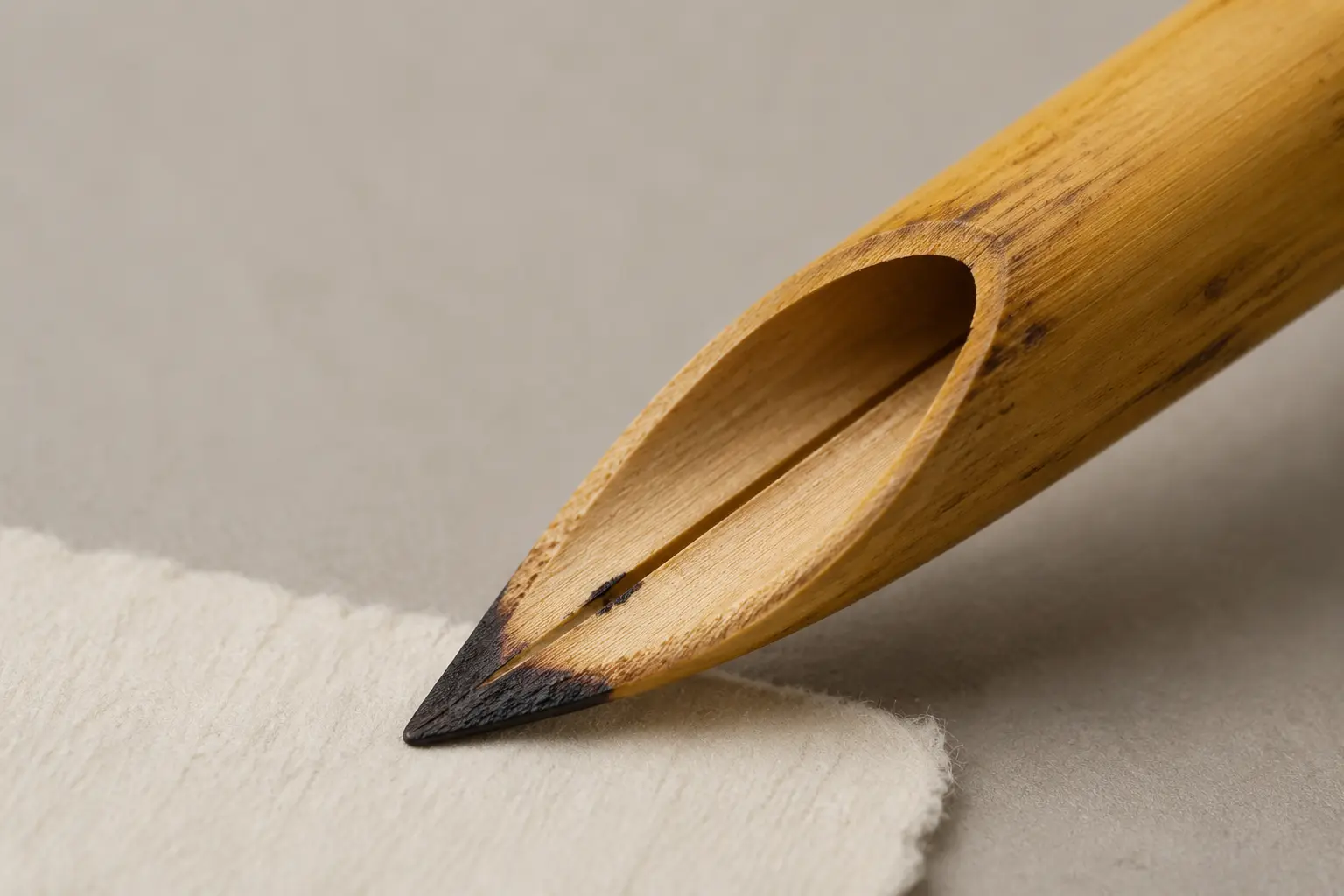
A typical qalam has an angled or broad writing edge, sometimes with a slit or a small shaped cavity that helps carry ink. As the writer changes stroke direction while keeping the nib angle controlled, the width of the mark changes. Nib width, edge angle, material hardness, ink and paper all influence the result. The tool is relatively rigid; useful variation comes mainly from the geometry of the edge rather than from flexible pressure like that of some pointed metal nibs.
Qalam, Reed Pen, Calamus Pen, Quill or Bamboo Pen?
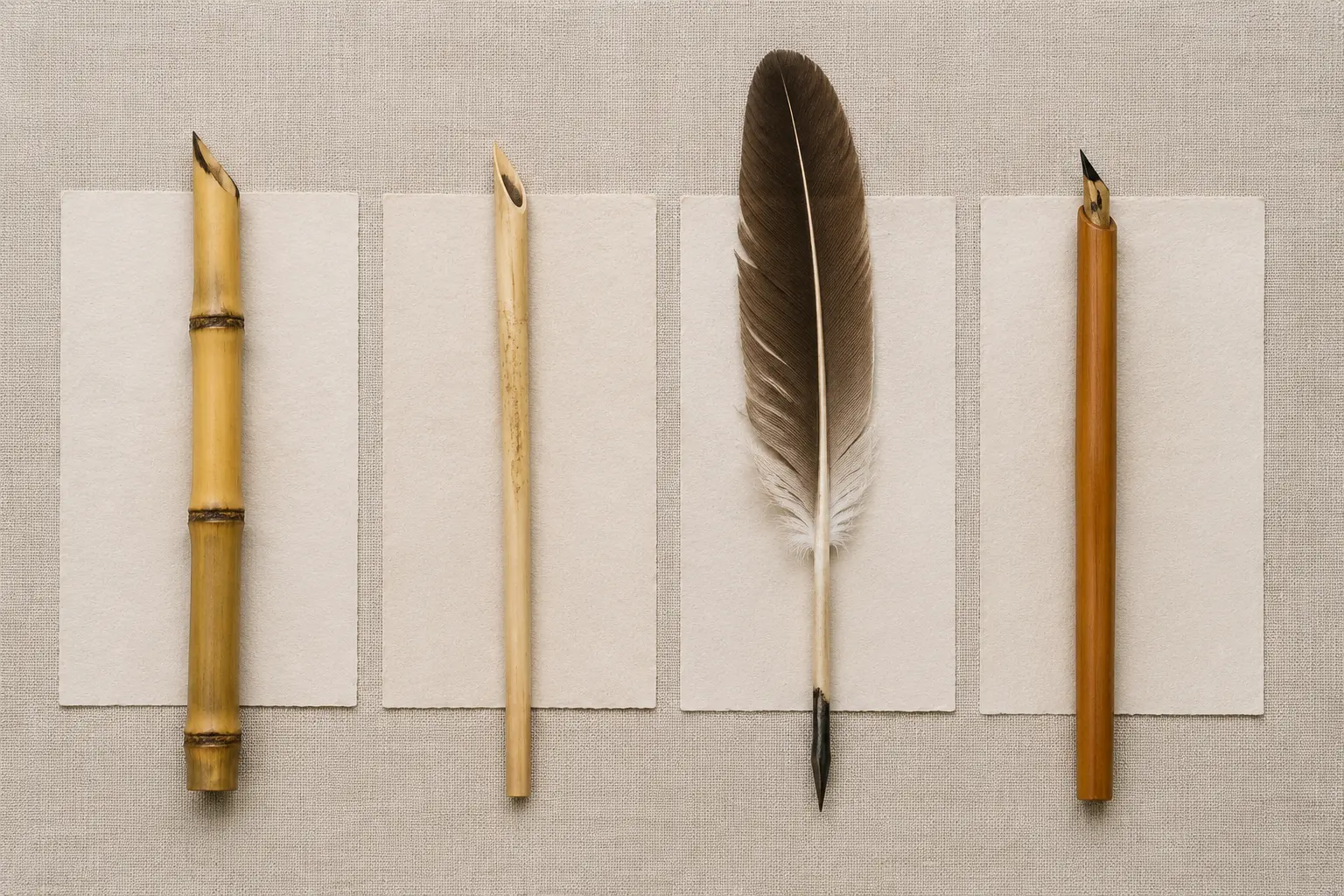
Online product names often mix material, shape and cultural association. A buyer searching for a bamboo quill pen may actually want a bamboo dip pen with an expressive nib, not a feather. The safest way to compare offers is to identify the body material and writing system separately.
| Term | Usual meaning | Important distinction |
|---|---|---|
| Qalam | A pen; in traditional calligraphy discussion, often a cut reed pen | It is not automatically bamboo, and its cultural use is more specific than a generic craft pen. |
| Reed pen | A dip pen cut from a suitable reed or cane-like stem | “Reed” describes a broad material category in ordinary product language; the actual plant should be documented if material identity matters. |
| Calamus pen | A name often used for a cut reed writing tool | The label alone does not establish a botanical species, origin or historical date. |
| Quill | A writing nib cut from a suitable feather shaft | A real quill is feather-based. “Bamboo quill” is usually an informal product phrase, not a literal material description. |
| Bamboo pen | Any pen whose body or nib uses bamboo | It may be a one-piece cut dip pen, a bamboo handle with an inserted nib, or a ballpoint with a bamboo barrel. |
What about a bamboo scribe or bamboo stick pen?
Bamboo scribe is ambiguous. It may describe a pointed marking tool, a bamboo stylus, a pen, or even a person in storytelling copy. A bamboo stick pen usually suggests a simple natural shaft, but it still says nothing about whether the tip is cut bamboo, an inserted metal nib or a ballpoint mechanism. Product pages should show the nib clearly and name the writing method.
A Short, Careful History of Natural Writing Nibs
Reed pens appear in surviving writing traditions across long periods and multiple regions. Museum collections preserve examples of reed pens and manuscripts whose descriptions identify a broad-nibbed reed pen. Such evidence is more reliable than assigning a precise age to an unprovenanced “old bamboo pen” found in a marketplace listing.
Feather quills belong to a different material history. Their hollow shafts can be cured and cut into writing points, but their resilience, wall structure and preparation differ from bamboo and reed. A modern bamboo pen may echo the visible simplicity of both tools without being a replica of either one.
Material availability, script conventions, paper or parchment, ink preparation and workshop practice all shaped how writing tools developed. There was no single universal natural pen. Even within one tool family, craftspeople adjust the edge width and angle to the intended hand. That variety is why responsible historical copy should say “inspired by” or identify a documented form instead of presenting a generic bamboo item as an authentic tool from an unspecified civilization.
How to assess an “old bamboo pen” claim
Age, provenance and cultural attribution require evidence. Wear, dark color or distressed packaging does not prove that a pen is antique. For an actual collectible, consult a qualified specialist and retain records of ownership, context and condition. For a new retail product, describe it as vintage-inspired, traditional-style or hand-cut only when those words are accurate. Do not manufacture artificial provenance.
Writing with Bamboo: What the Tool Feels Like
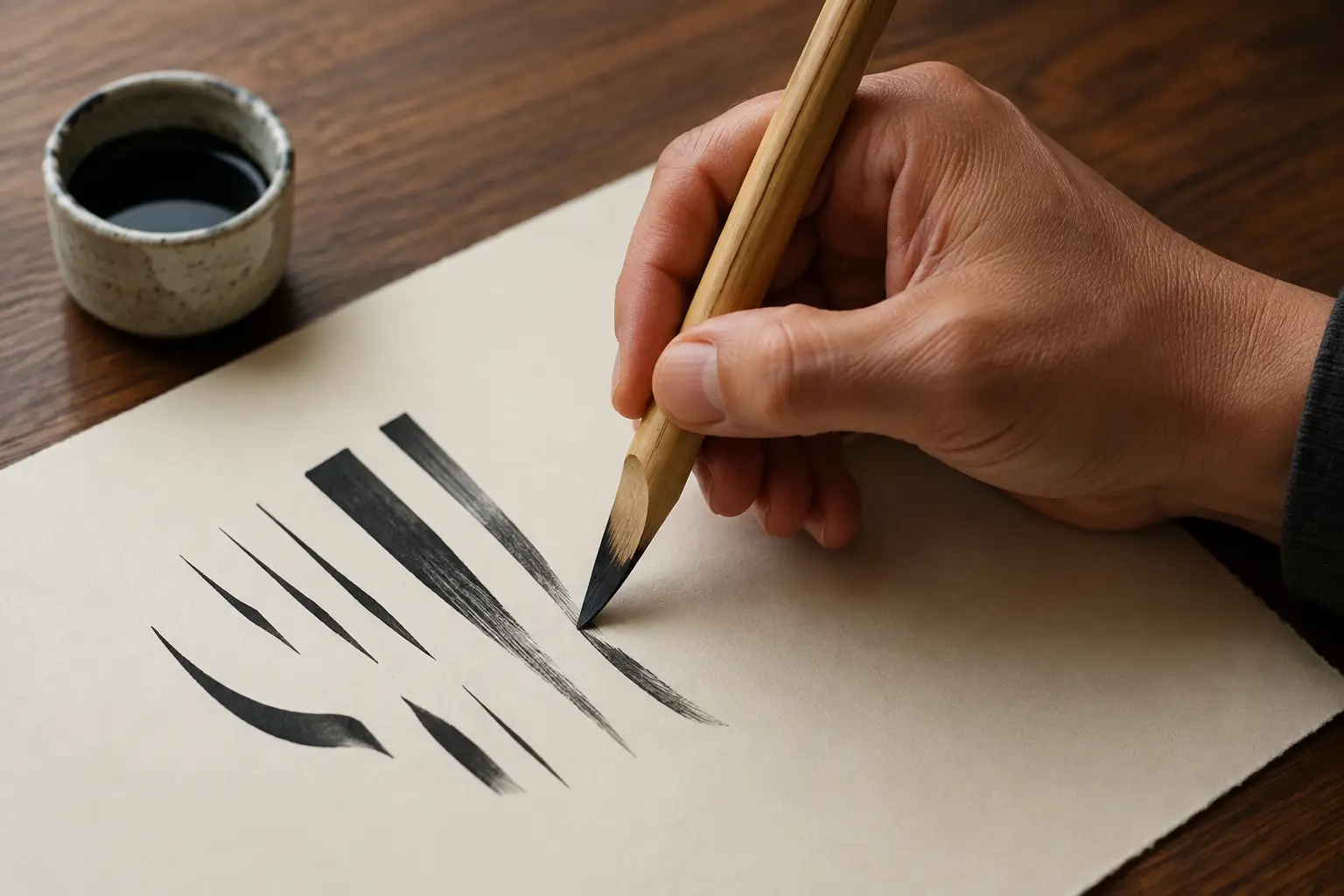
Writing with bamboo is direct and rhythmic. A well-finished cut edge can make crisp broad strokes, fine corner lines and textured dry marks. Because the natural nib is usually firm, the writer controls contrast through edge angle, direction and ink load rather than heavy pressure.
A practical first test
- Use an ink intended for dip-pen or calligraphy practice and a paper that resists feathering.
- Dip only the working edge and any small reservoir, then remove a hanging drop at the container rim.
- Place the full edge on scrap paper and pull short lines at a consistent angle.
- Test horizontal, vertical and curved strokes before attempting letters.
- Recharge when the line becomes dry; do not force the nib by pressing harder.
Plant fibers may catch if the edge is rough or pushed sharply across the sheet. Stop and inspect the nib if it scratches, splinters or releases fragments. Clean according to the ink maker's guidance, wipe the pen promptly and let it dry fully before storage. Prolonged soaking can affect a natural shaft, coating or adhesive.
Chinese Bamboo Calligraphy: Use the Term with Context
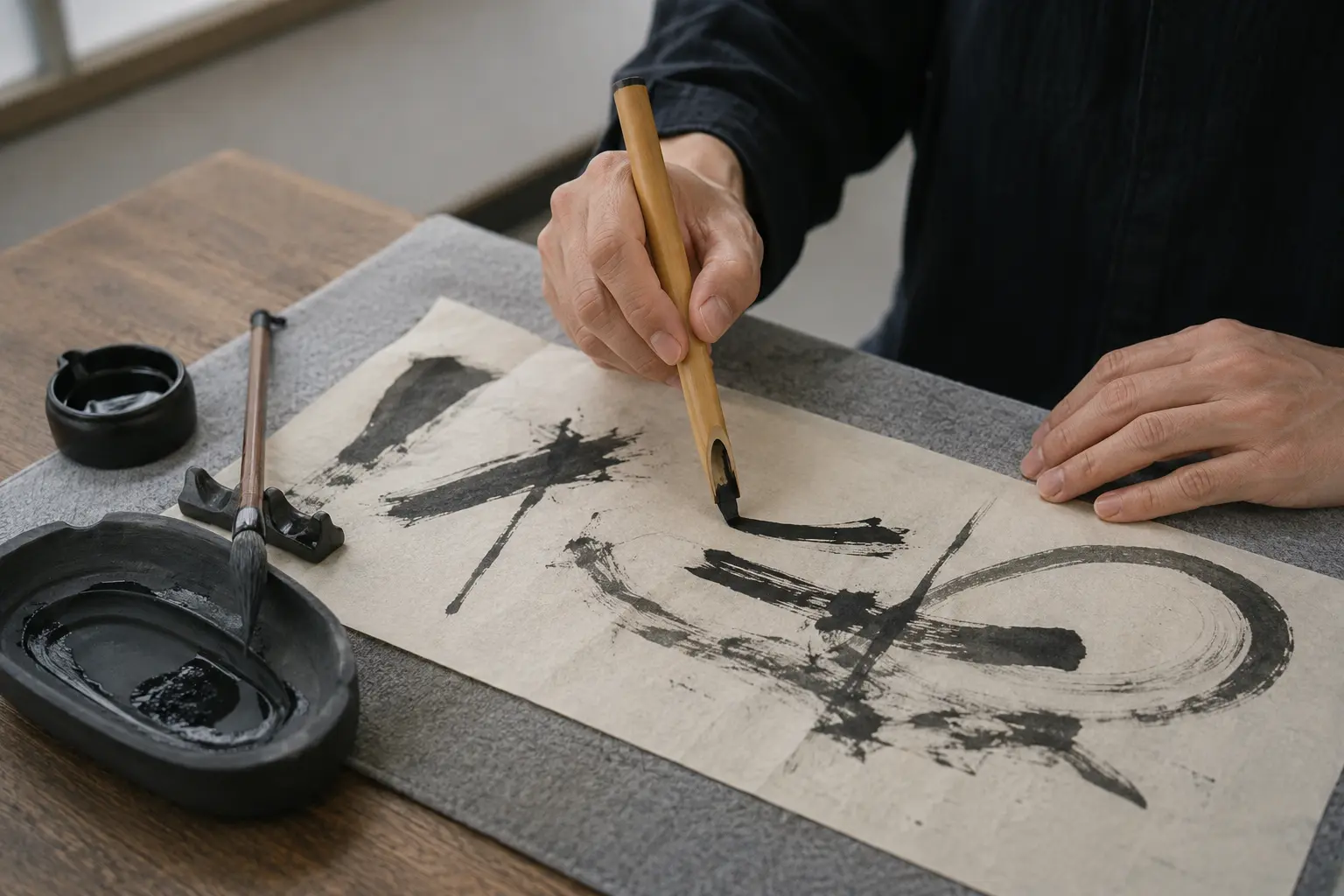
Searches for Chinese bamboo calligraphy can point to several different ideas: calligraphy written on bamboo-related paper, a bamboo-handled brush, an experimental cut bamboo pen, or lettering used on a bamboo product. These are not the same thing. Traditional Chinese calligraphy is fundamentally associated with the brush, whose soft hair creates modulation through pressure, speed, moisture and movement. A rigid cut bamboo pen produces a different mark.
That difference does not prevent contemporary artists from experimenting with bamboo nibs. A cut bamboo tool can support abstract strokes, mixed-media drawing and modern lettering exercises. The accurate description is “bamboo pen for contemporary calligraphy” or “experimental bamboo calligraphy tool,” unless the maker can document a more specific tradition. Retail copy should not claim that a cut bamboo pen is the standard traditional Chinese calligraphy instrument.
Developing a Modern Bamboo Qalam Set for B2B Buyers
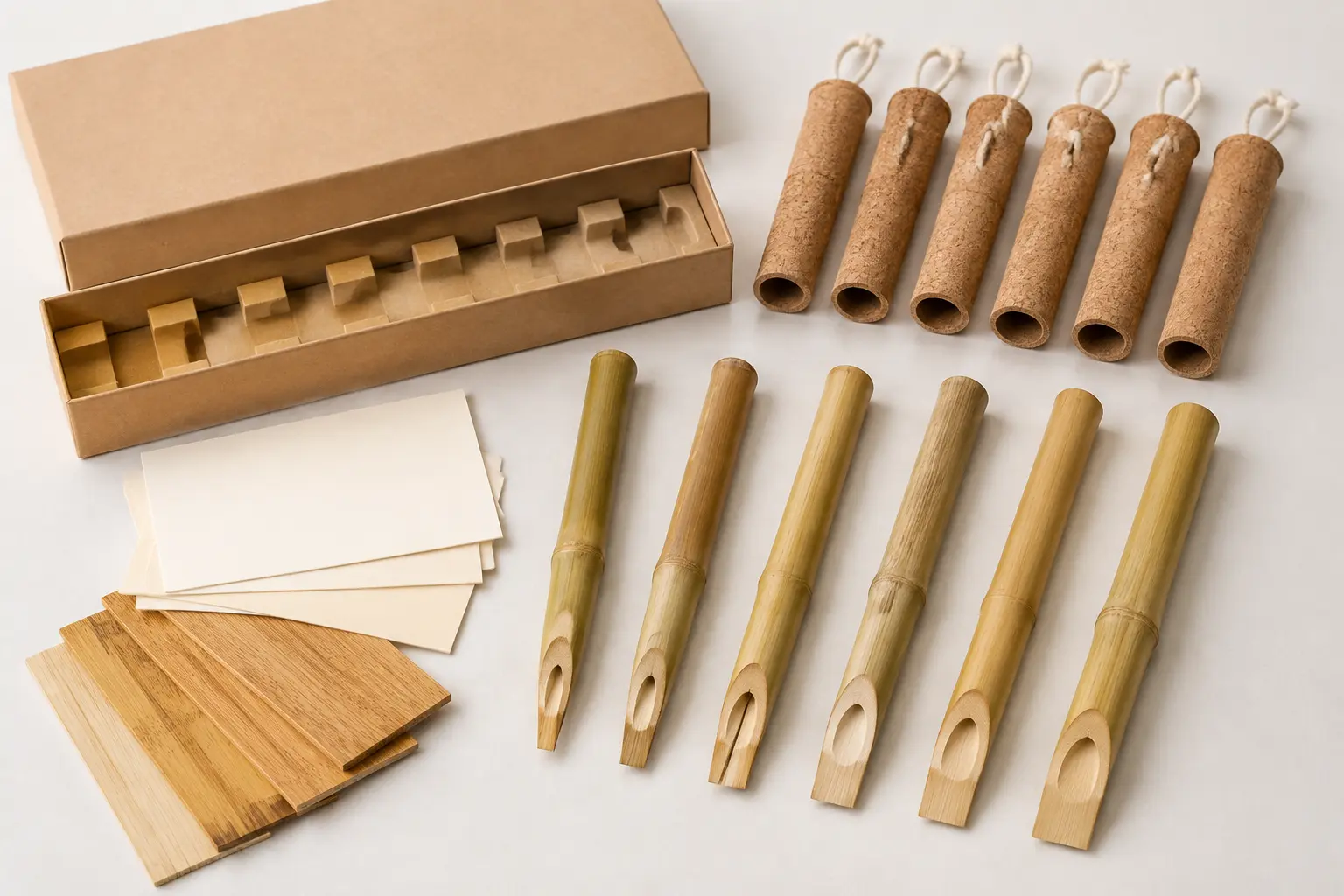
A successful bamboo qalam set starts with a defined user and writing purpose. A classroom kit may need durable, clearly differentiated nib widths and simple care instructions. An artist set may prioritize more profiles and expressive marks. A museum-shop or cultural program requires especially careful wording, reference review and a clear distinction between contemporary production and historical objects.
Specify the product before requesting a quote
- Construction: one-piece cut bamboo or reed, bamboo handle with replaceable nib, or another clearly named system.
- Nib geometry: target width range, cut angle, slit, reservoir concept and left- or right-oblique options if required.
- Material definition: requested species or material category, finish, treatment and the evidence needed to support origin or composition claims.
- User safety: smooth grip, controlled edges, protective cap or sleeve, age grading and instructions appropriate to the destination market.
- Set contents: number of pens, ink inclusion or exclusion, paper samples, cleaning cloth, storage and instruction card.
- Packaging: insert retention, ventilation after use, labeling space, shipping protection and disposal information that can be supported.
Evaluate samples by function, not appearance alone
Natural grain and color will vary, so approve a representative range rather than a single ideal photograph. Test each nib on the specified paper and ink. Record initial ink flow, stroke contrast, line length per dip, scratching, splintering, cleaning and performance after repeated wet-and-dry cycles. Check cap fit and whether a damp pen can be stored safely. If ink is included, review leakage, labeling and market-specific requirements for the complete packed set.
For bulk development with Fujian Xianxu, a useful inquiry includes the intended market, application, writing system, preferred nib range, set contents, packaging concept, artwork, testing expectations and target quantity. Final specifications, sampling terms, price, production schedule and supporting documents should be confirmed for the actual project rather than assumed from a general guide.
Buyer Checklist: Respectful Storytelling and Accurate Claims
- Identify whether the product is bamboo, reed, feather, or only bamboo-handled.
- Use “qalam” with cultural context; do not imply that all qalam are bamboo.
- Reserve “quill” for a feather writing tool, or explain that “bamboo quill” is a search or style term.
- Do not assign an age, origin, script tradition or museum-like provenance without evidence.
- Show the actual nib and writing samples from the production-equivalent item.
- Request documentation for material, finish, packaging and environmental claims relevant to the destination market.
Frequently Asked Questions
Is a bamboo qalam the same as a reed pen?
They can work on the same cut-nib principle, but the material names are not identical. A traditional qalam is commonly described as a cut reed pen. A bamboo qalam is specifically made from bamboo or sold as such, so its material should be confirmed.
Is a bamboo quill made from a feather?
No. A literal quill is made from a feather shaft. “Bamboo quill” or “bamboo quill pen” is often informal commercial wording for a bamboo dip pen with an expressive tip. A product page should explain the construction rather than relying on that phrase alone.
Can a bamboo stick pen be used for calligraphy?
Yes, if its tip is cut and finished for controlled ink delivery. Ask about nib width, edge angle, slit or reservoir, compatible ink and paper, because “bamboo stick pen” by itself does not define performance.
Is a cut bamboo pen a traditional Chinese calligraphy tool?
It can be used for contemporary or experimental calligraphy, but it should not be presented as the standard traditional Chinese tool. Chinese calligraphy is historically brush-centered, and a bamboo pen creates a different kind of mark.
What should be included in a bamboo qalam set?
A practical set may include clearly identified nib widths, protective sleeves, compatible practice paper, a cleaning cloth, storage and concise use-and-care instructions. Ink may be included only after its packaging, labeling and transport implications have been assessed.
Sources and Further Reading
- The Metropolitan Museum of Art: Lala Rukh, RUPAK — includes a museum description of an angled qalam as a dried reed pen used in calligraphy.
- The Metropolitan Museum of Art: Folio from a Qur'an Manuscript — describes writing made with a broad-nibbed reed pen.
- The British Museum: reed pen, object EA5535 — an institutional object record for further material comparison.
- The British Museum: reed pen, object EA96185 — an additional museum record for reed-pen construction and terminology.
Discuss a Custom Bamboo Writing Tool Project
Planning a bamboo qalam, bamboo writing tool or private-label set? Share the intended user, market, nib style, accessories, packaging and documentation needs with Fujian Xianxu. A clear product brief makes sample comparison more useful and helps turn historical inspiration into an accurately described modern product.