
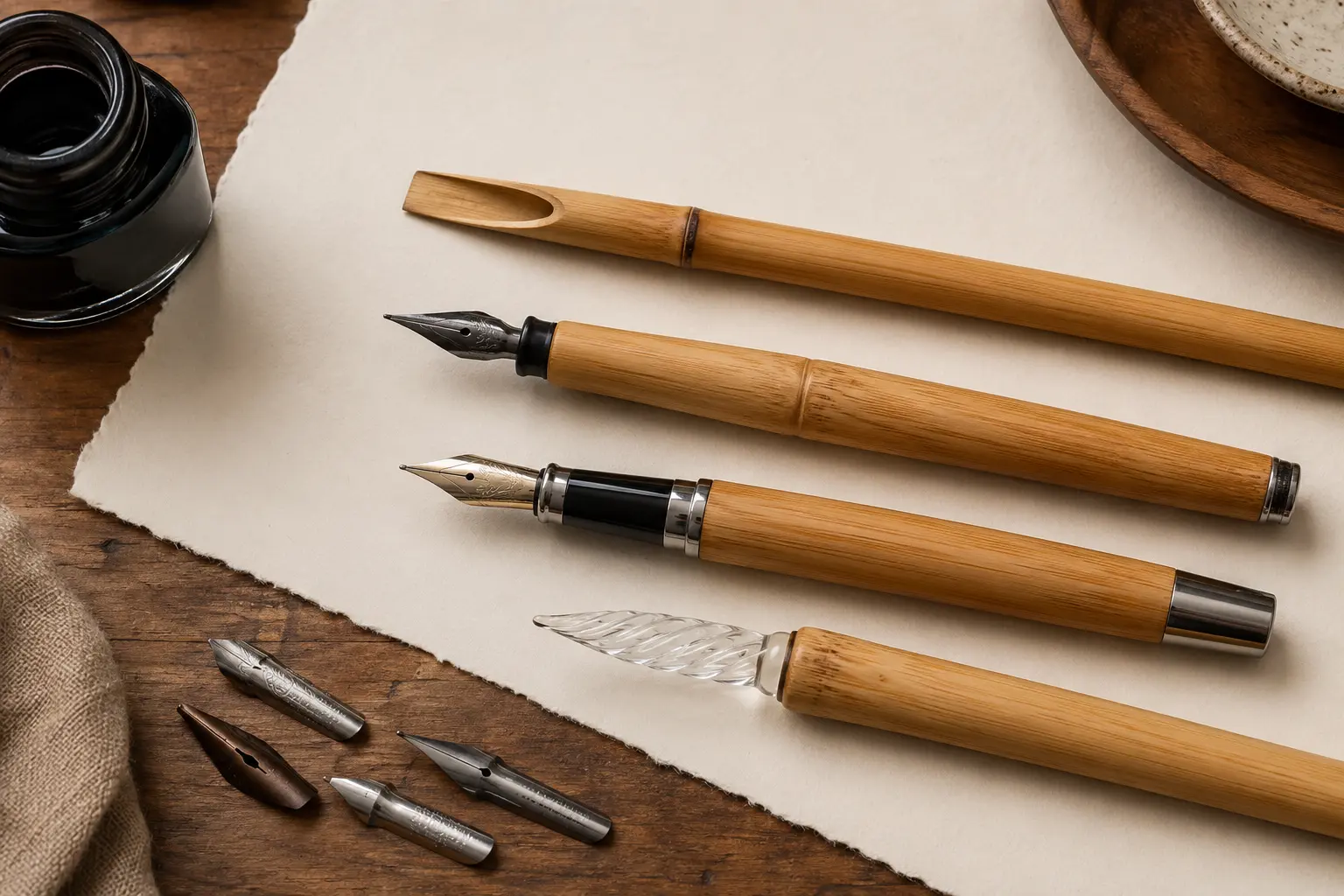
“Bamboo pen” can describe several very different writing tools. One may be a hand-cut reed-style pen whose bamboo tip touches the paper. Another may be a bamboo-handled holder fitted with a removable metal nib. A bamboo fountain pen generally uses a bamboo body or trim around a conventional nib, feed and ink system. A bamboo glass pen often means a glass writing tip paired with a bamboo handle, not a tip made from bamboo.
Those distinctions matter to calligraphers, illustrators, retailers and B2B buyers. They affect line variation, ink compatibility, cleaning, replacement parts, packaging and the language used in product listings. This guide compares the main formats and shows how to specify them accurately.
First Identify the Type of Bamboo Pen
The word “bamboo” may describe the writing tip, the handle, the barrel or only a decorative surface. Before comparing products, identify which part is bamboo and how ink reaches the page.
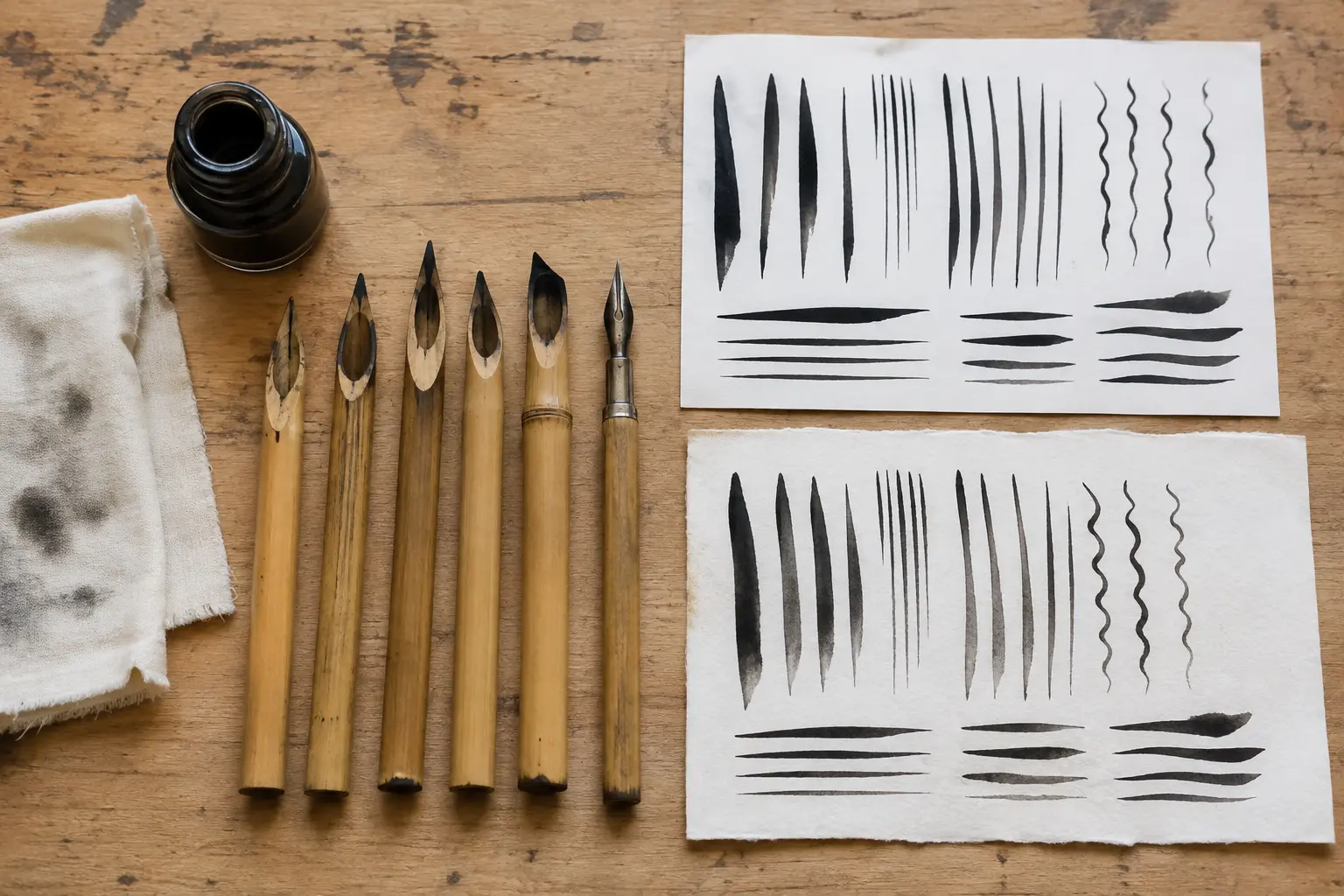
- Reed-style bamboo dip pen: a shaped bamboo end acts as the writing point and is dipped directly into suitable ink.
- Bamboo nib holder: a bamboo handle holds an interchangeable metal calligraphy or drawing nib.
- Bamboo fountain pen: a bamboo barrel or bamboo-trimmed housing contains a conventional nib, feed and cartridge or converter system.
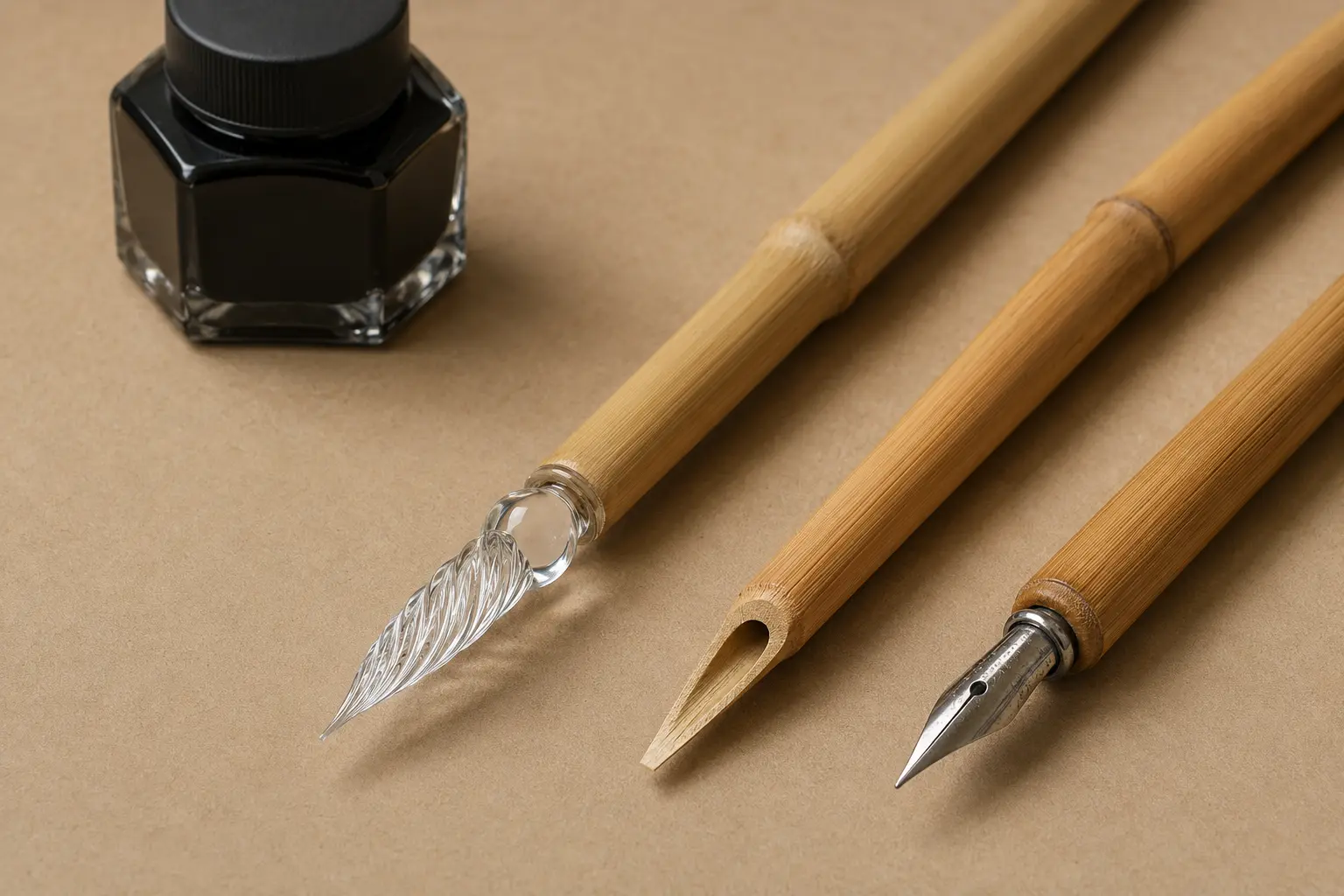
- Bamboo-handled glass pen: a spiral glass tip holds a small amount of ink between its grooves and is mounted in or paired with a bamboo handle.
Product pages sometimes blur these categories. A precise description should state the tip material, handle material, ink system and whether parts are replaceable. That information is more useful than a broad phrase such as “natural art pen.”
What Is a Bamboo Dip Pen?
A bamboo dip pen has no self-contained continuous ink supply or fountain-pen feed. The user dips its tip into ink, removes excess and writes or draws until the small ink load on the nib or in a shallow groove is depleted. The tool may use a tip cut directly into the bamboo, or a separate nib held by a bamboo handle. These two constructions behave differently and should not share the same technical claims.
Reed-style bamboo tips
A traditional reed-style tip can produce expressive, slightly textured lines. The cut angle, slit, edge width and bamboo hardness all influence ink flow. Because a natural tip wears and changes with use, variation is part of the experience. It is well suited to experimental lettering, broad strokes, sketching and historical writing practice, but it may not deliver the repeatability expected from a standardized metal nib.
Bamboo nib holders with metal nibs
A bamboo nib pen may instead be a holder designed for a removable metal nib. In that case, the bamboo provides the grip and visual character while the metal bamboo pen nib—more accurately, the nib fitted to the bamboo holder—controls the line. Buyers should state the accepted nib size or fitting rather than assuming all nibs are interchangeable.
Understanding Bamboo Nibs and Pen Tips
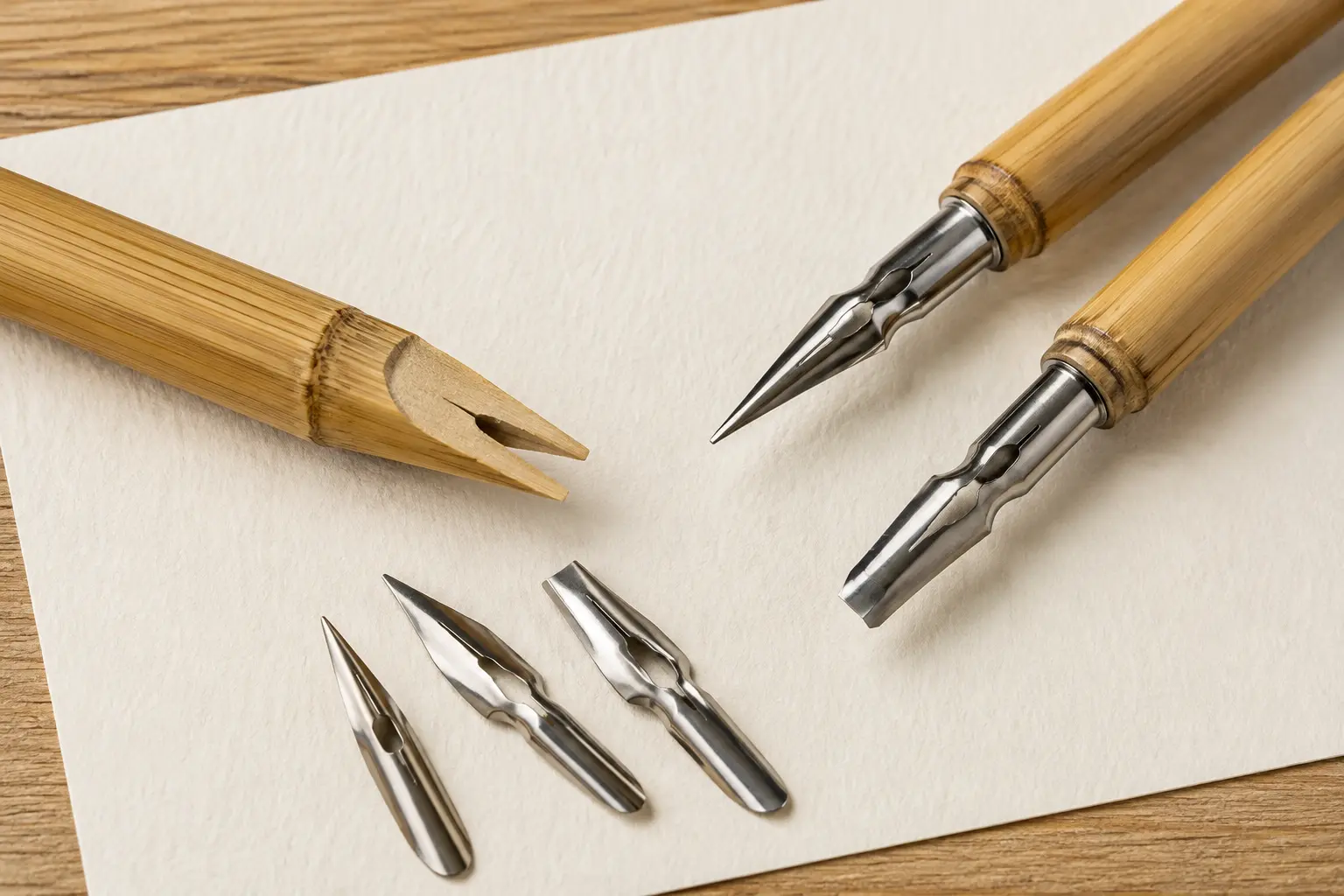
Searches for bamboo nibs, bamboo pen tips or a bamboo tip pen can refer to several products. A useful specification names the actual material and profile: hand-cut bamboo tip, broad-edge reed tip, pointed metal nib in a bamboo holder, or glass tip with a bamboo handle.
Broad edges and pointed nibs serve different marks
A broad edge creates strokes whose thickness changes with writing angle and direction. A pointed metal nib can create fine lines and, depending on its design and pressure, may produce thicker downstrokes. A rigid drawing nib favors controlled marks, while a more flexible nib can emphasize contrast. No single nib is best for every script or illustration style.
Fit and replacement matter for sets
For a retail or educational set, document which nibs fit the holder, how they are inserted and whether replacements can be purchased. A holder that grips one sample securely may not fit every nib style. The supplier should verify the proposed combination and include safe handling instructions, because metal nibs may have sharp points and glass tips are breakable.
How a Bamboo Fountain Pen Differs
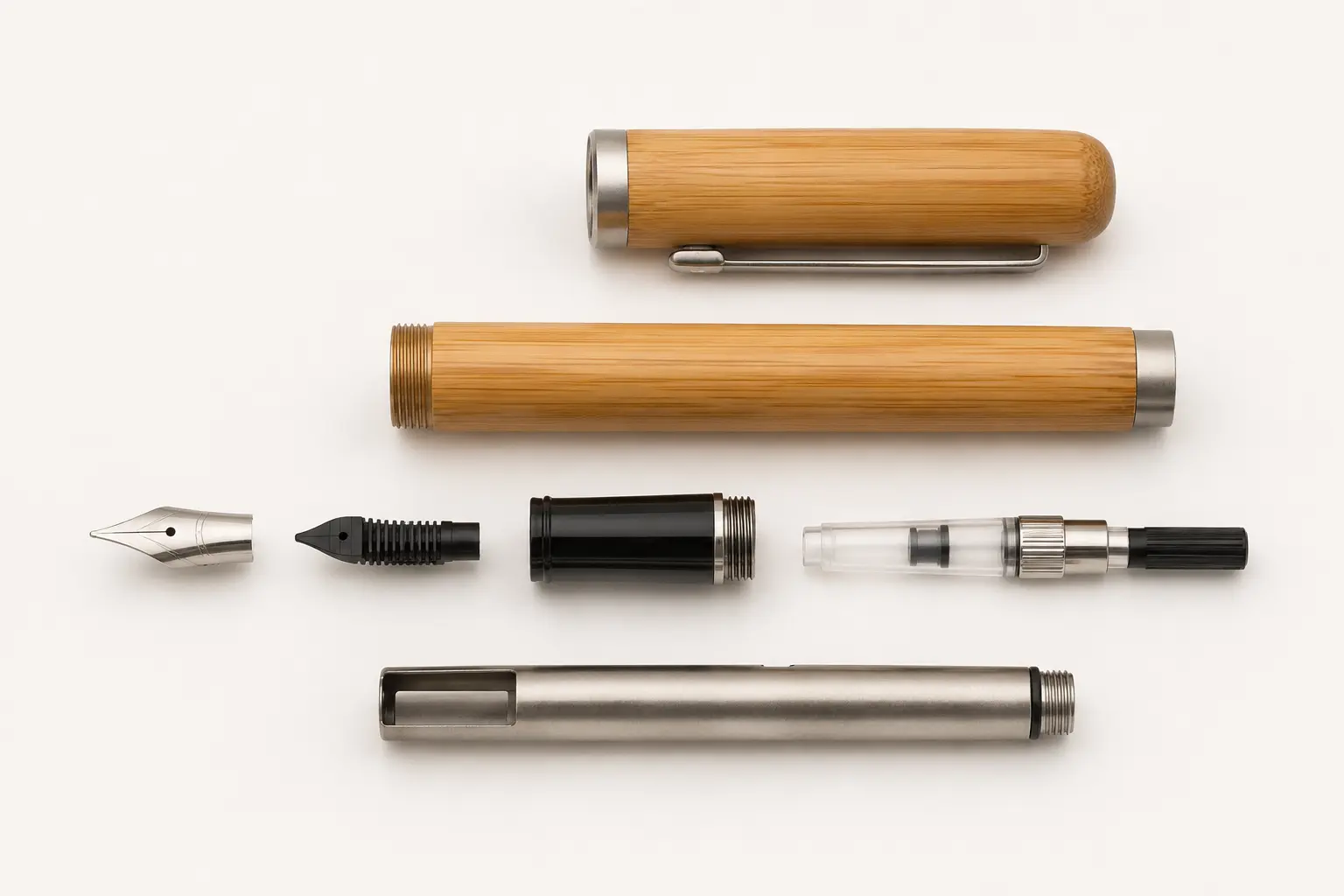
A bamboo fountain pen continuously delivers ink from a cartridge, converter or internal reservoir through a feed to a conventional fountain-pen nib. “Bamboo” normally refers to the barrel, cap, grip accent or outer finish. The nib and feed are not normally bamboo, and the filling system uses standard functional materials.
This format suits everyday note-taking better than repeated dipping, provided the selected nib and ink system work reliably. Procurement specifications should cover nib width, filling method, cap seal, posting or non-posting use, clip construction, component finish and whether replacement cartridges or converters are available in the target market.
Ask for clear construction language
Avoid statements such as “100% bamboo fountain pen” unless every relevant component has been documented and the wording is defensible. “Fountain pen with a natural bamboo barrel” is usually clearer. If the barrel uses bamboo veneer, laminated bamboo or solid machined bamboo, state that accurately in the product data.
Test the assembled writing system
Evaluate cap fit, nib alignment, startup after rest, ink flow, leakage and filling operation using the proposed components. Testing a loose nib is not enough; the nib, feed, housing, ink supply and cap work as a system. Results can also depend on ink and paper, so record the test conditions.
Choosing a Bamboo Drawing Pen
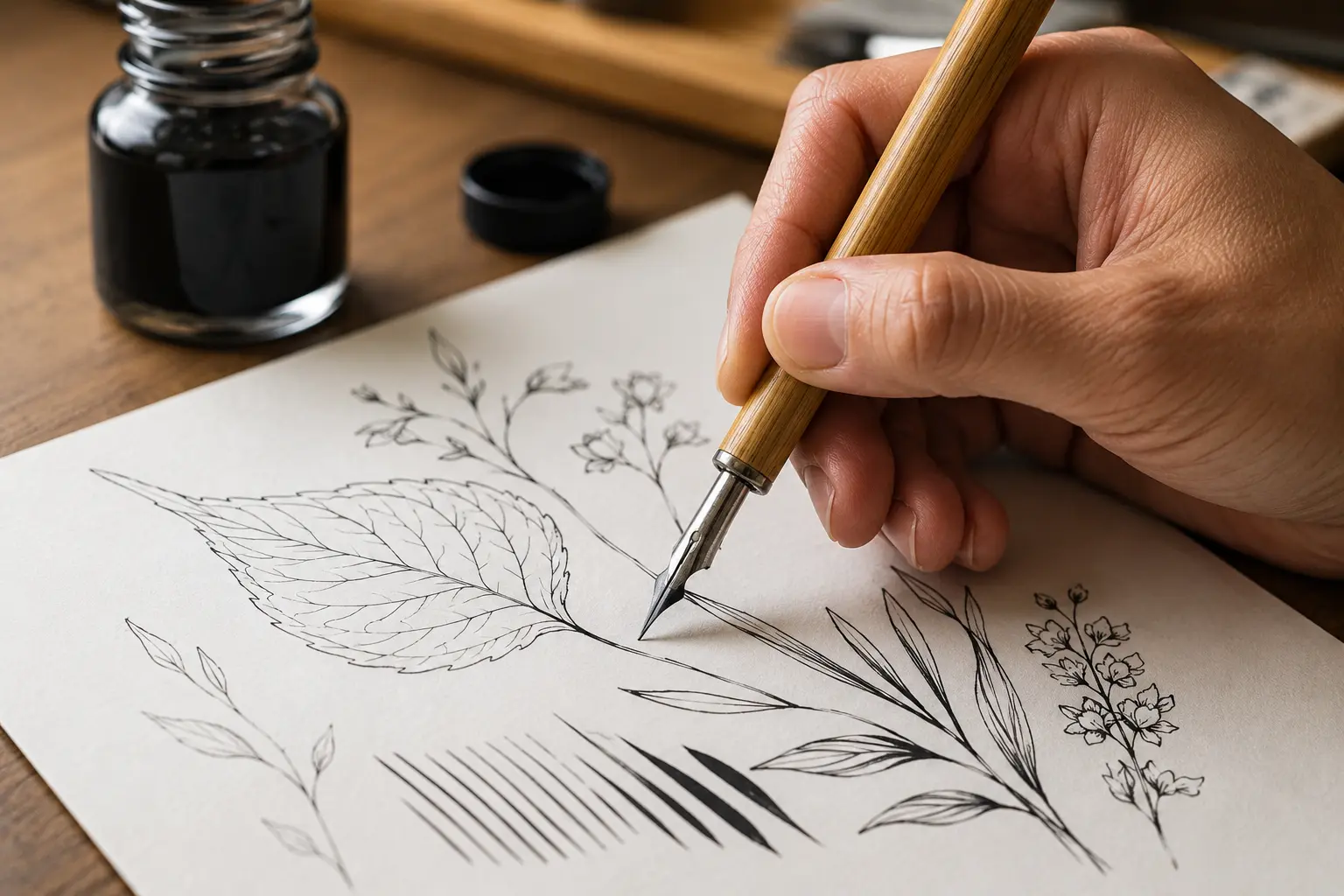
A bamboo drawing pen can be a reed-style tool for bold organic marks or a bamboo holder fitted with a fine metal nib. The choice depends on the desired line, drawing scale, paper and ink. Artists may value visible variation, while technical exercises may require a more consistent nib.
For product selection, ask for writing samples made with the proposed pen, nib, ink and paper. Note the angle and pressure used. A dramatic sample made with a different nib or heavily textured paper may not represent the packaged product. Retailers can improve customer satisfaction by showing honest line examples and explaining that results depend on technique.
How to Select Bamboo Pen Ink
Bamboo pen ink is not a single special formulation. The suitable ink depends primarily on the pen type. Dip pens can work with many calligraphy and drawing inks, subject to the nib material and maker guidance. Fountain pens require ink formulated for fountain-pen feed systems; some pigmented, shellac-based or highly particulate inks used for dip work can clog a fountain pen.
Questions to ask about ink
- Is the ink intended for a dip pen, fountain pen or both?
- Does it contain particles or binders that require special cleaning?
- How does it behave on the intended paper?
- What drying time, water resistance or archival property is documented by the ink maker?
- Is the bottle suitable for the length and shape of the pen tip?
Do not transfer a performance claim from the ink to the pen, or from one ink color to an entire range, without evidence. If a gift set includes bottled ink, packaging and transport requirements also need careful review for the destination and shipping method.
Cleaning and care
Wipe or rinse dip nibs promptly according to the nib and ink supplier’s guidance, then dry metal parts to reduce corrosion risk. Do not soak an untreated bamboo handle for extended periods. Fountain pens require a compatible flushing routine, while glass tips should be handled over a protected surface and stored so the tip cannot strike hard objects.
What Is a Bamboo Glass Pen?
A bamboo glass pen generally combines a grooved glass writing tip with a bamboo handle or bamboo decorative section. Ink sits in the spiral channels of the glass tip after dipping and travels to the paper as the user writes. The glass nib is not bamboo; the term describes the combined product.
Glass tips are easy to rinse between many ink colors and make visually appealing gift sets, but they can chip or break. Buyers should check tip smoothness, writing consistency around the circumference, handle-to-tip security and protective packaging. Because individual glass tips can have small differences, a realistic quality plan should focus on safe edges and usable writing rather than demanding visually impossible uniformity.
Comparison for Users and B2B Buyers
| Pen type | Ink delivery | Typical strength | Key sourcing check |
|---|---|---|---|
| Cut bamboo dip pen | Direct dip; bamboo tip holds a limited ink load | Expressive broad or textured marks | Tip cut, finish, natural variation and care guidance |
| Bamboo holder with metal nib | Removable nib is dipped | Choice of pointed, broad or drawing nibs | Nib fit, included sizes, replacement compatibility |
| Bamboo-bodied fountain pen | Feed from cartridge, converter or reservoir | Convenient continuous writing | Nib/feed alignment, filling system, cap seal and parts |
| Bamboo-handled glass pen | Glass grooves retain ink after dipping | Quick color changes and decorative presentation | Tip smoothness, breakage protection and secure assembly |
B2B Specification and Quality Checklist
For a custom range, define the intended user, pen category, bamboo part, tip or nib material, dimensions, finish, ink compatibility, replaceable parts, included accessories, branding and packaging. Request representative samples and approve a written specification rather than approving only a photograph.
Inspection points may include bamboo surface finish, cracks, sharp edges, holder fit, nib alignment, cap operation, ink-flow checks, glass-tip condition, logo position, set completeness and protective packing. Requirements for labeling, testing and documentation should be linked to the exact product and destination market.
Fujian Xianxu supports OEM/ODM development through China and Vietnam manufacturing and reports exports to more than 40 countries. It identifies BSCI and FSC factory certifications and can discuss REACH- or FDA-relevant testing based on the proposed materials, construction and buyer requirements. Confirm current document scope and the appropriate test plan for each finished item.
Frequently Asked Questions
Is a bamboo dip pen the same as a bamboo fountain pen?
No. A dip pen is dipped into ink and has no continuous internal supply. A fountain pen uses a feed and an internal cartridge, converter or reservoir.
Are bamboo fountain pen nibs made from bamboo?
Normally, no. “Bamboo fountain pen” usually refers to a bamboo barrel or trim. The nib is generally metal, with a conventional feed and ink system.
Can every metal nib fit every bamboo nib holder?
No. Nib curvature, size and holder design vary. Verify the exact combination and identify compatible replacements.
Can dip pen ink be used in a fountain pen?
Not automatically. Some dip inks can clog or damage fountain-pen feed systems. Use only inks the fountain pen and ink makers identify as compatible.
What does “bamboo glass pen” mean?
It usually means a glass writing tip combined with a bamboo handle or bamboo decorative section. The glass tip itself should not be described as bamboo.
Which bamboo pen is best for drawing?
A cut bamboo tip suits bold, organic marks; a bamboo holder with a fine metal nib suits more controlled linework. The best choice depends on ink, paper, scale and desired line character.
What should a retailer include in the product instructions?
Identify the pen type, tip material, compatible ink, loading method, cleaning routine, replaceable parts, storage guidance and any sharp-point or breakage precautions relevant to the set.
Discuss a Custom Bamboo Writing Set
Send the intended pen type, target user, nib or tip requirements, ink and accessory plan, branding artwork, packaging reference, quantity and destination. Contact Fujian Xianxu to review an OEM/ODM concept and confirm the sample, documentation, testing, commercial terms and production schedule for the specific project.