
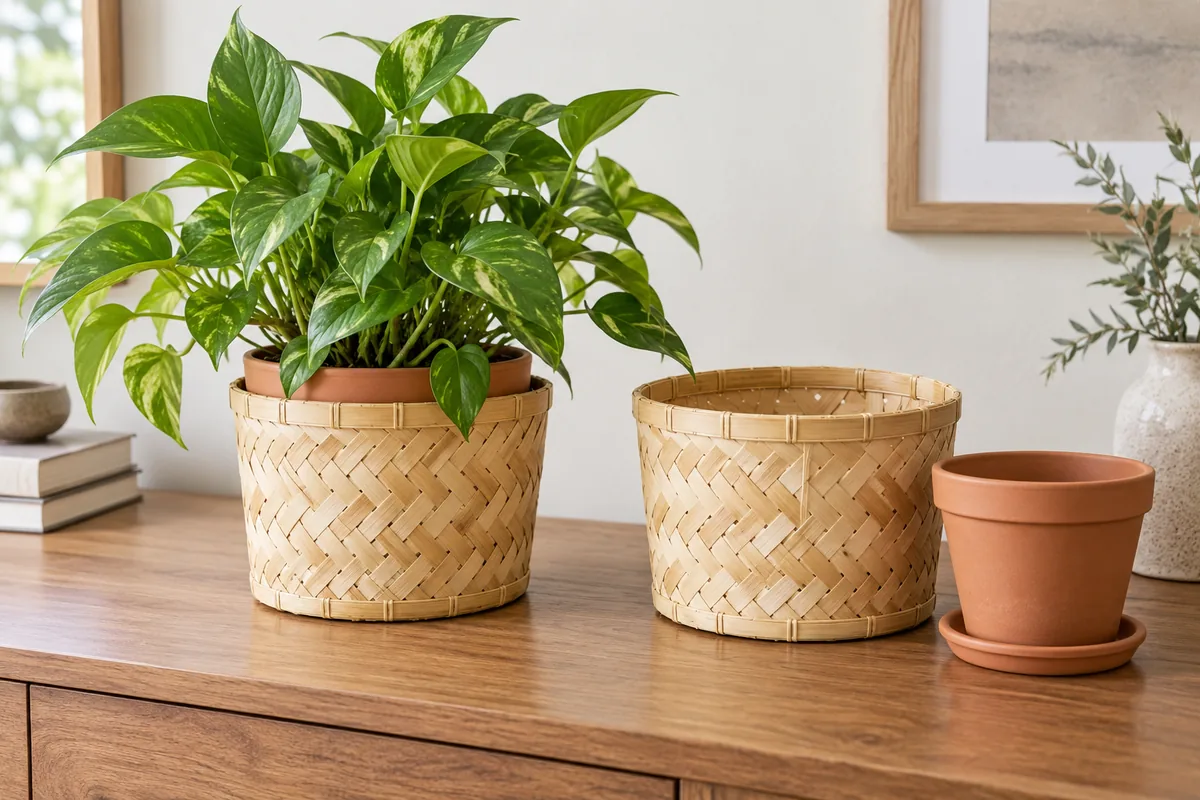
Bamboo baskets for plants can turn a plain nursery pot into a textured part of a room. The most practical setup treats the basket as a decorative outer cover: the plant grows in a separate pot, and a watertight tray protects the basket and the surface underneath. This approach also lets you remove the plant for watering, inspection and repotting.
Before choosing a bamboo planter basket, consider the plant’s existing pot, the space around it and how you will manage drainage. Appearance matters, but a basket that traps a pot or hides standing water creates unnecessary work.
Keep the growing pot separate
Do not place loose soil or pour water directly into an untreated woven bamboo basket. Use an inner growing pot with drainage holes and a separate tray. The Royal Horticultural Society’s container guide emphasizes the importance of drainage holes; a decorative basket should not replace a suitable growing container.
In a decorative-cover setup, the inner pot holds the roots and potting mix, the tray catches incidental runoff, and the bamboo plant basket provides the visible finish. A fabric liner may hide the pot, but it is not automatically waterproof.
A purpose-built planter with an engineered lining, composite base or drainage plug is a different product. Verify its specific planting, drainage and exposure instructions rather than applying the same assumptions. A plug may contain runoff; it does not remove the need to inspect and empty collected water.
Measure the pot, tray and basket opening
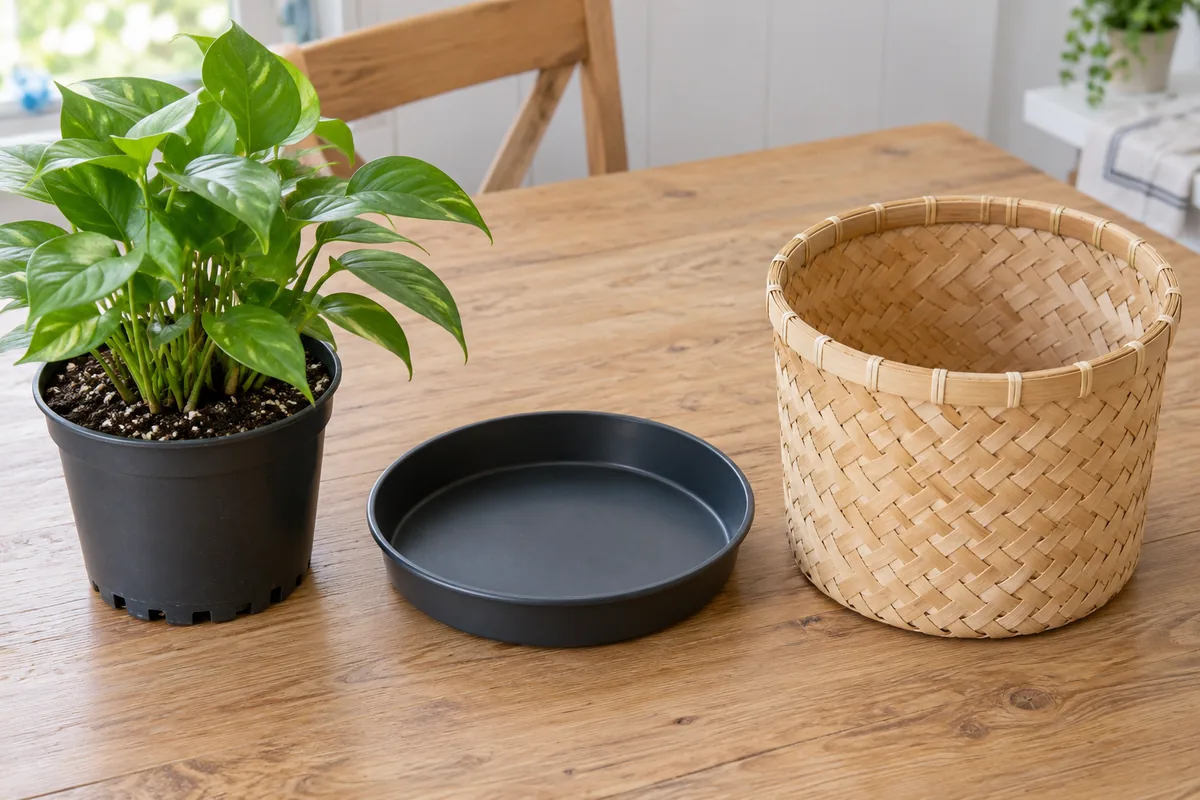
Measure the widest part of your inner pot, including its rim, and the outside dimensions of the tray. Then compare these with the basket’s internal measurements. Published basket dimensions may describe the exterior, leaving less room inside than expected.
- Opening: the pot and tray must pass through without forcing the weave.
- Base: the tray should rest flat without tipping or bending.
- Height: decide whether to hide the pot completely or leave its rim accessible.
- Removal space: leave enough room to lift the pot out comfortably.
Tapered baskets need particular attention. A wide top does not prove that the base will accommodate your tray. Ask for the internal bottom diameter or width, and confirm whether handles or reinforcing bands reduce the usable space.
For a hypothetical example, suppose your pot rim measures 20 cm across and its tray measures 22 cm. A basket with a 24 cm internal opening but a 21 cm internal base fails the tray check, despite admitting the pot. Compare both dimensions, then check actual fit, height and removal access. These numbers illustrate the process; they are not a universal clearance rule.
Create a watering routine you can maintain
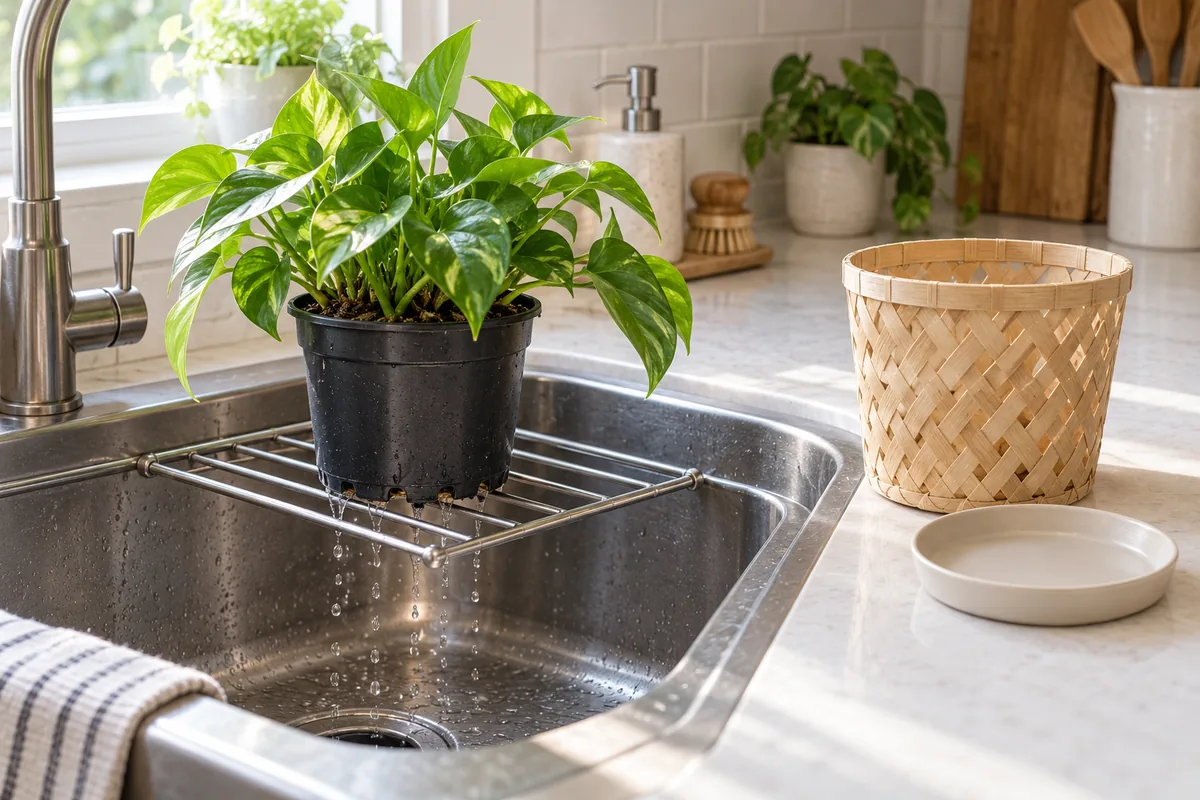
For a manageable plant, lift the inner pot out and water it in a suitable sink or watering area. Allow excess water to drain, wipe the pot’s exterior, and return it to the dry tray. Inspect the tray instead of assuming that water has disappeared.
University of Maryland Extension’s watering guidance advises removing excess water from saucers and avoiding prolonged standing water. Water according to the needs of the particular plant and its growing conditions; a basket cover does not establish a universal watering schedule.
For a large plant that is difficult to move, design access before buying the basket. You should be able to inspect and empty the tray without pulling on the stems or tipping a heavy arrangement. A hidden reservoir that cannot be reached is a poor fit for this simple decorative setup.
Choose the shape for the room
A round bamboo basket can soften the appearance of a square side table or cabinet. A taller basket can conceal a deep pot beside a chair, while a shallow design suits a low shelf if the inner pot fits. Measure the finished arrangement, including foliage, rather than the basket alone.
Choose the display position around the plant’s light requirements first. Then assess the basket’s color, silhouette and relationship to nearby furniture. For groups, repeat one basket detail and vary plant heights. Leave access for checking leaves, lifting pots and cleaning the floor.
Keep natural, painted and stained finishes distinct when comparing products. Ask what cleaning and exposure conditions the maker recommends. A bamboo basket intended for indoor display should not be assumed suitable for rain, irrigation spray or long periods outdoors.
Check hanging displays as complete assemblies
A bamboo hanging basket carries more than its own weight. Include the pot, moist growing medium, tray, plant and suspension components when checking the stated capacity of the basket, hanger and fixing. Decorative handles should not be treated as structural suspension points without confirmation.
Choose a position where the basket can be lowered or reached safely for watering. Keep the tray accessible and inspect the suspension regularly. If the product is only a decorative cover, place it in a compatible purpose-built support rather than improvising attachments through the weave.
Frequently asked questions
Can I plant directly into a bamboo basket?
For an untreated woven basket, use a separate growing pot and tray. A purpose-built planter needs its own verified lining, drainage and care instructions.
Does a plastic liner solve drainage?
No. A liner may contain moisture, but the growing pot still needs appropriate drainage and you need a way to remove excess water.
Which basket size should I buy?
Choose from internal measurements of the opening, base and height. Include the tray’s dimensions and enough clearance to remove the pot.
Can bamboo plant baskets go outside?
Only use them outdoors when the maker specifies suitability for those conditions. A covered balcony still exposes a basket to changing humidity and weather.