
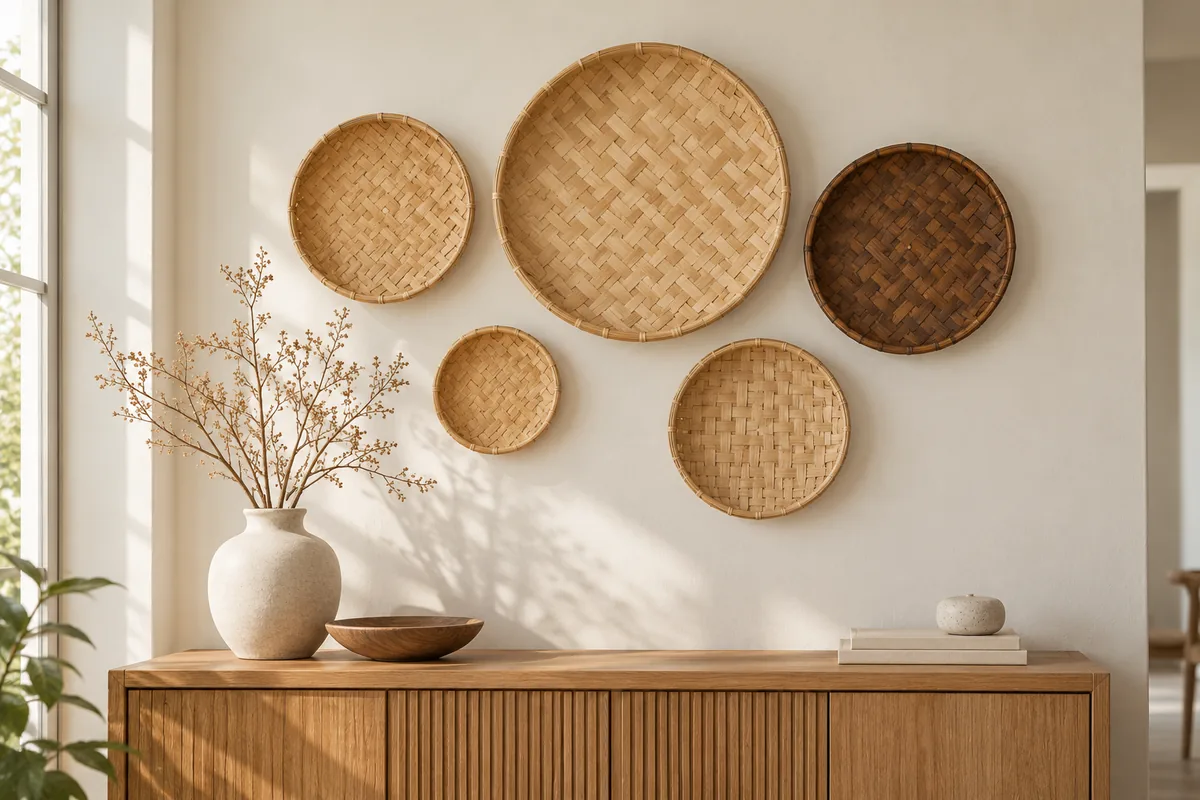
Bamboo wall baskets bring visible weave, gentle shadows and rounded shapes to a room. A single shallow basket can anchor a small wall, while a mixed arrangement can fill the space above a console or dining bench. The best choice depends on more than a pleasing front view: depth, weight, mounting points and the surrounding furniture all affect how the display works.
This guide explains how to choose a decorative bamboo basket, plan an arrangement and distinguish wall decor from baskets designed to hold objects.
Choose the basket’s job before its shape
A bamboo wall basket is usually chosen to be seen from the front. A bamboo hanging basket may instead be a suspended container, a wall pocket or a handled basket hung from a hook. These uses require different construction. A shallow tray that looks beautiful on a wall should not automatically be filled with keys, flowers or other objects.
- Flat wall display: prioritize the weave, rim, overall diameter and a suitable attachment.
- Wall pocket: check the usable opening, depth and stated capacity for contents.
- Suspended container: inspect every cord, strap, handle and attachment point.
- Tabletop decoration: check that the base sits evenly and protects the surface beneath it.
Measure the whole arrangement
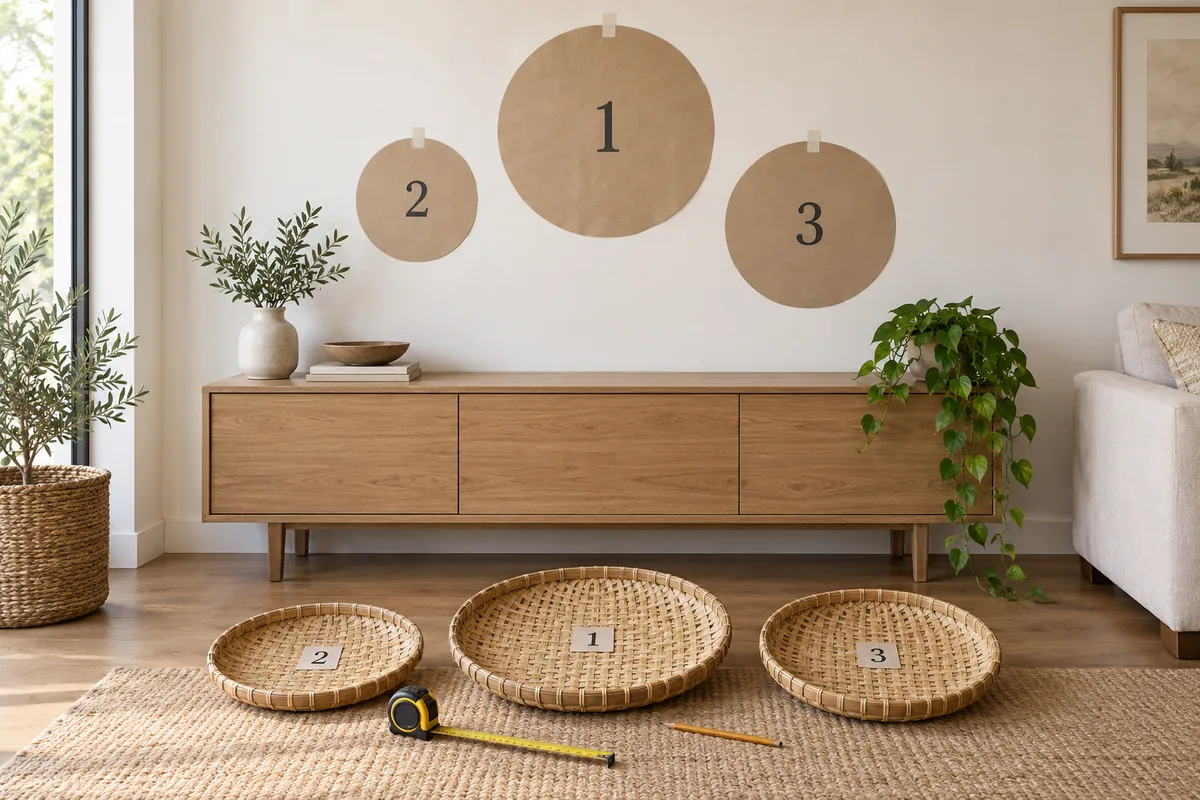
Measure the available wall area and leave room around nearby shelves, switches and door frames. Cut paper templates that follow the actual basket outlines, then number each template and its matching basket. Move the templates around to compare one large basket, a vertical pair or a loose group before making holes.
Once the arrangement works, map the attachment as well as the outline. On each basket, measure the approved hanger’s position down from the top edge and across from one side; transfer those two offsets to its matching template. A centered basket outline does not mean the hanger sits at the center. Mark the fixing position only after checking how the basket hangs from its intended attachment.
Photograph the numbered layout before removing templates. Install the appropriate fixings according to their instructions, then match baskets to their numbers and check the arrangement from the doorway. This record also makes it easier to return cleaned baskets to their original positions.
Depth matters too. A flat round bamboo basket makes a shallow display, while a deep bowl projects farther into the room. In a narrow hallway, measure that projection from the wall. Above a console, consider the arrangement together with the lamp, mirror and objects already on the furniture.
Use one visual anchor: a larger basket, a darker center or a repeated rim color. You can vary diameter and weave while keeping the palette consistent. A good arrangement does not require a particular number of baskets; it needs enough space for each outline to remain readable.
Compare natural, black, white and red finishes
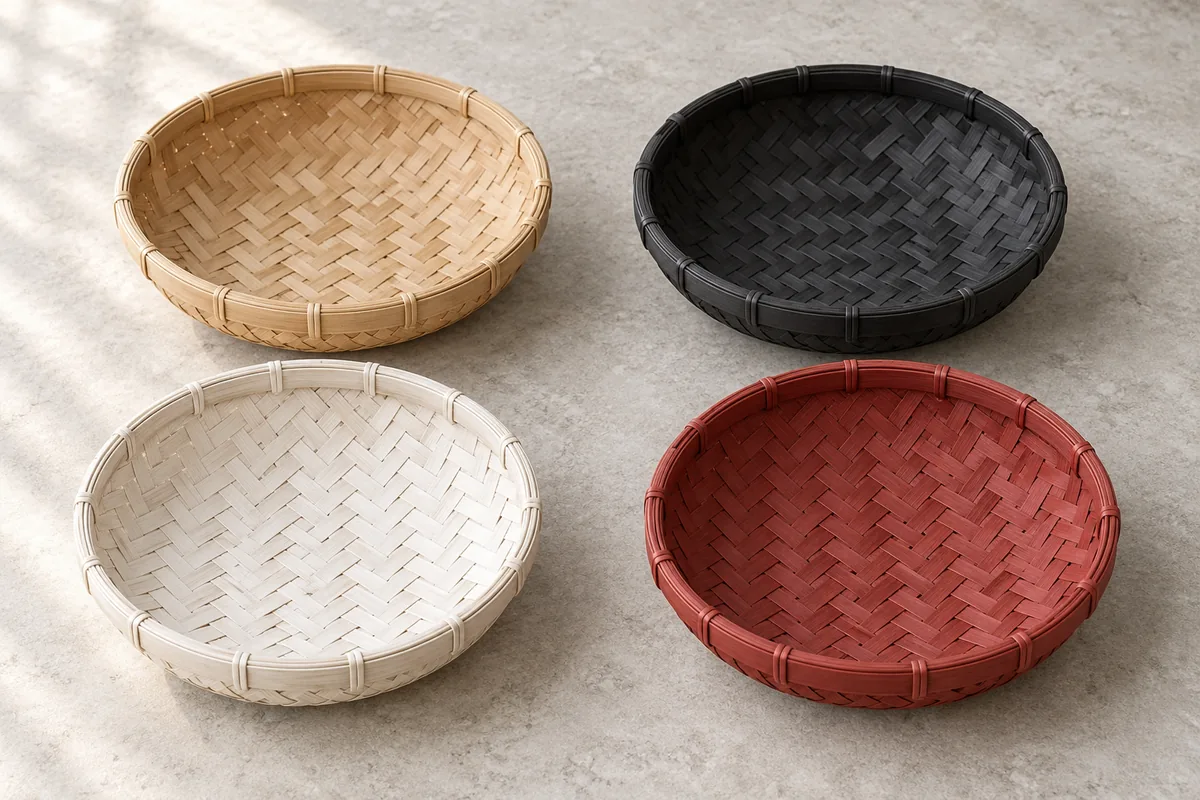
A natural bamboo basket can work with pale walls and timber furniture. Black bamboo baskets can create a more distinct outline, while white baskets may blend with a light background. A red bamboo basket can become the focal point of an otherwise restrained display. These are styling options, so compare samples or clear photographs against your own wall color.
Ask whether the color comes from paint, stain, another treatment or the material itself. “Natural” is not a complete finish specification. For a coordinated set, request photographs taken in the same lighting, plus details about acceptable color variation. A product image on a white screen cannot guarantee an exact match at home.
Check materials and mounting details
Do not assume that every woven basket is bamboo. Wicker can include different materials; the Smithsonian’s wicker basket record describes constructions using rattan, willow, bamboo and other plant materials. Ask for a component list covering the woven body, rim, bindings and any frame.
Before buying, request the empty weight, rear-view photographs and the intended hanging method. Use a fixing suitable for your wall and the complete displayed weight, following the fixing manufacturer’s instructions. Avoid suspending a basket from a decorative strand unless the seller identifies it as an attachment point. Check that any mounting hardware cannot scrape the wall.
Style flowers and seasonal displays carefully
A bamboo flower basket can hold dried or artificial stems without needing a water-filled base. For fresh flowers, use a separate stable vessel that contains the water completely. Confirm that the basket and its support are suitable for the combined weight before adding a vase.
Keep the basket accessible for dusting and inspection. Follow the maker’s cleaning directions, and check the back, rim and hanger when changing a display. If a basket has loose strips or a damaged attachment, remove it from the wall until the problem is resolved.
Frequently asked questions
Can I hang a serving basket on the wall?
Possibly, but check its weight and a suitable attachment method. A serving handle or open weave should not be assumed to be a mounting point.
How do I mix different bamboo wall baskets?
Repeat one feature, such as color or rim shape, and vary the others. Paper templates help you judge spacing before installation.
Is a hanging basket suitable for storage?
Only when its construction and mounting system are intended for that use. Ask for capacity information rather than judging strength from its appearance.
Should wall baskets match the furniture exactly?
No. You can repeat a similar tone or use a deliberate accent. Compare the complete arrangement with the furniture and wall together.