
End Grain Wood Cutting Board | Custom Wholesale
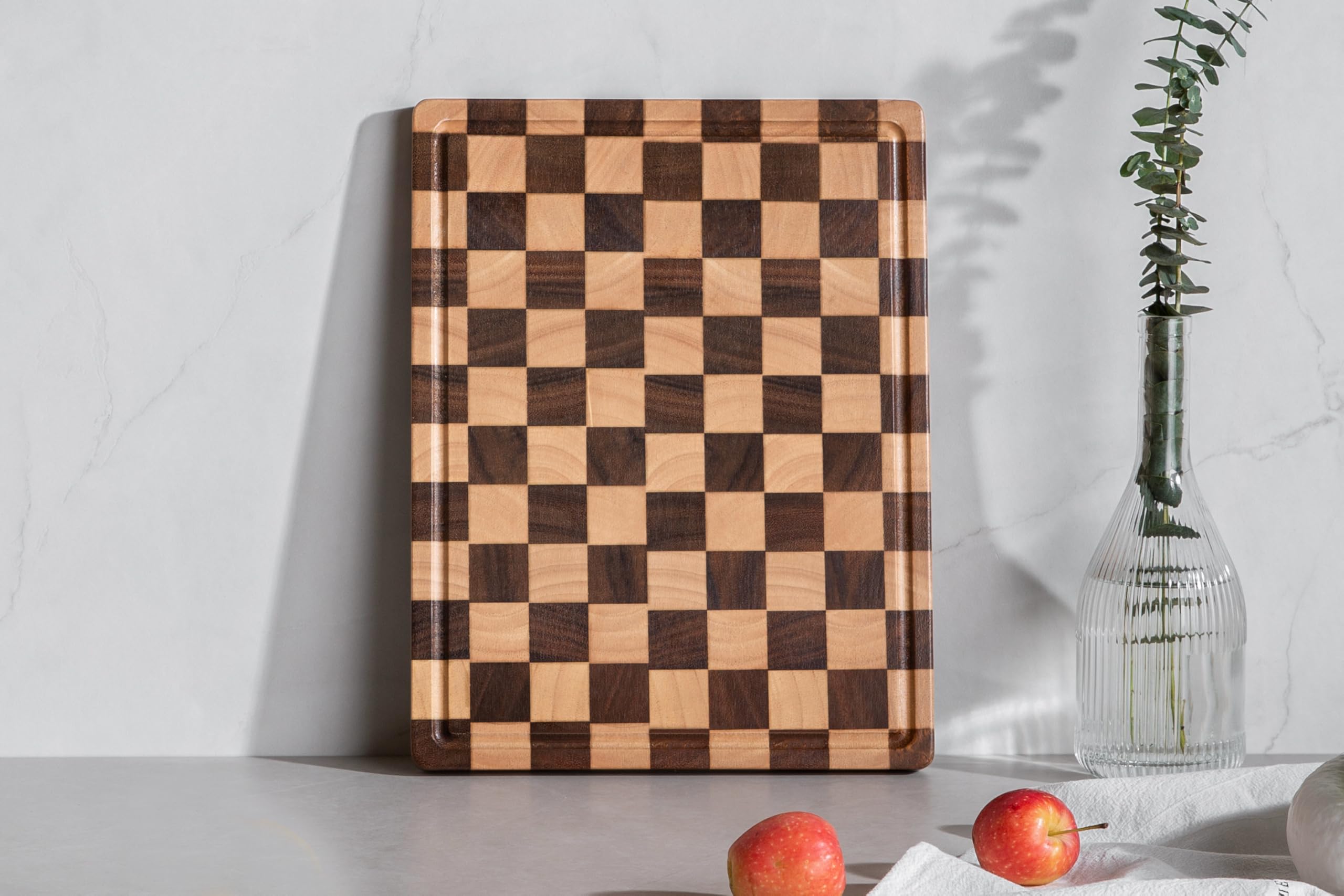
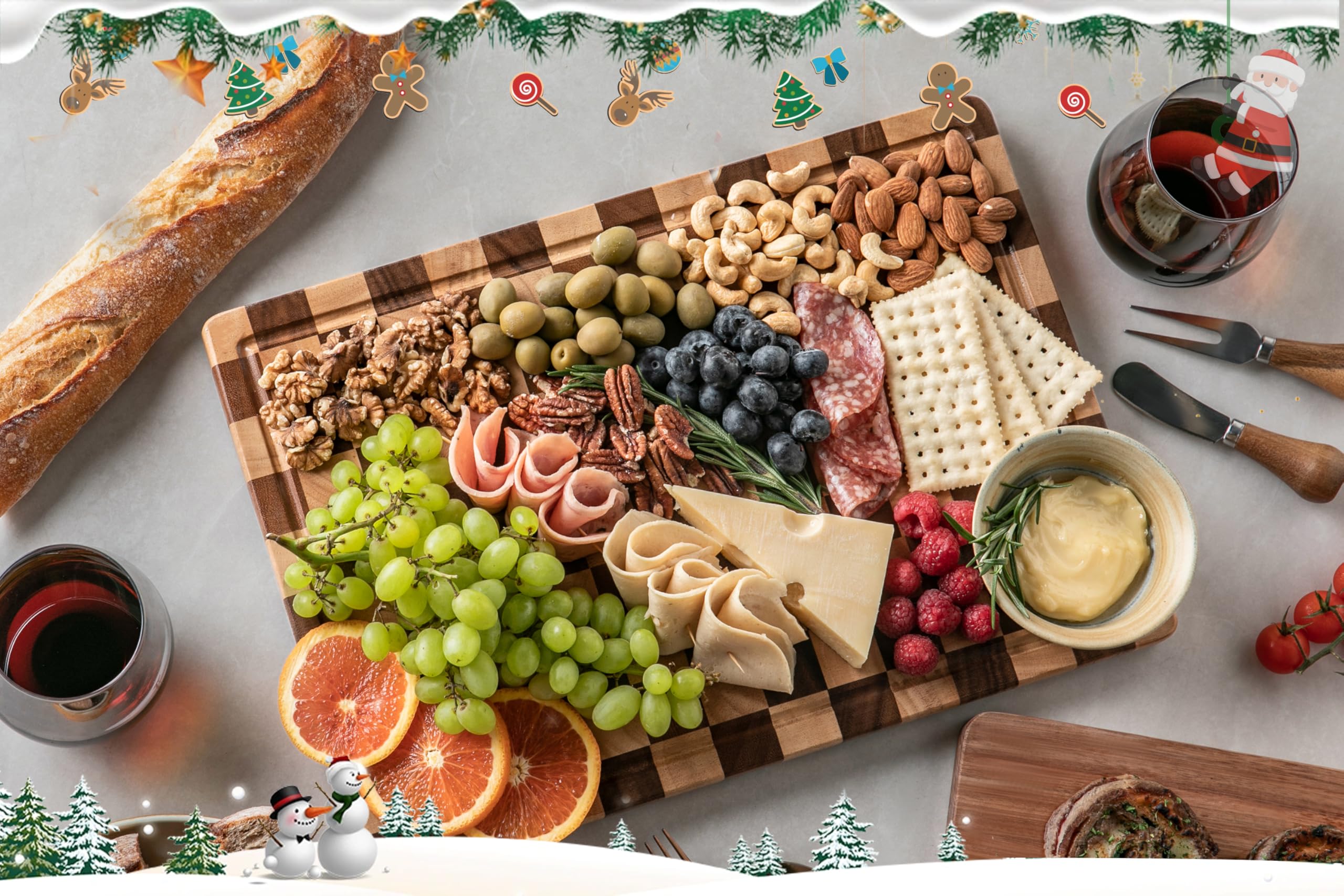
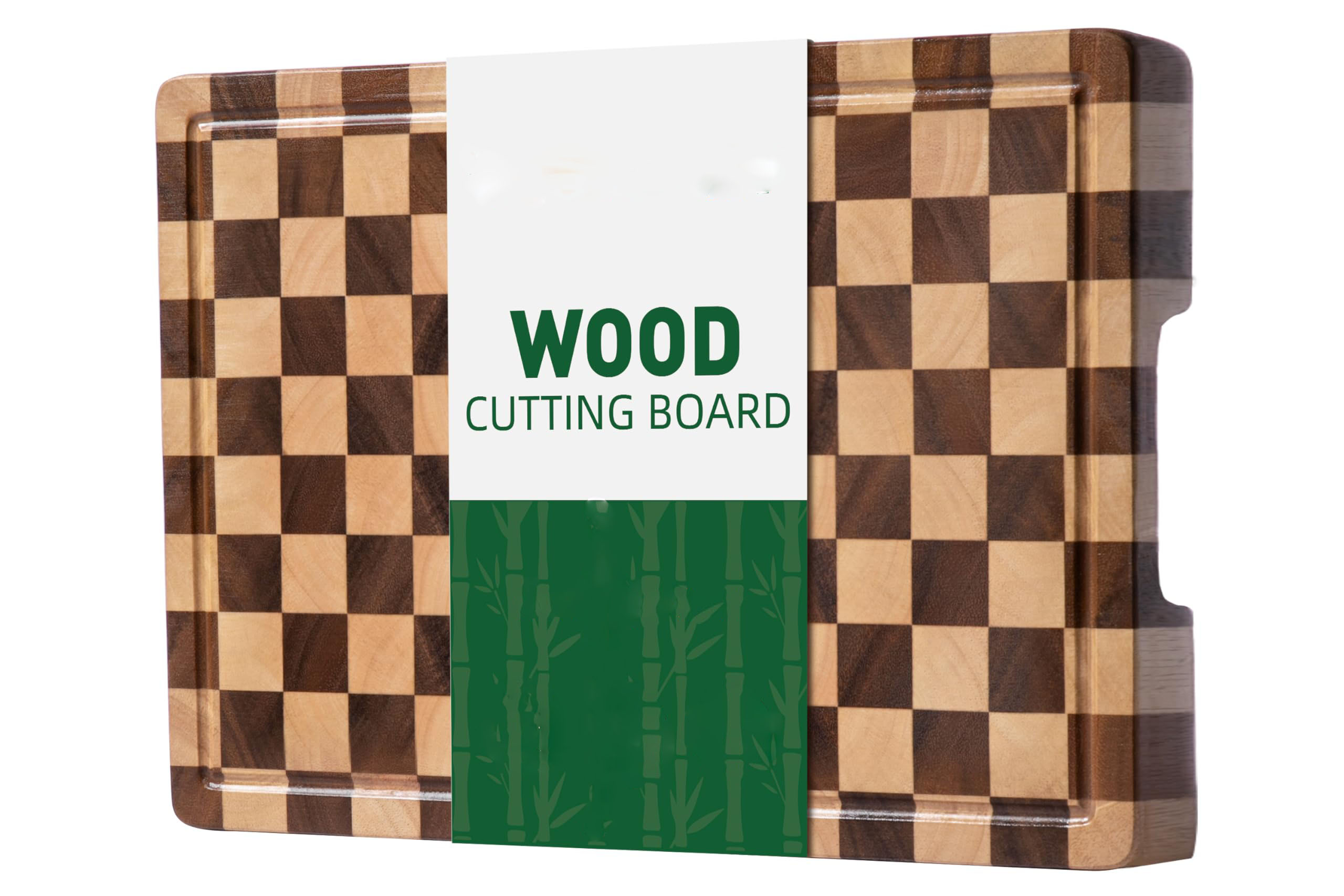
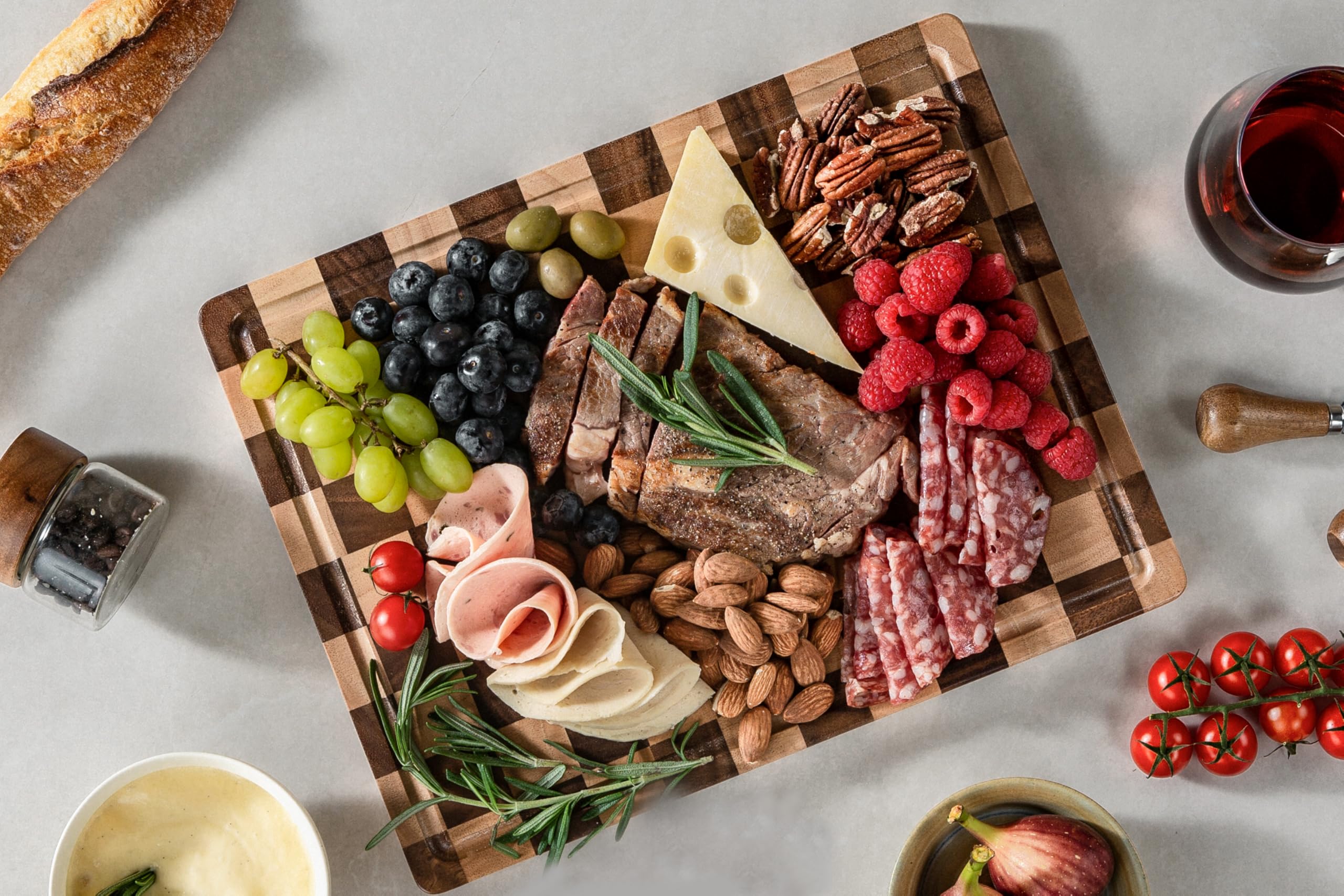
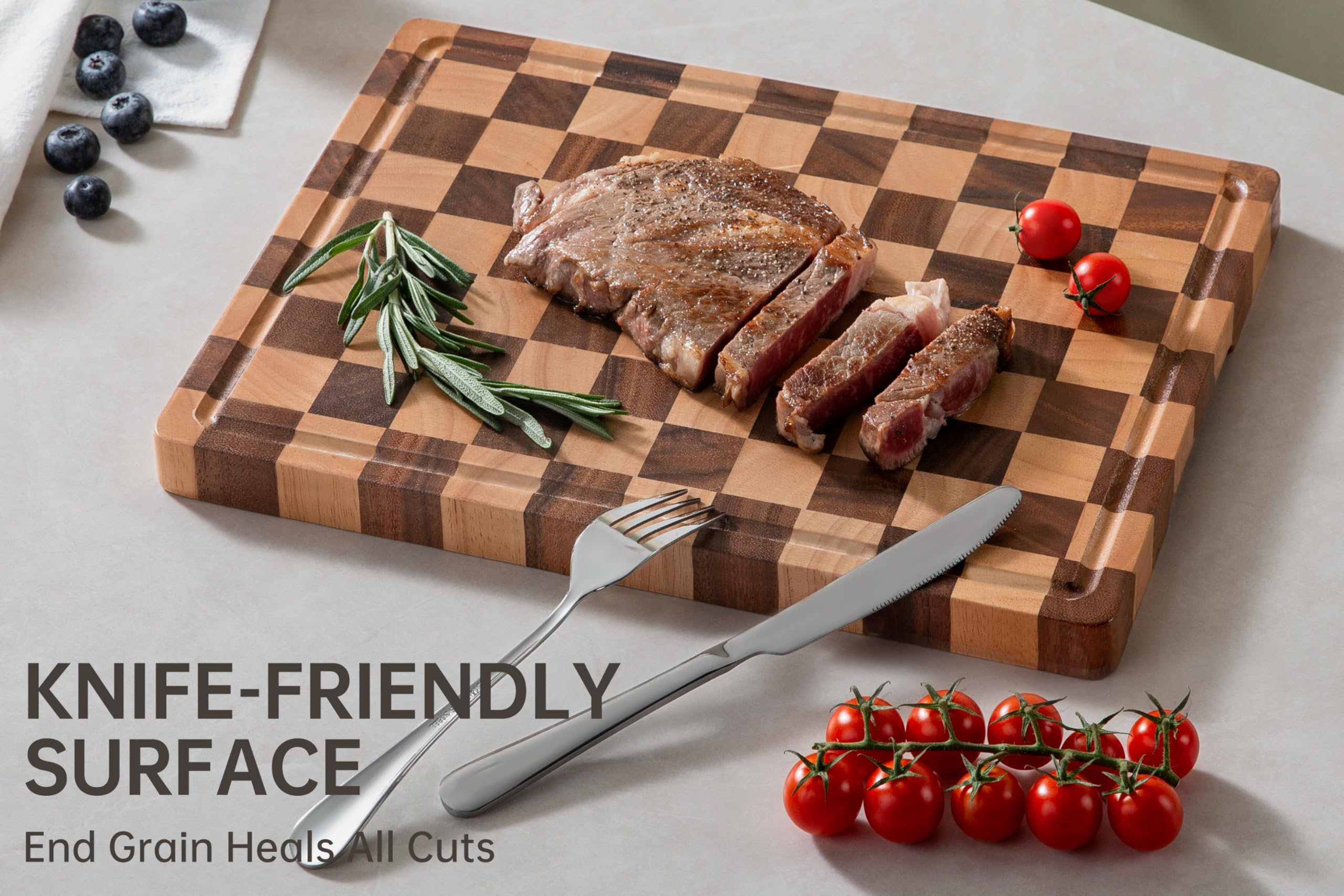
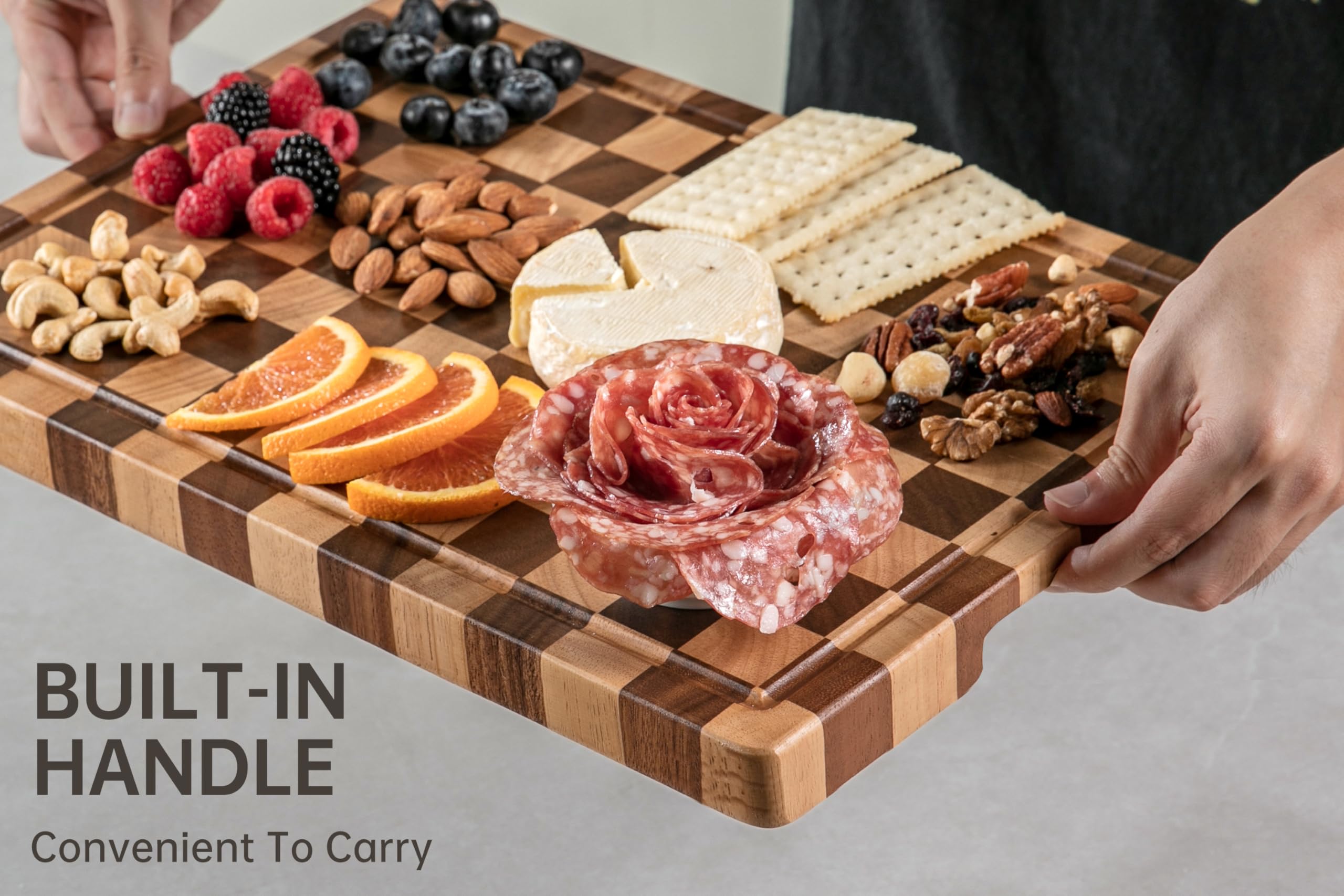
This end grain wood cutting board features a checkerboard-style end-grain surface, a perimeter juice groove and built-in side handles for carrying and presentation. Product imagery shows it used both as a preparation board and as a serving surface for cheese, cured meats, crackers, fruit, grapes and nuts. A custom printed paper sleeve can be added for retail display and private-label programs. Current product information lists acacia wood and rubberwood, but the exact species and construction cannot be confirmed from photographs alone; final material, dimensions, pattern, finish and packaging must follow the approved sample, bill of materials and purchase order. Buyers can discuss board size, groove layout, handle profile, branding and packaging for wholesale kitchenware, gifting and charcuterie collections.
Açıklama
The Checkerboard Is a Construction Map, Not a Printed Effect
This end grain wood cutting board is built from contrasting light and dark wood blocks arranged into a checkerboard pattern. The end-grain faces form the main working surface, while a perimeter groove, rounded corners, and integrated side handles complete the board. Product images show it stored upright, carried by the handle recesses, used for cheese and fruit presentation, and brought to the table with prepared meat. A custom paper sleeve is also shown as a packaging direction.
For an OEM buyer, the pattern is only the first specification layer. Block orientation, moisture condition, glue lines, flatness, groove, handles, treatment, and packaging affect repeatability. Images can inspire merchandising, but the signed sample, drawing, and PO must define production.
Approve the End Grain Wood Cutting Board as a Matrix of Blocks
A checkerboard cutting board should be mapped by rows and columns before production. The drawing should identify nominal block dimensions, grain orientation, light and dark placement, permitted edge pieces, and the position of the finished pattern relative to the groove and handles. Do not rely on a general instruction to “alternate colors.” Without a controlled layout, a partial block at an edge or a shifted starting color can change the entire appearance.
Each visible block should present the specified face direction. Control unintended long-grain or side-grain exposure and review the top, bottom, and four edges; the working-face pattern alone does not reveal the complete glue-up.
The current specification lists acacia and rubber wood, but photographs cannot confirm species, and color is not identification. Record species, grade, block schedule, color range, and treatment in the sample and PO. An acacia wood cutting board description must match the confirmed construction.
Wood Condition and Glue Lines Deserve Their Own Approval Gate
An end grain wood cutting board contains many elements and joints. Define moisture requirements for incoming blocks, glue-up, final inspection, and packing. Use a buyer-approved range and method suited to the material and destination.
Inspect visible glue lines under consistent light. Set limits for open seams, excess adhesive, line variation, filler, gaps, and discontinuities near grooves or handles. Machining around rounded corners can expose previously hidden joint issues.
Check the conditioned sample on an agreed reference surface with defined points and tolerance, then repeat after the approved pack test or conditioning sequence. Assess rocking, high points, twist, or cup against written criteria.
Control Contrast with Boundary Samples, Not an Exact Color Promise
The two-tone design depends on visible contrast, yet wood grain and shade can vary from block to block. Create approved light, dark, and limit references under consistent lighting and after the specified surface treatment. Define which natural variations are acceptable, but do not identify a species from color alone. A digital image is useful for layout approval but cannot replace physical color references.
Judge both individual blocks and the balance of the complete face. A block may fall within the approved shade range while creating an unintended cluster when placed beside similar pieces. If pattern balance matters, state the sorting rule and provide pass/fail examples. Review the edges as well as the top because the same glue-up can present different grain figures on adjacent faces. Logo contrast should be approved on this real variation range.
Convert the Photograph into a Controlled Drawing
The drawing for an end grain wood cutting board should control every interface below.
| Feature | What the drawing and sample should define |
|---|---|
| Overall board | Length, width, thickness, dimensional tolerances, squareness, and allowable flatness |
| Block matrix | Rows, columns, block size, orientation, color sequence, edge condition, and pattern centering |
| Perimeter groove | Width, depth, offset from edges, corner radii, start/stop geometry, and machining tolerance |
| Rounded corners | Plan-view corner radius plus top and bottom edge treatment |
| Side handles | Length, opening height, recess depth, internal radii, location, hand clearance, and remaining wall thickness |
| Branding | Method, size, position, orientation, contrast reference, and artwork revision |
| Surface treatment | Material, application method, appearance range, drying or curing process, and approved care instructions |
| Packaging | Paper sleeve dimensions, protective separations, retail labels, barcode position, carton arrangement, and pack-out reference |
No numerical product size has been established here. Select the final dimensions for the target channel and confirm them on the sample and PO. Buyers planning adjacent boards or kitchen accessories can browse our kitchenware collection.
The Groove and Handles Must Work Around the Block Pattern
The perimeter groove depends on width, depth, edge offset, and continuity through the corners. Do not assume liquid capacity; define a measured buyer test if collection performance matters.
Inspect the machined groove for torn fibers, rough transitions, residue, darkened edges, and inconsistent depth. It should follow the drawing and maintain the specified distance from corners and handle walls.
Integrated side handles are shown in use, but overall dimensions do not define their fit. Confirm clearance, internal radii, symmetry, surrounding material, and separation from the groove. Check that a recess does not expose a visually unacceptable joint.
Build a Custom Program in the Right Sequence
For a custom end grain cutting board, lock size, block matrix, materials, groove, handles, and tolerances before approving finish, logo, sleeve, labels, and carton graphics. This prevents a structural change from shifting the pattern or branding.
Provide drawings, pattern map, appearance reference, treatment, care text, tests, packaging layout, and defect examples. Number every revision; the quote, sample, inspection sheet, artwork, and PO should agree. Learn more on our About page.
Use a Golden Sample, Then Inspect the Process
A signed sample defines the finished end grain wood cutting board, while inspection should follow material preparation, panel assembly, machining, finishing, and packing.
| Stage | Suggested control points |
|---|---|
| Prepared blocks | Confirmed material schedule, dimensions, grain-face orientation, moisture condition, color sorting, and visible defects |
| Glue-up | Pattern sequence, block alignment, joint closure, panel dimensions, adhesive application record, and curing controls |
| Machining | Thickness, flatness, groove path and depth, corner radii, handle geometry, edge smoothness, and surface preparation |
| Finish and appearance | Approved treatment, color and sheen range, grain contrast, glue-line appearance, logo quality, residue, roughness, and visible damage |
| Final and packed board | Critical dimensions, sample comparison, flatness after conditioning, correct sleeve and labels, protective fit, carton count, and movement control |
For wholesale end grain cutting boards, sample across carton positions and production intervals, then record results against tolerances and visual references.
Let Packaging Protect the Pattern Consumers Are Buying
Packaging for an end grain wood cutting board can use the pictured custom paper sleeve to carry branding while revealing the checkerboard. Match it to board thickness, handles, and corners. Check sliding, abrasion, information coverage, and hard-edge contact.
Protect against corner impact, face rubbing, groove-edge pressure, and carton movement. Separate stacked boards and keep handles from catching packaging. After pack testing, inspect flatness, corners, groove, handles, finish, logo, sleeve, and labels.
Use and Care Should Match the Approved Treatment
Use the board on a stable, level surface. Grip the side handles securely and support the board for its size and weight. Although images show upright storage, approve guidance for the final dimensions and environment.
A conservative care direction for the final end grain wood cutting board is to hand wash without prolonged soaking and dry promptly, including inside the groove and handles. Avoid dishwasher cleaning, extreme heat, and extended contact with standing moisture. If periodic treatment is specified, provide the exact approved material and method. Care text must match the final species, adhesive system, and surface treatment.
Frequently Asked Questions
Which woods are used in the light and dark blocks?
The current specification lists acacia and rubber wood, but photographs cannot confirm species or assign a species to each color. Confirm the material schedule, grade, pattern, and appearance range on the sample and PO.
Does the board have a fixed groove capacity?
No fixed value is stated. Groove performance depends on its width, depth, path, corners, and the overall board size. Define a test if collection capacity is a purchasing requirement.
Can the checkerboard pattern be customized?
Pattern scale, sequence, and branding can be evaluated for OEM production. Review changes against block yield, glue lines, groove, handles, appearance, and packaging.
Are the serving scenes guaranteed applications?
They are presentation examples. Final suitability and care depend on approved materials, construction, treatment, dimensions, and buyer evaluation.
What should buyers include in a quotation brief?
Send target quantity and market, dimensions, block map, material schedule, moisture and flatness criteria, groove and handle drawing, finish, logo artwork, sleeve concept, packaging requirements, test methods, and destination details. Submit your custom end grain cutting board brief through our contact page for a project-specific review.

Değerlendirmeler
Henüz değerlendirme yapılmadı.