
Choosing between bamboo flooring manufacturers is not simply a matter of comparing a price per square meter. A useful comparison starts with the flooring construction, intended installation environment, measurable product requirements, test evidence, sample approval process and the way a supplier handles batch consistency and claims. Two quotations can use the same phrase—such as “strand-woven bamboo flooring”—while describing products with different dimensions, adhesives, profiles, coatings, tolerances and packaging.
This B2B guide is written for importers, distributors, contractors, retailers and private-label buyers evaluating a bamboo flooring manufacturer or planning a bamboo floor wholesale order. It explains what to put in an RFQ, how to distinguish a manufacturer from an exporter or trader, which documents deserve closer review and how to compare suppliers without relying on unsupported superlatives.
What Counts as a Bamboo Flooring Manufacturer?
A company may describe itself as a manufacturer, factory, supplier, exporter or trading company. Those terms do not always describe the same role. A legal manufacturer normally operates the production site responsible for defined manufacturing stages. An exporter may be the seller of record but may or may not own the factory. A trading company can coordinate several factories and provide useful sourcing services, yet it should not be presented as the physical producer.
For a broader explanation of these business roles, see our guide to choosing a bamboo supplier, manufacturer or factory. The sections below focus specifically on flooring construction, machining, test evidence and batch control.
The distinction matters because a flooring program usually depends on more than a finished sample. Buyers may need to know where the strips or strands are prepared, where lamination or pressing occurs, who machines the edge profile, who applies the coating and which entity controls final inspection. Some processes may be subcontracted. That is not automatically a problem, provided the production route is disclosed and the quality plan covers every site involved.
When comparing bamboo floor manufacturers, ask for the legal company name, factory address, business role and a process map showing in-house and outsourced operations. Then check whether quotations, test reports, certificates, packing marks and export documents refer to the correct entities.
Start With the Correct Flooring Construction
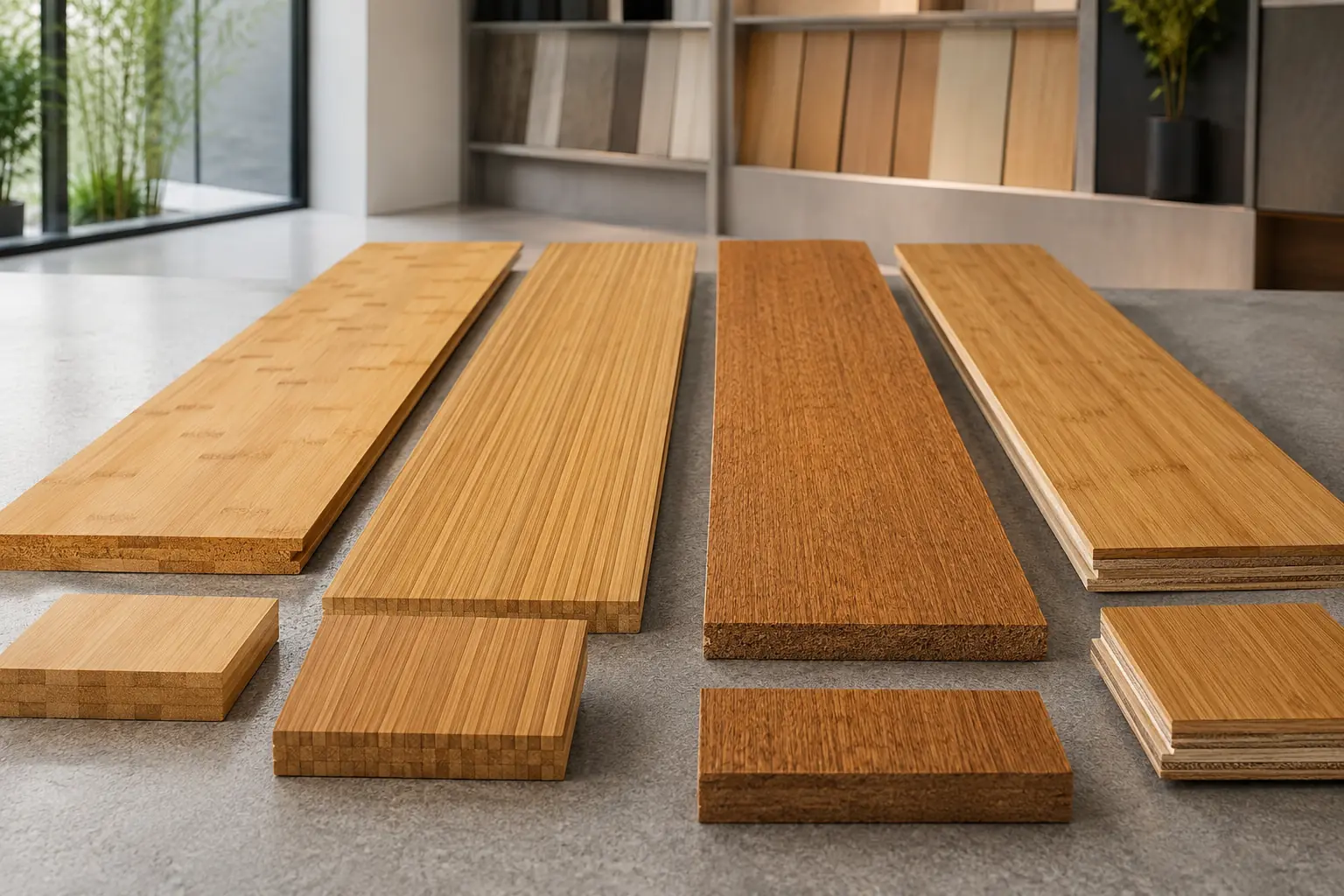
“Bamboo flooring” is a category rather than one standardized construction. The best starting point is to define how the plank is built and where it will be installed. Appearance alone is not enough to identify the internal structure.
| Construction | How it is generally formed | Typical visible character | Questions for the supplier |
|---|---|---|---|
| Horizontal laminated bamboo | Prepared strips are arranged flat and bonded into a blank | Wider bamboo nodes and grain features may remain visible | Ask about strip grading, adhesive, lamination quality and dimensional tolerance |
| Vertical laminated bamboo | Prepared strips are placed on edge and bonded | Finer, more linear visual pattern | Ask how color and strip width are controlled across batches |
| Strand-woven bamboo | Fiber bundles or crushed strands are combined with resin and compressed | Dense, variegated pattern that differs by strand preparation and color | Request product-specific density, performance and emissions evidence rather than generic claims |
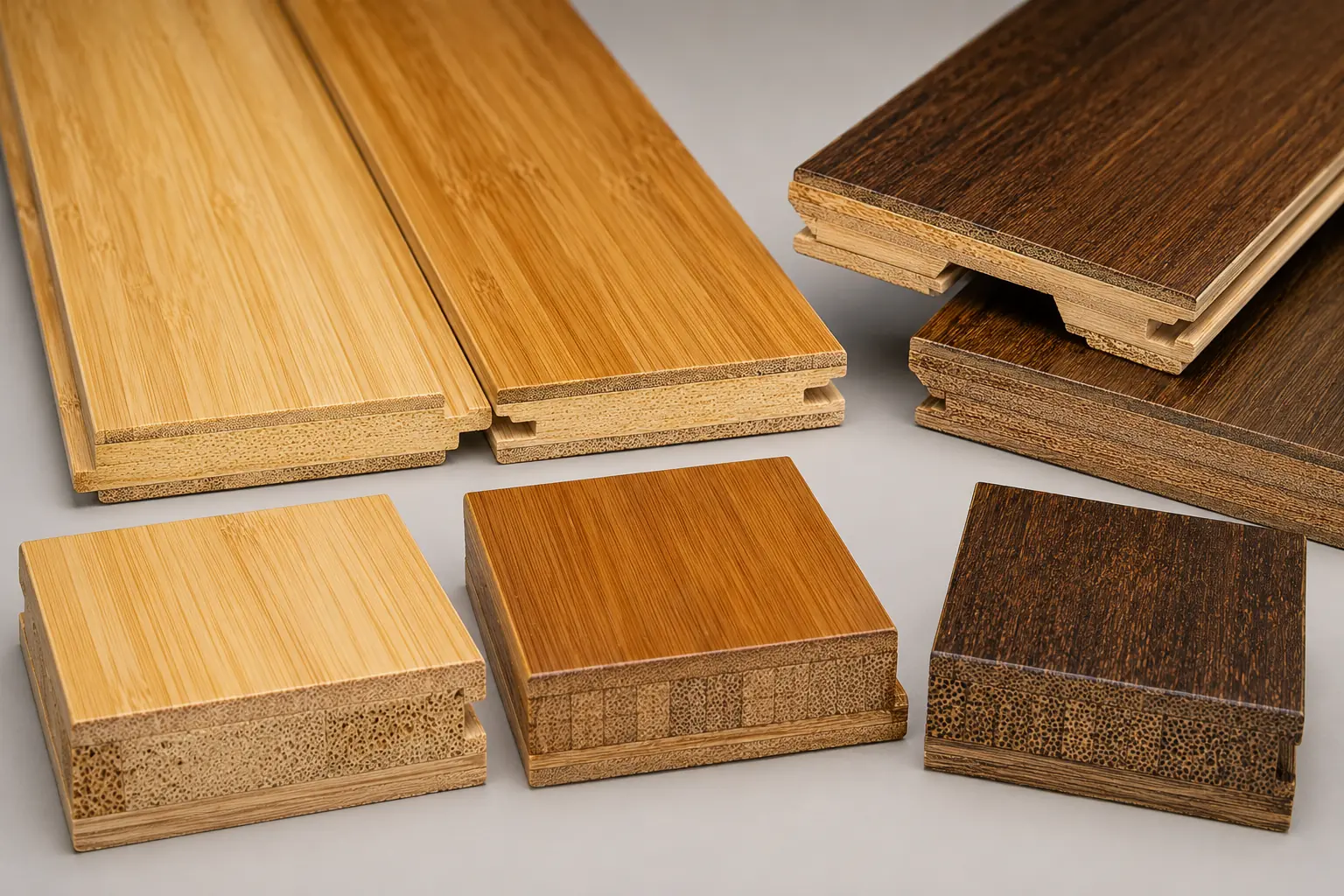
| Engineered bamboo flooring | A bamboo wear layer is bonded to a multi-layer or composite core | Appearance depends mainly on the bamboo top layer | Confirm core material, layer thickness, balance construction and regulatory classification |
Edge format is a separate decision. Tongue-and-groove and click-lock systems affect installation method, machining tolerances and licensing questions. Indoor and exterior products must also be treated as different specifications. A product should not be described as suitable for outdoor use merely because it has a dark color, dense construction or surface coating. Exterior suitability needs product-specific design details, testing and installation guidance.
How Bamboo Flooring Is Manufactured—in Brief
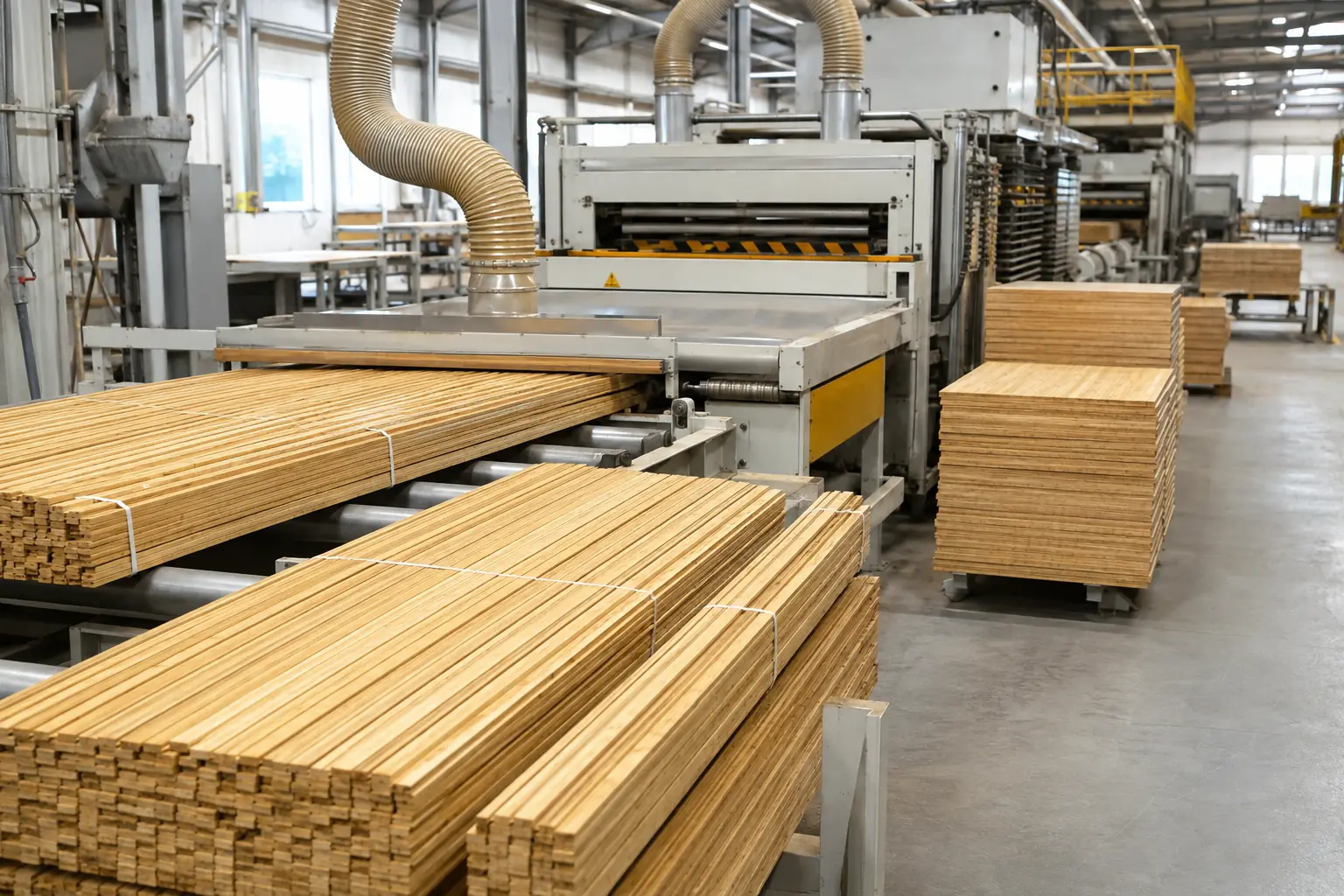
The general process begins with bamboo selection, cross-cutting and splitting. The outer and inner surfaces are removed or calibrated, and the prepared material is treated and dried. From that point, the route changes: strips can be laminated horizontally or vertically, strands can be compressed into dense blanks, or a bamboo wear layer can be combined with an engineered core. The blanks are conditioned, machined, sanded, finished, graded, inspected and packed.
Exact treatment chemistry, moisture targets, pressing conditions and finishing schedules vary by construction and factory. Buyers who need a technical explanation can read our guide to how bamboo flooring is manufactured. For supplier comparison, the more important question is whether the proposed factory can document and control the process for the exact SKU being quoted.
Seven Checks for Comparing Bamboo Flooring Manufacturers
1. Confirm the legal manufacturer and physical site
Match the business license, factory address, quotation and payment beneficiary. If another entity will export the goods, document that relationship. A factory photo or marketplace profile is not a substitute for legal-entity verification.
2. Identify which operations are in-house
Ask where material preparation, drying, lamination or strand pressing, profiling, coating, testing and packing occur. If an operation is subcontracted, confirm who approves the subcontractor and how incoming and outgoing lots are checked.
3. Compare written specifications and tolerances
Do not compare prices until the construction, dimensions, tolerances, finish, edge system, packaging and test requirements are aligned. A low quotation may simply omit a requirement that another supplier included.
4. Request current, product-specific evidence
Test reports should identify the tested product, construction, model or sample, method, result, laboratory and report date. A company-level certificate or a report for a different core, adhesive or coating cannot automatically prove compliance for the quoted floor.
5. Review color and batch-control procedures
Bamboo has natural variation, while carbonization, staining and coating add process variation. Define the approved range, lighting conditions for evaluation, board-mixing instructions and how cartons are identified by production lot. Replacement planning should be discussed before the first shipment, not after a mismatch occurs.
6. Inspect packaging and loading plans
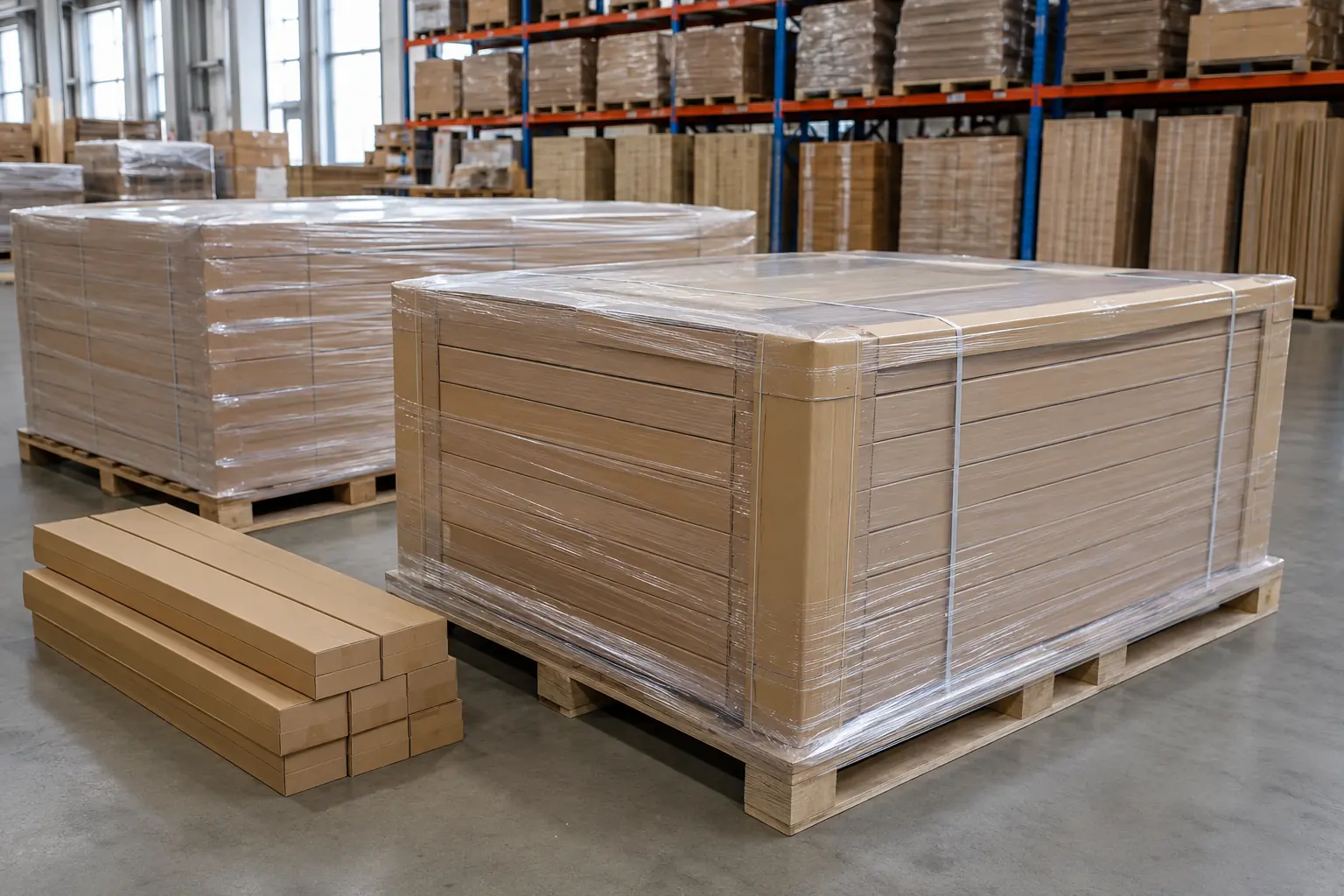
Confirm planks per carton, carton strength, edge and corner protection, moisture protection, pallet requirements, labels, barcodes and loading method. Packaging must suit the plank length, weight, destination and distribution route. Ask how cartons are kept dry before loading and how mixed SKUs will be separated.
7. Understand claims and replacement handling
Request a written process for reporting damage, dimensional problems, profile mismatch, color variation or finish defects. Clarify the evidence required, response time, responsibility for inspection and method for matching replacement material to the original lot.

What to Put in a Bamboo Floor Wholesale RFQ
A complete RFQ helps bamboo flooring manufacturers quote the same requirement. It also exposes unanswered questions early, when changes are less expensive. Include the following:
- Intended application, indoor environment and installation method
- Construction: horizontal, vertical, strand-woven or engineered
- Overall length, width and thickness, plus permitted tolerances
- Wear-layer and core details for engineered products
- Tongue-and-groove or click-lock profile, including licensing requirements
- Natural, carbonized, stained or other color direction, with an approved range
- Surface texture, gloss level and coating system
- Moisture, dimensional-stability, emissions, fire, slip or other target-market requirements where applicable
- Carton quantity, labels, barcodes, instructions and retail or project packaging
- Order quantity by SKU, expected reorder pattern and destination country
- Inspection plan, approved sample and required shipment documents
Avoid relying only on a reference photo. Add a dimensional drawing, color reference, performance brief and packaging layout. If a requirement is still undecided, mark it as open rather than allowing each supplier to make a different assumption.
Buyers who also need a general framework for sampling, private labeling and repeat orders can use our bamboo products wholesale and OEM guide. The flooring RFQ should remain the controlling document for floor-specific requirements.
Test Reports and Certifications: Check the Scope
Destination-market requirements depend on the product construction, installation use and jurisdiction. An engineered plank with a composite core may have different documentation needs from a laminated bamboo plank. Buyers should obtain advice appropriate to their market and confirm the applicable standard before ordering.
For every certificate or report, check the certificate holder, legal entity, production site, covered product, standard or test method, laboratory or issuing body, issue date, expiry date and current status. Sustainability claims require the same care. A logo on a website does not prove that a specific order is covered. Our FSC bamboo certification guide explains how buyers can check certificate scope and product coverage.
| Supplier claim | Evidence a buyer should request |
|---|---|
| “Low-emission” | A current report for the exact construction, adhesive/core and destination-market method |
| “FSC-certified” | Valid certificate details, product-group scope and claim that will appear on transaction documents |
| “Exterior grade” | Product-specific design, test evidence, installation limits and maintenance instructions |
| “Scratch resistant” or “high wear” | Defined coating system, agreed performance method and representative test result |
| “Factory direct” | Legal-entity verification, factory address and evidence of the operations conducted there |
Sample Approval and Production Quality Control
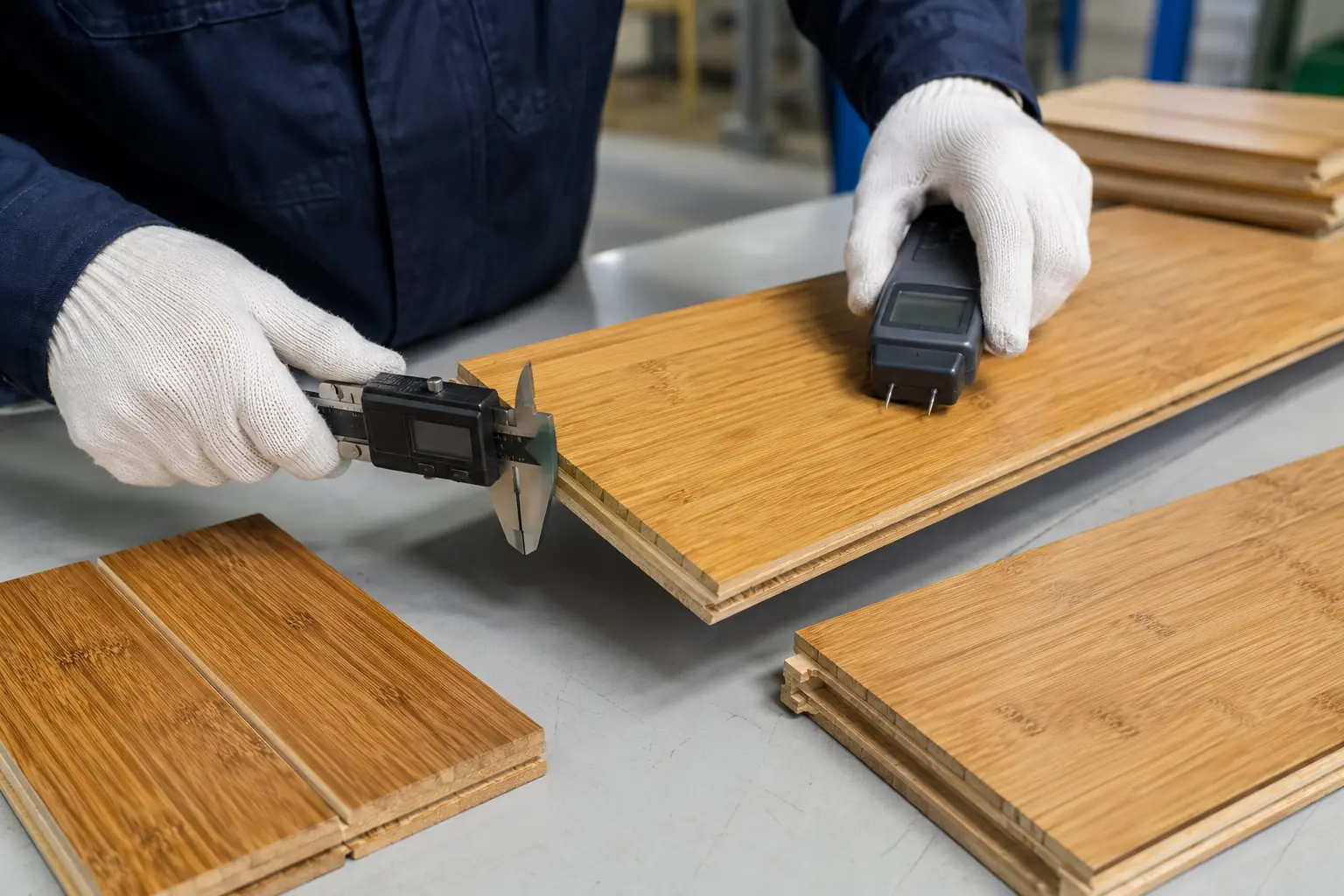
The approved sample should be connected to a written specification. Record its construction, dimensions, profile, color range, finish, packaging and any test requirements. One appearance sample cannot represent every measurable characteristic, so keep drawings and acceptance criteria with it.
A practical inspection plan can cover incoming material identification, drying or conditioning records, blank dimensions, machining tolerances, profile fit, board flatness, surface defects, color grading, coating appearance, carton contents and labeling. The exact inspection method and sampling level should reflect the product risk, order size and contractual requirements.
Before shipment, agree on who performs inspection, what constitutes a major or minor defect, how mixed lots are handled and which records will accompany the goods. Keep retain samples where replacement matching is important.
What Affects Bamboo Floor Wholesale Pricing?
Wholesale pricing is influenced by more than plank dimensions. Construction, density, wear-layer structure, color process, surface texture, edge profile, coating schedule, yield requirements, test program, packaging and order mix can all change cost. A program with many colors or dimensions may also create separate setup, sampling and minimum-order considerations.
Ask whether the offer is for stock or made-to-order goods, which Incoterm is used, how long the quotation remains valid and which tests, tooling, samples, pallets or labels are included. Confirm MOQ by construction, color and dimension; a single overall quantity may not describe the minimum for each SKU. Because these variables are supplier- and project-specific, a reliable article should not publish invented MOQ, lead-time or container figures.
A Practical Manufacturer-Comparison Scorecard
The following weighting is a suggested procurement tool, not an industry standard. Buyers can change it to match their risks.
| Evaluation area | Suggested weight | What to examine |
|---|---|---|
| Product and specification fit | 25% | Construction, dimensions, profile, finish and application suitability |
| Testing and documentation | 20% | Product-specific reports, certificate scope and document validity |
| Factory and process verification | 20% | Legal entity, production site, in-house operations and subcontracting |
| Quality-control system | 15% | Sample control, tolerances, batch records, inspection and traceability |
| Commercial and delivery terms | 10% | MOQ, price basis, lead time, packaging and loading plan |
| Communication and claims support | 10% | Technical response quality, change control and claim procedure |
Common Sourcing Mistakes
- Comparing unmatched quotations. A price comparison is unreliable when constructions, coatings or packaging differ.
- Treating all strand-woven floors as identical. Strand preparation, resin, density, color process and finishing can vary.
- Accepting logos without verifying documents. Scope, product and legal entity matter.
- Assuming bamboo automatically means sustainable or low-emission. These claims require evidence for the actual supply chain and product.
- Approving appearance only. Dimensions, profile fit, flatness, finish and documentation also need acceptance criteria.
- Ignoring installation conditions. The building, subfloor, moisture conditions and installation method affect the specification and field result.
- Leaving replacement rules undefined. Color and production-lot planning are important when future matching may be required.
Frequently Asked Questions
How do I compare bamboo flooring manufacturers?
Compare suppliers against one written RFQ. Review product fit, legal manufacturer, production route, current product-specific evidence, quality controls, packaging, commercial terms and claim handling. Do not rank suppliers by price alone.
What should I ask a bamboo flooring manufacturer before ordering?
Ask which processes are in-house, what construction is being quoted, how moisture and dimensions are controlled, which reports apply to the exact product, how color lots are graded, what the MOQ is per SKU and how claims or replacement lots are handled.
What is the MOQ for bamboo floor wholesale orders?
There is no universal MOQ. It can vary by construction, dimensions, color, profile, coating, packaging and whether the item is stocked or made to order. Request the MOQ for each SKU and distinguish a trial order from normal repeat-production terms.
Are bamboo floor manufacturers always the direct exporters?
No. A factory may export through a related or independent company, while an exporter may coordinate goods from several factories. Confirm the role and legal entity of every party involved.
Is strand-woven bamboo always the best option?
No construction is universally best. Strand-woven products are typically designed as dense composites, but actual performance depends on material preparation, resin, pressing, machining, finish, installation and testing. Match documented performance to the intended use.
Should a buyer approve a sample before production?
Yes. Use an approved sample together with drawings, tolerances, finish and packaging requirements. Record which characteristics the sample represents and which require separate test reports or inspection criteria.
Build the Decision Around Evidence
The strongest bamboo flooring manufacturers are not necessarily the companies making the broadest claims. For a wholesale buyer, the more useful signs are a clear product definition, a verifiable production route, current evidence, controlled samples, measurable inspection criteria and transparent commercial terms.
Fujian Xianxu Bamboo & Wood Co., Ltd. works with B2B buyers on custom bamboo and wooden product programs. If a flooring inquiry is part of a broader sourcing brief, send the intended application, construction, dimensions, quantity, destination market and documentation requirements through our contact page. Product feasibility, production route, certification scope, MOQ and delivery terms must be confirmed for the specific project before quotation.